What Does Hybrid Car Mean — and Why Does It Matter in 2026?
A hybrid car pairs a gasoline engine with one or more electric motors and a small battery pack to improve fuel economy, reduce emissions, and in some cases deliver short bursts of purely electric driving. But the term "hybrid" now covers two mechanically distinct vehicle categories — and choosing the wrong one can cost you thousands in fuel, missed tax credits, or daily charging frustration.
If you've searched "what does hybrid car mean" and found conflicting answers, you're not alone. The auto industry uses the word loosely. A Toyota Prius and a Jeep Wrangler 4xe are both technically hybrids, yet one never plugs in and the other drives 35 miles on electricity alone before the engine fires. This guide dissects both types with exact numbers, real-world expectations, and a clear decision framework for your next purchase.
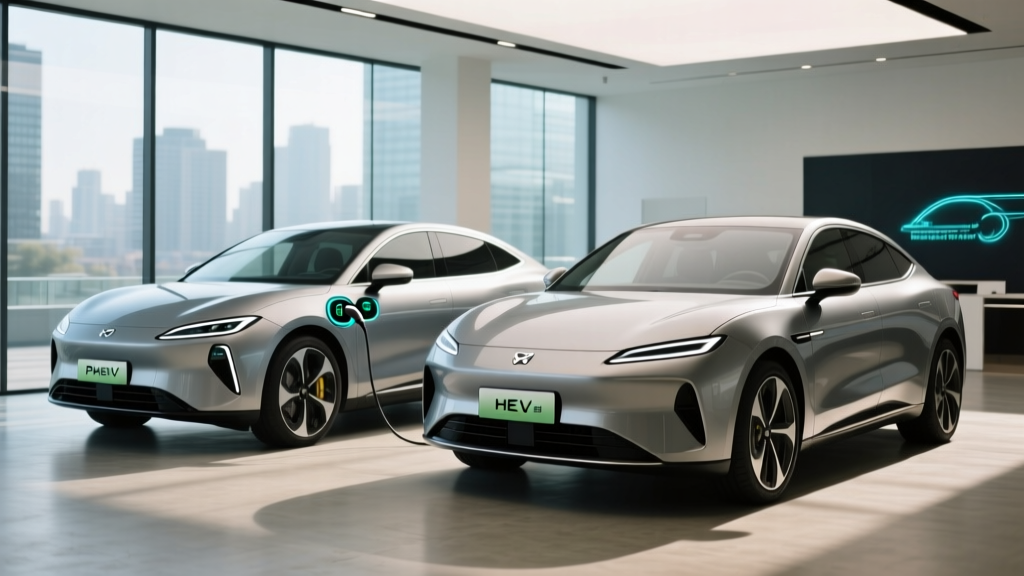
Conventional Hybrid (HEV) vs Plug-In Hybrid (PHEV): The Critical Split
Before comparing models, you need the fundamental distinction locked in:
| Attribute | Conventional Hybrid (HEV) | Plug-In Hybrid (PHEV) |
|---|---|---|
| Plugs in? | No — charges via engine and regenerative braking | Yes — has a charge port (Level 1/2, rarely DC) |
| Battery size | 0.5–2.0 kWh (small, assists engine) | 10–25 kWh (large, enables EV-only driving) |
| Electric-only range | None (motor assists at low speed only) | 20–50+ miles EPA |
| Fueling | Gasoline only | Gasoline + grid electricity |
| Federal tax credit | Not eligible under §30D | Up to $7,500 (subject to sourcing, income, MSRP caps) |
| Ideal for | No home charging, pure MPG improvement | Home charging available, short daily commutes |
Neither type requires you to "learn to drive differently." Both use automatic transmissions (or CVTs), start with a push button, and refuel at any gas station. The PHEV simply adds the option to plug in overnight for cheaper, quieter, zero-tailpipe-emission commuting.
How Many MPG Does a Hybrid Get? Real EPA Data Across Popular Models
Fuel economy is the headline number for any hybrid buyer. Below are EPA combined/city/highway figures for some of the most popular 2025–2026 model-year hybrids and PHEVs, sourced from fueleconomy.gov. Note: conventional hybrids often exceed EPA city estimates in real-world stop-and-go driving because regenerative braking recovers energy that gas-only cars waste as heat.
| Model (2025/2026) | Type | City MPG | Highway MPG | Combined MPG | PHEV EV Range | Combined MPGe (PHEV) |
|---|---|---|---|---|---|---|
| Toyota Prius LE | HEV | 57 | 56 | 57 | — | — |
| Toyota Prius Prime SE | PHEV | 52 (gas) | 48 (gas) | 50 (gas) | 44 mi | 127 MPGe |
| Honda Accord Hybrid | HEV | 51 | 44 | 48 | — | — |
| Toyota RAV4 Hybrid | HEV | 41 | 38 | 40 | — | — |
| Toyota RAV4 Prime | PHEV | 40 (gas) | 36 (gas) | 38 (gas) | 42 mi | 94 MPGe |
| Hyundai Tucson PHEV | PHEV | 37 (gas) | 36 (gas) | 37 (gas) | 33 mi | 80 MPGe |
| Ford Maverick Hybrid | HEV | 40 | 37 | 39 | — | — |
| Jeep Wrangler 4xe | PHEV | 20 (gas) | 20 (gas) | 20 (gas) | 21 mi | 49 MPGe |
PHEV Deep Dive: Electric-Only Range, Battery Size, and Charging Times
For PHEV buyers, the electric-only range is the number that determines whether you'll burn gas on a typical weekday. Here's what the hardware looks like under the skin:
| PHEV Model | Battery (kWh usable) | EPA EV Range | Level 2 Charge Time (0–100%) | DC Fast Charge? | Combined HP |
|---|---|---|---|---|---|
| Toyota Prius Prime SE | 10.9 kWh (NMC) | 44 mi | ~4.0 hr @ 3.3 kW | No | 220 hp |
| Toyota RAV4 Prime | 14.9 kWh (NMC) | 42 mi | ~2.5 hr @ 6.6 kW | No | 302 hp |
| Hyundai Tucson PHEV | 11.2 kWh (NMC) | 33 mi | ~2.0 hr @ 7.2 kW | No | 261 hp |
| Jeep Wrangler 4xe | 14.9 kWh (NMC) | 21 mi | ~2.5 hr @ 7.2 kW | No | 375 hp |
| Chrysler Pacifica PHEV | 13.0 kWh (NMC) | 32 mi | ~2.0 hr @ 7.2 kW | No | 260 hp |
| BMW X5 xDrive50e | 22.1 kWh (NMC) | 38 mi | ~3.0 hr @ 7.4 kW | No | 483 hp |
Two critical takeaways for PHEV shoppers:
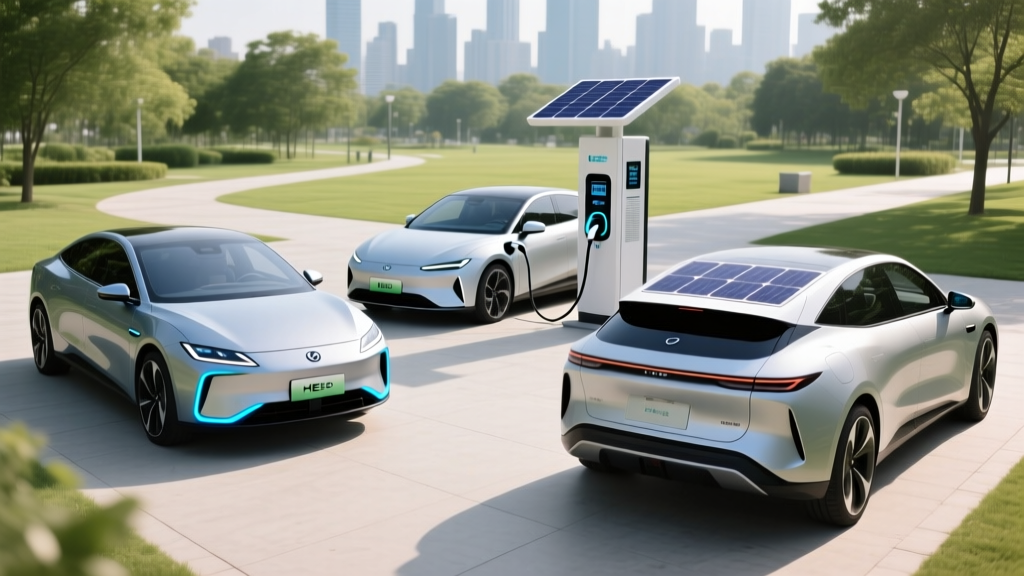
- Almost no PHEVs support DC fast charging. The onboard chargers max out at 3.3–7.4 kW (Level 2), meaning a full charge takes 2–4 hours on a home 240V outlet or public Level 2 station. You will not find meaningful DC fast-charge capability on PHEVs because the batteries are too small to justify the hardware cost and weight.
- EV range drops in cold weather and at highway speed. A Prius Prime rated at 44 miles EPA may deliver 30–35 miles in 30°F weather with cabin heat running, and as little as 28 miles at sustained 70+ mph. If your one-way commute is 40 miles, a 44-mile-rated PHEV will not cover it gas-free in winter.
Powertrain Architecture: How Hybrids Actually Move
Most mainstream hybrids use one of three architectures:
- Series-parallel (Toyota Hybrid Synergy Drive): The engine and motor can drive the wheels independently or together. A planetary gearset blends power seamlessly. This is the system in the Prius, RAV4 Hybrid, and Camry Hybrid — and it's why Toyota dominates hybrid reliability and efficiency.
- Parallel hybrid (Honda two-motor system): The engine primarily acts as a generator, with the electric motor driving the wheels most of the time. At highway cruising, a clutch locks the engine directly to the wheels for efficiency. Found in the Accord Hybrid, CR-V Hybrid.
- P2/P3 architecture (Hyundai/Kia, European brands): An electric motor is sandwiched between the engine and a conventional automatic transmission. Delivers strong combined power but slightly lower city MPG than Toyota's system. Used in the Tucson PHEV, Sportage PHEV, and many BMW/Mercedes PHEVs.
Combined horsepower figures (from the tables above) tell a performance story: PHEVs are often the most powerful trims in a lineup. The RAV4 Prime's 302 hp makes it the quickest RAV4 Toyota sells. The Wrangler 4xe's 375 hp and instant electric torque make it the most responsive Wrangler ever built. If you assume "hybrid" means "slow," the spec sheets will change your mind.
Pricing, Tax Credits, and Total Cost of Ownership
Hybrid premiums over gas-only models have narrowed considerably. Here's what 2025–2026 pricing looks like:
- Toyota Prius LE (HEV): ~$28,550 MSRP — roughly $1,500 more than the now-discontinued gas-only Corolla Hatchback, with a fuel-cost payback of under 2 years for a 15,000-mile/year driver.
- Toyota RAV4 Hybrid (HEV): ~$33,000 MSRP — about $1,500 premium over the gas RAV4 LE.
- Toyota Prius Prime SE (PHEV): ~$33,775 MSRP — potentially eligible for the federal §30D clean vehicle credit (up to $7,500), subject to critical-mineral and battery-component sourcing requirements, buyer income caps ($150K single / $300K joint), and the $55,000 MSRP cap for sedans.
- Toyota RAV4 Prime (PHEV): ~$44,500 MSRP — qualifies under the $80,000 SUV MSRP cap; credit eligibility depends on battery sourcing compliance, which varies by model year and production batch.
- Ford Maverick Hybrid (HEV): ~$28,000 MSRP — no federal tax credit for conventional hybrids.
- Vehicle must have ≥7 kWh battery capacity (all PHEVs listed above qualify)
- MSRP cap: $55,000 for sedans; $80,000 for SUVs, vans, and trucks
- Buyer AGI cap: $150,000 (single), $225,000 (HOH), $300,000 (joint)
- Battery critical minerals and components must meet phased-in domestic-sourcing thresholds — percentages increase yearly; verify per VIN on fueleconomy.gov
- Credit can be transferred to the dealer at point of sale for an immediate price reduction, or claimed on your tax return (Form 8936)
- Conventional hybrids (HEVs) do NOT qualify for §30D
On total cost of ownership: a PHEV charged nightly at home (at $0.14/kWh national average) costs roughly $0.04–0.05 per mile on electricity versus $0.12–0.15 per mile on gasoline at $3.50/gallon and 35 MPG combined. For a 30-mile daily commute, that's approximately $800–$1,000 in annual fuel savings during EV-mode months. Over five years, a PHEV with a $7,500 credit and $4,000 in fuel savings can actually undercut a comparable gas-only model — but only if you plug in regularly. A PHEV that never charges is just a heavier, more expensive hybrid.
Reliability, Battery Lifespan, and Replacement Cost
Hybrid battery anxiety is the single biggest objection from cautious buyers — and it's largely outdated. Here's what the data shows:
Real-world degradation data is reassuring:
- Toyota HEV batteries: Consumer Reports and taxi-fleet data show Prius batteries routinely lasting 150,000–200,000+ miles before meaningful capacity loss. The small (1–2 kWh) battery sees shallow charge cycles, which is gentle on NMC chemistry.
- Toyota PHEV batteries: The larger (11–15 kWh) packs in the Prime models have less long-term field data, but Toyota's thermal management and conservative buffer (roughly 15–20% of the pack is reserved and unusable) suggest similar longevity.
- Hyundai/Kia PHEV batteries: Carry 10-year/100,000-mile warranties. Early Tucson PHEV models (2022+) are still accumulating fleet data.
If a hybrid battery does fail out of warranty, replacement costs have dropped:
- Prius HEV: $2,000–$3,500 (OEM new), $1,000–$1,800 (refurbished/remanufactured)
- RAV4 Hybrid: $3,000–$5,000 (OEM new)
- PHEV packs: $5,000–$9,000 depending on model (larger capacity = higher cost)
For context, a conventional automatic transmission replacement on a gas car runs $3,000–$6,000, and hybrid powertrains eliminate the traditional starter motor, alternator, and accessory belt — components that routinely fail on gas-only vehicles. Hybrids also use regenerative braking, which dramatically extends brake pad life (60,000–100,000 miles is common).
Hybrid vs PHEV vs EV: Which One Fits Your Life?
The decision isn't about which technology is "best" — it's about which matches your driving pattern, charging access, and budget:
- You lack access to home or workplace charging (apartment, street parking, no 240V outlet)
- You want maximum MPG with zero behavior change — just gas up and go
- You regularly take long road trips and don't want to plan around charging
- Your budget is tight and you want a proven, low-risk powertrain
- You have reliable Level 2 charging at home (garage or driveway with 240V)
- Your daily round-trip commute is under the vehicle's EV range (25–45 miles)
- You want electric commuting but need gas flexibility for weekend trips
- You qualify for the §30D credit and can offset the PHEV premium
- Your daily driving is predictable and under 250 miles
- You have home charging and access to DC fast charging for road trips
- You want zero tailpipe emissions and the lowest per-mile fuel cost
- You're ready to plan charging stops on longer trips
Pros and Cons: The Honest Summary
- No plug-in required — zero infrastructure dependency
- 40–57 MPG combined in most models
- Proven long-term reliability (20+ years of Prius data)
- Lower purchase price than PHEV or BEV
- Excellent city MPG with regenerative braking
- No electric-only driving — always burns gasoline
- No federal tax credit eligibility
- Higher fuel cost than PHEV in EV mode or BEV
- Still requires oil changes, spark plugs, and emissions maintenance
- 20–50 miles of gas-free electric commuting
- Potential $7,500 federal tax credit (with eligibility caveats)
- Gas engine eliminates range anxiety on long trips
- Often the most powerful trim in the lineup
- Lower per-mile cost on electricity vs gasoline
- Requires home charging to realize fuel savings
- Heavier than HEV (carries both systems)
- No DC fast charging on most models
- Higher upfront cost than HEV before credits
- Complex powertrain — two systems to maintain long-term
Frequently Asked Questions
Do conventional hybrids need to be plugged in?
No. Conventional hybrids (HEVs) charge their small battery entirely through the gasoline engine and regenerative braking. There is no charge port. You drive and refuel exactly like a gas car — the hybrid system operates invisibly in the background.
How far can a PHEV go on electric only?
Current PHEVs deliver 21–50 miles of EPA-rated electric-only range. The Toyota Prius Prime leads at 44 miles; the RAV4 Prime achieves 42 miles; the Hyundai Tucson PHEV manages 33 miles. Real-world EV range drops 15–30% in cold weather (below 40°F) and at sustained highway speeds above 70 mph.
Is a hybrid more reliable than a gas car?
Historically, yes — particularly Toyota and Honda hybrids. The hybrid system eliminates the starter motor, alternator, and accessory drive belt (common gas-car failure points). Regenerative braking extends pad life. Toyota's hybrid powertrain has accumulated over two decades of field data with battery packs routinely lasting 150,000+ miles. Consumer Reports consistently ranks Toyota and Lexus hybrids at the top of reliability surveys.
What does hybrid battery replacement cost?
Out-of-warranty hybrid battery replacement runs $2,000–$5,000 for conventional HEVs and $5,000–$9,000 for PHEVs (due to larger capacity). Refurbished batteries are available for $1,000–$2,500. However, most hybrid batteries last the life of the vehicle under normal use, and all are federally warranted for at least 8 years/100,000 miles (10/150,000 in CARB states).
Do hybrids qualify for any tax credit?
Conventional hybrids (HEVs) do not qualify for the federal §30D clean vehicle credit. Plug-in hybrids (PHEVs) with ≥7 kWh battery capacity may qualify for up to $7,500, subject to MSRP caps ($55K sedans, $80K SUVs/trucks), buyer income limits, and battery sourcing requirements. Always verify eligibility per VIN on fueleconomy.gov before purchasing, and consult a tax professional for your specific situation.
What's the total range of a PHEV?
Total combined range (EV + gas) for most PHEVs is 400–600 miles. The Prius Prime, for example, delivers 44 miles on electricity plus roughly 470 miles on its 10.6-gallon tank in gas mode — totaling approximately 514 miles before needing both a plug and a pump.