Infiniti's Electrified Pivot: What Buyers Need to Know
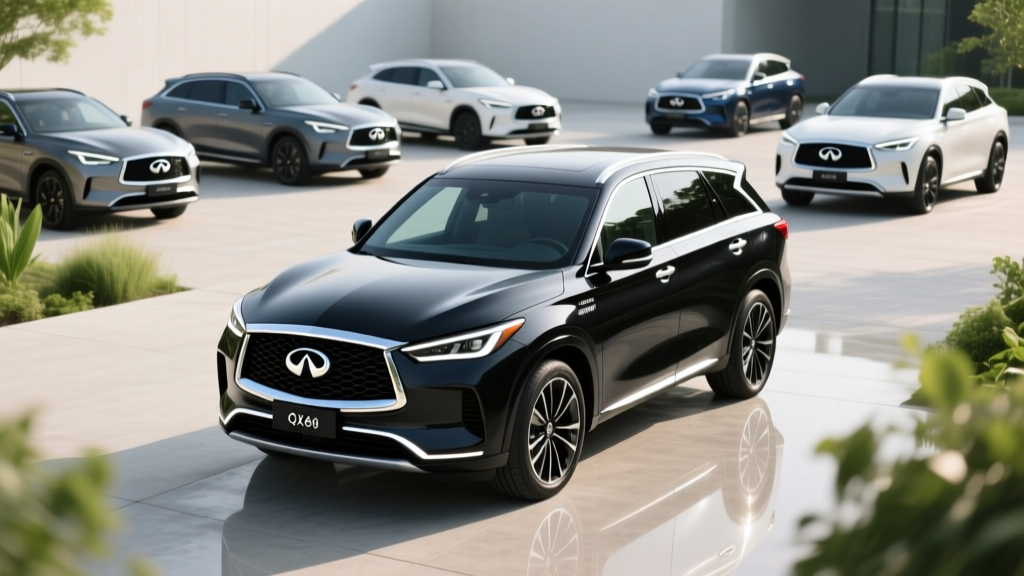
Infiniti has historically lagged in electrification, but the brand's 2026 lineup signals a meaningful shift. If you're researching Infiniti hybrid cars, the conversation centers on one flagship model: the QX60 PHEV, a plug-in hybrid three-row luxury SUV that bridges the gap between conventional gas motoring and full battery-electric driving. Infiniti's parent company Nissan has deep EV experience via the Leaf and Ariya, and that expertise now filters into the luxury division.
But before diving into specs, it's essential to understand what Infiniti currently offers—and what it doesn't. Unlike Toyota or Hyundai, Infiniti does not sell a conventional hybrid (HEV) in the U.S. market for 2026. There is no Infiniti equivalent to the RAV4 Hybrid or Tucson Hybrid that recharges solely through regenerative braking and the gasoline engine. The QX60 PHEV is Infiniti's sole electrified offering, and it requires plugging in to unlock its full efficiency potential.
HEV vs. PHEV — What's the Difference?
| Feature | Conventional Hybrid (HEV) | Plug-in Hybrid (PHEV) |
|---|---|---|
| Plug-in charging | No — self-charging via engine + regen | Yes — plug in for electric-only miles |
| Battery size | Small (~1–2 kWh) | Larger (~15–25 kWh usable) |
| Electric-only range | Less than 1 mile at low speed | 20–50+ miles at highway-capable speeds |
| Gas engine | Always available | Always available after battery depletes |
| Federal tax credit | None | Up to $7,500 under §30D (if eligible) |
| Best for | No home charging access | Home charging + short commutes |
The 2026 Infiniti QX60 PHEV: Specs, Range, and Powertrain
The QX60 PHEV pairs a 2.0-liter turbocharged four-cylinder engine with a front-mounted electric motor and a larger lithium-ion battery pack than the standard QX60's mild-hybrid system. Combined output reaches an estimated 295 horsepower and 310 lb-ft of torque, routed through a continuously variable transmission (CVT) to either front-wheel or all-wheel drive configurations.
| Specification | 2026 Infiniti QX60 PHEV (AWD) |
|---|---|
| Powertrain | 2.0L turbo I-4 + electric motor |
| Combined HP / Torque | 295 hp / 310 lb-ft |
| Battery (usable) | ~19.2 kWh, lithium-ion (NMC) |
| EPA Electric-Only Range | 34 miles (estimated) |
| Total Combined Range | ~440 miles (est.) |
| EPA MPGe (electric + gas) | 64 MPGe (est.) |
| EPA MPG (gas-only, charge-depleted) | 28 city / 27 hwy / 27 combined (est.) |
| Level 2 Charging (240V) | ~3.5 hours (0–100%) |
| DC Fast Charging | Not available |
| 0–60 mph | ~7.0 seconds (est.) |
| Starting MSRP | ~$58,500 (PURE AWD trim) |
Electric-Only Range: What to Expect
The EPA-estimated 34 miles of electric-only driving covers most daily commutes. In real-world mixed driving with moderate temperatures, expect 28–32 miles before the gas engine engages. In cold weather (below 35°F), that figure can drop to 22–26 miles due to cabin heating demands and reduced battery efficiency. Highway driving at 75+ mph also shortens electric range to roughly 24–28 miles.
Fuel Economy: EPA vs. Real-World MPG
Once the battery is depleted and the QX60 PHEV operates as a conventional hybrid, the EPA estimates 28 city / 27 highway / 27 combined MPG. These figures are competitive for a three-row luxury SUV weighing over 4,700 pounds.
| Driving Scenario | EPA Estimate | Real-World Expectation |
|---|---|---|
| City (stop-and-go) | 28 MPG | 27–30 MPG (regen helps in traffic) |
| Highway (70 mph cruise) | 27 MPG | 25–27 MPG |
| Combined mixed | 27 MPG | 25–28 MPG |
| Cold weather (below 30°F) | N/A | 22–25 MPG |
Plug-in hybrids generally perform better than their EPA city numbers in real-world urban driving because regenerative braking recovers energy during frequent stops. Highway driving is where PHEVs lose their edge relative to the EPA sticker — aerodynamic drag at 70+ mph taxes the smaller four-cylinder engine more than in a larger-displacement conventional vehicle.
The critical efficiency insight: your actual fuel consumption depends almost entirely on how often you charge. If you plug in nightly and commute under 30 miles round-trip, you may use gasoline only on road trips, achieving effective fuel economy well above 50 MPGe over a month. If you never plug in, you're carrying 400+ pounds of battery dead weight and will see 25–27 MPG — no better than a well-tuned gas-only crossover.
Charging the QX60 PHEV: Home and Public Options
The QX60 PHEV charges exclusively via AC power — there is no DC fast-charging capability, which is typical for plug-in hybrids in this class. The onboard charger accepts up to 7.2 kW on a Level 2 (240V) connection.
| Charging Level | Power | Time (0–100%) | Use Case |
|---|---|---|---|
| Level 1 (120V household) | ~1.4 kW | ~13–14 hours | Overnight top-up; not ideal for full recharge |
| Level 2 (240V home/public) | 7.2 kW (max) | ~3.5 hours | Daily home charging; workplace charging |
| DC Fast Charge | Not supported | N/A | N/A |
For most PHEV owners, a Level 2 home charger is the practical standard. A 240V outlet (NEMA 14-50) or hardwired wall unit delivers a full overnight charge in roughly 3.5 hours — more than sufficient since PHEV batteries are small and you're typically replenishing 15–18 kWh at most. Level 1 (standard 120V) works in a pinch but requires 13+ hours for a full charge, making it impractical for daily use unless your electric-only commute is very short.
The lack of DC fast charging is a non-issue for PHEV ownership. The battery is too small to benefit meaningfully from fast charging, and PHEV owners rarely rely on public infrastructure since home charging covers virtually all daily needs.
Pricing, Trims, and Tax Credit Eligibility
The 2026 QX60 PHEV is expected to start around $58,500 for the PURE AWD trim, climbing to approximately $68,000 for the fully loaded AUTOGRAPH AWD. These estimates position the QX60 PHEV against plug-in hybrid rivals like the Volvo XC90 Recharge and the Jeep Grand Cherokee 4xe.
Federal §30D Tax Credit: Does the QX60 PHEV Qualify?
Under current IRS rules (IRS §30D), new PHEVs may qualify for up to $7,500 in federal tax credits, but eligibility is complex and changes frequently. Key requirements include:
- MSRP cap: SUVs/vans must be under $80,000 — the QX60 PHEV clears this threshold on most trims
- Buyer income cap: Modified AGI must not exceed $150,000 (single), $225,000 (head of household), or $300,000 (joint)
- Battery sourcing: Critical minerals and battery components must meet escalating domestic-content percentages — verify current-year compliance on the manufacturer's site or fueleconomy.gov
- Point-of-sale transfer: Eligible buyers can apply the credit as an immediate purchase-price reduction at the dealer, rather than waiting for tax filing
- Final assembly: Vehicle must be assembled in North America
Important: Tax credit rules shift regularly as battery-sourcing requirements tighten. Always confirm eligibility with your tax professional and check the latest IRS guidance before purchasing.
Battery Warranty, Reliability, and Replacement Costs
Hybrid and PHEV battery longevity remains the number-one concern for buyers transitioning from conventional vehicles. Infiniti backs the QX60 PHEV's high-voltage battery with a warranty of 8 years / 100,000 miles (whichever comes first), which is standard across the luxury-hybrid segment. In California Air Resources Board (CARB) states, that extends to 10 years / 150,000 miles.
Battery Warranty at a Glance
Coverage: 8 years / 100,000 miles (49-state) — 10 years / 150,000 miles (CARB states including CA, NY, MA, WA, CO, and others)
Capacity threshold: Warranty typically covers battery capacity falling below 60–70% of original. Check your specific warranty booklet for the exact degradation threshold.
Out-of-warranty replacement cost: Estimated $8,000–$14,000 for a PHEV battery pack of this size, though real-world failures within the first 10–12 years remain uncommon based on Nissan/Infiniti's hybrid history.
Nissan's broader track record with lithium-ion batteries — spanning over a decade with the Leaf — suggests competent thermal management and cell durability. The QX60 PHEV's liquid-cooled battery pack should experience gradual degradation rather than sudden failure. Most PHEV owners report 5–10% capacity loss over the first five years, which translates to losing 2–3 miles of electric range — noticeable but not debilitating.
For overall vehicle reliability, Infiniti's recent J.D. Power and Consumer Reports scores have been mid-pack among luxury brands. The QX60 nameplate has seen improvement since its 2022 redesign, though the CVT transmission remains a point some owners flag for refinement rather than durability. The PHEV variant's added complexity (electric motor, power electronics, larger battery) introduces more potential failure points than the gas-only QX60, but these components are well-proven across the Nissan Alliance.
Who Should Choose the Infiniti QX60 PHEV?
Choose the QX60 PHEV If:
- You have home or workplace Level 2 charging access and a commute under 35 miles round-trip
- You want three-row SUV practicality (7-passenger seating) with reduced daily fuel consumption
- You're not ready to commit to a full EV due to road-trip frequency or charging-infrastructure gaps in your area
- You value Infiniti's luxury cabin, ProPILOT Assist driving aids, and dealership network
- You may qualify for the §30D federal tax credit, bringing the effective price closer to a gas-only luxury SUV
Consider a Full EV Instead If:
- Your daily driving is under 250 miles and you have reliable home charging — a full EV like the Infiniti QX Inspiration (when it arrives) or a Rivian R1S eliminates gasoline entirely
- You want DC fast charging for road trips at 150–350 kW speeds
- You seek lower long-term maintenance costs (no oil changes, fewer moving parts)
Stick with the Gas-Only QX60 If:
- You have no access to home or workplace charging — a PHEV you never plug in is a heavier, thirstier gas car
- You want the lowest upfront purchase price (the gas QX60 starts roughly $8,000–$10,000 lower)
- Your driving is overwhelmingly highway-heavy, where PHEV electric-range advantages diminish
How the QX60 PHEV Compares to Rivals
The luxury three-row PHEV segment is small but competitive. Here's how the QX60 PHEV stacks up against its closest alternatives:
| Specification | Infiniti QX60 PHEV | Volvo XC90 Recharge | Jeep Grand Cherokee L 4xe |
|---|---|---|---|
| Est. Electric Range | 34 mi | 32 mi | 26 mi |
| Combined HP | 295 hp | 455 hp | 375 hp |
| Battery (usable) | ~19.2 kWh | ~18.6 kWh | ~17.3 kWh |
| Gas MPG (depleted) | ~27 combined | ~27 combined | ~23 combined |
| Starting MSRP | ~$58,500 | ~$76,000 | ~$57,000 |
| Seating | 7-passenger | 6/7-passenger | 6/7-passenger |
| DC Fast Charging | No | No | No |
The Volvo XC90 Recharge offers substantially more power (455 hp) and a more premium interior, but at a $17,000+ premium. The Jeep Grand Cherokee L 4xe is the value play with solid off-road capability, though its fuel economy suffers from a heavier, less aerodynamic platform. The QX60 PHEV occupies a middle ground: more refined than the Jeep, more affordable than the Volvo, with competitive electric range.
Pros
- 34 miles of electric range covers most commutes
- Three-row, 7-passenger seating in a PHEV
- Competitive starting price in the luxury PHEV segment
- No range anxiety — gas engine for road trips
- ProPILOT Assist ADAS included on most trims
- Strong 8-year / 100k-mile battery warranty
Cons
- No DC fast-charging capability
- CVT can feel unrefined under hard acceleration
- Requires home charging access to realize efficiency gains
- Fewer electrified options across the Infiniti lineup
- Mid-pack reliability ratings for the brand
- Tax credit eligibility uncertain due to sourcing rules
Frequently Asked Questions
How many MPG does the Infiniti QX60 PHEV get?
Once the battery is depleted, the QX60 PHEV delivers an estimated 28 city / 27 highway / 27 combined MPG. When factoring in electric-only driving, the combined rating reaches approximately 64 MPGe. Your real-world results depend heavily on charging frequency — plug in daily and your gasoline consumption drops dramatically.
How far can the QX60 PHEV go on electric power alone?
The EPA-estimated electric-only range is 34 miles. In real-world conditions, expect 28–32 miles in moderate temperatures and 22–26 miles in cold weather. This covers the average American one-way commute of roughly 16 miles with margin to spare.
Does Infiniti make any conventional (non-plug-in) hybrids?
As of 2026, Infiniti does not offer a conventional hybrid (HEV) in the U.S. market. The QX60 PHEV is the brand's only electrified model. If you want a self-charging luxury hybrid without plugging in, you'll need to look at competitors like the Lexus TX 500h or BMW X5 xDrive50e (which is actually a PHEV, but has a longer electric range that reduces plug-in dependency).
Is the Infiniti QX60 PHEV reliable?
Infiniti's reliability ratings are mid-tier among luxury brands. The PHEV powertrain adds complexity over the gas-only QX60, but Nissan's extensive experience with lithium-ion batteries provides confidence. The 8-year / 100,000-mile hybrid battery warranty protects against premature degradation. Long-term data specific to the QX60 PHEV is still accumulating.
What does a PHEV battery replacement cost?
Out-of-warranty replacement for a PHEV battery pack of this size typically runs $8,000–$14,000 including parts and labor. However, widespread PHEV battery failures within the first decade are uncommon. Most owners experience gradual capacity loss (5–10% over 5 years) rather than catastrophic failure.
Does the QX60 PHEV qualify for a federal tax credit?
It may qualify for up to $7,500 under IRS §30D, but eligibility depends on your income, the vehicle's MSRP, battery component sourcing, and final assembly location. The QX60 PHEV's MSRP is under the $80,000 SUV cap, and it is assembled in North America. However, critical-mineral and battery-component sourcing requirements tighten annually — verify current-year eligibility on fueleconomy.gov or consult a tax professional before purchasing.
Hybrid vs. PHEV vs. EV — which is right for me?
A conventional hybrid (HEV) is best if you have no home charging access and want better MPG without changing habits. A PHEV suits drivers with home charging and short commutes who also take regular road trips. A full EV (BEV) is ideal if you have reliable charging, drive under 250 miles daily, and want the lowest operating costs and zero tailpipe emissions. The QX60 PHEV is a strong middle-ground choice for three-row SUV buyers not ready to go fully electric.
Can I charge the QX60 PHEV at a public DC fast charger?
No. The QX60 PHEV supports only AC charging — Level 1 (120V) and Level 2 (240V). It cannot use DC fast-charging stations like Electrify America or Tesla Superchargers. This is standard for PHEVs; the battery is too small to benefit from DC fast charging, and home Level 2 charging covers all daily needs.