The 2026 Volkswagen Tiguan eHybrid: VW's Plug-In Hybrid SUV Play
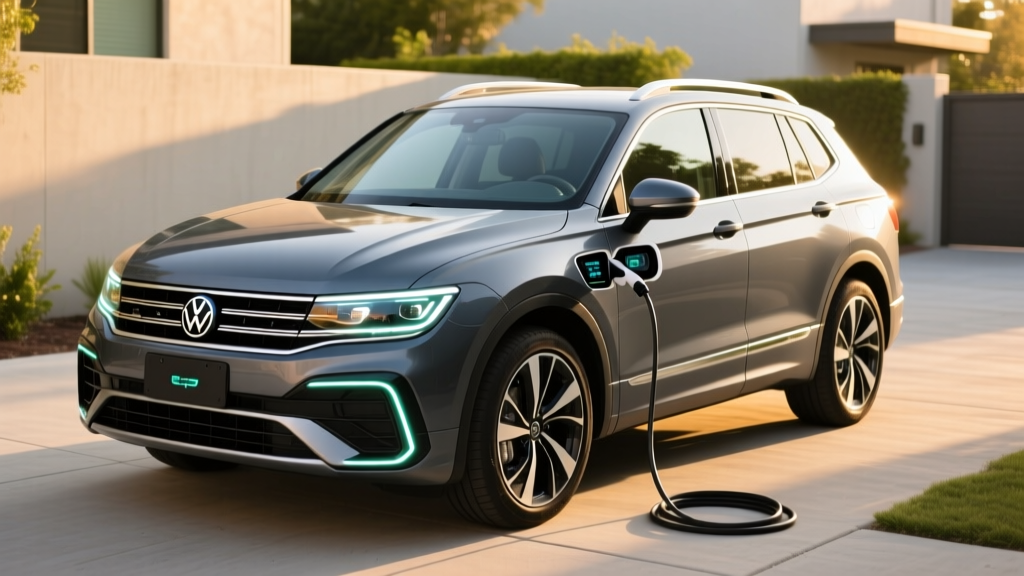
Volkswagen's commitment to electrification extends beyond its ID. family of full electric vehicles. For buyers who want electric commuting without range anxiety on road trips, the 2026 Tiguan eHybrid represents the brand's core VW plug in hybrid SUV offering in the US market. It pairs a turbocharged gasoline engine with a meaningful electric motor and a battery large enough to cover most daily commutes on electrons alone.
This guide breaks down the real numbers — EPA-estimated range, combined MPGe, actual highway efficiency, charging logistics, and whether the Tiguan eHybrid qualifies for federal tax incentives under current IRS §30D rules. We'll also cover the conventional hybrid Tiguan variant so you understand exactly what you're getting.
Conventional Hybrid (HEV) vs. Plug-In Hybrid (PHEV): What's the Difference?
Conventional Hybrid (HEV): Uses a small battery recharged by regenerative braking and the engine. You never plug it in. Electric-only driving is limited to brief low-speed moments. Expect 35-38 MPG combined in a midsize SUV.
Plug-In Hybrid (PHEV): Carries a larger battery (typically 13-25 kWh) that you charge from a wall outlet or public charger. Delivers 25-40 miles of true electric-only driving before the gas engine seamlessly engages. After the battery depletes, it operates like a conventional hybrid.
Range, Efficiency, and Real-World MPG
The 2026 Tiguan eHybrid carries a 13.1 kWh usable lithium-ion battery (NMC chemistry) paired with a 1.5-liter turbocharged four-cylinder engine and an integrated electric motor. Here are the official EPA figures alongside what you should expect in practice.
| Metric | EPA Estimate | Real-World Expectation |
|---|---|---|
| Electric-Only Range | 32 miles | 26–30 mi (highway/cold weather) |
| Combined MPGe (EV mode) | 85 MPGe | 75–82 MPGe |
| Gas-Only Combined MPG | 35 MPG | 32–34 MPG (mixed), 37+ city |
| City MPG (hybrid mode) | 38 MPG | 36–40 MPG (regen-heavy routes) |
| Highway MPG (hybrid mode) | 33 MPG | 30–33 MPG (70+ mph cruising) |
| Total Combined Range | ~440 miles | ~380–420 miles |
| Battery Capacity (usable) | 13.1 kWh | — |
Powertrain, Charging, and Battery Specs
The Tiguan eHybrid's powertrain blends a 1.5L turbocharged four-cylinder (producing approximately 130 hp on its own) with a 100 kW (134 hp) electric motor integrated into the transmission housing. Combined system output reaches 245 horsepower and 295 lb-ft of torque, routed through a six-speed dual-clutch automatic to either front-wheel drive or VW's 4Motion all-wheel-drive system.
| Specification | Value |
|---|---|
| Engine | 1.5L Turbocharged I4 |
| Electric Motor | 100 kW (134 hp) |
| Combined Output | 245 hp / 295 lb-ft |
| Transmission | 6-speed DSG automatic |
| Battery (Usable) | 13.1 kWh, NMC chemistry |
| Level 1 Charging (120V) | ~1.4 kW — full charge in ~9 hours |
| Level 2 Charging (240V) | ~3.6 kW — full charge in ~3.5 hours |
| DC Fast Charging | Not available |
| Charge Port | J1772 (Level 1 & Level 2) |
| 0–60 mph | ~7.2 seconds |
| Towing Capacity | 1,500 lbs (estimated) |
Charging Realities for PHEV Owners
The Tiguan eHybrid does not support DC fast charging — this is standard for most plug-in hybrids in this class. The 3.6 kW onboard AC charger means a full 0–100% replenishment takes about 3.5 hours on a 240V Level 2 circuit. For most owners, overnight charging on a standard 120V household outlet (Level 1) is sufficient: plugging in when you get home at 6 PM delivers a full battery by 3 AM.
A dedicated Level 2 home charger (240V, 16A circuit) is ideal if you want to top up mid-day or if multiple drivers share the vehicle. Installation typically runs $500–$1,500 depending on your electrical panel's capacity and the distance from panel to charger location. Consult a licensed electrician for a site-specific quote.
Pricing, Trims, and Tax Credit Eligibility
The 2026 Tiguan eHybrid starts at approximately $39,490 MSRP (SE trim, FWD) and climbs to around $44,990 for the SEL R-Line with 4Motion. Pricing excludes the $1,295 destination charge.
Federal Tax Credit Under IRS §30D
Under current 2026 IRS rules, the Tiguan eHybrid may qualify for up to $7,500 in federal tax credits — but eligibility is not guaranteed and depends on several factors:
- MSRP Cap: SUVs must have an MSRP at or below $80,000 (Tiguan qualifies)
- Buyer Income Cap: AGI must not exceed $150,000 (single), $225,000 (head of household), or $300,000 (joint)
- Battery Sourcing: Critical minerals and battery components must meet escalating domestic-content thresholds — VW's supply chain compliance varies by build date and must be verified on the IRS qualified vehicle list at irs.gov
- Point-of-Sale Transfer: As of 2024+, eligible buyers can transfer the credit to the dealer at purchase, reducing the out-of-pocket price directly
- Tax Liability: The credit is non-refundable — you must have sufficient federal tax liability to claim it (or use the POS transfer option)
Because battery sourcing rules tighten annually, always verify the specific VIN's eligibility with your dealer and a tax professional before purchase. The IRS updates its qualified clean vehicle list regularly.
State and Local Incentives
Beyond federal credits, many states offer additional PHEV rebates. California's CVRP program, Colorado's state tax credit, and various utility-company rebates can stack on top of federal incentives. These vary by jurisdiction and funding availability — check your state energy office or utility provider for current programs.
Reliability, Battery Warranty, and Long-Term Costs
Volkswagen backs the Tiguan eHybrid's high-voltage battery and powertrain with competitive warranty coverage:
- High-Voltage Battery: 8 years / 100,000 miles (capacity retention threshold: 70% of original capacity)
- Powertrain: 4 years / 50,000 miles (engine, transmission, motor)
- Bumper-to-Bumper: 4 years / 50,000 miles
- Scheduled Maintenance: 2 years / 20,000 miles included
How Long Will the PHEV Battery Last?
PHEV batteries experience less stress than full-EV batteries because they operate in a narrower state-of-charge window — VW's battery management system maintains a buffer at both the top and bottom to prevent degradation-accelerating extremes. Real-world data from earlier VW PHEV models (Golf GTE, Passat GTE in Europe) suggests 10–15% capacity loss over 8–10 years of typical use.
If the battery does fall below the 70% capacity threshold within the warranty period, VW will repair or replace it at no cost. Out-of-warranty replacement for a 13.1 kWh PHEV battery currently runs $4,000–$7,000 including labor, though prices are expected to decline as battery costs continue their downward trend.
Reliability Track Record
VW's recent reliability ratings have improved, though the brand still trails Toyota and Honda in long-term dependability surveys from J.D. Power and Consumer Reports. The DSG transmission in earlier VW PHEVs drew some complaints, but the current-generation unit has proven more robust. The hybrid system itself adds complexity compared to a conventional gas Tiguan — two power sources, additional cooling circuits, and high-voltage components mean more potential failure points, though the warranty mitigates early-life risk.
Driving Impressions and Daily Ownership
The Tiguan eHybrid's 245 combined horsepower makes it noticeably quicker than the conventional gas-only Tiguan (184 hp). The electric motor delivers instant torque from a standstill, so city driving and highway merging feel confident. In EV mode, the cabin is near-silent — the gas engine only fires up under hard acceleration or when the battery depletes.
The transition between electric and hybrid modes is seamless in most conditions. VW's predictive hybrid management uses navigation data (when a route is set) to intelligently allocate battery charge — saving electric miles for city segments and using the engine on open highway stretches where EV efficiency drops.
One trade-off: the PHEV battery sits beneath the rear seat area, which eliminates the third-row option available on the conventional Tiguan. You get five seats and approximately 33 cubic feet of cargo space behind the rear row — adequate for most families, but if you need three rows, you'll need to look at the gas Tiguan or a larger PHEV like the Kia Sorento Plug-In Hybrid.
Pros
- 32-mile EPA electric range covers most commutes
- 245 hp combined — quickest Tiguan variant
- No range anxiety — 440+ mile total range
- Charges on standard 120V outlet overnight
- Eligible for up to $7,500 federal credit (verify VIN)
- Near-silent EV mode for city driving
Cons
- No DC fast charging capability
- No third-row seating (PHEV battery packaging)
- $39,490+ starting price is premium for the segment
- Real-world EV range drops in cold weather (~25 mi)
- 4-year/50k powertrain warranty trails Hyundai/Kia (10yr/100k)
- DSG transmission can feel hesitant at low speeds
Who Should Buy the Tiguan eHybrid vs. a Full EV or Gas SUV?
Choose the Tiguan eHybrid (PHEV) If:
- Your daily commute is under 35 miles round-trip and you can charge at home
- You take road trips 4+ times per year and don't want to plan around charging stops
- You lack reliable public DC fast charging infrastructure near your home
- You want meaningful fuel savings without a full lifestyle change
- You need an SUV but don't require a third row
Choose a Full EV (like the VW ID.4) If:
- You have home Level 2 charging and your daily driving is under 200 miles
- You want zero tailpipe emissions and minimal maintenance (no oil changes, fewer moving parts)
- You drive 15,000+ miles annually — EV fuel savings compound significantly
- DC fast chargers are readily available in your area for road trips
Choose a Conventional Gas or HEV SUV If:
- You cannot charge at home (apartment, street parking, no garage)
- Your budget is under $35,000
- You drive fewer than 8,000 miles per year — fuel savings won't offset the PHEV premium
- You need three rows of seating
How the Tiguan eHyybrid Compares to Rival PHEV SUVs
| Spec | VW Tiguan eHybrid | Toyota RAV4 Prime | Hyundai Tucson PHEV |
|---|---|---|---|
| EPA EV Range | 32 mi | 42 mi | 33 mi |
| Combined MPG (hybrid) | 35 MPG | 38 MPG | 35 MPG |
| Combined HP | 245 hp | 302 hp | 261 hp |
| Battery (usable) | 13.1 kWh | 14.9 kWh | 13.8 kWh |
| AWD Standard? | Optional | Yes | Yes |
| Starting MSRP | ~$39,490 | ~$44,500 | ~$38,725 |
| Powertrain Warranty | 4 yr / 50k mi | 5 yr / 60k mi | 10 yr / 100k mi |
The RAV4 Prime leads on electric range and power but commands a higher price and is frequently subject to limited dealer allocation. The Tucson PHEV offers the strongest warranty and standard AWD. The Tiguan eHybrid occupies a middle ground — European driving dynamics, competitive efficiency, and VW's interior quality — but its lack of standard AWD and shorter warranty are worth weighing.
Frequently Asked Questions
How many MPG does the VW Tiguan eHybrid get?
The EPA rates the 2026 Tiguan eHybrid at 35 MPG combined in hybrid mode (38 city / 33 highway). In real-world driving, city-heavy routes with regenerative braking can push toward 37–40 MPG, while sustained highway cruising at 75+ mph may drop to 30–32 MPG. Once the battery depletes, it functions like a conventional hybrid.
How far can the Tiguan eHybrid go on electric only?
The EPA estimates 32 miles of electric-only range. In real-world conditions — cold weather, highway speeds, hilly terrain — expect 25–30 miles. For a typical suburban commute under 30 miles round-trip with nightly home charging, you may go weeks without burning gasoline.
Does the VW plug in hybrid SUV qualify for a tax credit?
Under current 2026 IRS §30D rules, the Tiguan eHybrid may qualify for up to $7,500 in federal tax credits, subject to buyer income caps, MSRP limits, and battery sourcing requirements. Eligibility varies by VIN and build date. Always verify on the IRS qualified vehicles list and consult a tax professional. The credit can be transferred to the dealer at point of sale to reduce your purchase price directly.
Is the Tiguan eHybrid reliable and what does battery replacement cost?
VW's hybrid system has proven reasonably reliable in European-market predecessors. The high-voltage battery is warrantied for 8 years / 100,000 miles against degradation below 70% capacity. Out-of-warranty replacement runs approximately $4,000–$7,000. The added complexity of a dual powertrain means slightly higher long-term maintenance risk compared to a conventional gas Tiguan, though the warranty covers the expensive components during the critical early years.
Can I charge the Tiguan eHybrid at a DC fast charger?
No. The Tiguan eHybrid only supports AC charging — Level 1 (120V, ~9 hours for a full charge) and Level 2 (240V, ~3.5 hours). It uses a standard J1772 connector. DC fast charging is not available on this or most PHEVs in its class, as the relatively small battery doesn't justify the cost and weight of DC hardware.
Do I need to plug in a conventional hybrid?
No. A conventional hybrid (HEV) like the standard Toyota RAV4 Hybrid recharges its small battery entirely through regenerative braking and the gasoline engine. You simply fuel up as normal. Only plug-in hybrids (PHEVs) like the Tiguan eHybrid require — and benefit from — being plugged in to access their full electric range.
Hybrid vs. PHEV vs. EV — which fits my lifestyle?
HEV (conventional hybrid): Best if you can't charge at home and want better MPG with zero behavior change. PHEV (plug-in hybrid): Best if you can charge at home, commute under 35 miles, and take regular road trips. BEV (full electric): Best if you have home charging, drive under 250 miles daily, and want the lowest operating cost and zero tailpipe emissions. The Tiguan eHybrid is a strong PHEV pick for the middle group.