Volkswagen's approach to electrification in the U.S. market has been decidedly battery-electric — the ID.4 and ID.7 have carried the brand's zero-emission banner. But for buyers who aren't ready to commit to a full EV, the question remains: does VW offer a hybrid? The answer for 2026 is nuanced. Volkswagen's global hybrid lineup includes compelling plug-in hybrid (PHEV) models like the Touareg PHEV and the Golf GTE, but U.S. availability is limited. This guide breaks down every VW hybrid option relevant to American buyers in 2026, with exact MPG figures, electric-only range, battery specs, and tax credit eligibility.
Volkswagen's Hybrid Strategy in 2026: What's Available Stateside
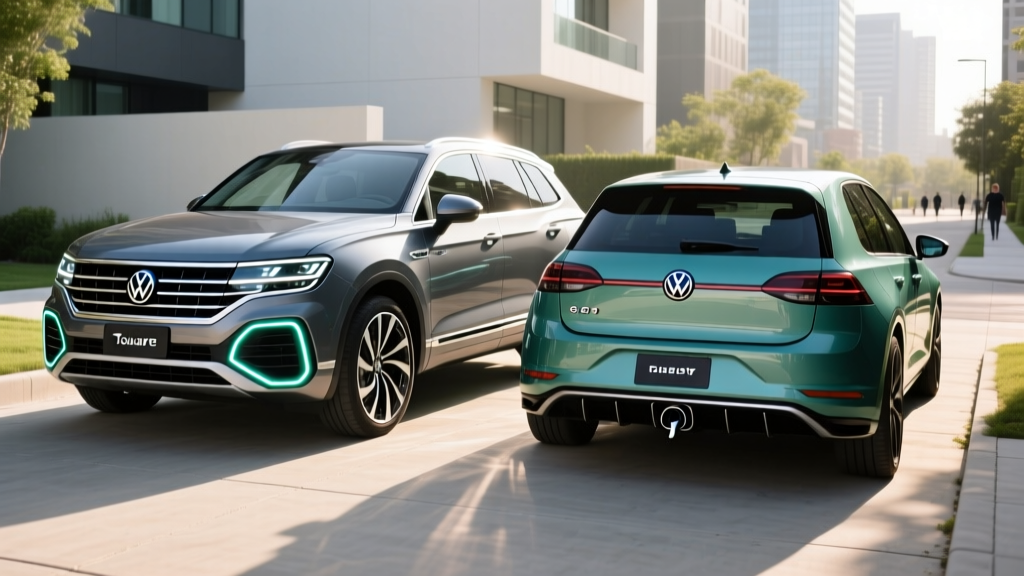
Volkswagen AG sells several hybrid vehicles globally, but the U.S. market gets a narrower selection. As of the 2026 model year, the primary VW hybrid nameplate available (or importable via specialty channels) for American buyers centers on the Touareg PHEV (badged as the Touareg eHybrid in some markets). The Golf GTE, a sporty plug-in hybrid hatchback, remains a European-market exclusive — though it influences buyer expectations and frequently appears in cross-shopping research.
Notably, Volkswagen discontinued the conventional hybrid (HEV) version of the Jetta Hybrid years ago and has not reintroduced a non-plug-in hybrid for the U.S. market. If you're searching for a "VW hybrid" that never needs to be plugged in, you won't find one in the current American lineup. Every current VW hybrid uses plug-in architecture.
HEV vs. PHEV: The Critical Difference
Conventional Hybrid (HEV): Uses a small battery (typically 1–2 kWh) recharged solely by regenerative braking and the gas engine. You never plug it in. Examples: Toyota Prius, Honda CR-V Hybrid. VW does not currently sell an HEV in the U.S.
Plug-in Hybrid (PHEV): Carries a larger battery (13–25+ kWh usable) that you charge via a wall outlet, Level 2 charger, or occasionally DC fast charging. It delivers meaningful electric-only range (20–50+ miles) before the gas engine engages. Examples: Toyota RAV4 Prime, Jeep Wrangler 4xe, and the VW Touareg PHEV.
2026 VW Touareg PHEV: Full Specs, MPG, and Electric Range
The Touareg PHEV pairs Volkswagen's turbocharged 3.0-liter V6 with an electric motor integrated into the transmission, delivering robust combined output and legitimate electric-only driving for daily commutes. Here's the complete spec breakdown:
| Specification | 2026 VW Touareg PHEV |
|---|---|
| Powertrain | 3.0L Turbo V6 + electric motor (8-speed auto, AWD) |
| Combined Horsepower | ~375 hp / 516 lb-ft torque |
| Battery Capacity (Usable) | ~17.9 kWh (NMC lithium-ion) |
| EPA Electric-Only Range | ~32 miles (estimated) |
| Total Combined Range | ~480 miles (electric + 19.4-gal tank) |
| EPA MPGe (Electric Mode) | ~58 MPGe combined |
| EPA MPG (Gas Only, Charge-Depleted) | ~22 city / 25 hwy / 23 combined |
| Level 2 Charging (AC) | 7.2 kW onboard charger; 0–100% in ~2.5 hours |
| DC Fast Charging | Not supported (CCS port, AC only) |
| 0–60 mph | ~5.8 seconds |
| Base MSRP (U.S. est.) | ~$68,000–$72,000 (if officially sold) |
Charging the Touareg PHEV: What You Need at Home
Like most PHEVs, the Touareg does not support DC fast charging. This is standard for the segment — PHEV batteries are small enough that Level 2 AC charging replenishes them quickly, making DC infrastructure unnecessary.
| Charging Method | Power (kW) | 0–100% Time | Notes |
|---|---|---|---|
| Level 1 (120V household) | ~1.4 kW | ~13 hours | Overnight top-up; slow for daily full recharge |
| Level 2 (240V, 32A) | 7.2 kW | ~2.5 hours | Recommended home setup; full charge while you work or sleep |
| DC Fast Charge | N/A | N/A | Not supported on Touareg PHEV |
For daily PHEV ownership, a Level 2 home charger is strongly recommended. A 240V/32A circuit with a quality EVSE (ChargePoint Home Flex, Emporia Level 2, or similar) will fully replenish the Touareg's ~18 kWh battery in roughly 2.5 hours. Installation costs for a Level 2 circuit typically range from $500 to $1,800 depending on panel proximity and local permitting — factor this into your purchase budget.
The VW Golf GTE: Europe's Hot Hatch PHEV (Not U.S.-Bound)
The Golf GTE deserves mention because it dominates "VW hybrid" search results globally. The 2026 Golf GTE sold in Europe features:
- Powertrain: 1.5L turbo 4-cylinder + electric motor, ~245 hp combined
- Battery: ~19.7 kWh usable (NMC), up from earlier generations
- WLTP Electric Range: ~62 miles (WLTP; expect ~50 miles EPA-equivalent)
- AC Charging: 7.2 kW Level 2; no DC fast charge
- MPG (charge-depleted): ~40 MPG combined (EU cycle; U.S. equivalent likely ~34–36 MPG)
Volkswagen has not confirmed U.S. availability for the Golf GTE as of 2026. American buyers seeking a similar compact PHEV should cross-shop the Toyota Prius Prime (44 miles electric, 127 MPGe) or the upcoming Hyundai Elantra PHEV.
Federal Tax Credit Eligibility for VW PHEVs
Under the IRS §30D Clean Vehicle Credit, plug-in hybrids with a battery capacity of at least 7 kWh can qualify for up to $7,500 — but several restrictions apply that heavily impact VW's PHEV lineup:
- Battery sourcing & critical minerals: The vehicle's battery components must be manufactured or assembled in North America, and critical minerals must meet phased percentage thresholds. As of 2026, these thresholds are stringent, and VW's PHEV battery supply chain (largely sourced from European and Asian suppliers) may not meet full requirements.
- MSRP cap: SUVs/vans/pickups must have an MSRP at or below $80,000; sedans/hatchbacks at or below $55,000. The Touareg PHEV at ~$68,000–$72,000 falls under the SUV cap.
- Buyer income limits: Modified AGI must not exceed $300,000 (joint), $225,000 (head of household), or $150,000 (single).
- Point-of-sale transfer: Eligible buyers can transfer the credit to the dealer at purchase, reducing the out-of-pocket price immediately rather than waiting for a tax refund.
- Final assembly: The vehicle must undergo final assembly in North America. The Touareg is assembled in Bratislava, Slovakia — this alone likely disqualifies it from the §30D credit.
Battery Longevity, Warranty, and Replacement Costs
VW PHEV Battery Warranty & Lifespan
Warranty Coverage: Volkswagen covers PHEV high-voltage batteries for 8 years or 100,000 miles (whichever comes first), with a capacity retention threshold of approximately 70%. If the battery degrades below that threshold within the warranty period, VW will repair or replace it at no cost.
Expected Lifespan: NMC-based PHEV batteries in the 18–20 kWh range typically retain 85–90% capacity after 5 years of daily cycling. Because PHEV batteries are smaller and cycle more frequently than full EV batteries, thermal management is critical — the Touareg PHEV uses active liquid cooling to mitigate degradation.
Out-of-Warranty Replacement Cost: Based on comparable PHEV battery replacements (BMW X5 xDrive45e, Audi Q5 TFSI e), expect a Touareg PHEV battery replacement to cost between $8,000 and $14,000 including parts and labor if needed beyond the warranty window. This is a real long-term ownership cost to budget for if you plan to keep the vehicle past 100,000 miles.
Who Should Buy a VW Hybrid — And Who Shouldn't
The VW PHEV proposition is specific. Here's a practical decision framework:
✅ Choose a VW PHEV If:
- Your daily commute is under 30 miles and you can charge at home nightly
- You regularly take road trips exceeding 300 miles and don't want to plan around DC chargers
- You want premium SUV refinement (Touareg) with partial electric driving
- You live in a region with extreme cold where full EV range loss is a concern
- You need towing capability (Touareg: ~7,700 lbs) that most EVs can't match efficiently
❌ Look Elsewhere If:
- You want the full $7,500 federal tax credit — the Touareg PHEV likely won't qualify
- You don't have access to home or workplace Level 2 charging (a PHEV you never plug in is just a heavy gas car)
- You want the lowest possible fuel cost — a full EV at $0.04/mile beats a PHEV in gas mode at ~$0.14/mile
- You prefer a compact or midsize PHEV — the Touareg is a large, premium SUV with a premium price
- U.S. dealer support and parts availability are a priority — limited stateside Touareg PHEV presence means longer service waits
How VW PHEVs Compare to Key Rivals
| Model | EV Range | Gas MPG | Combined HP | MSRP | §30D Credit |
|---|---|---|---|---|---|
| VW Touareg PHEV | ~32 mi | 23 comb. | 375 hp | ~$68K | Unlikely |
| Toyota RAV4 Prime | 42 mi | 38 comb. | 302 hp | ~$44K | Likely partial |
| Jeep Wrangler 4xe | 21 mi | 20 comb. | 375 hp | ~$52K | Eligible |
| BMW X5 xDrive50e | 38 mi | 24 comb. | 483 hp | ~$74K | Unlikely |
| Volvo XC90 Recharge | 32 mi | 27 comb. | 455 hp | ~$72K | Unlikely |
The RAV4 Prime leads on value, electric range, and likely tax-credit eligibility thanks to Toyota's U.S. manufacturing footprint. The Touareg PHEV competes more directly with the BMW X5 and Volvo XC90 Recharge — premium European SUVs that also largely fail the §30D assembly requirement. If tax credit eligibility is a top priority, the RAV4 Prime or Jeep Wrangler 4xe offer stronger financial cases.
Frequently Asked Questions
How many MPG does the VW Touareg PHEV get?
When operating in charge-depleted (gas-only) mode, the 2026 Touareg PHEV returns an EPA-estimated 22 city / 25 highway / 23 combined MPG. In electric mode, it achieves approximately 58 MPGe. Real-world city driving with regenerative braking can push gas-mode figures to 24–25 MPG. On sustained highway trips at 75+ mph, expect closer to 21–22 MPG.
How far can the VW Touareg PHEV go on electric only?
The EPA-estimated electric-only range is approximately 32 miles. In real-world conditions — highway speeds, cold weather, or hilly terrain — expect 20–28 miles before the gas engine engages. This covers most daily commutes if you charge at home overnight.
Does the VW Touareg PHEV qualify for the federal tax credit?
Almost certainly not. The §30D credit requires final assembly in North America, and the Touareg is built in Slovakia. Additionally, battery-component and critical-mineral sourcing requirements further complicate eligibility. Verify with the DOE's VIN lookup tool and consult a tax professional. Some state-level incentives may still apply regardless of assembly location.
Is the VW PHEV battery reliable, and what does replacement cost?
VW covers the high-voltage battery for 8 years / 100,000 miles with a ~70% capacity retention guarantee. NMC batteries with active liquid cooling (as used in the Touareg) generally degrade 1.5–2.5% per year under normal use. Out-of-warranty replacement is estimated at $8,000–$14,000. For context, most PHEV batteries outlast their warranty periods with 80–88% capacity remaining at the 100,000-mile mark.
Should I buy a VW PHEV or a full electric vehicle?
Choose the PHEV if you need 400+ mile total range for frequent road trips, lack reliable access to DC fast charging infrastructure, or need heavy towing capability. Choose a full EV (like the VW ID.4) if you have home charging, drive under 250 miles daily, want the lowest per-mile fuel cost (~$0.04/mi vs. ~$0.14/mi gas), and want to maximize federal tax credit eligibility — the U.S.-assembled ID.4 qualifies for the full $7,500 credit.
Can I charge the Touareg PHEV at a DC fast charger?
No. The Touareg PHEV supports only AC charging — Level 1 (120V) and Level 2 (240V). DC fast charging is not available on this or most PHEVs. The relatively small ~18 kWh battery charges fully in about 2.5 hours on a Level 2 home charger, which is sufficient for daily top-ups.