Quick Verdict: Two Toyota-Powered Hybrids, Different Personalities
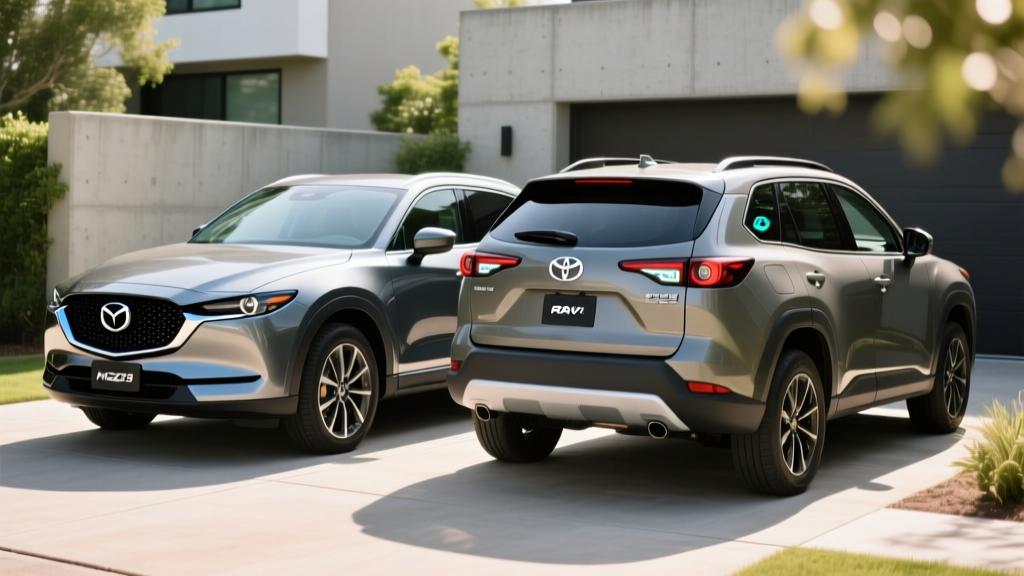
The 2026 Mazda CX-50 Hybrid and Toyota RAV4 Hybrid share the same 2.5-liter four-cylinder hybrid powertrain — Mazda licensed Toyota's system — but they deliver meaningfully different driving experiences, packaging, and value propositions. The RAV4 Hybrid remains the segment benchmark with 41 MPG combined and a starting MSRP around $33,575, while the CX-50 Hybrid trades a few MPG for premium materials, sharper steering, and a more commanding road presence at roughly $35,390 to start.
If you're cross-shopping the Mazda CX-50 Hybrid vs RAV4 Hybrid, the decision hinges on whether you prioritize maximum fuel efficiency and cargo space (RAV4) or driving engagement and interior refinement (CX-50). Both are conventional hybrids (HEVs) — neither requires plugging in.
| Specification | Mazda CX-50 Hybrid | Toyota RAV4 Hybrid |
|---|---|---|
| Powertrain | 2.5L I4 + 2 electric motors | 2.5L I4 + 2 electric motors |
| Combined Horsepower | 219 hp | 219 hp |
| Drivetrain | AWD (standard) | AWD (standard, electronic rear motor) |
| Transmission | eCVT | eCVT |
| EPA MPG (City / Hwy / Combined) | 38 / 35 / 38 | 41 / 38 / 41 |
| Fuel Tank (gallons) | 14.5 | 14.5 |
| Total Range (miles, est.) | ~551 | ~595 |
| 0-60 mph | ~7.3 sec | ~7.4 sec |
| Cargo Volume (behind 2nd row) | 31.4 cu ft | 37.6 cu ft |
| Starting MSRP | $35,390 | $33,575 |
| Hybrid Battery Warranty | 8 yr / 100,000 mi | 10 yr / 150,000 mi |
HEV vs PHEV: Neither of These Needs a Plug
Both the CX-50 Hybrid and RAV4 Hybrid are conventional hybrids (HEVs), not plug-in hybrids (PHEVs). This is a critical distinction that still trips up many shoppers:
Conventional Hybrid (HEV)
- You never plug it in — the battery charges via regenerative braking and the gas engine
- Small battery (~1.6 kWh usable) assists the engine during acceleration and enables low-speed electric-only crawling
- Fuel economy gains come from engine optimization, regen braking, and electric assist — not grid electricity
- Examples: CX-50 Hybrid, RAV4 Hybrid, Honda CR-V Hybrid
Plug-In Hybrid (PHEV)
- You plug it in to charge a larger battery (~14-18 kWh) for 25-42 miles of electric-only driving
- Requires access to a 120V or 240V outlet for meaningful benefit
- Once the electric range depletes, it operates as a conventional hybrid
- Examples: RAV4 Prime (42 mi EV range), CX-50 PHEV (not yet offered in the US as of 2026)
If you want plug-in capability in this segment, the Toyota RAV4 Prime (PHEV) offers 42 miles of electric-only range, a 18.1 kWh battery, and 302 combined horsepower — but starts around $44,000 and has limited availability. Mazda does not currently sell a CX-50 PHEV in the United States.
Fuel Economy: EPA Numbers and Real-World MPG
| Model | City MPG | Highway MPG | Combined MPG |
|---|---|---|---|
| Mazda CX-50 Hybrid AWD | 38 | 35 | 38 |
| Toyota RAV4 Hybrid AWD | 41 | 38 | 41 |
Source: fueleconomy.gov (EPA estimates for AWD hybrid trims).
Real-World MPG: What to Actually Expect
Hybrids often exceed their EPA city estimates in stop-and-go traffic because regenerative braking recaptures energy that gas-only vehicles waste as heat. In real-world driving:
- RAV4 Hybrid: Owners consistently report 40-44 MPG in mixed suburban driving and 38-42 MPG in city-heavy commutes. Highway-only driving at 75+ mph can dip to 34-36 MPG, as the electric motor contributes less at sustained high speeds.
- CX-50 Hybrid: Expect 36-40 MPG in mixed conditions. The CX-50's slightly heavier curb weight (~3,900 lbs vs ~3,800 lbs for the RAV4) and wider tires account for the 3 MPG combined deficit.
Cold-weather impact: Both vehicles will see a 5-10% MPG reduction in sub-freezing temperatures. The engine runs more frequently to heat the cabin and warm the hybrid battery, reducing electric-motor assist. This is normal for all hybrids and far less severe than the 20-30% range loss battery-electric vehicles experience in cold weather.
Powertrain Deep Dive: Same Toyota Bones, Different Mazda Tune
Both SUVs use Toyota's fourth-generation hybrid system centered on a 2.5-liter Atkinson-cycle four-cylinder engine paired with two electric motor-generators through an electronically controlled continuously variable transmission (eCVT). Combined output is 219 horsepower in both applications.
The eCVT is not a traditional belt-and-cone CVT — it uses a planetary gearset to seamlessly blend engine and motor power. The result is smooth, linear acceleration without the rubber-band drone associated with older CVT designs.
How Mazda Differentiates the Drive
Mazda's engineers recalibrated the throttle mapping, steering weight, and suspension tuning. The CX-50 Hybrid feels more responsive in initial tip-in, with firmer steering and a slightly stiffer ride. It's a subtle but noticeable difference on winding back roads — the Mazda encourages you to drive it, while the Toyota prioritizes serene efficiency.
The AWD systems differ slightly: Toyota uses a dedicated rear electric motor (eAWD) that engages independently of the front axle, providing up to 80% rear torque bias when needed. Mazda uses the same eAWD architecture but tunes it for more rear-biased feel during spirited driving.
Pricing, Trims, and Tax Credit Eligibility
2026 Pricing Breakdown
- Mazda CX-50 Hybrid: Starts at ~$35,390 (Preferred trim). Top Premium Plus trim reaches ~$42,000.
- Toyota RAV4 Hybrid: Starts at ~$33,575 (LE trim). Well-equipped XLE sits around $36,000. Limited trim tops out near $41,000.
The RAV4 Hybrid undercuts the CX-50 Hybrid by roughly $1,800 at base level, though trim-for-trim comparisons narrow the gap when you match feature content.
Federal Tax Credit: What Applies
§30D Federal Tax Credit Status: Neither the CX-50 Hybrid nor the RAV4 Hybrid qualifies for the $7,500 federal EV tax credit under IRS §30D rules. This credit applies only to battery-electric vehicles (BEVs) and plug-in hybrids (PHEVs) with sufficient battery capacity. Conventional hybrids (HEVs) like these are not eligible.
Some states offer their own hybrid incentives — check your state's energy office or department of revenue for current programs. These vary widely and change frequently.
If you want federal tax credit eligibility in this segment, you'd need to look at the RAV4 Prime (PHEV), which may qualify for up to $7,500 depending on your income, the vehicle's MSRP (must be under $80,000 for SUVs), battery sourcing compliance, and whether you take delivery before the credit phases out. Always verify current eligibility with a tax professional.
Interior, Cargo, and Daily Practicality
This is where the two SUVs diverge most clearly:
Toyota RAV4 Hybrid advantages:
- 37.6 cu ft of cargo space behind the second row vs 31.4 in the Mazda — a 6.2 cu ft gap that matters for strollers, gear, and groceries
- More upright seating position with slightly better outward visibility
- Simpler, more intuitive 8-inch (or available 10.5-inch) infotainment with wireless Apple CarPlay/Android Auto on upper trims
- Available 120V outlet in the cargo area on certain trims
Mazda CX-50 Hybrid advantages:
- Significantly more premium cabin materials — soft-touch surfaces, available leather with contrast stitching, and a more cohesive design language
- Standard 10.25-inch widescreen display (12.3-inch on upper trims) with a more modern interface
- Longer wheelbase provides slightly more rear legroom
- Standard panoramic moonroof on most trims (an expensive add-on or unavailable on RAV4)
- More refined sound insulation — noticeably quieter at highway speeds
For families who regularly haul cargo, the RAV4 wins on utility. For drivers who spend long hours in the car and value cabin ambiance, the CX-50 delivers a near-luxury experience at a mainstream price.
Mazda CX-50 Hybrid — Pros
- Premium interior that punches above its price class
- Engaging driving dynamics for a hybrid SUV
- Standard panoramic moonroof on most trims
- Quieter cabin at highway speeds
- Toyota hybrid reliability with Mazda styling
Mazda CX-50 Hybrid — Cons
- 3 fewer combined MPG than the RAV4 Hybrid
- Less cargo space (31.4 vs 37.6 cu ft)
- Higher starting price (~$1,800 premium)
- Shorter hybrid battery warranty (8 yr vs 10 yr)
- No PHEV variant available
Toyota RAV4 Hybrid — Pros
- Best-in-class 41 MPG combined
- Spacious cargo area (37.6 cu ft)
- 10-year / 150,000-mile hybrid battery warranty
- Proven long-term reliability track record
- RAV4 Prime PHEV option available for plug-in buyers
Toyota RAV4 Hybrid — Cons
- Interior materials feel budget-tier compared to Mazda
- Less engaging to drive — numb steering, soft suspension
- Engine drone under hard acceleration
- RAV4 Prime has long wait times and dealer markups
- Base LE trim is spartan on features
Reliability, Battery Lifespan, and Replacement Costs
Hybrid battery longevity is the number-one concern for first-time hybrid buyers. Here's what the data shows:
Hybrid Battery Warranty Comparison
- Mazda CX-50 Hybrid: 8 years / 100,000 miles (hybrid system components including battery)
- Toyota RAV4 Hybrid: 10 years / 150,000 miles (hybrid battery and related components)
Both warranties cover battery capacity loss below a defined threshold (typically ~60-70% of original capacity) and hybrid system component failures.
How Long Do Hybrid Batteries Actually Last?
Toyota's hybrid batteries — the same chemistry and architecture used in the Mazda — have an exceptional track record. Data from fleet operators and long-term owners indicates:
- Typical lifespan: 150,000 to 200,000+ miles before significant degradation
- Failure rate: Well under 5% within the warranty period for Toyota's Gen 4 hybrid system
- Degradation pattern: Gradual capacity loss of ~1-2% per year, not sudden failure
The nickel-metal hydride (NiMH) battery packs in these vehicles are less energy-dense than lithium-ion but extremely durable. Toyota has been refining this system since the 1997 Prius — it's one of the most proven powertrains in automotive history.
Battery Replacement Cost
If your hybrid battery does eventually need replacement outside of warranty:
- New OEM battery: $2,500 - $4,000 installed (varies by dealer and region)
- Refurbished/remanufactured battery: $1,500 - $2,500 installed
- Individual module replacement: Some specialists can replace failed modules within the pack for $500 - $1,200, extending the pack's life at lower cost
These costs have decreased significantly over the past decade as the hybrid fleet has aged and the aftermarket has matured. For context, a comparable transmission replacement on a conventional gas vehicle often costs $3,000 - $5,000.
Hybrid vs PHEV vs EV: Which Powertrain Fits Your Life?
Cross-shopping these hybrids means you've likely already ruled out a gas-only SUV. But where do you land on the electrification spectrum?
| Factor | HEV (CX-50 / RAV4 Hybrid) | PHEV (RAV4 Prime) | BEV (Full Electric) |
|---|---|---|---|
| Home Charging Required? | No | Yes (240V recommended) | Yes (240V strongly recommended) |
| Electric-Only Range | ~1 mi at low speed | 42 miles | 250-350+ miles |
| Total Range | ~550-595 mi | ~600 mi (EV + gas) | 250-350 mi (EV only) |
| Federal Tax Credit | Not eligible | Up to $7,500* | Up to $7,500* |
| Best For | No charging access; want simplicity | Short commute + charging access; want EV daily, gas for trips | Home charging + mostly under 250 mi/day |
| Fuel Cost (per mile) | ~$0.09-0.11 | ~$0.04-0.08 (electric) / $0.10 (gas) | ~$0.03-0.06 (home charging) |
*§30D credit eligibility depends on buyer income caps, vehicle MSRP caps, battery critical-mineral sourcing, and point-of-sale rules. Verify with IRS guidelines and a tax professional.
Choose the HEV (CX-50 or RAV4 Hybrid) if: You lack reliable access to home or workplace charging, you want a no-compromise fuel economy upgrade without behavioral change, or you regularly take long road trips where charging infrastructure is sparse.
Choose the PHEV (RAV4 Prime) if: Your daily commute is under 40 miles round-trip, you can install a Level 2 charger at home, and you want to drive on electricity most days while retaining gas flexibility for road trips.
Choose a BEV if: You have home charging, your daily driving is under 250 miles, and you want the lowest per-mile fuel cost, zero tailpipe emissions, and minimal maintenance.
Frequently Asked Questions
How many MPG does the Mazda CX-50 Hybrid get?
The 2026 Mazda CX-50 Hybrid is EPA-rated at 38 city / 35 highway / 38 combined MPG. In real-world mixed driving, owners report 36-40 MPG. City-heavy driving with frequent stops can push it slightly above the EPA city number thanks to regenerative braking.
How many MPG does the RAV4 Hybrid get?
The 2026 Toyota RAV4 Hybrid AWD is EPA-rated at 41 city / 38 highway / 41 combined MPG. Real-world reports cluster around 39-44 MPG in mixed driving, making it one of the most fuel-efficient compact SUVs available without plugging in.
Do these hybrids need to be plugged in?
No. Both the CX-50 Hybrid and RAV4 Hybrid are conventional hybrids (HEVs). They recharge their small battery packs through regenerative braking and the gasoline engine. You simply fill them with gas and drive — no plug, no charging cable, no behavior change required.
Is the RAV4 Prime PHEV a better choice than the RAV4 Hybrid?
The RAV4 Prime offers 42 miles of electric-only range, 302 combined horsepower, and potential §30D tax credit eligibility. If you can charge at home and your commute is under 40 miles, the Prime dramatically cuts fuel costs. However, it starts ~$10,000 higher than the RAV4 Hybrid, has limited dealer inventory, and is subject to markups. For buyers without home charging, the standard Hybrid makes more financial sense.
Is the Mazda CX-50 Hybrid reliable?
The CX-50 Hybrid uses Toyota's proven fourth-generation hybrid system, which has decades of reliability data behind it. Mazda's 8-year / 100,000-mile hybrid warranty provides strong coverage. The vehicle's non-hybrid components (infotainment, interior, chassis) follow Mazda's typical quality standards, which rank above average in the segment.
What does a hybrid battery replacement cost?
Out-of-warranty hybrid battery replacement runs $2,500-$4,000 for a new OEM pack or $1,500-$2,500 for a refurbished unit. Most Toyota-based hybrid batteries last 150,000-200,000+ miles, and many owners never need a replacement during the vehicle's life. Individual module repair is also available from specialists for $500-$1,200.
Does either hybrid qualify for a federal tax credit?
No. Conventional hybrids (HEVs) do not qualify for the federal §30D clean vehicle tax credit. Only plug-in hybrids (PHEVs) with sufficient battery capacity and battery-electric vehicles (BEVs) are eligible, subject to income caps, MSRP limits, and battery-sourcing requirements. Check IRS.gov for current rules.
Which is better for towing — CX-50 Hybrid or RAV4 Hybrid?
The RAV4 Hybrid is rated for up to 1,750 lbs of towing capacity. The CX-50 Hybrid is rated for up to 2,000 lbs when properly equipped. Neither is a serious tow vehicle, but the Mazda has a slight edge for light trailer or bike-rack duty. For serious towing (3,500+ lbs), you'd need a body-on-frame SUV or truck.
Final Recommendation
The Toyota RAV4 Hybrid wins on pure rational metrics: 3 more combined MPG, 6.2 more cubic feet of cargo space, a lower starting price, a longer battery warranty, and the availability of a PHEV variant (Prime) for those who want to plug in. It's the default recommendation for buyers who want maximum efficiency and practicality without thinking about it.
The Mazda CX-50 Hybrid earns its premium through a genuinely more pleasant daily experience — better materials, a quieter cabin, more engaging handling, and a design that stands out in a sea of appliance-shaped crossovers. The 3 MPG penalty costs roughly $75-$100 more per year in fuel (at 15,000 miles and $3.40/gallon). For many buyers, that's a worthwhile trade for a vehicle that feels a class above.
Test-drive both back-to-back. The numbers favor Toyota, but the seat-of-the-pants experience may favor Mazda. Either way, you're getting one of the most proven hybrid powertrains on the market.