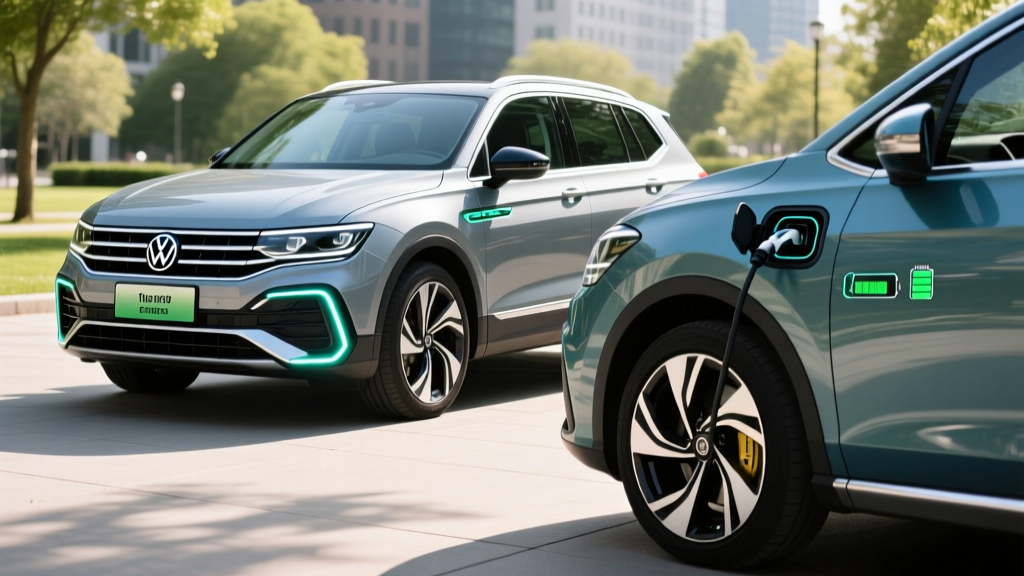
Volkswagen's electrification strategy leans heavily into battery-electric vehicles with its ID. family, but the brand hasn't abandoned internal combustion entirely. For 2026, VW continues to offer plug-in hybrid (PHEV) variants in key global markets — most notably the Tiguan eHybrid and the Golf GTE / eHybrid — bridging the gap between gas-only motoring and full EV ownership. If you've been searching for a hybrid auto VW that balances electric commuting with gas-powered road-trip flexibility, this guide breaks down every critical spec you need.
Before we get into the numbers, one clarification: Volkswagen does not currently sell a conventional (non-plug-in) hybrid in the US market. The models discussed here are plug-in hybrids (PHEVs), meaning they carry a larger battery you charge from a wall outlet or public charger, enabling meaningful electric-only driving before the gas engine kicks in. If you want a Toyota Prius-style hybrid you never plug in, VW isn't your brand — but if you want 30+ miles of tailpipe-free daily driving with a gas safety net, read on.
HEV vs PHEV: Where Volkswagen Fits In
Understanding the distinction between conventional hybrids and plug-in hybrids is essential before evaluating any VW hybrid auto.
| Feature | Conventional Hybrid (HEV) | Plug-in Hybrid (PHEV) | Battery Electric (BEV) |
|---|---|---|---|
| Plug-in charging | No — charges via regen + engine | Yes — Level 1 or Level 2 | Yes — Level 1, 2, or DC fast |
| Electric-only range | 0–2 miles at low speed | 25–50 miles (typical) | 200–400+ miles |
| Battery size | 0.5–2 kWh | 13–26 kWh | 50–120+ kWh |
| Gas engine | Yes (primary) | Yes (backup + highway) | No |
| Federal tax credit (§30D) | No | Up to $7,500 (if eligible) | Up to $7,500 (if eligible) |
| Example | Toyota Prius, Honda CR-V Hybrid | VW Tiguan eHybrid, Golf GTE | VW ID.4, Tesla Model Y |
Volkswagen's current hybrid strategy focuses exclusively on PHEVs. The reasoning is practical: a PHEV's larger battery delivers genuine zero-emission commuting for most daily trips while retaining a gas tank for weekend road trips where charging infrastructure may be sparse. According to fueleconomy.gov, the average American drives roughly 37 miles per day — squarely within PHEV electric-only range.
2026 VW Tiguan eHybrid: Specs, Range, and Real-World MPG
The Tiguan is Volkswagen's best-selling SUV globally, and the eHybrid variant is the most electrified version available short of stepping into the ID.4. The third-generation Tiguan eHybrid, introduced for the 2025 model year and continuing into 2026, pairs a 1.5-liter turbocharged four-cylinder engine with an electric motor integrated into the DSG automatic transmission.
| Specification | 2026 VW Tiguan eHybrid |
|---|---|
| Combined system output | 245 hp (180 kW) |
| Engine | 1.5L turbocharged I4 (150 hp) + electric motor (115 hp) |
| Transmission | 6-speed DSG automatic |
| Battery capacity (usable) | 19.7 kWh (NMC lithium-ion) |
| EPA electric-only range | ~35 miles (estimated; WLTP-rated at 62 mi / 100 km) |
| Total combined range (gas + electric) | ~440 miles |
| EPA combined MPG (hybrid mode) | ~38 MPG combined (est.) |
| MPGe (electric + gas combined) | ~95 MPGe (est.) |
| Level 2 charging (AC) | 3.6 kW onboard charger; 0–100% in ~5 hours |
| DC fast charging | Not available |
| 0–60 mph | ~7.5 seconds |
| Cargo volume (rear seats up) | ~23.8 cu ft |
| Base MSRP | ~$42,500 (SE R-Line eHybrid, est.) |
Real-World MPG vs EPA: What Owners Actually See
PHEVs are notoriously tricky to evaluate on MPG alone because the number depends entirely on how often you charge. If you plug in every night and drive under 35 miles daily, you may use almost zero gasoline for months. On fueleconomy.gov, PHEV fuel economy is listed in two modes:
- Charge-sustaining (hybrid mode): Once the battery is depleted, the Tiguan eHybrid operates like a conventional hybrid. Expect roughly 36–40 MPG combined, with city MPG slightly higher than highway thanks to regenerative braking.
- Charge-depleting (electric mode): Rated in MPGe — approximately 95 MPGe when blending electric and gas miles on a typical commute within EV range.
For a driver who charges nightly and commutes 30 miles round-trip, annual gasoline consumption could drop below 100 gallons — a massive reduction from the gas-only Tiguan's ~500-gallon annual appetite.
2026 VW Golf GTE / eHybrid: The Hot-Hatch PHEV
The Golf GTE has been Volkswagen's performance-oriented PHEV since 2015, and the eighth-generation Mk8 Golf GTE continues into 2026 with a substantially upgraded battery. For the European and select global markets (US availability remains limited), the Golf eHybrid and GTE represent VW's most refined plug-in hybrid powertrain.
| Specification | 2026 VW Golf GTE (Mk8.5) |
|---|---|
| Combined system output | 272 hp (200 kW) |
| Engine | 1.5L turbo I4 (150 hp) + electric motor (115 hp) |
| Battery capacity (usable) | 19.7 kWh (NMC lithium-ion) |
| WLTP electric-only range | ~63 miles (102 km) — expect ~45 mi EPA-equivalent |
| Level 2 AC charging | 3.6 kW; full charge in ~5 hours |
| DC fast charging | Not available |
| 0–60 mph | ~6.2 seconds |
| Base MSRP (Europe) | ~€47,000 (~$51,000 USD equivalent) |
The Golf GTE's 272 combined horsepower makes it genuinely quick — the electric motor's instant torque fills in the low-RPM gap that turbocharged engines typically struggle with. On electric-only power, it's whisper-quiet and adequate for city speeds up to 80 mph. The transition from electric to gas power is seamless, with the DSG transmission managing the handoff without the shudder some competitors exhibit.
Charging Your VW PHEV: What to Expect at Home and on the Road
One of the most common questions from prospective PHEV buyers is how charging works in practice. Unlike full EVs, VW's plug-in hybrids do not support DC fast charging. This is a deliberate engineering choice: the 19.7 kWh battery is small enough that Level 2 AC charging replenishes it fully overnight, and adding DC fast-charge hardware would increase cost and weight without meaningful benefit.
| Charging Level | Power (kW) | Time to Full (19.7 kWh) | Typical Location |
|---|---|---|---|
| Level 1 (120V household) | 1.4 kW | ~14 hours | Standard wall outlet |
| Level 2 (240V) | 3.6 kW (max onboard) | ~5 hours | Home wallbox, public Level 2 |
| DC Fast Charge | Not supported | N/A | N/A |
For most PHEV owners, a standard 120V outlet (Level 1) is actually sufficient. Plugging in at 7 PM with 10 miles of range remaining means a full charge by 7 AM — more than enough for the next day's commute. A Level 2 home charger (240V) is a luxury for PHEVs, not a necessity, though it becomes worthwhile if you also plan to own a full EV in the future.
Pricing, Tax Credits, and Total Cost of Ownership
PHEVs sit in a pricing sweet spot: more expensive than gas-only models, but typically $5,000–$10,000 less than comparable full EVs. Here's how VW's hybrid auto pricing breaks down and whether federal incentives apply.
Federal Tax Credit Eligibility (§30D)
Under current IRS rules, plug-in hybrids may qualify for the §30D Clean Vehicle Credit of up to $7,500, but eligibility is far from guaranteed. The credit has multiple requirements that must all be met:
- MSRP cap: SUVs must be under $80,000; sedans/wagons under $55,000
- Buyer income cap: AGI must not exceed $150,000 (single), $225,000 (head of household), or $300,000 (joint)
- Battery component sourcing: Increasing percentages of battery components must be manufactured or assembled in North America
- Critical minerals: Increasing percentages of critical minerals must be sourced from the US or free-trade-agreement partners
- Final assembly: Vehicle must undergo final assembly in North America
Critical caveat for VW PHEVs: Many Volkswagen models sold in the US are assembled in Europe or Mexico, which may disqualify them from the §30D credit's final-assembly requirement. Additionally, battery-sourcing rules tighten annually. Always verify eligibility on the official fueleconomy.gov tax credit page before purchasing, and consult a tax professional. Beginning in 2024, eligible credits can be transferred to the dealer as a point-of-sale discount, but only if the vehicle qualifies.
5-Year Cost of Ownership Estimate
| Cost Factor | VW Tiguan eHybrid (PHEV) | VW Tiguan Gas (2.0T) | VW ID.4 (BEV) |
|---|---|---|---|
| Base MSRP | ~$42,500 | ~$31,500 | ~$40,000 |
| Est. federal tax credit | $0–$7,500* | $0 | $0–$7,500* |
| 5-year fuel/electricity cost | ~$4,200 | ~$8,750 | ~$3,400 |
| 5-year maintenance | ~$2,800 | ~$3,500 | ~$1,800 |
| 5-year insurance (avg) | ~$9,500 | ~$8,200 | ~$9,800 |
| 5-year total (est.) | ~$52,000–$59,000 | ~$52,000 | ~$47,500–$55,000 |
* Tax credit eligibility varies by buyer income, vehicle sourcing, and assembly location. Verify at irs.gov.
The PHEV's financial advantage emerges when you factor in fuel savings against a gas-only model — roughly $4,500 over five years for a 15,000-mile/year driver who charges regularly. Against the ID.4, the PHEV costs slightly more to operate but eliminates range anxiety on long road trips.
Battery Longevity, Warranty, and Replacement Costs
Battery degradation is the number-one concern for hybrid and PHEV buyers. Volkswagen addresses this with a warranty that aligns with industry standards.
Real-World Degradation Data
PHEV batteries experience less stress than full EV batteries because they operate in a narrower state-of-charge window — the vehicle's software maintains a buffer at both the top and bottom to protect cell health. Based on data from PHEV fleets using similar NMC chemistry:
- Year 1–3: ~2–4% capacity loss (minimal and often imperceptible)
- Year 4–6: ~5–8% total loss; electric range may drop from 35 mi to ~32 mi
- Year 8–10: ~10–15% total loss; electric range ~30 mi — still usable for most commutes
Unlike full EV batteries, which can cost $10,000–$20,000 to replace, a PHEV battery replacement (if needed out of warranty) typically runs $5,000–$8,000 including labor, given the smaller pack size. In practice, most PHEV batteries outlast the vehicle itself — premature failures are rare and covered under warranty.
Who Should Buy a VW Hybrid Auto — and Who Shouldn't?
A plug-in hybrid isn't the right answer for everyone. Here's a decision framework based on your driving profile:
Choose the VW Tiguan eHybrid if:
- Your daily commute is under 35 miles round-trip and you can charge at home
- You take 3+ road trips per year exceeding 200 miles where charging is uncertain
- You want lower running costs than gas but aren't ready to commit to a full EV
- You live in an apartment or area where home charging is possible but public DC fast chargers are scarce
Choose a full EV (VW ID.4 or competitor) if:
- You can install a Level 2 home charger and your daily driving is under 250 miles
- You want zero engine maintenance (no oil changes, no spark plugs, no DSG fluid)
- You want DC fast charging for road trips (20–30 minute stops at 150+ kW chargers)
- You're motivated by maximum emissions reduction
Choose a conventional gas vehicle if:
- You have no access to home or workplace charging
- Your daily driving regularly exceeds 60+ miles (PHEV electric advantage diminishes)
- Upfront purchase price is your primary concern
Pros
- 35+ miles of electric-only commuting eliminates most daily gasoline use
- No range anxiety — gas engine provides 440+ mile total range
- Lower maintenance than gas-only (less engine wear during EV mode)
- Seamless electric-to-gas transition; no behavioral changes required
- Qualifies for HOV lane access in many states
Cons
- No DC fast charging — not ideal for all-electric road trips
- Higher MSRP than gas-only Tiguan (~$11,000 premium)
- Federal tax credit eligibility uncertain due to assembly/sourcing rules
- 3.6 kW onboard charger is slow compared to some competitors (7.2+ kW)
- US availability limited; some VW PHEV models only sold in Europe
Frequently Asked Questions
How many MPG does the VW Tiguan eHybrid get?
Once the battery is depleted, the Tiguan eHybrid operates in hybrid mode and returns approximately 36–40 MPG combined, with city driving slightly higher due to regenerative braking. If you charge daily and drive within the electric range, your effective MPGe can exceed 95 MPGe, and you may use only a few gallons of gas per month.
How far can the VW Tiguan eHybrid go on electric only?
The estimated EPA electric-only range is ~35 miles (WLTP-rated at ~62 miles in Europe, where testing is more generous). Real-world range depends on temperature, terrain, and driving style — expect 28–32 miles in cold weather or highway driving, and up to 38 miles in mild city conditions.
Does the VW hybrid auto qualify for a federal tax credit?
It depends. The §30D Clean Vehicle Credit offers up to $7,500 for qualifying PHEVs, but the vehicle must meet final-assembly, battery-sourcing, MSRP-cap, and buyer-income requirements. Many VW models are assembled outside the US, which may disqualify them. Always check fueleconomy.gov and consult a tax professional before relying on the credit.
Is the VW PHEV battery reliable, and what does replacement cost?
VW covers the high-voltage battery for 8 years / 100,000 miles with a 70% capacity retention guarantee. Real-world data on similar NMC PHEV packs shows 10–15% degradation over 8–10 years, meaning the battery typically outlasts the vehicle. Out-of-warranty replacement runs approximately $5,000–$8,000 — significantly less than a full EV battery.
Can I charge the VW Tiguan eHybrid at a DC fast charger?
No. Like most PHEVs, the Tiguan eHybrid only supports AC charging — Level 1 (120V) or Level 2 (240V). The 3.6 kW onboard charger fills the battery in about 5 hours on Level 2. This is intentional: the 19.7 kWh battery is small enough that overnight AC charging is always sufficient.
Should I buy the VW PHEV or the VW ID.4?
If you can charge at home and rarely drive more than 250 miles in a single day, the ID.4 offers lower operating costs, zero engine maintenance, and DC fast charging for road trips. If you regularly take long trips through areas with sparse charging infrastructure, or if you can't install a home charger reliably, the Tiguan eHybrid gives you the best of both worlds.