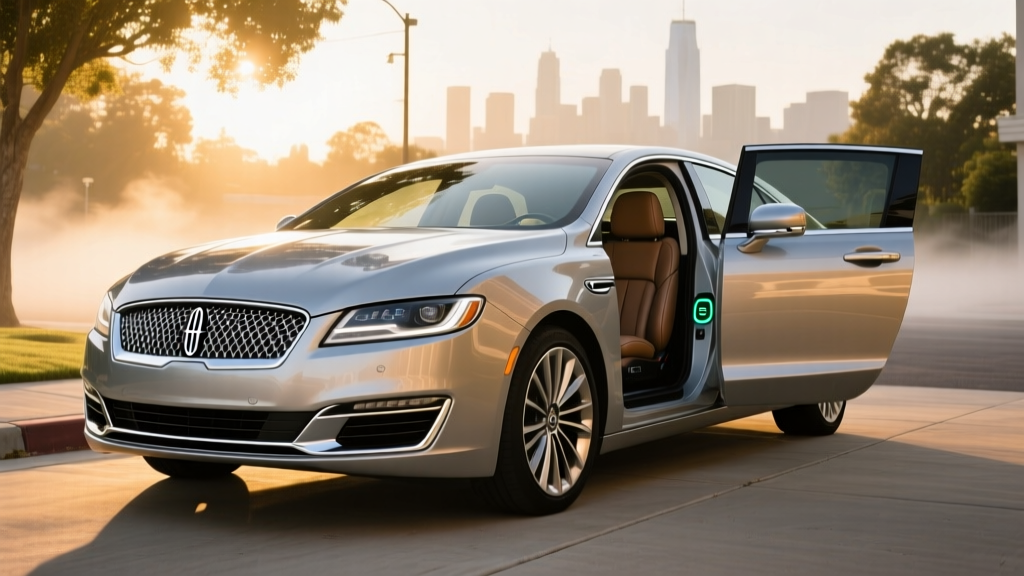
Lincoln 2015 Hybrid MKZ: Quick Verdict
The 2015 Lincoln MKZ Hybrid pairs a 2.0-liter Atkinson-cycle four-cylinder with an electric motor for a combined 188 horsepower, delivering an EPA-estimated 38 MPG combined. As a conventional hybrid (HEV), it requires no plug-in charging — the 1.4 kWh nickel-metal hydride (NiMH) battery recharges through regenerative braking and the gasoline engine. For buyers shopping the used market in 2026, the MKZ Hybrid remains one of the most affordable entry points into luxury hybrid ownership, with well-maintained examples trading between $10,000 and $16,000 depending on mileage and condition.
| Specification | 2015 Lincoln MKZ Hybrid |
|---|---|
| Powertrain | 2.0L Atkinson I-4 + electric motor (HEV) |
| Combined Horsepower | 188 HP |
| Engine Output | 141 HP @ 6,000 RPM / 129 lb-ft torque |
| Electric Motor Output | 118 HP / 117 lb-ft torque |
| Transmission | eCVT (planetary gearset) |
| Battery Capacity | 1.4 kWh (NiMH) |
| EPA MPG (City / Hwy / Combined) | 40 / 36 / 38 MPG |
| Fuel Tank | 16.5 gallons |
| Total Range | ~627 miles |
| 0–60 MPH | ~8.2 seconds |
| Drivetrain | Front-wheel drive |
| Original MSRP (Base) | $38,370 |
| Hybrid Battery Warranty (Original) | 8 years / 100,000 miles |
HEV vs PHEV: What the 2015 MKZ Hybrid Actually Is
Lincoln offered the 2015 MKZ exclusively as a conventional hybrid (HEV). There was no plug-in hybrid (PHEV) variant of the MKZ in 2015. This distinction matters because it shapes everything from daily use to cost expectations.
| Feature | 2015 MKZ Hybrid (HEV) | Typical PHEV (e.g., 2026 Lincoln Corsair Grand Touring) |
|---|---|---|
| Plug-in charging | No — self-charging via regen & engine | Yes — plug in for electric-only miles |
| Battery size | 1.4 kWh (NiMH) | ~14.4 kWh (NMC lithium-ion) |
| Electric-only range | None (EV mode limited to ~1 mile at low speed) | ~27–30 miles EPA |
| Federal tax credit (new) | None | Up to $3,750 (§30D, subject to sourcing/income rules) |
| Charging hardware needed | None | Level 1 (120V) or Level 2 (240V) home charger |
| Real-world use case | Set-it-and-forget-it efficiency | Short commutes on electricity, gas for longer trips |
As a conventional hybrid, the MKZ Hybrid operates like any gasoline car from the driver's perspective — you fill it at the pump and drive. The hybrid system works invisibly in the background, seamlessly switching between electric motor and gasoline engine to optimize fuel consumption. The eCVT transmission uses a planetary gearset rather than traditional belts or stepped gears, which is both smoother and more durable than a conventional CVT.
Fuel Economy: EPA Numbers vs Real-World MPG
| Driving Scenario | MPG |
|---|---|
| EPA City | 40 MPG |
| EPA Highway | 36 MPG |
| EPA Combined | 38 MPG |
| Real-World City (owner-reported) | 39–43 MPG |
| Real-World Highway (70–75 MPH) | 33–36 MPG |
| Real-World Combined (mixed driving) | 36–40 MPG |
| Cold-Weather Combined (<32°F) | 32–36 MPG |
Like most Toyota-derived hybrid systems (Ford's hybrid powertrain technology was co-developed with Toyota under cross-licensing agreements), the MKZ Hybrid actually exceeds its EPA city estimate in stop-and-go traffic. Regenerative braking recaptures energy that would otherwise be lost, and the engine shuts off frequently at low speeds. Owners on fueleconomy.gov's My MPG tracker report averages between 36 and 42 MPG in predominantly urban driving.
Highway driving tells a different story. At sustained speeds above 70 MPH, aerodynamic drag dominates and the engine carries most of the load. Expect 33–36 MPG on the interstate — still strong for a 3,700-pound luxury sedan, but noticeably below the city figure. Cold weather further reduces efficiency by 5–10% as the engine runs longer to heat the cabin and bring the catalytic converter up to operating temperature.
With a 16.5-gallon fuel tank and a realistic combined 38 MPG, you can expect approximately 627 miles between fill-ups — enough to drive from Los Angeles to the Bay Area on a single tank.
Powertrain Deep Dive: 188 HP and the eCVT Advantage
The 2015 MKZ Hybrid's powertrain combines a 2.0-liter Atkinson-cycle inline-four (141 HP, 129 lb-ft) with a permanent-magnet electric motor (118 HP, 117 lb-ft). Combined system output is 188 HP. The Atkinson cycle keeps the intake valve open longer during the compression stroke, sacrificing some peak power for greater thermal efficiency — the ideal trade-off in a hybrid where the electric motor compensates for low-end torque gaps.
The eCVT is the unsung hero here. Unlike the rubber-belt CVTs found in some competitors, Ford's eCVT uses a planetary gearset to blend power from the engine and motor. There are no belts to wear, no fixed gear ratios to hunt between. The result is seamless acceleration and a transmission that routinely outlasts the car itself. The 0–60 MPH time of approximately 8.2 seconds is adequate for merging and passing, though this is a luxury cruiser, not a sports sedan.
Drive modes include EV (electric-only at speeds up to ~25 MPH for roughly one mile), Eco (optimizes throttle response and climate control for efficiency), and Normal. The EV mode is useful for creeping through parking garages or residential streets, but the small 1.4 kWh battery limits its practical range to a few blocks.
Hybrid Battery Health, Warranty, and Replacement Cost
Original Hybrid Battery Warranty: 8 years / 100,000 miles (10 years / 150,000 miles in California and CARB-adopting states). The warranty covers battery capacity below approximately 60% of original capacity.
Current Status (2026): The original factory warranty has expired for all 2015 models. However, the NiMH battery in this generation has proven remarkably durable.
The 1.4 kWh NiMH battery pack in the MKZ Hybrid is one of the most reliable components in the vehicle. Nickel-metal hydride chemistry is less energy-dense than modern lithium-ion, but it degrades more gracefully and tolerates wider temperature extremes. Data from fleet and owner reports show these packs routinely reaching 150,000–200,000 miles before significant capacity loss.
When replacement is needed, costs in 2026 break down as follows:
- OEM new battery (Ford/Lincoln dealer): $2,500–$3,500 (part) + $500–$800 labor
- Remanufactured battery (e.g., Green Bean Battery): $1,200–$1,800 installed, often with a 3–5 year warranty
- Individual module replacement (independent hybrid specialist): $400–$900 if only a few cells have failed
Before purchasing a used 2015 MKZ Hybrid, request a hybrid battery health report. A Ford dealer can pull State of Health (SoH) data via the OBD-II port. Look for a pack reporting above 75% capacity — anything below 65% suggests near-term replacement. Also check for signs of cooling system neglect; the battery air-cooling fan filter (located behind the rear seat) should be cleaned regularly to prevent overheating-related degradation.
Reliability, Safety, and Long-Term Ownership
The 2015 MKZ Hybrid benefits from Ford's mature hybrid technology, which had been in production since the 2005 Escape Hybrid. By 2015, the system was in its third generation with well-documented reliability. The NHTSA gave the MKZ a 5-star overall safety rating, and the IIHS rated it Good in all crashworthiness categories.
Common issues to watch for on a 2015 model with 80,000+ miles:
- 12V auxiliary battery: Like all hybrids, the MKZ has a separate 12V battery that powers electronics. If the car sits for weeks, this battery can die and prevent the vehicle from starting, even if the hybrid battery is fully charged. Replace every 4–5 years.
- Brake actuator recall: Some 2013–2014 MKZ Hybrids were included in Ford's brake system recalls. Verify recall completion via the NHTSA VIN lookup tool.
- eCVT fluid: Ford recommends checking the eCVT fluid at 150,000 miles. Many owners proactively change it at 100,000 miles for $150–$250.
- Climate control blend door: A common Ford issue of this era — intermittent hot/cold airflow from vents. Repair runs $300–$600.
Overall, the MKZ Hybrid's mechanical simplicity (no turbocharger, no traditional automatic transmission, no starter motor, no alternator) means fewer failure points than a comparable turbocharged gas-only luxury sedan.
Used Market Pricing and Tax Credit Reality
As of early 2026, the 2015 Lincoln MKZ Hybrid trades in the used market at these approximate ranges:
- 80,000–100,000 miles, good condition: $12,000–$14,500
- 100,000–130,000 miles, good condition: $10,000–$12,500
- Below 60,000 miles, excellent condition: $14,500–$16,500
Federal tax credit: The 2015 MKZ Hybrid does not qualify for any federal tax credit. The IRS §30D clean vehicle credit applies only to new plug-in vehicles (BEVs and PHEVs with ≥7 kWh batteries). Conventional hybrids like the MKZ HEV are ineligible. Some states offer used-EV credits under §25E, but these also require plug-in capability — so the MKZ Hybrid does not qualify there either.
The total cost of ownership remains attractive despite the lack of incentives. At 38 MPG combined and $3.25/gallon gasoline, annual fuel cost for 12,000 miles is approximately $1,026. A comparable non-hybrid luxury sedan averaging 24 MPG would cost roughly $1,625 — a $599/year savings, or about $3,000 over five years of ownership.
Who Should Buy the 2015 MKZ Hybrid vs a Full EV or Gas Car
Choose the 2015 MKZ Hybrid if:
- You want luxury-car comfort and strong MPG without changing your fueling habits
- You lack access to home or workplace charging (apartment dwellers, street parkers)
- Your budget is $10,000–$16,000 and you want low operating costs
- You regularly take long road trips where charging infrastructure is sparse
- You want a proven, low-risk hybrid system with cheap replacement parts
Choose a full EV (e.g., used Tesla Model 3, Chevrolet Bolt) if:
- You can install a Level 2 home charger
- Your daily commute is under 60 miles round-trip
- You want zero tailpipe emissions and minimal maintenance
- Local electricity rates make charging significantly cheaper than gasoline
Choose a gas-only sedan if:
- You drive fewer than 5,000 miles per year (fuel savings won't offset hybrid premium)
- You exclusively drive highway miles where the hybrid advantage is smallest
Pros
- 40 MPG city — class-leading for a luxury sedan
- No plug-in charging required; operates like a normal gas car
- Proven, durable NiMH battery with affordable replacement options
- Quiet, well-insulated cabin with Lincoln luxury appointments
- 5-star NHTSA safety rating
- Low entry price on the used market ($10K–$16K)
Cons
- Highway MPG (33–36) less impressive than city figure
- No electric-only range for meaningful zero-emission driving
- Modest 188 HP — not a performance-oriented luxury sedan
- Original hybrid battery warranty has expired on all 2015 models
- No federal or state tax credit eligibility
- SYNC 2 infotainment system feels dated by 2026 standards
Frequently Asked Questions
How many MPG does the 2015 Lincoln MKZ Hybrid get?
The EPA rates it at 40 city / 36 highway / 38 combined MPG. In real-world driving, owners report 39–43 MPG in city traffic and 33–36 MPG on the highway at 70+ MPH. Cold weather can drop combined MPG to 32–36.
Does the 2015 MKZ Hybrid need to be plugged in?
No. It is a conventional hybrid (HEV), not a plug-in hybrid (PHEV). The 1.4 kWh battery recharges automatically through regenerative braking and the gasoline engine. You only ever need to fill it with gasoline.
How far can it drive on electric power alone?
Only about one mile at speeds below 25 MPH in EV mode. The battery is too small for meaningful electric-only driving. If electric-only range is a priority, look at a PHEV like the Lincoln Corsair Grand Touring (27 miles EV) or a full EV.
Is the 2015 MKZ Hybrid reliable, and what does a battery replacement cost?
Yes — the Ford hybrid system in this generation is well-proven with a track record of 150,000–200,000+ miles on the original battery. If replacement is needed, a remanufactured pack costs $1,200–$1,800 installed, while a new OEM pack runs $3,000–$4,300 including labor.
Does the 2015 MKZ Hybrid qualify for any tax credit?
No. Federal tax credits under IRS §30D and §25E require plug-in capability (BEV or PHEV). The MKZ Hybrid is a conventional HEV and does not qualify for federal, state, or local electrification incentives. Your fuel savings come entirely from its 38 MPG combined efficiency.
Hybrid vs PHEV vs EV — which is right for me?
A conventional hybrid (HEV) like the MKZ is best if you can't charge at home and want efficiency without lifestyle changes. A PHEV suits those with home charging and short commutes who still want gas backup for road trips. A full EV (BEV) is ideal for those with reliable home charging who want the lowest operating costs and zero tailpipe emissions — but requires planning for longer trips around DC fast-charging infrastructure.
What maintenance does the hybrid system require?
Beyond standard oil changes and tire rotations, the hybrid system is nearly maintenance-free. The eCVT has no belts or clutches to replace. Ford recommends checking eCVT fluid at 150,000 miles. The battery cooling fan filter behind the rear seat should be vacuumed every 15,000–20,000 miles to prevent overheating. The regenerative braking system significantly extends brake pad life — many owners report 80,000+ miles on original pads.