The Volvo XC70 Returns — As a Plug-In Hybrid Wagon
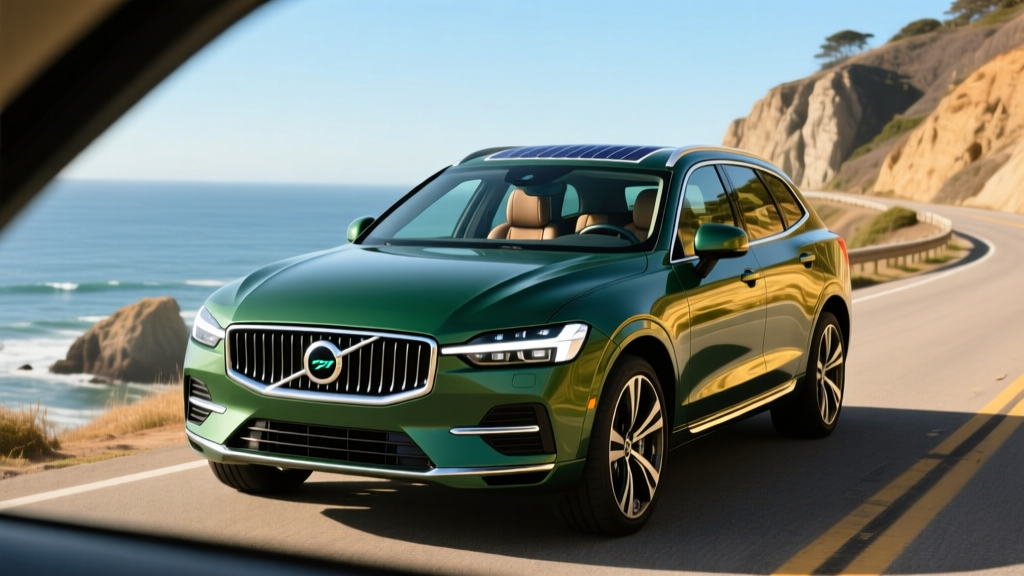
After a multi-year hiatus, Volvo has confirmed the Volvo XC70 hybrid SUV launch for the 2026 model year, reviving one of the most beloved nameplates in the wagon-crossover segment. But this isn't the old XC70: the new model arrives exclusively as a plug-in hybrid (PHEV), built on Volvo's updated SPA2 platform and positioned between the XC60 Recharge and XC90 Recharge in both size and price.
For buyers who want electric commuting without full range-anxiety on road trips, the 2026 XC70 Recharge targets a specific sweet spot — a family-hauling wagon with genuine electric-only range for daily driving and a turbocharged gas engine for longer hauls. Here's everything we know from Volvo's preliminary specifications and what it means for your purchase decision.
HEV vs PHEV: Why Volvo Chose Plug-In for the XC70
Before diving into specs, it's critical to understand what the XC70 Recharge is — and isn't.
Conventional Hybrid (HEV)
- No plug — charges via regenerative braking and the engine
- Small battery (~1–2 kWh)
- No meaningful electric-only range
- Lower MPG improvement in city driving
- No federal tax credit eligibility
- Example: Toyota RAV4 Hybrid
Plug-In Hybrid (PHEV) — XC70 Recharge
- Plugs in to charge — Level 1 (120V) or Level 2 (240V)
- Larger battery (~18.8 kWh usable)
- 35–38 miles electric-only for daily commutes
- Gas engine kicks in for longer trips — no range anxiety
- May qualify for federal §30D tax credit (up to $7,500)
- Example: Volvo XC70 Recharge, RAV4 Prime
The XC70 Recharge is a PHEV. That means you can plug it in to unlock its full electric range, but you're never stranded if you forget — the 2.0-liter turbocharged four-cylinder engine operates independently as a hybrid once the battery depletes.
2026 Volvo XC70 Recharge: Powertrain and Performance Specs
| Specification | 2026 XC70 Recharge (Preliminary) |
|---|---|
| Powertrain | 2.0L turbo I4 + rear electric motor (PHEV, AWD) |
| Combined Horsepower | 455 hp |
| Combined Torque | 523 lb-ft |
| Battery Capacity (usable) | 18.8 kWh (NMC lithium-ion) |
| Electric-Only Range (EPA est.) | 35–38 miles |
| Total Combined Range | ~520+ miles |
| 0–60 mph | ~4.7 seconds |
| Level 2 Charging (240V) | ~5 hours (0–100% at 3.7 kW onboard charger) |
| DC Fast Charging | Not supported |
| Drivetrain | eAWD (engine drives front, motor drives rear) |
| Towing Capacity | ~3,500 lbs (est.) |
The powertrain mirrors Volvo's proven Recharge architecture found in the XC60 and XC90 Recharge models: a turbocharged and supercharged 2.0-liter four-cylinder engine driving the front wheels, paired with a 143-hp electric motor on the rear axle. Combined output of 455 hp makes this one of the quickest wagons in its class, regardless of powertrain type.
Notably, the XC70 Recharge does not support DC fast charging. This is standard for most PHEVs — the battery is small enough that Level 2 overnight charging fully replenishes it. If you rely exclusively on public fast chargers, a full BEV is the better choice.
Fuel Economy: EPA MPG and Real-World Expectations
| Driving Mode | City | Highway | Combined |
|---|---|---|---|
| Charge-Sustaining (Hybrid Mode) | 28 MPG (est.) | 30 MPG (est.) | 29 MPG (est.) |
| MPGe (with full charge) | — | — | 58–63 MPGe (est.) |
MPGe (miles per gallon equivalent) measures energy consumption when the vehicle is using both battery and gasoline, converting electricity usage into a gasoline-equivalent figure. It's most meaningful for PHEV owners who charge regularly and drive within the electric-only range most days.
Pricing, Trims, and Federal Tax Credit Eligibility
Volvo has announced three trims for the 2026 XC70 Recharge, with pricing expected as follows (destination charge included):
- Core: ~$57,000 MSRP
- Plus: ~$62,000 MSRP
- Ultra: ~$67,500 MSRP
These are preliminary figures based on Volvo's current Recharge lineup pricing structure and are subject to change before the on-sale date.
Federal §30D Tax Credit: Does the XC70 Recharge Qualify?
Under current IRS rules for the §30D Clean Vehicle Credit, PHEVs can qualify for up to $7,500 — but eligibility depends on several factors that change frequently:
- MSRP Cap: SUVs/wagons must be under $80,000 — all XC70 trims should clear this
- Battery Capacity: Must be at least 7 kWh — the 18.8 kWh pack qualifies
- Battery Sourcing: Critical minerals and battery components must meet phased-in domestic/Fta-sourcing thresholds (these tighten annually through 2029)
- Buyer Income Limits: AGI must not exceed $150,000 (single), $225,000 (head of household), or $300,000 (joint)
- Point-of-Sale Transfer: Eligible buyers can apply the credit as a down-payment reduction at the dealer
Important: Battery sourcing requirements have disqualified several PHEVs in recent years. Volvo's supply chain compliance for the 2026 XC70 Recharge has not been confirmed by the IRS as of this writing. Always verify current eligibility on the IRS clean vehicle credit page before purchasing, and consult a tax professional for your specific situation.
Battery Warranty, Longevity, and Replacement Costs
PHEV batteries experience less stress than full BEV batteries because they operate within a narrower state-of-charge window (the system maintains a buffer at both the top and bottom). Based on data from the XC60 and XC90 Recharge models now several years into production, Volvo's NMC packs have shown minimal degradation — most owners report less than 5% capacity loss after three years of regular use.
Out-of-warranty replacement cost: If the battery requires replacement after the warranty expires, expect a cost in the range of $8,000–$12,000 including parts and labor, based on current Volvo Recharge battery pricing. This is significantly less than a full BEV battery replacement but still a meaningful long-term ownership cost to budget for.
Who Should Buy the XC70 Recharge — and Who Shouldn't?
Choose the XC70 Recharge PHEV if:
- Your daily commute is under 35 miles round-trip and you can charge at home
- You take regular road trips where charging infrastructure is sparse
- You want wagon practicality (cargo space, low load floor) with AWD capability
- You're not ready for a full BEV but want to reduce fuel consumption significantly
- You want near-luxury performance (455 hp, 4.7s 0-60) without a six-figure price tag
Choose a Full BEV Instead if:
- You have reliable home charging and rarely drive more than 250 miles between stops
- You want zero tailpipe emissions and the lowest per-mile energy cost
- You want DC fast charging for road trips (PHEVs don't offer this)
- Maintenance minimization is a priority (no engine oil, spark plugs, or exhaust system)
Choose a Conventional Hybrid (HEV) Instead if:
- You cannot install a home charger and don't want to rely on public Level 2 stations
- Your budget is tighter — HEVs like the RAV4 Hybrid start ~$15,000–$20,000 lower
- You want simplicity with no plug-in routine to manage
✓ Pros
- 35–38 mi electric range covers most commutes
- 455 hp makes it genuinely quick
- Wagon cargo versatility with AWD
- No range anxiety on road trips
- Potential $7,500 federal tax credit
- 8-year/100,000-mi battery warranty
✗ Cons
- No DC fast charging capability
- ~$57K starting price is steep for the segment
- Level 2 charging takes ~5 hours
- Tax credit eligibility not yet confirmed by IRS
- Real-world hybrid MPG only ~29 once battery depletes
- Only 4-cylinder engine (refined but not a six)
Frequently Asked Questions
How many MPG does the 2026 Volvo XC70 Recharge get?
Once the battery is depleted, the XC70 Recharge operates as a conventional hybrid with an estimated 28 city / 30 highway / 29 combined MPG. When starting with a full charge and driving within the electric range, the combined MPGe rating is estimated at 58–63 MPGe. Official EPA figures are pending final certification.
How far can the XC70 Recharge go on electric power alone?
Volvo targets 35–38 miles of EPA-estimated electric-only range. In real-world conditions — especially cold weather, highway speeds, or hilly terrain — expect closer to 28–32 miles before the gas engine engages. This is sufficient for most daily commutes under 35 miles round-trip.
Does the Volvo XC70 hybrid qualify for a tax credit?
The XC70 Recharge may qualify for up to $7,500 under the federal §30D Clean Vehicle Credit, provided it meets battery-sourcing requirements and the buyer falls within income limits ($150K single / $300K joint AGI). The MSRP is under the $80,000 SUV cap. However, IRS battery-sourcing compliance has not been confirmed for this specific model. Check IRS.gov before purchasing.
Is the XC70 Recharge reliable, and what does battery replacement cost?
Volvo's Recharge PHEV powertrain has been in production across the XC60 and XC90 since 2022 with generally positive reliability data. The high-voltage battery is warranted for 8 years or 100,000 miles. Out-of-warranty replacement is estimated at $8,000–$12,000. The conventional hybrid components (engine, transmission) follow Volvo's standard 4-year/50,000-mile warranty.
Can I charge the XC70 Recharge at a DC fast charger?
No. Like most PHEVs, the XC70 Recharge only supports Level 1 (120V) and Level 2 (240V) AC charging. A full charge on Level 2 takes approximately 5 hours. The battery is small enough that overnight home charging is the intended use case. If you need DC fast charging, consider a full BEV like the Volvo EX90.
Hybrid vs PHEV vs EV — which is right for me?
A conventional hybrid (HEV) is best if you can't charge at home and want simplicity. A PHEV like the XC70 Recharge is ideal if you have home charging, commute under 35 miles, but also take longer road trips. A full BEV is the right choice if you want the lowest operating cost, zero tailpipe emissions, and have access to reliable charging. The XC70 Recharge occupies the middle ground — electric commuting with gasoline backup.
All specifications cited are preliminary based on Volvo's announced 2026 model-year data and are subject to change before the vehicle's on-sale date. Tax credit eligibility is governed by current IRS §30D rules and may change. Verify all figures with your Volvo dealer and a qualified tax professional before purchasing. Source references: fueleconomy.gov, Volvo Cars USA.