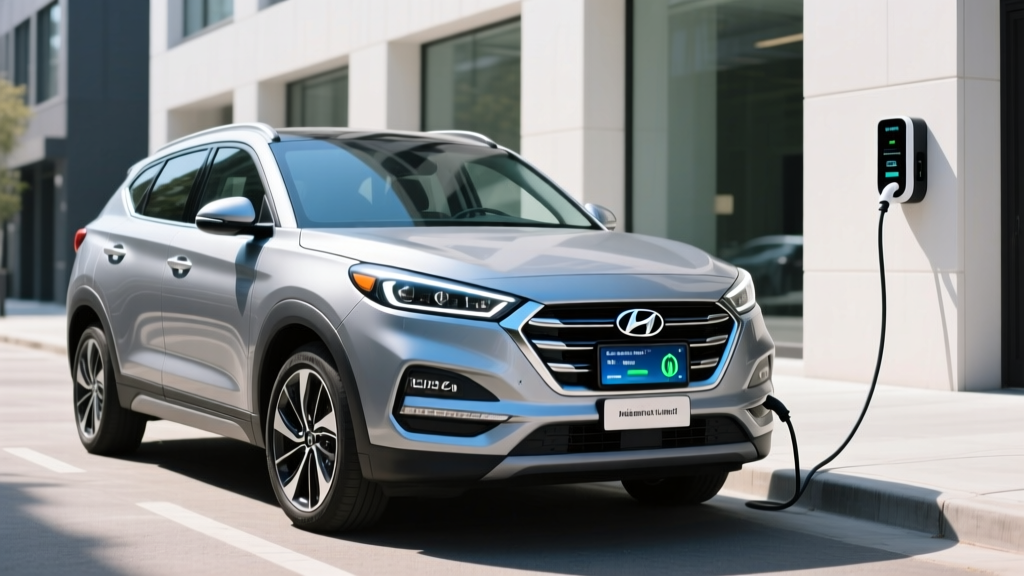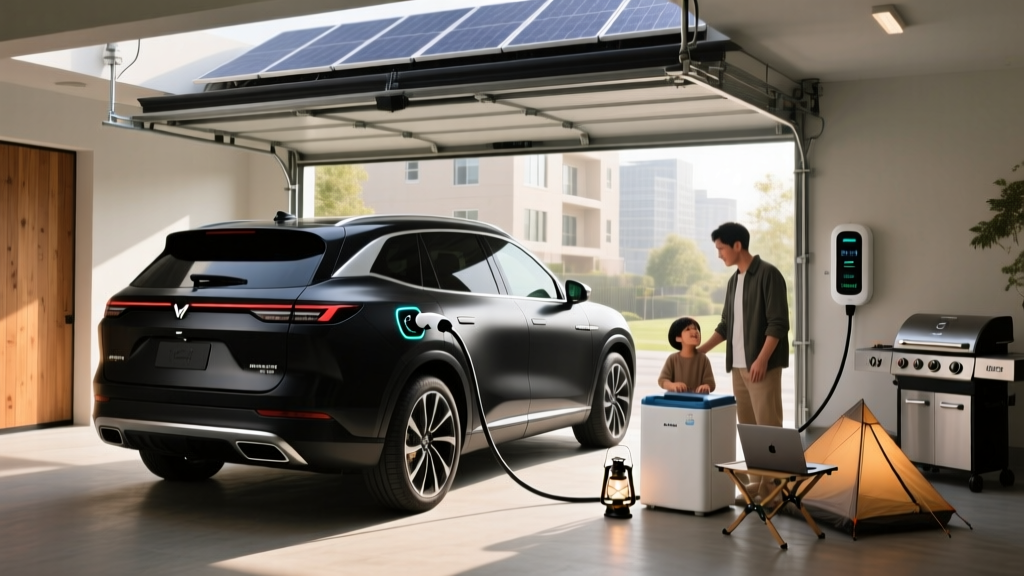
Vehicle-to-load (V2L) and vehicle-to-home (V2H) power export have turned modern hybrids and plug-in hybrids into mobile generators. If you've been searching how to export in hybrid 2025 models — or the latest 2026 offerings — you've likely noticed that only a handful of electrified vehicles actually support the feature. This guide breaks down exactly which hybrids and PHEVs can export power, how much they can deliver, and what you need to make it work in the real world.
What Does "Export Power" Mean in a Hybrid?
Power export lets you draw electricity out of your vehicle's high-voltage traction battery to run external devices, appliances, or even your home during an outage. There are three tiers of this technology:
- V2L (Vehicle-to-Load): Plug devices directly into a 120V outlet built into the vehicle or an adapter plugged into the charge port. Typical output: 1,500–3,600 watts. Good for tools, camping gear, tailgating, and emergency backup for a fridge or sump pump.
- V2H (Vehicle-to-Home): Bi-directional energy flows from the vehicle through a dedicated wall-mounted inverter to power household circuits. Typical output: 5,000–9,600 watts. Can sustain an entire home for hours to days depending on battery capacity.
- V2G (Vehicle-to-Grid): The vehicle sends power back to the utility grid for demand-response credits. Still largely in pilot programs in the U.S. as of 2026 and rarely available on consumer hybrids.
Most 2025–2026 hybrid buyers will encounter V2L first. V2H requires specific vehicle-inverter pairing and professional installation, and V2G remains experimental for residential use.
HEV vs PHEV: Which Hybrids Can Actually Export?
Conventional Hybrid (HEV)
Self-charging via regenerative braking and the gas engine. Battery sizes are small — typically 1.0 to 2.0 kWh. Most HEVs cannot export power because the battery is too small and the architecture doesn't support external discharge. A few exceptions exist (like the Ford Maverick Hybrid with an available onboard inverter for 120V/400W bed outlets), but these draw from the 12V system or a limited inverter, not true V2L from the traction battery.
Plug-In Hybrid (PHEV)
Larger battery (typically 13–25 kWh) with a charge port. PHEVs are the primary candidates for V2L and V2H export because they have sufficient stored energy and the onboard power electronics to manage bi-directional flow. The gas engine can also recharge the battery while exporting, extending runtime indefinitely as long as fuel is available.
The critical takeaway: if power export is your priority, focus on PHEVs with confirmed V2L or V2H capability. Conventional hybrids generally lack the battery capacity and hardware.
2025–2026 PHEVs and Hybrids With Power Export Capability
| Model (Year) | Type | Battery (kWh) | Export Type | Max Output | EV Range (mi) | Combined HP | Base MSRP |
|---|---|---|---|---|---|---|---|
| Ford F-150 PowerBoost Hybrid (2025) | HEV | 1.5 | Pro Power Onboard (V2L) | 2.0 kW or 7.2 kW | N/A | 430 | ~$62,500 |
| Hyundai Tucson PHEV (2025) | PHEV | 13.8 | V2L (interior + adapter) | 3.6 kW | 33 | 261 | ~$39,500 |
| Kia Sorento PHEV (2025) | PHEV | 13.8 | V2L (adapter) | 3.6 kW | 32 | 261 | ~$51,000 |
| Toyota RAV4 Prime (2025) | PHEV | 18.1 | Limited 120V outlet (1.5 kW) | 1.5 kW | 42 | 302 | ~$44,500 |
| Jeep Wrangler 4xe (2025) | PHEV | 17.3 | Not factory V2L (aftermarket only) | N/A | 22 | 375 | ~$51,000 |
| Mitsubishi Outlander PHEV (2025) | PHEV | 20.0 | 100V AC outlet (Japan) / 120V (1.5 kW US) | 1.5 kW | 38 | 248 | ~$41,500 |
| Ford F-150 Lightning (2025)* | BEV | 98–131 | Pro Power Onboard + V2H (Intelligent Backup Power) | 9.6 kW (V2L) / 9.6 kW (V2H) | 240–320 | 580 | ~$57,000 |
*Included for comparison — the F-150 Lightning is a full EV, not a hybrid, but remains the benchmark for V2H capability.
Fuel Economy and Electric-Only Range Breakdown
| Model | EV Range (mi) | EPA City MPG | EPA Hwy MPG | EPA Combined | MPGe (EV Mode) |
|---|---|---|---|---|---|
| Ford F-150 PowerBoost HEV | N/A | 25 | 26 | 25 | N/A |
| Hyundai Tucson PHEV | 33 | — | — | 35 MPG (hybrid) / 80 MPGe (EV) | 80 |
| Kia Sorento PHEV | 32 | — | — | 34 MPG (hybrid) / 79 MPGe (EV) | 79 |
| Toyota RAV4 Prime | 42 | 94 MPGe | 84 MPGe | 94 MPGe / 38 MPG | 94 |
| Mitsubishi Outlander PHEV | 38 | — | — | 25 MPG (hybrid) / 64 MPGe (EV) | 64 |
Source: fueleconomy.gov (EPA). Real-world note: PHEV electric range drops 15–25% in cold weather (below 40°F) and at sustained highway speeds above 65 mph. Hybrids often exceed EPA city ratings in stop-and-go driving because regenerative braking recovers more energy.
How to Set Up V2L Export on a PHEV — Step by Step
If your 2025–2026 PHEV supports V2L, here's how to actually use it:
- Confirm your trim supports V2L. Not all trims include it. For example, on the Hyundai Tucson PHEV, V2L is standard on SEL Convenience and Limited trims via an interior 120V outlet, and available via a charge-port adapter on higher trims.
- Check the max wattage. Most PHEV V2L systems cap at 3.6 kW (3,600 watts). This is enough to run a microwave (1,000W), a refrigerator (600–800W), power tools (500–1,500W), or a space heater (1,500W) — but not all simultaneously.
- Set a discharge limit. Most vehicles let you set a minimum state of charge (SoC) — e.g., stop exporting at 20% battery — so you retain enough charge to drive. Check your vehicle settings menu.
- Use the engine as a generator. In most PHEVs, if the battery drops below the export threshold, the gas engine will start to recharge it, effectively turning your PHEV into a portable generator. Fuel consumption at idle-export is typically 0.3–0.5 gallons per hour depending on load.
- Use proper cords and adapters. For charge-port V2L, you need the manufacturer's V2L adapter (sold separately for some models, ~$200–$400). Use 12-gauge or heavier extension cords for loads above 1,500W.
V2H: Exporting Power to Your Entire Home
V2H is the holy grail for outage-prone homeowners, but it's far less common in hybrids than in full EVs. As of 2026, here's the reality:
- Ford F-150 PowerBoost Hybrid: The available 7.2 kW Pro Power Onboard system can be connected to a home transfer switch by a licensed electrician to serve as backup power. This is the most accessible hybrid V2H solution currently on the market.
- Ford F-150 Lightning (BEV): With the Ford Charge Station Pro and Home Integration System (~$3,900 + installation), the Lightning can deliver up to 9.6 kW to your home — enough to power an average house for up to 3 days per Ford.
- Most PHEVs (Tucson, Sorento, RAV4 Prime): Currently limited to V2L only. No factory-supported V2H bi-directional home integration is available as of 2026.
For V2H, budget $1,500–$4,000 for the home-side equipment (transfer switch or bi-directional inverter) plus $1,000–$3,000 for professional electrical installation. A 200-amp panel upgrade, if needed, adds $1,500–$3,000.
Tax Credits and Pricing for Export-Capable Hybrids
Federal tax credit eligibility under IRS §30D applies primarily to PHEVs and BEVs, not conventional hybrids. Here's what qualifies for 2025–2026:
- PHEVs eligible for up to $7,500: Must meet battery critical-mineral sourcing and component manufacturing requirements (phased in through 2025–2026). Buyer income caps apply: $150K single / $300K joint AGI.
- MSRP caps: Vans, SUVs, and pickups: $80,000 max. Sedans: $55,000 max.
- Point-of-sale transfer: As of 2024+, you can transfer the credit to the dealer for an immediate price reduction at purchase.
- Conventional HEVs: Do NOT qualify for the §30D federal credit. Some states offer minor incentives — check your state energy office.
Among the export-capable models above, the Toyota RAV4 Prime and Hyundai Tucson PHEV have historically qualified for partial or full credits depending on battery sourcing rules in effect at purchase. Always verify current eligibility on the DOE's fueleconomy.gov tax credit page before buying — rules shift frequently.
Hybrid vs PHEV vs Full EV: Which Fits Your Export Needs?
Choose a Hybrid (HEV) With Export If:
- You need high-wattage (7.2 kW) backup power for extended outages
- You can't charge at home and don't want to rely on plug-in infrastructure
- You want the longest possible runtime (gas engine recharges continuously)
- Best fit: Ford F-150 PowerBoost with 7.2 kW Pro Power Onboard
Choose a PHEV With V2L If:
- You need moderate power (1.5–3.6 kW) for tools, camping, or short outages
- You want electric-only daily commuting (30–42 mi) plus gas flexibility for road trips
- You want to qualify for the federal tax credit
- Best fits: Toyota RAV4 Prime, Hyundai Tucson PHEV, Kia Sorento PHEV
Choose a Full EV With V2H If:
- You need whole-home backup power (9.6 kW+) for multi-day outages
- You have reliable home Level 2 charging
- You want maximum stored energy (98–131 kWh vs. a PHEV's 13–20 kWh)
- Best fit: Ford F-150 Lightning with Intelligent Backup Power
Battery Reliability, Warranty, and Replacement Costs
Federal law mandates that hybrid and PHEV batteries carry a minimum warranty of 8 years / 100,000 miles (10 years / 150,000 miles in California and states that follow CARB rules). Here's what major manufacturers offer:
- Toyota: 10 years / 150,000 miles (all 50 states for 2020+ models)
- Hyundai/Kia: 10 years / 100,000 miles
- Ford: 8 years / 100,000 miles
- Mitsubishi: 10 years / 100,000 miles
Replacement cost if out of warranty: Hybrid battery packs typically cost $2,000–$5,000 for HEV batteries (smaller, 1–2 kWh) and $5,000–$12,000 for PHEV batteries (larger, 13–20 kWh), including labor. Real-world data from fleet operators shows most hybrid batteries retain 85–90% capacity at 150,000 miles, with failure rates well below 5% within the warranty period.
Power export use does consume battery cycles, but at typical V2L loads (a few kWh per event), the impact on long-term degradation is minimal — equivalent to a short drive cycle. Manufacturers design the battery management system (BMS) to prevent deep discharge damage during export.
Pros and Cons of Export-Capable Hybrids
✅ Pros
- Dual-purpose vehicle: transportation + mobile power source
- PHEVs offer electric commuting with gas backup — no range anxiety
- Gas engine recharges battery during export — indefinite runtime
- Higher-wattage systems (7.2 kW on F-150) can replace standalone generators
- PHEVs may qualify for up to $7,500 federal tax credit
- Strong battery warranties (8–10 years) protect the investment
❌ Cons
- Most PHEVs limited to 1.5–3.6 kW V2L — not enough for whole-home backup
- V2H (whole-home) remains rare in hybrids; mostly limited to Ford trucks
- PHEV batteries are small — 3–4 hours max at full V2L draw without engine running
- Export-capable trims often cost $3,000–$8,000 more than base trims
- V2L adapters may be dealer-installed or sold separately
- Conventional HEVs generally cannot export beyond basic 120V/400W outlets
Frequently Asked Questions
How many MPG does a power-export-capable hybrid get?
It depends on the model. The Ford F-150 PowerBoost Hybrid achieves 25 MPG combined (25 city / 26 highway). The Toyota RAV4 Prime PHEV delivers 94 MPGe in EV mode and 38 MPG once the battery is depleted. The Hyundai Tucson PHEV returns 80 MPGe on electric and 35 MPG in hybrid mode. Real-world MPG for hybrids often exceeds EPA city estimates in stop-and-go traffic thanks to regenerative braking.
How far can a PHEV go on electric-only power?
Among export-capable PHEVs: the Toyota RAV4 Prime leads at 42 miles, followed by the Mitsubishi Outlander PHEV at 38 miles, Hyundai Tucson PHEV at 33 miles, and Kia Sorento PHEV at 32 miles. Expect 15–25% less range in freezing temperatures or at sustained highway speeds above 70 mph.
Does a hybrid or PHEV qualify for a tax credit?
Conventional hybrids (HEVs) do not qualify for the federal §30D clean vehicle credit. Plug-in hybrids (PHEVs) may qualify for up to $7,500 depending on battery sourcing requirements, buyer income (≤$300K joint / ≤$150K single), and MSRP caps ($80K for SUVs/trucks). Check current eligibility at irs.gov before purchasing — rules change annually.
Is an export-capable hybrid reliable, and what does battery replacement cost?
Yes. Toyota, Hyundai, Kia, and Ford hybrid systems have proven highly reliable, with battery failure rates under 5% within the 8–10 year warranty period. Out-of-warranty replacement costs $2,000–$5,000 for HEVs and $5,000–$12,000 for PHEVs. Using V2L export occasionally has negligible impact on long-term battery health.
Can I use my hybrid to power my house during an outage?
Only if your vehicle supports V2H or has a high-wattage onboard inverter that can connect to a home transfer switch. The Ford F-150 PowerBoost Hybrid (7.2 kW) and F-150 Lightning (9.6 kW) are the primary options. Most PHEVs with V2L can power individual appliances via extension cords but cannot feed your home's electrical panel directly.
Does using power export drain my hybrid battery?
Yes — export draws from the traction battery. At 3.6 kW continuous draw, a 14 kWh PHEV battery depletes in about 3–3.5 hours. However, most PHEVs will automatically start the gas engine to recharge the battery once it hits a preset threshold, so you won't be stranded. Always set a minimum SoC reserve in your vehicle settings.