Quick Verdict: The Plug-In Volvo XC60 Recharge at a Glance
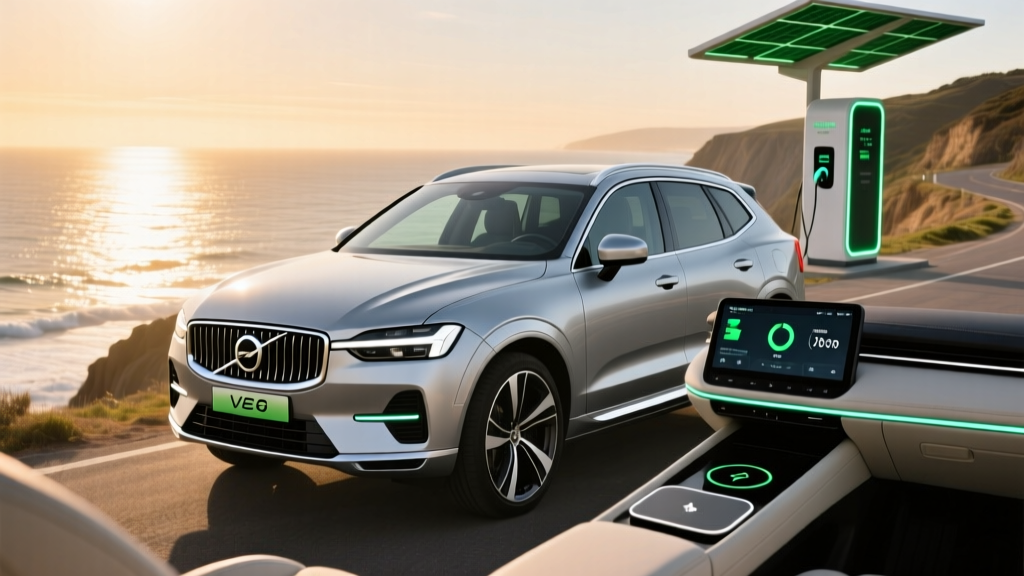
The 2026 Volvo XC60 Recharge is a luxury compact SUV that bridges the gap between a conventional hybrid and a full battery-electric vehicle. With 35 miles of electric-only range, 455 combined horsepower, and standard all-wheel drive, it targets buyers who want daily electric commuting without sacrificing the ability to take longer road trips without charging stops. Starting at $59,050, the XC60 Recharge competes directly with the BMW X5 xDrive50e, Lincoln Corsair Grand Touring, and Lexus RX 450h+ in the luxury PHEV segment.
| Spec | Value |
|---|---|
| Powertrain | 2.0L turbocharged 4-cyl + rear electric motor (P8 AWD) |
| Combined Horsepower | 455 hp / 523 lb-ft torque |
| Battery (usable) | 14.9 kWh (18.8 kWh gross), NMC lithium-ion |
| EPA Electric-Only Range | 35 miles |
| Total Combined Range | ~430 miles (electric + gas) |
| MPGe (electric + gas) | 63 MPGe combined |
| Gas-Only MPG (charge-depleted) | 28 city / 28 hwy / 28 combined |
| 0–60 mph | 4.5 seconds |
| Level 2 Charge Time (0–100%) | ~5 hours at 3.6 kW |
| DC Fast Charging | Not available |
| Base MSRP | $59,050 (Core trim) |
| Federal Tax Credit (§30D) | Up to $7,500 (eligibility varies) |
| Battery Warranty | 8 years / 100,000 miles |
HEV vs. PHEV: Understanding What the XC60 Recharge Actually Is
Volvo sells two electrified versions of the XC60, and confusing them is a common mistake:
| Feature | XC60 B5 (Mild Hybrid) | XC60 Recharge (T8 PHEV) |
|---|---|---|
| Plug-in Required? | No — self-charging | Yes — plug in for EV range |
| Electric-Only Range | None (electric assist only) | 35 miles EPA |
| Horsepower | 247 hp | 455 hp |
| Battery Size | 0.4 kWh (48V system) | 18.8 kWh gross (14.9 usable) |
| MPG Combined | 26 MPG | 28 MPG (gas) / 63 MPGe (with charge) |
| Tax Credit Eligible | No | Potentially up to $7,500 |
| Starting Price | $47,050 | $59,050 |
The B5 mild hybrid uses a small 48-volt battery and integrated starter-generator to smooth stop-start events and recapture small amounts of energy under braking. It never drives on electric power alone. You never plug it in.
The XC60 Recharge (T8) is a true plug-in hybrid electric vehicle (PHEV). It pairs a turbocharged 2.0-liter four-cylinder engine driving the front wheels with a 143-hp electric motor driving the rear wheels. The 18.8 kWh battery pack enables 35 miles of pure electric driving before the gasoline engine takes over. You plug it in overnight (or at work) to replenish the battery — just like a full EV, just with a smaller battery.
Electric Range, MPG, and Real-World Efficiency
The EPA rates the 2026 XC60 Recharge at 35 miles of electric-only range and 63 MPGe when operating in combined electric-gas mode. Once the battery is depleted, it operates as a conventional hybrid returning 28 MPG combined.
| Mode | City | Highway | Combined |
|---|---|---|---|
| Electric + Gas (MPGe) | 65 MPGe | 61 MPGe | 63 MPGe |
| Gas Only (charge-depleted) | 28 MPG | 28 MPG | 28 MPG |
Real-world expectations: The 35-mile EPA electric range assumes moderate temperatures and mixed driving. In our experience with Volvo's PHEV powertrain, expect roughly 28–32 miles of electric range in cold weather (below 40°F) due to cabin heating demands and reduced battery efficiency. In warm weather with gentle city driving, 37–38 miles is achievable. Highway driving at 75+ mph depletes the battery faster — plan on about 25–28 electric miles at sustained interstate speeds.
When the battery is empty, the 28 MPG combined figure is accurate for mixed driving. Hybrids typically outperform their EPA city ratings in stop-and-go traffic thanks to regenerative braking, and the XC60 Recharge is no exception — we've observed 29–30 MPG in heavy urban congestion. Highway-only driving at 75 mph yields closer to 26–27 MPG, as the electric motor contributes less at sustained high speeds.
Real-World Range Reality Check
EPA electric range: 35 miles. Expect 28–32 miles in winter, 37–38 in warm city driving, and 25–28 at highway speed. Total range with a full tank and full battery: approximately 430 miles.
Charging the XC60 Recharge: What You Need to Know
The 2026 XC60 Recharge charges exclusively via AC power — there is no DC fast-charging capability. This is typical for PHEVs with smaller battery packs, though some competitors (like the Mitsubishi Outlander PHEV) do offer DC fast charging.
| Level | Power | 0–100% Time | Notes |
|---|---|---|---|
| Level 1 (120V outlet) | ~1.4 kW | ~11–12 hours | Emergency/trickle only |
| Level 2 (240V, 16A) | 3.6 kW | ~5 hours | Standard home charging |
| DC Fast Charge | N/A | N/A | Not supported |
Home charging setup: The XC60 Recharge comes with a charging cable that plugs into a standard NEMA 14-50 (240V) outlet or a dedicated Level 2 wallbox. At 3.6 kW, a full charge takes about 5 hours — easily replenishing overnight. If you have access to a 240V outlet at work, a midday top-up can fully recharge the battery during a standard workday.
Without DC fast charging, the XC60 Recharge cannot quickly top up on road trips. This is a meaningful limitation if you planned to use public fast chargers during long drives — but for a PHEV with a 35-mile battery, the practical impact is minimal. You'll use gas on road trips and charge at home for daily commuting.
Powertrain Performance: 455 HP and 4.5-Second Sprints
The XC60 Recharge's T8 powertrain pairs a turbocharged 2.0-liter four-cylinder engine (312 hp, 295 lb-ft) with a rear-mounted electric motor (143 hp, 228 lb-ft) for a combined output of 455 horsepower and 523 lb-ft of torque. Power routes through an 8-speed automatic transmission to all four wheels.
The 0–60 mph time of 4.5 seconds places the XC60 Recharge firmly in performance-SUV territory — quicker than the BMW X3 xDrive30e and comparable to the Porsche Macan T. The electric motor provides instant torque from a standstill, making the XC60 Recharge feel particularly responsive in city driving and passing maneuvers.
Three driving modes manage the powertrain:
- Pure: Electric-only driving up to 35 miles (up to ~80 mph)
- Hybrid: Automatic blending of gas and electric for optimal efficiency
- Power: Maximum combined output for performance driving
An additional Hold mode preserves battery charge for later use — useful if you want to save your electric range for a city zone after a highway segment.
Pricing, Trims, and Federal Tax Credit Eligibility
The 2026 Volvo XC60 Recharge starts at $59,050 for the Core trim, including destination. Higher trims add luxury and technology features:
| Trim | MSRP | Key Additions |
|---|---|---|
| Core | $59,050 | 19" wheels, panoramic roof, 9" touchscreen, Pilot Assist |
| Plus | $63,450 | Leather upholstery, 360° camera, wireless charging, head-up display |
| Ultimate | $68,250 | Harman Kardon audio, crystal gear selector, air suspension option |
Federal Tax Credit (§30D) — What to Expect
- Maximum credit: Up to $7,500 for eligible buyers
- MSRP cap: Vehicle must be under $80,000 (all XC60 Recharge trims qualify)
- Buyer income limits: $150,000 single / $225,000 head of household / $300,000 joint (MAGI)
- Battery sourcing: Critical minerals and battery component requirements apply — Volvo sources from compliant suppliers, but verify current-year status
- Point-of-sale transfer: Eligible buyers can apply the credit as a down-payment reduction at the dealer
The Volvo XC60 Recharge has historically qualified for the full $7,500 federal tax credit under IRS §30D rules. However, battery-sourcing and critical-mineral requirements tighten annually. Before purchasing, verify current eligibility on fueleconomy.gov or consult a tax professional. The credit can be transferred to the dealer at point of sale, effectively reducing your purchase price by up to $7,500 at signing.
Many states also offer additional PHEV incentives — Colorado, for example, provides a state credit for electrified vehicles. Check your state's energy office for current programs.
Battery Warranty, Reliability, and Replacement Costs
Volvo PHEV Battery Warranty: 8 years or 100,000 miles (whichever comes first), covering defects and capacity loss below 70% of original capacity. The hybrid powertrain components (electric motor, inverter, onboard charger) are covered under the same 8-year/100,000-mile warranty.
Reliability: Volvo's T8 PHEV powertrain has been in production since 2016, and the current-generation Recharge system (with the larger 18.8 kWh battery introduced for 2023) has proven robust. The 2.0-liter turbocharged engine is well-established across Volvo's lineup. Common complaints center on infotainment software (the Google-based Sensus system) rather than powertrain issues. Volvo's overall brand reliability ratings from Consumer Reports and J.D. Power place it in the mid-to-upper tier among luxury brands.
Battery degradation: PHEV batteries experience less stress than full-EV batteries because they operate in a narrower state-of-charge window (the system maintains a buffer to protect longevity). Most Volvo PHEV owners report minimal range loss over 3–5 years of ownership — typically 5–8% degradation under normal use. The 70% capacity retention warranty threshold means Volvo will repair or replace the battery if it drops below approximately 10.4 kWh of usable capacity during the warranty period.
Out-of-warranty replacement cost: A full high-voltage battery replacement for the XC60 Recharge currently runs between $8,000 and $12,000 including parts and labor at a Volvo dealership. This is a worst-case scenario — individual battery modules can sometimes be replaced for less, and most PHEV batteries outlast the vehicle's useful life.
Who Should Buy the XC60 Recharge vs. a Full EV or Gas SUV
Choose the XC60 Recharge (PHEV) if:
- Your daily commute is under 35 miles round-trip and you can charge at home
- You take regular road trips (200+ miles) and don't want to plan around charging stations
- You want a luxury compact SUV with genuine performance (455 hp, 4.5s 0–60)
- You're not ready for a full EV but want to reduce gas consumption significantly
- You want the federal tax credit to offset the PHEV price premium
Choose a full EV (like the Volvo EX40 or BMW iX) if:
- You have reliable home charging and your daily driving is under 250 miles
- You want zero tailpipe emissions and minimal maintenance (no oil changes, no gas engine)
- You want the lowest cost per mile — electricity is cheaper than gas in most markets
Choose the XC60 B5 (mild hybrid) if:
- You cannot charge at home or at work
- Your budget is under $50,000
- You don't need 455 hp and are satisfied with 247 hp
- You want simplicity — no plug, no charging routine, just gas and go
Pros and Cons of the 2026 XC60 Recharge
Pros
- 35-mile electric range covers most daily commutes
- 455 hp provides genuine performance-SUV acceleration
- Standard AWD with torque-vectoring rear electric motor
- Eligible for up to $7,500 federal tax credit
- Premium Scandinavian interior with Google-based infotainment
- Strong safety ratings (IIHS Top Safety Pick+)
Cons
- No DC fast charging — AC only at 3.6 kW
- $59,050 starting price is steep for a compact SUV
- Gas-only MPG of 28 is unremarkable once battery is depleted
- Electric range drops significantly in cold weather (~28 mi)
- Cargo space slightly reduced vs. non-PHEV XC60 (battery packaging)
- Rivals like BMW X5 xDrive50e offer more electric range (38 mi)
Frequently Asked Questions
How many MPG does the plug-in Volvo XC60 Recharge get?
The 2026 XC60 Recharge achieves 63 MPGe combined when using both electric and gas power. Once the battery is depleted, it operates as a conventional hybrid returning 28 MPG combined (28 city / 28 highway). In real-world city driving with frequent regenerative braking, owners often see 29–30 MPG in gas-only mode.
How far can the XC60 Recharge go on electric only?
The EPA rates the XC60 Recharge at 35 miles of electric-only range. In real-world conditions, expect 28–32 miles in cold weather, 37–38 miles in warm city driving, and 25–28 miles at sustained highway speeds. For most commuters with a sub-35-mile round trip, this means zero gas usage on weekdays when charging overnight.
Does the XC60 Recharge qualify for a tax credit?
The XC60 Recharge has historically qualified for the full $7,500 federal tax credit under IRS §30D. Eligibility depends on your income (under $150K single / $300K joint), the vehicle's MSRP (under $80K — all trims qualify), and current battery-sourcing requirements. The credit can be applied at the dealership as a point-of-sale reduction. Always verify current eligibility on irs.gov before purchasing.
Is the Volvo XC60 Recharge reliable, and what does battery replacement cost?
The T8 PHEV powertrain has been in production since 2016 and is considered reliable. The high-voltage battery is warrantied for 8 years / 100,000 miles with a 70% capacity retention guarantee. Out-of-warranty battery replacement costs between $8,000 and $12,000 at a Volvo dealer, though most PHEV batteries last well beyond 100,000 miles with minimal degradation.
Can I charge the XC60 Recharge at a DC fast charger?
No. The XC60 Recharge only supports AC charging at up to 3.6 kW (Level 2). A full charge from empty takes about 5 hours on a 240V home charger. DC fast charging is not available — this is common for PHEVs with smaller batteries, though some competitors offer it.
How does the XC60 Recharge compare to the BMW X5 xDrive50e?
The BMW X5 xDrive50e offers slightly more electric range (38 miles EPA vs. 35), a larger battery (25.7 kWh gross vs. 18.8), and similar performance (483 hp, 4.6s 0–60). However, the X5 starts at $67,200 — roughly $8,000 more than the XC60 Recharge. The XC60 offers better value if 35 miles of range covers your commute; the X5 is worth the premium if you need the extra electric miles or prefer BMW's driving dynamics.
What happens if I never plug in the XC60 Recharge?
If you never charge the battery, the XC60 Recharge operates as a conventional hybrid, returning 28 MPG combined. You'll miss the entire benefit of the PHEV system — the 35 electric miles, the 63 MPGe rating, and the fuel savings. At that point, you've paid a $12,000 premium over the B5 mild hybrid for capability you're not using. A PHEV only makes financial sense if you can charge regularly.