Volvo's Electrified Strategy: Where Hybrids Fit in 2026
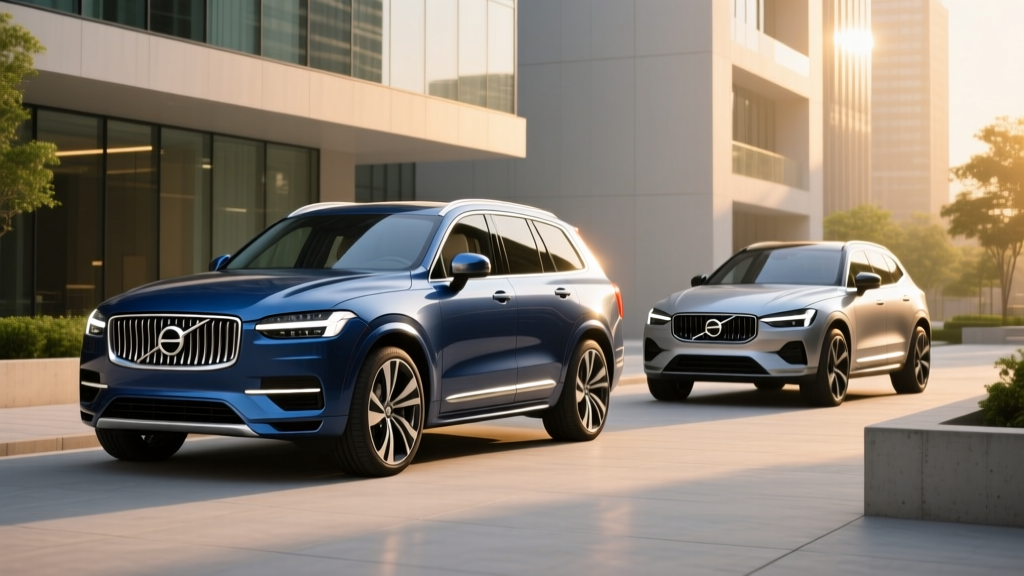
Volvo has committed to full electrification, but the transition isn't happening overnight. For 2026, the Swedish automaker continues to offer its Recharge plug-in hybrid (PHEV) variants across core models like the XC90 and XC60, bridging the gap between conventional gas powertrains and the all-electric EX90 and EX30. This Volvo hybrid vehicle launch strategy reflects a practical reality: many buyers want electric driving for daily commutes but aren't ready to eliminate the gas engine entirely.
The Recharge lineup uses a turbocharged and supercharged 2.0-liter four-cylinder engine paired with an electric motor integrated into the eight-speed automatic transmission. The result is substantial combined horsepower (455 hp in the XC60 and XC90 Recharge) with the ability to drive 30-40 miles on electricity alone before the gas engine kicks in.
HEV vs PHEV: Understanding Volvo's Hybrid Options
Before diving into specific models, it's critical to distinguish between conventional hybrids and plug-in hybrids—Volvo only offers the latter in 2026.
Conventional Hybrid (HEV)
- No plug-in charging required—battery charges via regenerative braking and engine
- Smaller battery (typically 1-2 kWh)
- Electric motor assists gas engine but can't drive on electricity alone for meaningful distances
- Example: Toyota RAV4 Hybrid (41 MPG combined)
Plug-in Hybrid (PHEV) — Volvo Recharge
- Requires plug-in charging to access full electric range
- Larger battery (18.8 kWh usable in Volvo Recharge models)
- Can drive 30-40 miles on electricity alone before switching to hybrid mode
- Example: Volvo XC60 Recharge (35 miles electric, then 30 MPG combined)
Volvo discontinued its mild-hybrid B5 and B6 powertrains after 2024, meaning every non-EV Volvo sold in 2026 is a full PHEV. If you see a Volvo without a "Recharge" badge or charging port, it's either an older model or a full EV (EX30, EX40, EX90).
2026 Volvo Recharge PHEV Lineup: Specs at a Glance
| Model | Powertrain | Combined HP | Battery (kWh usable) | EPA Electric Range | EPA MPG (gas) | Base MSRP |
|---|---|---|---|---|---|---|
| XC60 Recharge | 2.0L turbo+super + electric motor | 455 hp | 18.8 kWh | 35 miles | 30 combined (28 city / 32 hwy) | $59,950 |
| XC90 Recharge | 2.0L turbo+super + electric motor | 455 hp | 18.8 kWh | 33 miles | 27 combined (26 city / 28 hwy) | $76,850 |
| S60 Recharge | 2.0L turbo+super + electric motor | 455 hp | 18.8 kWh | 41 miles | 31 combined (30 city / 33 hwy) | $52,350 |
All three models share the same T8 powertrain architecture. The differences in electric range and MPG come down to vehicle weight, aerodynamics, and tire rolling resistance. The S60 sedan, being lighter and more aerodynamic than the SUVs, squeezes out an extra 6-8 miles of electric range.
Real-World MPG vs EPA: What Owners Actually See
EPA estimates provide a baseline, but PHEV efficiency depends heavily on your driving and charging habits. Here's what to expect:
If You Charge Daily (30-40 mile commute)
You'll rarely use gas. A 35-mile round-trip commute on a fully charged XC60 Recharge means you're burning electricity for 90% of your driving. In this scenario, expect 80-100 MPGe (miles per gallon equivalent, measuring electricity consumption in gas-equivalent terms). Your actual gas consumption might be 1-2 gallons per month for longer weekend trips.
If You Never Charge (Always on Gas)
The PHEV becomes a heavy conventional hybrid. Expect EPA gas-mode MPG or slightly worse due to the battery weight penalty. For the XC90 Recharge, that means 25-27 MPG combined in real-world mixed driving. Highway-heavy routes at 75+ mph may drop to 23-24 MPG.
Cold Weather Impact
Electric range drops 15-25% in freezing temperatures (32°F and below). The XC60 Recharge's 35-mile EPA electric range becomes 26-30 miles in winter. Gas-mode MPG also suffers slightly due to increased engine warm-up time and cabin heating demands.
Charging the Volvo Recharge: Time, Cost, and Practicality
Volvo Recharge PHEVs use a J1772 connector for Level 1 and Level 2 AC charging. Critically, these vehicles do not support DC fast charging—the onboard charger maxes out at 3.7 kW, meaning even at a public Level 2 station, you're limited to the car's internal charging speed.
| Charging Method | Power | 0-100% Time | Miles Added per Hour |
|---|---|---|---|
| Level 1 (120V household outlet) | 1.4 kW | 13-14 hours | ~3 miles/hour |
| Level 2 (240V home or public) | 3.7 kW (car-limited) | 5 hours | ~7 miles/hour |
For most owners, overnight Level 1 charging from a standard 120V outlet is sufficient to replenish the 18.8 kWh battery. If you drive 35 miles daily and plug in for 12 hours overnight, you'll add 36 miles of range—enough to fully recharge. Level 2 is faster but not essential for PHEV ownership the way it is for full EVs.
Charging Cost
At the U.S. average electricity rate of $0.16/kWh, fully charging the 18.8 kWh battery costs about $3.00. That's roughly $0.09 per electric mile, compared to $0.15-$0.18 per mile on gas (assuming 30 MPG and $4.50/gallon). Over a year of 12,000 miles driven mostly on electricity, you'd save $700-$1,000 in fuel costs versus a gas-only vehicle.
Battery Warranty, Reliability, and Replacement Costs
Volvo Recharge Battery Warranty
8 years or 100,000 miles (whichever comes first), covering battery capacity loss below 70% of original capacity. This is the industry-standard PHEV warranty, matching Toyota, Hyundai, and BMW.
Volvo's PHEV battery is an NMC (nickel-manganese-cobalt) lithium-ion pack with active liquid cooling and heating. Real-world degradation data from 2019-2023 Recharge models shows 8-12% capacity loss after 5 years and 60,000 miles—well within the warranty threshold. Most owners report minimal range loss in the first 3-4 years.
Reliability Track Record
Consumer Reports rates Volvo's overall reliability as "average" (3/5), with the XC60 Recharge scoring slightly above average and the XC90 Recharge slightly below. Common complaints center on infotainment glitches (the Google-based Android Automotive system) and minor electrical gremlins, not powertrain failures. The T8 hybrid system itself has proven robust since its 2016 introduction.
Battery Replacement Cost
If your battery fails outside warranty (rare but possible after 10+ years), expect a replacement cost of $8,000-$12,000 including parts and labor. This is comparable to other luxury PHEVs but significantly more than a conventional hybrid like the Toyota RAV4 Hybrid ($3,000-$4,000). However, battery replacement is uncommon—most PHEV batteries outlast the vehicle's useful life.
Tax Credit Eligibility: Does the Volvo Recharge Qualify?
Under 2026 IRS §30D rules, the Volvo XC60 Recharge and XC90 Recharge do not qualify for the $7,500 federal tax credit. The credit is reserved for battery electric vehicles (BEVs) and fuel cell vehicles, not plug-in hybrids.
However, some states offer their own PHEV incentives:
- California: No state rebate for PHEVs as of 2024 (program sunset)
- Colorado: $2,500 tax credit for PHEVs under $80,000 MSRP (XC60 qualifies, XC90 does not)
- New York: No current PHEV incentive
Always verify current state incentives via your state energy office or a tax professional, as programs change annually. The federal used-EV credit (up to $4,000) also excludes PHEVs.
Volvo Recharge vs Full EV vs Gas: Which Should You Choose?
Choose Volvo Recharge PHEV If:
- You have home charging (even a 120V outlet) and a commute under 35 miles
- You take 2-4 road trips per year and don't want to plan around charging stations
- You want luxury features and safety tech but aren't ready for a full EV
- You live in an apartment without charging access but can charge at work
Choose a Full EV (EX90, Tesla Model Y) If:
- You have reliable home Level 2 charging and want to eliminate gas entirely
- Your daily driving is under 250 miles and you're comfortable with DC fast charging on road trips
- You want the $7,500 federal tax credit and lower long-term maintenance costs
- You prioritize maximum acceleration and one-pedal driving
Choose a Conventional Hybrid (Toyota, Honda) If:
- You have no access to any charging (home, work, or public)
- You want maximum fuel efficiency without behavioral changes
- You're on a tighter budget (RAV4 Hybrid starts at $33,000 vs XC60 Recharge at $59,950)
- You prioritize proven reliability and low maintenance costs
Ownership Costs: 5-Year Total Cost Comparison
| Vehicle | Purchase Price | Fuel (5 yr, 60k mi) | Maintenance (5 yr) | 5-Year Total |
|---|---|---|---|---|
| Volvo XC60 Recharge (charged daily) | $59,950 | $2,500 (mostly electricity) | $3,200 | $65,650 |
| Volvo XC60 Recharge (never charged) | $59,950 | $9,000 (gas only) | $3,200 | $72,150 |
| BMW X5 xDrive40i (gas) | $63,200 | $10,500 | $4,500 | $78,200 |
| Tesla Model Y Long Range (EV) | $47,990 (after $7,500 credit) | $3,000 (electricity) | $1,800 | $52,790 |
The XC60 Recharge makes financial sense if you charge regularly and value the luxury badge, safety features, and road-trip flexibility. If you never charge, you're paying a $5,000-$8,000 premium over a gas-only luxury SUV for a heavier, more complex powertrain with minimal efficiency gain.
Frequently Asked Questions
How many MPG does the Volvo Recharge get?
In gas-only mode (battery depleted), the XC60 Recharge achieves 30 MPG combined (28 city / 32 highway), and the XC90 Recharge gets 27 MPG combined (26 city / 28 highway). If you charge daily and drive mostly on electricity, you'll use minimal gas—potentially 1-2 gallons per month for a 30-mile daily commute.
How far can the Volvo Recharge go on electric only?
The XC60 Recharge delivers 35 miles of EPA-rated electric range, the XC90 Recharge gets 33 miles, and the S60 Recharge sedan achieves 41 miles. Real-world range drops 15-25% in freezing weather and 10-15% at sustained highway speeds above 70 mph.
Does the Volvo Recharge qualify for the $7,500 federal tax credit?
No. Under current IRS §30D rules, the federal EV tax credit applies only to battery electric vehicles and fuel cell vehicles, not plug-in hybrids. Some states offer smaller PHEV incentives (e.g., Colorado's $2,500 credit), but the federal credit is not available.
Is the Volvo Recharge reliable?
The T8 powertrain has proven mechanically robust since 2016, with few reported hybrid system failures. Consumer Reports rates Volvo's overall reliability as average, with most complaints focused on infotainment software rather than the hybrid drivetrain. The battery carries an 8-year/100,000-mile warranty covering capacity loss below 70%.
What happens if I never plug in the Volvo Recharge?
The car operates as a conventional hybrid, using the gas engine and regenerative braking to maintain a small battery buffer. You'll get EPA gas-mode MPG (30 combined for XC60, 27 for XC90) but won't access the 33-41 miles of electric range. You're essentially paying extra for a capability you're not using.
How long does it take to charge the Volvo Recharge?
From a standard 120V household outlet (Level 1), expect 13-14 hours for a full charge. From a 240V Level 2 charger, the car's 3.7 kW onboard charger limits charging to about 5 hours. DC fast charging is not supported.
For official EPA fuel economy data, visit fueleconomy.gov. For current federal tax credit rules, consult IRS.gov §30D guidance. Volvo's official specifications and warranty details are available at VolvoCars.com.