Quick Verdict: The 2012 Highlander Hybrid at a Glance
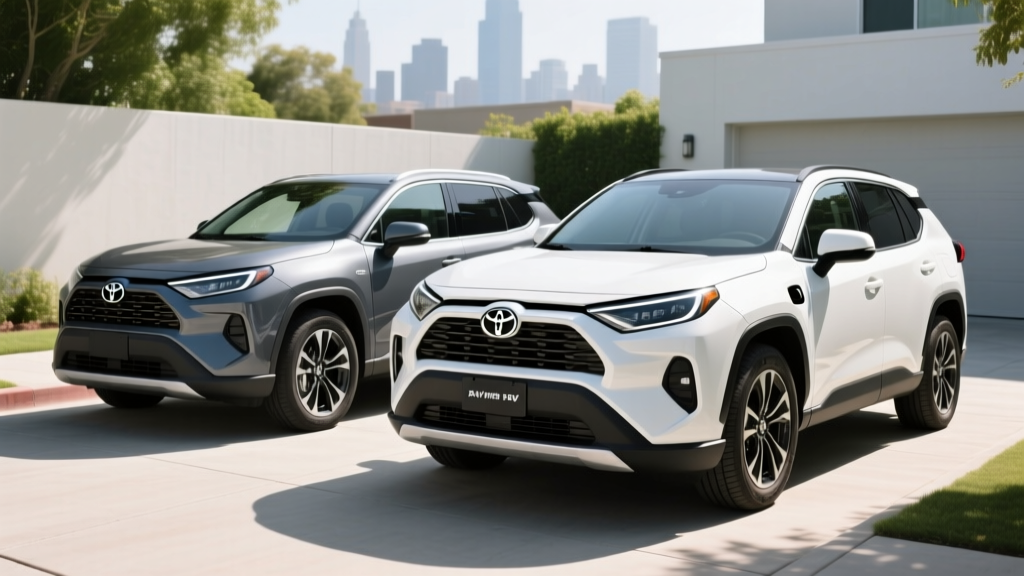
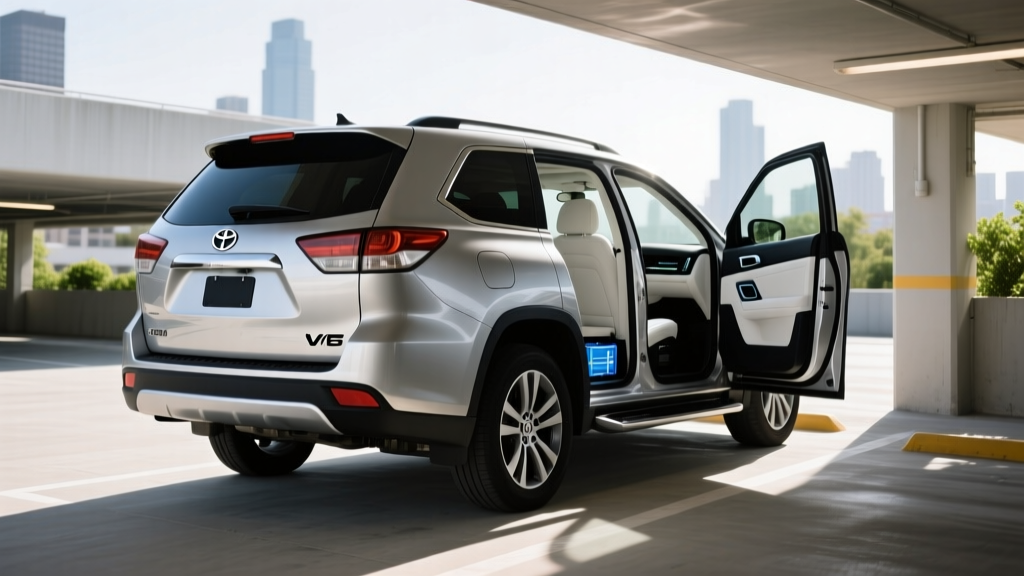
If you're researching the 2012 Toyota Highlander Hybrid V6 as a used family hauler, you're looking at one of the most proven hybrid powertrains Toyota ever built. This third-row SUV pairs a 3.5-liter V6 with Toyota's Hybrid Synergy Drive to deliver 280 combined horsepower and an EPA-estimated 28 MPG combined — figures that still hold up for a seven-passenger vehicle more than a decade later.
But buying a 14-year-old hybrid in 2026 comes with specific concerns: hybrid battery health, replacement costs, and how it stacks against modern PHEVs and full EVs. This guide covers every number you need before signing the check.
| Spec | 2012 Highlander Hybrid V6 |
|---|---|
| Powertrain | 3.5L V6 + electric motor (Hybrid Synergy Drive) |
| Combined Horsepower | 280 hp |
| EPA MPG (City / Hwy / Combined) | 28 / 28 / 28 |
| Drivetrain | AWD-i (electronic all-wheel drive) |
| Hybrid Battery | ~1.9 kWh NiMH (sealed, self-charging) |
| Seating | 7 passengers |
| 0–60 mph | ~7.8 seconds |
| Original MSRP (Base) | ~$38,900 |
| Used Price Range (2026) | $8,500 – $14,000 |
| Hybrid Battery Warranty (Original) | 8 years / 100,000 miles (10 yr / 150,000 mi in CARB states) |
HEV vs. PHEV: Understanding What the 2012 Highlander Hybrid Is
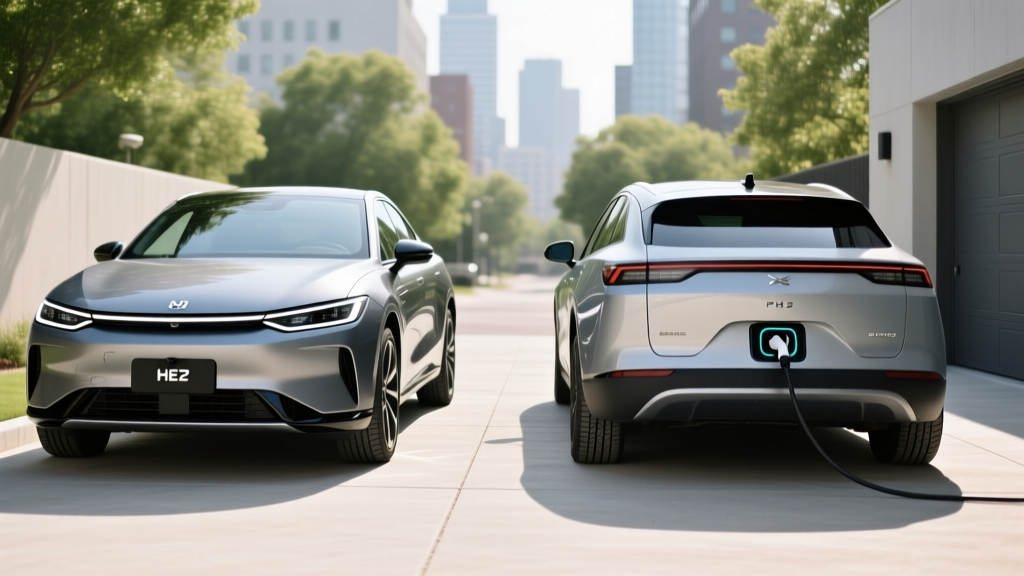
The 2012 Toyota Highlander Hybrid is a conventional hybrid electric vehicle (HEV) — not a plug-in hybrid (PHEV). This distinction matters enormously for ownership expectations.
| Feature | HEV (This Highlander) | PHEV (e.g., RAV4 Prime) | BEV (e.g., Model Y) |
|---|---|---|---|
| Plug-in Charging | No — charges via regenerative braking & engine | Yes — Level 1 or Level 2 | Yes — Level 1, 2, or DC fast |
| Electric-Only Range | ~1 mile at low speed | 30–42 miles typical | 250–330+ miles |
| Battery Size | ~1.9 kWh NiMH | 13–18 kWh Li-ion | 60–100 kWh Li-ion |
| Gas Required? | Yes — always | Yes — for trips beyond EV range | No |
| Federal Tax Credit (§30D) | No — expired for this model | Up to $7,500 (if eligible) | Up to $7,500 (if eligible) |
The Highlander Hybrid's small nickel-metal hydride (NiMH) battery is charged entirely by the gasoline engine and regenerative braking. You never plug it in. It can creep at very low speeds on electric power alone for roughly one mile, but the engine handles the vast majority of propulsion. Think of it as a dramatically more efficient gas SUV, not an electric car.
Fuel Economy: EPA Numbers vs. Real-World MPG
The EPA rates the 2012 Highlander Hybrid V6 at 28 MPG city, 28 MPG highway, and 28 MPG combined. The identical city and highway figures are a hallmark of Toyota's Hybrid Synergy Drive — the system is optimized for efficiency across driving conditions rather than favoring one.
| Driving Scenario | MPG (EPA or Estimated) |
|---|---|
| EPA City | 28 MPG |
| EPA Highway | 28 MPG |
| EPA Combined | 28 MPG |
| Real-World City (owner-reported) | 26 – 30 MPG |
| Real-World Highway (70+ mph) | 24 – 27 MPG |
| Cold Weather (below 30°F) | 22 – 25 MPG |
| Non-Hybrid 2012 Highlander V6 AWD (baseline) | 19 combined MPG |
According to fueleconomy.gov, the hybrid's 28 MPG combined represents a roughly 47% improvement over the conventional 2012 Highlander V6 AWD (19 MPG combined). Over 15,000 annual miles, that translates to approximately 240 fewer gallons of fuel per year — roughly $720 in annual savings at $3.00/gallon.
Real-world owners on Fuelly and owner forums consistently report 25–28 MPG in mixed driving. Highway-heavy drivers cruising above 70 mph should expect the lower end of that range. Cold weather reduces efficiency as the engine runs more frequently to maintain cabin heat and battery temperature.
Powertrain Deep Dive: 280 HP From V6 + Electric Motor
The 2012 Highlander Hybrid uses Toyota's proven Hybrid Synergy Drive system, which combines:
- 3.5-liter V6 engine (2GR-FXE): Produces 230 hp and 212 lb-ft of torque. This is the Atkinson-cycle variant of Toyota's ubiquitous 2GR engine family, optimized for fuel efficiency over peak power.
- Front electric motor: Contributes to the 280 hp combined system output and provides immediate torque from a stop.
- Rear electric motor: Powers the rear wheels for the AWD-i system, eliminating the need for a mechanical driveshaft to the rear axle.
- NiMH hybrid battery pack: Approximately 1.9 kWh capacity, mounted under the second-row seat.
The continuously variable transmission (eCVT) uses a planetary gearset rather than a belt-driven design, which is both smoother and more durable than conventional CVTs. Acceleration to 60 mph takes about 7.8 seconds — adequate for merging and passing, though it won't feel sporty. The tradeoff for 280 hp in a hybrid is that the system prioritizes efficiency over raw performance.
Hybrid Battery Health, Lifespan, and Replacement Cost
This is the single most important question for anyone buying a 2012 Highlander Hybrid in 2026: what shape is the hybrid battery in?
Original Hybrid Battery Warranty
Toyota warranted the hybrid battery for 8 years / 100,000 miles in most states, and 10 years / 150,000 miles in CARB (California Air Resources Board) states including California, New York, Massachusetts, and others. For a 2012 model, even the extended CARB warranty expired in 2022.
Expected battery lifespan: Toyota's NiMH hybrid batteries in the Highlander and similar models (Camry Hybrid, Prius) have demonstrated strong longevity. Data from owner communities and hybrid specialists suggests these packs typically last 150,000 to 200,000+ miles before significant degradation. Some fail earlier; many last longer. The key factors are:
- Heat exposure: Vehicles in hot climates (Arizona, Texas, Florida) tend to see faster NiMH degradation.
- Mileage: Higher-mileage examples that were driven regularly tend to fare better than low-mileage examples that sat for long periods.
- State of charge management: Toyota's system keeps the NiMH pack between roughly 40% and 80% charge, avoiding the extremes that accelerate degradation.
Battery replacement cost in 2026:
- New OEM Toyota battery: $2,500 – $3,500 (parts only; add $500–$800 for installation)
- Remanufactured battery: $1,500 – $2,200 installed
- Individual module replacement (by a hybrid specialist): $500 – $1,200 if only specific cells have failed
Before purchasing, request a hybrid battery health check from a Toyota dealer or independent hybrid specialist. They can read the battery's internal resistance values and individual module voltages to assess remaining life. A scan tool check of the battery ECU will also reveal any stored fault codes.
Tax Credits, Pricing, and Total Cost of Ownership
Federal tax credit: The 2012 Toyota Highlander Hybrid does not qualify for any current federal tax credit. The §30D new clean vehicle credit applies only to new plug-in vehicles (PHEVs and BEVs) meeting specific battery sourcing and MSRP requirements. As a conventional HEV, the Highlander Hybrid was never eligible for the plug-in vehicle credit. Some early hybrid credits existed under the Energy Policy Act of 2005, but Toyota's allocation was exhausted by 2007–2008.
Used pricing in 2026: Expect to pay between $8,500 and $14,000 for a 2012 Highlander Hybrid depending on mileage, condition, and region. Higher-trim Limited models with navigation and rear-seat entertainment command the top of that range.
Five-year ownership cost estimate (15,000 miles/year):
| Cost Category | Estimated 5-Year Total |
|---|---|
| Purchase Price (mid-range example) | $11,000 |
| Fuel (28 MPG avg, $3.25/gal) | $8,700 |
| Insurance | $5,500 – $7,500 |
| Maintenance (oil, brakes, tires, fluids) | $3,000 – $4,500 |
| Potential Hybrid Battery Replacement | $0 – $3,000 (if needed) |
| Total Estimated 5-Year Cost | $28,200 – $34,700 |
For comparison, a non-hybrid 2012 Highlander V6 AWD (19 MPG combined) would cost approximately $12,800 in fuel over the same period — roughly $4,100 more. The hybrid's fuel savings partially offset any battery replacement risk.
Who Should Buy the 2012 Highlander Hybrid vs. a Modern PHEV or EV?
Pros
- 28 MPG combined in a 7-passenger AWD SUV
- Proven, durable powertrain with massive service history
- No charging infrastructure needed — just add gas
- Low entry price ($8,500–$14,000)
- Toyota reliability and parts availability
- AWD-i provides confident traction in rain and light snow
Cons
- Hybrid battery warranty expired; replacement is an out-of-pocket risk
- No electric-only driving range to speak of
- Dated interior technology (no Apple CarPlay/Android Auto)
- eCVT drone under hard acceleration
- Third row is tight for adults
- No federal or state EV/PHEV incentives apply
Choose the 2012 Highlander Hybrid If:
- You need a 7-seat AWD SUV under $15,000
- You lack home charging access and can't use a PHEV or EV
- You drive 12,000–18,000 miles/year and want to reduce fuel costs vs. a gas-only SUV
- You value Toyota's reliability track record and plan to own for 3–5 years
Consider a Modern PHEV or EV Instead If:
- You can install a Level 2 home charger and want electric-only commuting (look at the RAV4 Prime or Hyundai Tucson PHEV)
- You want current safety tech (automatic emergency braking, lane centering) — the 2012 Highlander predates Toyota Safety Sense
- You qualify for the §30D federal tax credit on a new PHEV or BEV (up to $7,500; see IRS guidelines)
- You want to eliminate gasoline entirely — a BEV like the Hyundai Ioniq 5 or Tesla Model Y may save more long-term
Reliability and Common Issues
The 2012 Highlander Hybrid has a strong reliability reputation, but at 14 years old, certain wear items deserve attention:
- Inverter coolant pump: Toyota issued a recall for the inverter coolant pump on some model years. Verify this recall was performed (check NHTSA VIN lookup at nhtsa.gov/recalls).
- Brake actuator: The regenerative braking system uses an electro-hydraulic brake actuator that can fail at higher mileages. Replacement runs $1,200–$1,800. Listen for unusual brake pedal feel or warning lights.
- Power steering: The electric power steering rack can develop leaks or electrical faults. Check for whining noises or heavy steering effort.
- Standard aging items: Suspension bushings, struts, water pump, and ignition coils are all potential maintenance items on a vehicle of this age.
The hybrid-specific components (eCVT planetary gearset, electric motors) have proven extremely durable and rarely require service beyond normal fluid changes.
Frequently Asked Questions
How many MPG does the 2012 Toyota Highlander Hybrid V6 get?
The EPA rates it at 28 MPG city, 28 MPG highway, and 28 MPG combined. Real-world owners report 25–28 MPG in mixed driving, with highway speeds above 70 mph yielding 24–27 MPG and cold weather reducing that to 22–25 MPG.
Can the 2012 Highlander Hybrid drive on electric power only?
Only at very low speeds (under ~25 mph) for roughly one mile. This is a conventional hybrid (HEV), not a plug-in hybrid. The gasoline engine provides the vast majority of propulsion. If you want meaningful electric-only range, consider a PHEV like the Toyota RAV4 Prime (42 miles EV range).
Is the hybrid battery reliable and what does replacement cost?
Toyota's NiMH hybrid batteries typically last 150,000–200,000+ miles. For a 2012 model, the original warranty has expired. A new OEM replacement battery costs $2,500–$3,500 plus installation; remanufactured options run $1,500–$2,200 installed. Individual module repairs by a hybrid specialist can cost as little as $500–$1,200.
Does the 2012 Highlander Hybrid qualify for any tax credit?
No. The §30D federal clean vehicle credit applies only to new plug-in vehicles (PHEVs and BEVs). The 2012 Highlander Hybrid is a conventional HEV and does not qualify for federal or most state EV incentives. The used clean vehicle credit (up to $4,000 under §25E) also applies only to used plug-in vehicles, not conventional hybrids.
Hybrid vs. PHEV vs. EV — which is right for me?
A conventional hybrid (HEV) like this Highlander is ideal if you want better fuel economy with zero lifestyle change — no charging, no range planning, just fill up with gas. A PHEV makes sense if you have home charging and a short commute, giving you 30–42 miles of electric driving for daily use plus a gas engine for road trips. A full EV (BEV) is best if you can charge at home, want minimal maintenance, and are comfortable with current charging infrastructure for longer trips.
How does the 2012 Highlander Hybrid compare to the current model?
Toyota discontinued the Highlander Hybrid after the 2013 model year and did not reintroduce a hybrid variant until the 2020 model year with an entirely different powertrain (2.5L 4-cylinder hybrid, 243 hp, 36 MPG combined). The 2025 Highlander Hybrid starts around $42,000 and delivers significantly better fuel economy, modern safety tech, and a new hybrid battery warranty. The 2012 model remains relevant only in the used market at a fraction of the price.
What should I check before buying a used 2012 Highlander Hybrid?
Prioritize a hybrid battery health scan (module voltages and internal resistance), verify the inverter coolant pump recall was performed, inspect the brake actuator for proper function, and check for typical 14-year-old vehicle wear items (suspension, cooling system, transmission fluid). A pre-purchase inspection by a Toyota dealer or hybrid specialist is strongly recommended.