Quick Verdict: Is the 2026 Volkswagen Jetta Hybrid Worth It?
The 2026 Volkswagen Jetta Hybrid occupies a specific niche: buyers who want better fuel economy than a gas-only compact sedan but aren't ready to commit to a plug-in hybrid or full battery-electric vehicle. As a conventional hybrid (HEV), it requires no plug-in charging — you simply fill it with gas and let the hybrid system optimize efficiency. However, there's a critical piece of context every prospective buyer needs before visiting a dealership: Volkswagen's hybrid strategy in the US market has shifted significantly, and understanding what's actually available versus what's been discontinued will save you time and frustration.
This guide covers the Jetta Hybrid's real-world fuel economy, powertrain specifications, battery longevity, warranty coverage, pricing, and where it fits against PHEV and full EV alternatives in 2026.
HEV vs PHEV: Understanding the Jetta Hybrid's Architecture
Before evaluating specific numbers, it's essential to understand the two hybrid categories, because Volkswagen has offered both under the Jetta nameplate at different times.
Conventional Hybrid (HEV)
- No plug-in charging required — the battery charges via regenerative braking and the gas engine
- Small battery (typically 1–2 kWh)
- Electric motor assists the gas engine but cannot drive the car on electricity alone for meaningful distances
- Fuel economy improvement of 10–30% over a gas-only equivalent
- No electric-only range to speak of (maybe 1 mile at very low speed)
Plug-In Hybrid (PHEV)
- Must be plugged in to access electric-only driving range
- Larger battery (typically 10–25 kWh)
- Can drive 20–50 miles on electricity alone before the gas engine engages
- Eligible for federal tax credits (up to $7,500 under IRS §30D, subject to requirements)
- Total combined range often exceeds 400+ miles (electric + gas)
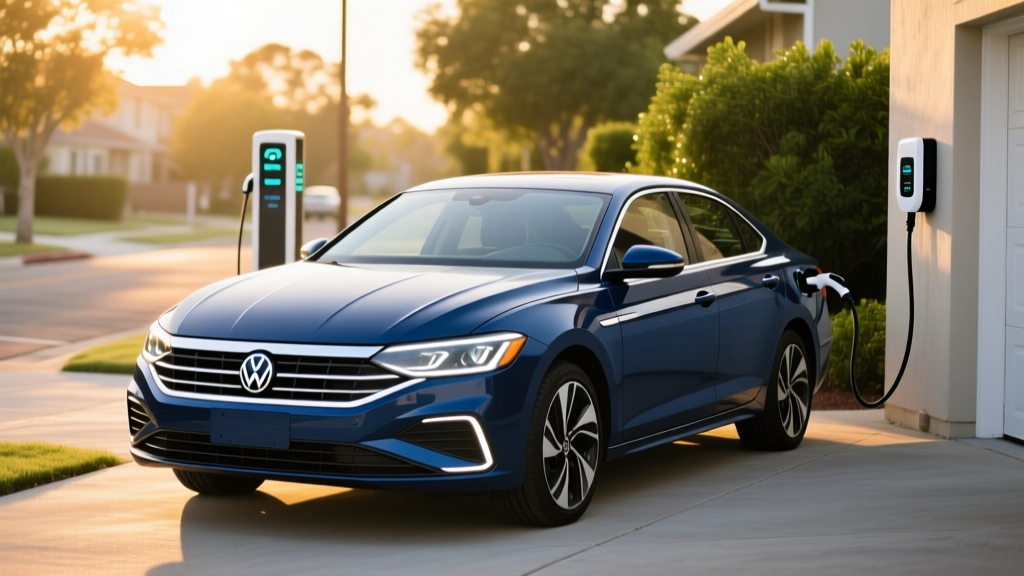
The Jetta Hybrid sold in the US was a conventional hybrid (HEV). Volkswagen offered it primarily in the 2013–2015 model years with a 1.4L turbocharged engine paired with a 27-hp electric motor and a 1.1 kWh lithium-ion battery. As of 2026, Volkswagen does not sell a new Jetta Hybrid in the United States. The current Jetta lineup consists of gas-only models (1.5L turbo). If you're searching for a "Volkswagen Jetta Hybrid" today, you're likely looking at the used market or comparing it against current hybrid sedans from competitors.
For buyers who want a Volkswagen plug-in hybrid, the brand has focused its PHEV efforts on models like the Golf GTE (available in Europe, not the US as of 2026) and the upcoming ID. series of full EVs. VW's US electrification strategy has pivoted heavily toward the ID.4 electric SUV rather than hybrid sedans.
Fuel Economy: EPA MPG and Real-World Numbers
For the most recent Volkswagen Jetta Hybrid (2015 model year, the final US model), here are the official EPA figures and what owners actually report:
| Metric | EPA Estimate | Real-World Average |
|---|---|---|
| City MPG | 42 MPG | 38–45 MPG (hybrids often exceed EPA in stop-and-go) |
| Highway MPG | 48 MPG | 42–50 MPG (steady cruising favors the hybrid system) |
| Combined MPG | 45 MPG | 40–47 MPG |
| Fuel Tank Capacity | 13.2 gallons | — |
| Total Range | ~594 miles | ~530–620 miles |
Real-world MPG context: Conventional hybrids like the Jetta Hybrid tend to perform better relative to their EPA estimates in city driving, where regenerative braking recaptures energy frequently and the electric motor handles low-speed propulsion. On long highway trips at 75+ mph, the gas engine does most of the work, and real-world highway MPG can dip slightly below the EPA sticker — though the Jetta Hybrid's aerodynamic profile and turbocharged engine keep this penalty modest.
For comparison, the 2026 gas-only Volkswagen Jetta (1.5L turbo) achieves an EPA-estimated 31 MPG combined, according to fueleconomy.gov. The hybrid variant delivered roughly a 45% improvement in combined fuel economy over its gas counterpart — a meaningful gap that translates to approximately $400–$600 in annual fuel savings depending on mileage and local gas prices.
Powertrain Specifications: Engine, Motor, and Combined Output
| Specification | Detail |
|---|---|
| Gas Engine | 1.4L turbocharged 4-cylinder (EA211) |
| Engine Horsepower | 150 hp @ 5,000–6,000 rpm |
| Engine Torque | 184 lb-ft @ 1,500–3,500 rpm |
| Electric Motor | 27 hp (20 kW), integrated into transmission housing |
| Combined System Output | 170 hp |
| Transmission | 7-speed DSG dual-clutch automatic |
| Hybrid Battery | 1.1 kWh lithium-ion (located behind rear seat) |
| 0–60 mph | ~8.5 seconds |
| Drivetrain | Front-wheel drive |
The Jetta Hybrid's powertrain pairs Volkswagen's well-regarded EA211 1.4L turbo with a compact electric motor sandwiched between the engine and the DSG transmission. The combined 170 hp output made it noticeably quicker than the base gas Jetta of its era (which produced 115–147 hp depending on the year), while simultaneously delivering superior fuel economy. This "more power AND more efficiency" proposition is the core appeal of hybridization.
The 7-speed DSG transmission was a differentiator — most competing hybrids (Toyota Prius, Honda Insight) used continuously variable transmissions (CVTs), which can produce a droning sensation under hard acceleration. The DSG's fixed gear ratios deliver crisper shifts and a more traditional driving feel, though some owners reported occasional low-speed hesitation typical of early dual-clutch designs.
Battery Warranty, Lifespan, and Replacement Cost
Battery longevity is the single most common concern among hybrid buyers. Here's what the data shows for the Jetta Hybrid:
Volkswagen Jetta Hybrid Battery Coverage
- Original Warranty: 8 years / 100,000 miles (10 years / 150,000 miles in CARB states including California, New York, Massachusetts, and others adopting California emissions standards)
- Warranty Capacity Threshold: Battery must retain sufficient capacity to meet emissions and fuel economy standards — typically interpreted as no more than ~30% degradation
- Battery Chemistry: Lithium-ion (not LFP — early-2010s hybrids predominantly used NMC-type cells)
- Replacement Cost (out of warranty): $2,500–$4,500 for the hybrid battery pack, plus $500–$1,000 in labor
Real-world degradation data: The Jetta Hybrid's 1.1 kWh battery is small by modern standards, and because the hybrid system keeps the battery's state of charge (SoC) within a narrow operating window (roughly 40–80%), the cells experience less stress than a full EV battery that regularly cycles from 10% to 90%. Many 2013–2015 Jetta Hybrid owners report reaching 150,000+ miles with minimal noticeable degradation. That said, these vehicles are now 10+ years old, and lithium-ion cells degrade with time as well as use — calendar aging means a 2014 model's battery is approaching the end of its optimal life regardless of mileage.
If you're buying a used Jetta Hybrid in 2026, the original 8-year/100,000-mile warranty has expired for most examples. Budget $3,000–$5,000 as a contingency for hybrid battery replacement if the vehicle has high mileage or shows reduced fuel economy. A pre-purchase inspection by a technician with hybrid diagnostic tools can assess the battery's state of health (SoH) before you buy.
Pricing, Tax Credits, and Ownership Economics
Because the Jetta Hybrid is no longer sold new in the US, pricing discussion centers on the used market and how it compares to current alternatives:
- Original MSRP (2015): ~$26,000–$29,000 depending on trim (SE, SEL, SEL Premium)
- Used Market (2026): $8,000–$14,000 depending on mileage, condition, and trim
- Federal Tax Credit: The Jetta Hybrid never qualified for the federal plug-in EV tax credit (§30D) because it is a conventional hybrid with no plug-in capability. The IRS credit applies only to PHEVs and BEVs with sufficient battery capacity and plug-in charging. Per IRS guidelines, conventional HEVs are ineligible.
- Used Clean Vehicle Credit (§25E): This credit (up to $4,000 or 30% of sale price, whichever is less) applies to used EVs and PHEVs — not conventional hybrids. The used Jetta Hybrid does not qualify.
| Cost Category (5-Year / 75,000 mi) | Jetta Hybrid (Used) | 2026 Jetta Gas | 2026 Toyota Prius (HEV) |
|---|---|---|---|
| Purchase Price | $11,000 (avg used) | $23,000 (new base) | $29,000 (new base) |
| Fuel Cost (75k mi) | ~$5,200 (45 MPG avg) | ~$7,500 (31 MPG avg) | ~$4,900 (57 MPG combined) |
| Insurance (est.) | ~$5,500 | ~$6,000 | ~$6,200 |
| Maintenance (est.) | ~$3,000 | ~$2,500 | ~$2,200 |
| Battery Contingency | $3,500 (potential) | $0 | $0 (under warranty) |
| Estimated 5-Year Total | $28,200 | $39,000 | $42,300 |
The used Jetta Hybrid can be a budget-friendly option if the battery holds up, but the risk of an out-of-warranty battery replacement erodes its cost advantage versus a new Toyota Prius with a full warranty. The 2026 Prius delivers an EPA-estimated 57 MPG combined — a significant leap over the Jetta Hybrid's 45 MPG — and comes with Toyota's 10-year/150,000-mile hybrid battery warranty.
Who Should Buy the Jetta Hybrid vs Alternatives?
Pros
- Strong fuel economy (45 MPG combined) for a non-Toyota sedan
- DSG transmission provides a more engaging driving feel than CVT competitors
- Combined 170 hp output — quicker than most hybrid sedans of its era
- No plug-in charging required — works for apartment dwellers without charging access
- Low used-market entry price ($8,000–$14,000)
Cons
- Discontinued after 2015 — no new model available in 2026
- Hybrid battery warranty has expired on nearly all examples
- $2,500–$4,500 battery replacement risk on high-mileage units
- No federal or state tax credit eligibility (HEV, not PHEV)
- Trunk space reduced by battery placement behind rear seat
- Outperformed in MPG by current-gen Toyota Prius (57 MPG) and Honda Accord Hybrid (48 MPG)
Choose the Jetta Hybrid (Used) If:
- You want a fuel-efficient sedan on a tight budget (under $15,000)
- You prefer a European driving feel over Toyota/Honda
- You can verify the hybrid battery's health before purchase
- You drive mostly city miles where the hybrid system shines
Choose a Current Hybrid (Prius, Accord Hybrid, Hyundai Sonata Hybrid) If:
- You want a full factory warranty including hybrid battery coverage
- You prioritize the latest safety tech (AEB, lane-keeping, adaptive cruise)
- You want better fuel economy than the Jetta Hybrid's 45 MPG
- You plan to keep the car 8+ years
Choose a PHEV (Prius Prime, Hyundai Ioniq PHEV) If:
- You have home or workplace charging access
- Your daily commute is under 40 miles (you can drive mostly on electricity)
- You want federal tax credit eligibility (up to $7,500 for qualifying PHEVs under §30D)
- You want the option of electric-only driving for short trips with gas-engine backup for road trips
Choose a Full EV (Chevy Bolt, Hyundai Ioniq 5, Tesla Model 3) If:
- You have reliable home Level 2 charging
- You want zero tailpipe emissions and minimal maintenance
- You drive under 300 miles per day and have access to DC fast charging for road trips
- You want to maximize federal and state incentive eligibility
Reliability and Common Issues
The Volkswagen Jetta Hybrid's reliability record is mixed. The EA211 1.4L turbo engine is generally robust when properly maintained (timely oil changes with the correct specification oil are critical for turbo longevity). The DSG transmission in hybrid applications proved more reliable than earlier dry-clutch DSG units Volkswagen used in non-hybrid models, but it still requires DSG fluid service every 40,000 miles.
Common issues reported by owners include:
- Mechatronic unit failures in the DSG transmission (the electronic control module that manages clutch engagement) — repair cost $1,500–$3,000
- 12V auxiliary battery drain — the hybrid system's complexity can cause parasitic drain if the car sits for extended periods
- Water pump and thermostat housing leaks — common across VW's EA211 engine family
- Hybrid battery cooling fan — can fail, leading to reduced hybrid system performance and potential battery overheating
Compared to a Toyota Prius of the same era, the Jetta Hybrid has higher maintenance costs and more complex systems that can fail. The Prius's planetary gearset (e-CVT) has fewer wear components than the DSG, and Toyota's hybrid battery management system has a longer track record of durability. This is reflected in resale values: the Prius holds its value significantly better than the Jetta Hybrid.
Frequently Asked Questions
How many MPG does the Volkswagen Jetta Hybrid get?
The final US-market Jetta Hybrid (2015 model year) is EPA-rated at 42 MPG city, 48 MPG highway, and 45 MPG combined. Real-world driving typically yields 40–47 MPG combined, with city driving often exceeding the EPA estimate thanks to regenerative braking and highway driving sometimes falling slightly below at speeds above 70 mph.
Is the Volkswagen Jetta Hybrid a plug-in?
No. The Jetta Hybrid is a conventional hybrid (HEV), not a plug-in hybrid (PHEV). It cannot be plugged in, has no electric-only driving range, and charges its small 1.1 kWh battery solely through regenerative braking and the gas engine. Volkswagen has not offered a plug-in Jetta variant in the US market.
Does the Jetta Hybrid qualify for any tax credit?
No. The federal clean vehicle tax credit (IRS §30D) and the used clean vehicle credit (§25E) apply only to plug-in electric vehicles — battery-electric vehicles (BEVs) and plug-in hybrids (PHEVs) with sufficient battery capacity. Conventional hybrids like the Jetta Hybrid are not eligible for federal purchase incentives. Some states may have offered hybrid incentives historically, but most have shifted their programs to plug-in vehicles.
How much does it cost to replace the Jetta Hybrid battery?
A replacement hybrid battery pack for the Jetta Hybrid costs approximately $2,500–$4,500 for the part, plus $500–$1,000 in labor, for a total of $3,000–$5,500. Because the original 8-year/100,000-mile warranty has expired on nearly all examples as of 2026, this is an out-of-pocket expense. Third-party refurbished battery options may be available at lower cost ($1,500–$2,500) but come with shorter warranty periods.
Is the Volkswagen Jetta Hybrid reliable?
Reliability is average to below-average compared to segment leaders like the Toyota Prius and Honda Insight. The 1.4L turbo engine is sound with proper maintenance, but the DSG transmission's mechatronic unit, the hybrid battery cooling system, and the overall complexity of the powertrain create more potential failure points than simpler hybrid designs. Budget-conscious buyers should factor in higher maintenance costs versus a Toyota or Honda hybrid.
What is the best alternative to the Jetta Hybrid in 2026?
For new-car buyers, the 2026 Toyota Prius (57 MPG combined, starting ~$29,000, 10-year hybrid battery warranty) is the strongest conventional hybrid sedan. The Honda Accord Hybrid (48 MPG combined, ~$34,000) offers more space and a more premium feel. For plug-in hybrid buyers, the Toyota Prius Prime (44 miles electric-only, ~$34,000, eligible for up to $7,500 federal credit) is the closest spiritual successor to what a modern Jetta PHEV might have been. Budget buyers seeking a used hybrid should also consider the Hyundai Sonata Hybrid and Kia Optima Hybrid from the 2016–2020 era, which offer strong reliability and more modern safety features.