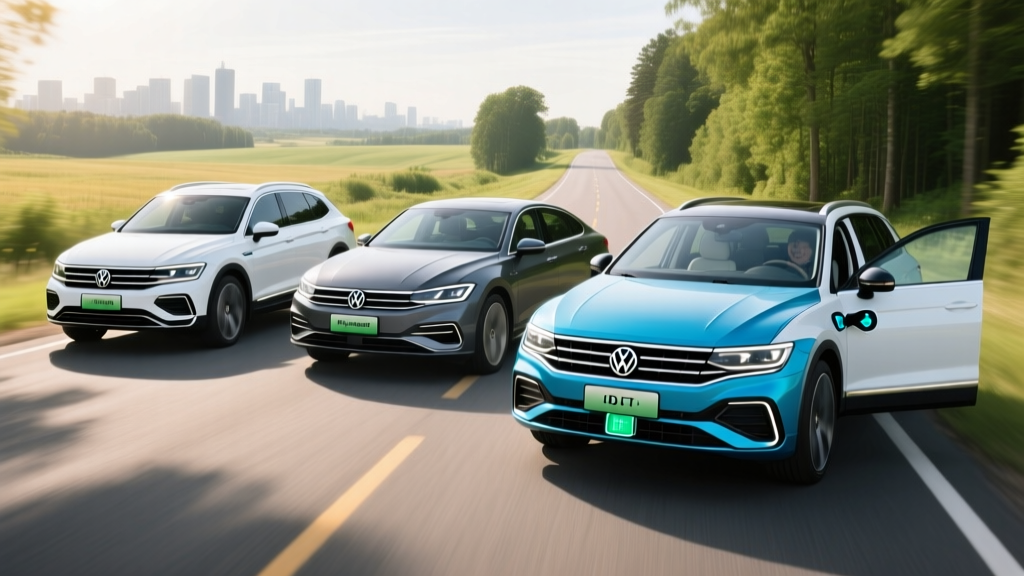
Volkswagen's hybrid strategy for the 2025–2026 model years has shifted dramatically. After discontinuing the Golf GTE in the U.S. and phasing out the Passat, VW is doubling down on plug-in hybrids (PHEVs) within its SUV lineup while keeping conventional hybrids (HEVs) minimal. If you're researching Volkswagen hybrid models 2025, the landscape comes down to a handful of key vehicles: the refreshed Tiguan eHybrid, the Jetta hybrid variant available in select markets, and VW's broader transition toward its ID. electric family.
This guide covers exactly what Volkswagen offers in the hybrid and PHEV space right now, with real numbers — EPA MPG, kWh battery capacity, electric-only range, pricing, and federal tax credit eligibility under current IRS §30D rules.
HEV vs PHEV: Understanding Volkswagen's Hybrid Lineup
Before evaluating specific models, it's critical to distinguish the two hybrid architectures Volkswagen uses:
Conventional Hybrid (HEV)
A small battery (typically 1–2 kWh) charged by regenerative braking and the engine. No plug required. The electric motor assists during acceleration and low-speed driving. You never charge it externally — it manages itself.
Plug-In Hybrid (PHEV)
A larger battery (13–20+ kWh) that you plug in to charge. Provides 20–40+ miles of pure electric driving before the gasoline engine engages. Requires access to a Level 1 (120V) or Level 2 (240V) outlet to capture the full benefit.
Volkswagen's U.S. strategy heavily favors PHEVs. The company has signaled that conventional HEVs don't align with its long-term electrification roadmap, though mild-hybrid (48V) systems appear in some models to improve stop-start smoothness and efficiency marginally.
2025 Volkswagen Tiguan eHybrid: The Core PHEV Offering
The Tiguan eHybrid (badged as the Tiguan PHEV in some markets) is Volkswagen's primary plug-in hybrid for the U.S. Built on the updated third-generation Tiguan platform, it pairs a 1.5-liter turbocharged four-cylinder engine with an electric motor integrated into the DSG transmission.
| Specification | 2025 Tiguan eHybrid |
|---|---|
| Combined System Output | 242 hp / 295 lb-ft torque |
| Engine | 1.5L turbo I4 (148 hp) |
| Electric Motor | 114 hp (integrated in DSG) |
| Battery Capacity | 19.7 kWh (usable ~15.5 kWh) |
| Battery Chemistry | NMC (Nickel Manganese Cobalt) |
| EPA Electric-Only Range | ~33 miles (estimated, pending final EPA cert) |
| Total Combined Range | ~430 miles (gas + electric) |
| Level 1 Charging (120V) | ~12 hours (0–100%) |
| Level 2 Charging (240V, 3.6 kW) | ~4.5 hours (0–100%) |
| DC Fast Charging | Not available |
| 0–60 mph | ~7.3 seconds |
| Drivetrain | FWD (AWD available in eHybrid 4Motion variant) |
| Starting MSRP | $39,490 (SE trim) |
Electric-Only Range: What to Expect
EPA Estimated Electric Range: ~33 miles
Real-World Expectation: 25–30 miles in mixed driving with climate control on. Highway-only electric driving at 70 mph may drop to 20–22 miles. In cold weather (below 35°F), expect 18–22 miles due to cabin heating demands and reduced battery efficiency.
The 33-mile electric range is competitive with rivals like the Toyota RAV4 Prime (42 miles EPA) but falls short of the Hyundai Tucson PHEV (33 miles EPA) and Ford Escape PHEV (37 miles EPA). For daily commutes under 25 miles round-trip, the Tiguan eHybrid can operate almost entirely on electricity if you charge nightly at home.
Fuel Economy: MPG Breakdown
| Mode | City | Highway | Combined |
|---|---|---|---|
| Charge-Sustaining (gas only, battery depleted) | 33 MPG | 36 MPG | 34 MPG |
| Combined MPGe (electric + gas) | 82 MPGe (estimated) | ||
Once the battery is depleted and the Tiguan operates as a conventional hybrid, 34 MPG combined is respectable for a compact SUV. Real-world highway driving at 75 mph may yield 31–33 MPG. City driving with frequent regen braking opportunities can push slightly above the EPA figure to 35–36 MPG — a common hybrid trait where stop-and-go traffic maximizes regenerative energy capture.
For context, a gasoline-only 2025 Tiguan with the 2.0L turbo gets 23 city / 30 highway / 26 combined, according to fueleconomy.gov. The PHEV delivers a meaningful efficiency improvement.
Pricing, Trims, and Federal Tax Credit Eligibility
The 2025 Tiguan eHybrid starts at approximately $39,490 for the SE trim, with the SEL Premium reaching $45,000+. Pricing includes destination charges.
Federal §30D Tax Credit: Does the Tiguan PHEV Qualify?
- MSRP Cap: SUVs must be under $80,000 — Tiguan qualifies ✓
- Buyer Income Cap: AGI must not exceed $150K (single) / $300K (joint) — varies by buyer
- Battery Sourcing (Critical Minerals): Must meet escalating annual thresholds for North American or FTA-partner sourcing — Volkswagen has not confirmed full compliance for 2025 Tiguan PHEV battery cells
- Battery Component Manufacturing: Must meet North American assembly thresholds — pending confirmation
- Point-of-Sale Transfer: If eligible, the credit can be applied at purchase rather than at tax filing
Verdict: As of early 2025, the Tiguan eHybrid's §30D eligibility remains uncertain due to battery-sourcing requirements. Volkswagen's U.S.-market PHEV batteries have historically used cells sourced from suppliers that may not meet the 2025 critical-mineral thresholds. Buyers should verify current eligibility at fueleconomy.gov or consult a tax professional before assuming the full $7,500 credit applies. The credit may be $3,750 (meeting one requirement) or $0 (meeting neither).
State incentives vary widely. California's CVRP program, Colorado's state credit, and New York's Charge Drive NY program may offer additional rebates. Check your state's energy office for current amounts.
Battery Warranty, Lifespan, and Replacement Cost
Volkswagen PHEV Battery Warranty
Coverage: 8 years / 100,000 miles (whichever comes first)
Capacity Retention Threshold: VW warrants the high-voltage battery to retain at least 70% of its original capacity during the warranty period. If capacity drops below 70%, VW will repair or replace the battery at no cost.
What's Covered: Defects, excessive degradation, cell failures, and BMS (battery management system) faults.
What's Not Covered: Damage from accidents, flooding, improper charging equipment, or modifications.
For the 19.7 kWh NMC battery in the Tiguan eHybrid, real-world degradation data from VW's European PHEV fleet (Golf GTE, Passat GTE) suggests approximately 8–12% capacity loss over 5 years / 60,000 miles under normal use. This means most owners will retain well above the 70% warranty threshold for the battery's practical life.
Out-of-warranty replacement cost: If the battery requires replacement after the warranty expires, expect $6,000–$9,000 for the pack plus $1,000–$1,500 in labor. This is a significant expense, though it typically occurs beyond 120,000+ miles. Individual module replacement (if only some cells fail) can reduce cost to $2,000–$4,000.
To maximize battery lifespan:
- Avoid regularly charging to 100% and letting it sit for days — charge to 80–90% for daily use if your charger supports it
- Minimize DC fast charging (not applicable here, as the Tiguan PHEV lacks DC capability)
- In extreme heat, park in shade or a garage when possible
- Use the vehicle's built-in battery preconditioning features when available
Who Should Choose a VW PHEV vs a Full EV or Gas Car?
Choose the Tiguan eHybrid (PHEV) If:
- You can charge at home (Level 1 or 2) nightly
- Your daily commute is under 30 miles round-trip
- You take road trips several times per year and don't want to plan around DC fast chargers
- You live in an area with limited public charging infrastructure
- You want SUV practicality with lower running costs than a gas-only Tiguan
Choose a Full EV (like the VW ID.4) If:
- You have reliable home Level 2 charging
- You want to eliminate gasoline purchases entirely
- Your daily driving is under 200 miles
- You want lower maintenance costs (no oil changes, fewer moving parts)
- The ID.4's 291-mile EPA range and $45,000-$55,000 price fits your budget
Choose a Gas-Only Tiguan If:
- You cannot charge at home (apartment, street parking without outlet access)
- The $6,000-$8,000 PHEV price premium doesn't pencil out for your mileage
- You drive less than 8,000 miles per year (fuel savings won't offset the premium quickly)
How the Tiguan eHybrid Compares to Rivals
| Spec | 2025 VW Tiguan eHybrid | 2025 Toyota RAV4 Prime | 2025 Hyundai Tucson PHEV |
|---|---|---|---|
| Combined HP | 242 hp | 302 hp | 261 hp |
| Battery (kWh) | 19.7 kWh | 18.1 kWh | 13.8 kWh |
| EPA Electric Range | ~33 mi | 42 mi | 33 mi |
| MPG (gas only) | 34 combined | 38 combined | 35 combined |
| AWD Standard | No (optional) | Yes | Yes |
| 0–60 mph | ~7.3 sec | 5.7 sec | ~7.0 sec |
| Starting MSRP | ~$39,490 | ~$43,690 | ~$38,725 |
| DC Fast Charge | No | No | No |
The RAV4 Prime remains the PHEV SUV benchmark thanks to its 42-mile electric range, standard AWD, and strong performance. However, it carries a price premium and has been plagued by limited dealer availability and markups. The Tucson PHEV undercuts on price but offers a smaller battery. The Tiguan eHybrid slots in the middle — competitive specs with VW's typically solid interior quality and ride refinement.
Pros
- Larger 19.7 kWh battery than most PHEV rivals
- Comfortable ride quality and premium interior feel
- 8-year/100,000-mile battery warranty
- Practical cargo space retained vs gas Tiguan
- Smooth DSG-integrated electric motor (no jerky transitions)
Cons
- Electric range (~33 mi) trails the RAV4 Prime (42 mi)
- No DC fast charging capability
- Federal tax credit eligibility uncertain for 2025
- FWD standard — AWD costs extra
- 3.6 kW onboard charger is slow for Level 2 (4.5 hrs to full)
Ownership Costs: 5-Year Breakdown
| Cost Factor | Tiguan eHybrid (PHEV) | Tiguan 2.0T (Gas) |
|---|---|---|
| Purchase Price (MSRP) | $39,490 | $32,490 |
| Federal Tax Credit (est.) | $0–$7,500 (uncertain) | $0 |
| Fuel/Energy (60,000 mi) | $3,200 (mix of electricity + gas) | $7,800 (gas only) |
| Maintenance (5 yr) | $3,800 | $4,200 |
| Insurance (5 yr avg) | $8,500 | $7,800 |
| Depreciation (est.) | $16,000 | $14,500 |
| 5-Year Total | $39,000–$46,500 | $52,290 |
If you qualify for the full §30D credit, the PHEV becomes significantly cheaper to own over 5 years. Without the credit, the breakeven point versus the gas Tiguan extends to roughly 6–7 years based on fuel savings alone. Electricity costs assume $0.14/kWh national average and $3.50/gallon gasoline. Your local rates will shift these numbers — check your utility's EV time-of-use rates for potential further savings by charging overnight.
Frequently Asked Questions
How many MPG does the 2025 Volkswagen Tiguan eHybrid get?
Once the battery is depleted, the Tiguan eHybrid operates as a conventional hybrid and delivers an EPA-estimated 33 city / 36 highway / 34 combined MPG. In real-world city driving with frequent stops, you may see 35–36 MPG thanks to regenerative braking. Highway cruising at 75 mph typically yields 31–33 MPG. When factoring in electric-only driving, the combined MPGe is estimated at 82 MPGe.
How far can the Tiguan PHEV go on electric only?
The EPA-estimated electric-only range is approximately 33 miles. Real-world range is typically 25–30 miles in mixed driving, 20–22 miles at sustained highway speeds, and 18–22 miles in cold weather (below 35°F). The 19.7 kWh battery (15.5 kWh usable) is larger than most PHEV competitors, but the Tiguan's weight and aerodynamics limit the advantage.
Hybrid vs PHEV vs EV — which should I choose?
Choose a PHEV (like the Tiguan eHybrid) if you can charge at home, drive under 30 miles daily, but need the flexibility of a gas engine for road trips. Choose a full EV (like the VW ID.4) if you want zero gas purchases, have home charging, and your daily driving stays under 200 miles. Choose a conventional hybrid if you cannot plug in at all but still want better fuel economy than a gas-only car. Volkswagen currently does not offer a conventional HEV SUV in the U.S. — your nearest option would be the Toyota RAV4 Hybrid or Honda CR-V Hybrid.
Is the Volkswagen Tiguan hybrid reliable and what does battery replacement cost?
VW's PHEV powertrain (1.5T engine + DSG-integrated motor) has been in use across European models since 2020 with generally positive reliability outcomes. The high-voltage battery carries an 8-year/100,000-mile warranty with a 70% capacity retention guarantee. Out-of-warranty battery replacement runs $6,000–$9,000 for the pack plus labor, though individual module repairs can cost $2,000–$4,000. Based on fleet data from VW's European PHEVs, expect 8–12% degradation over 5 years — well within the warranty threshold. According to NHTSA records, VW has issued no major battery-related recalls for its current PHEV architecture.
Does the 2025 Volkswagen Tiguan eHybrid qualify for any tax credit?
Eligibility for the federal §30D tax credit (up to $7,500) depends on battery sourcing and component manufacturing requirements that tightened significantly in 2024–2025. As of early 2025, Volkswagen has not confirmed that the Tiguan eHybrid's battery cells meet the critical-mineral and component-manufacturing thresholds required for the full credit. The vehicle may qualify for $3,750 (partial) or $0. Additionally, the buyer must meet income caps ($150K single / $300K joint AGI) and the SUV must be under the $80,000 MSRP cap (which the Tiguan meets). Always verify current eligibility at irs.gov before purchasing, as sourcing compliance can change model year to model year.
Can I DC fast charge the Tiguan PHEV?
No. The 2025 Tiguan eHybrid supports only AC charging: Level 1 (120V, ~1.4 kW) and Level 2 (240V, up to 3.6 kW). A full charge from empty takes approximately 12 hours on Level 1 or 4.5 hours on Level 2. This is typical for PHEVs — the smaller battery makes DC fast charging less cost-effective for manufacturers to include. For most PHEV owners who charge overnight at home, this is not a practical limitation.
Does Volkswagen offer any conventional (non-plug-in) hybrids in 2025?
Not in the U.S. market. Volkswagen has focused its American hybrid strategy exclusively on plug-in hybrids. Some international markets receive mild-hybrid (48V) versions of the Golf and Tiguan, but these provide only marginal efficiency gains (~1–2 MPG improvement) and do not offer electric-only driving. If you want a conventional hybrid without plug-in capability, you'll need to look at Toyota, Honda, or Hyundai's HEV offerings.