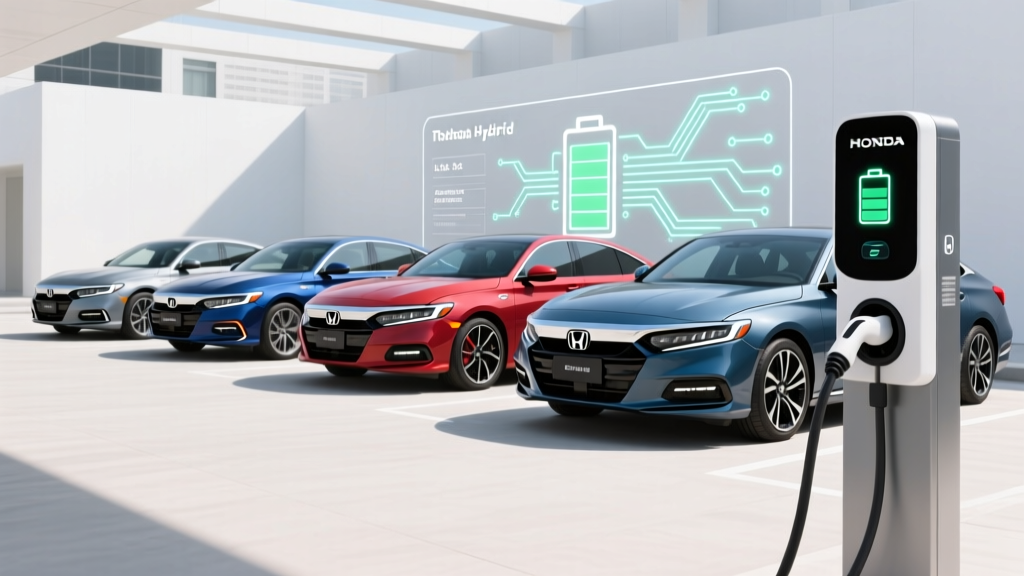
If you're not ready to commit to a full battery-electric vehicle but want to cut fuel costs and emissions, hybrids offer a practical middle ground. But the term "hybrid" covers two fundamentally different powertrains: the conventional hybrid (HEV) and the plug-in hybrid (PHEV). Understanding the difference between the different types of hybrid vehicles is the single most important step before you spend $30,000–$55,000 on one.
This guide breaks down each type with exact EPA fuel economy figures, real-world efficiency data, battery specifications, warranty coverage, and federal tax credit eligibility — so you can match the right hybrid to your driving pattern.
HEV vs PHEV: The Core Distinction
Before comparing specific models, you need to understand the mechanical difference between the two hybrid architectures available in 2026.
Conventional Hybrid (HEV)
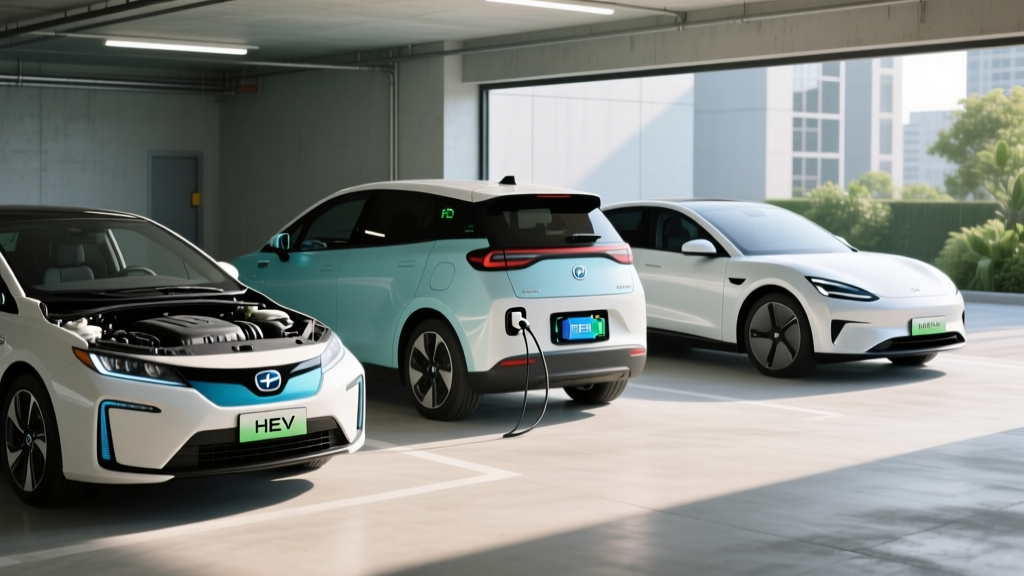
An HEV pairs a gasoline engine with a small electric motor and a compact battery (typically 1–2 kWh). The battery charges exclusively through regenerative braking and engine power — you never plug it in. The electric motor assists during acceleration and enables brief low-speed electric driving, but the engine does the heavy lifting. Think of it as a gas car that's significantly more efficient, especially in stop-and-go traffic.
Plug-In Hybrid (PHEV)
A PHEV uses a much larger battery (typically 13–25 kWh) and a more powerful electric motor. You plug it in to charge (Level 1 or Level 2), and it delivers 25–50 miles of pure electric driving before the gasoline engine engages. Once the battery depletes, it operates like a conventional hybrid. A PHEV is essentially an EV for short commutes and a hybrid for longer trips.
| Feature | HEV (Conventional Hybrid) | PHEV (Plug-In Hybrid) |
|---|---|---|
| Battery capacity | 1–2 kWh | 13–25 kWh |
| Plug-in charging | No — self-charging | Yes — Level 1/Level 2 |
| Electric-only range | Less than 1 mile at low speed | 25–50 miles (EPA) |
| Fuel economy (gas mode) | 40–57 MPG combined | 35–50 MPG combined (after battery depletes) |
| Home charging needed | No | Strongly recommended |
| Federal tax credit (§30D) | Not eligible | Up to $7,500 (eligibility varies) |
| Typical price premium over gas model | $1,500–$3,500 | $5,000–$12,000 |
Conventional Hybrids (HEV): Maximum MPG, Zero Plugs
The HEV segment has matured considerably. Toyota's fifth-generation hybrid system and Hyundai/Kia's TMED-II architecture deliver real-world fuel economy that often exceeds EPA estimates in city driving — because regenerative braking recovers more energy in stop-and-go conditions than the test cycle captures.
Top HEV Models for 2026
| Model | Powertrain | Combined HP | EPA City | EPA Highway | EPA Combined | Base MSRP |
|---|---|---|---|---|---|---|
| Toyota Prius (LE AWD) | 2.0L I4 + 2 motors | 196 hp | 57 MPG | 56 MPG | 57 MPG | $29,450 |
| Toyota Camry Hybrid (LE) | 2.5L I4 + motor | 225 hp | 53 MPG | 50 MPG | 52 MPG | $30,495 |
| Honda Accord Hybrid (Sport) | 2.0L I4 + 2 motors | 204 hp | 51 MPG | 44 MPG | 48 MPG | $34,295 |
| Hyundai Tucson Hybrid (Blue) | 1.6L Turbo + motor | 232 hp | 38 MPG | 38 MPG | 38 MPG | $33,465 |
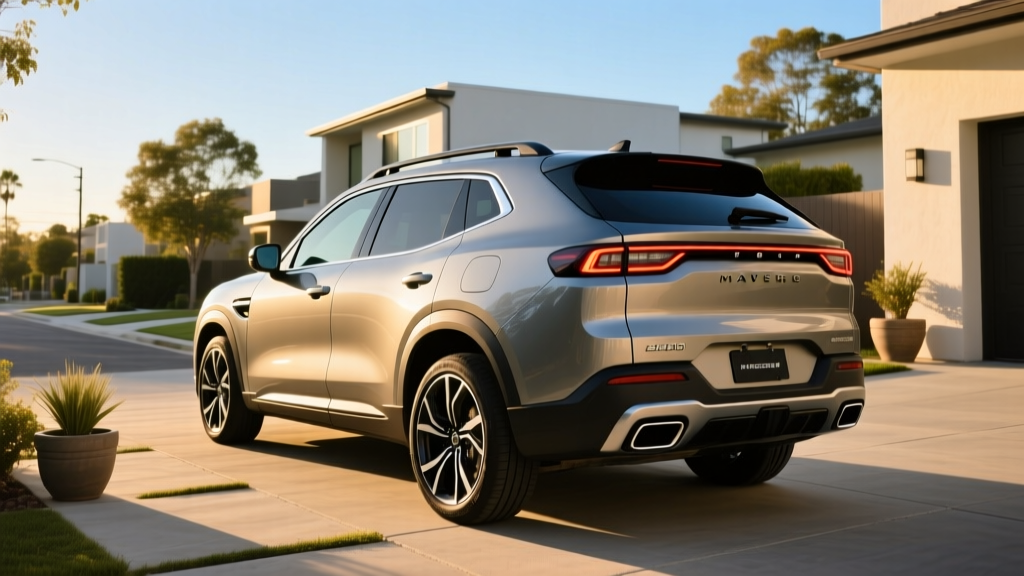
| Ford Maverick Hybrid (FWD) | 2.5L I4 + motor | 191 hp | 42 MPG | 33 MPG | 37 MPG | $28,440 |
Source: fueleconomy.gov — EPA estimates. Real-world results vary by driving style, terrain, and climate.
Real-World MPG: What to Actually Expect
HEVs consistently outperform their EPA city estimates in actual urban driving. The Prius LE, rated at 57 MPG city, routinely returns 60–65 MPG in moderate-temperature stop-and-go commutes. Highway driving tells a different story: sustained 75+ MPH speeds reduce regenerative braking opportunities and increase aerodynamic drag, so expect 48–52 MPG highway from that same Prius.
Cold weather impacts HEVs less severely than full EVs, but you'll still see a 5–10% efficiency drop in sub-freezing temperatures because the engine runs more frequently to provide cabin heat and warm up the catalytic converter.
Plug-In Hybrids (PHEV): Electric Commutes, Gas Road Trips
PHEVs are the right tool if your daily driving falls under 40 miles round-trip and you have access to a standard 120V outlet or a Level 2 home charger. You'll run primarily on electricity for daily errands, with the gasoline engine available for weekend road trips — eliminating range anxiety entirely.
Top PHEV Models for 2026
| Model | Battery (kWh) | EV Range (EPA) | Combined HP | Gas-Mode MPG | Total Range | Base MSRP |
|---|---|---|---|---|---|---|
| Toyota RAV4 Prime (SE) | 18.1 kWh | 42 miles | 302 hp | 38 MPG | 600+ miles | $44,905 |
| Hyundai Tucson PHEV (SEL) | 13.8 kWh | 33 miles | 261 hp | 35 MPG | 440+ miles | $39,405 |
| Jeep Wrangler 4xe (Sport S) | 17.3 kWh | 22 miles | 375 hp | 20 MPG | 370+ miles | $51,795 |
| Toyota Prius Prime (SE) | 13.6 kWh | 44 miles | 220 hp | 48 MPG | 510+ miles | $34,170 |
| BMW X5 xDrive50e | 25.7 kWh | 38 miles | 483 hp | 27 MPG | 440+ miles | $68,700 |
Source: fueleconomy.gov and manufacturer specifications. EV range is EPA-rated; real-world electric range varies with temperature and driving speed.
PHEV Charging: What You Need to Know
Most PHEVs charge via Level 1 (120V household outlet) or Level 2 (240V). Charge times vary significantly:
| Model | Level 1 (120V) | Level 2 (240V) | DC Fast Charge |
|---|---|---|---|
| Toyota RAV4 Prime | ~12 hours | ~2.5 hours (6.6 kW) | No |
| Toyota Prius Prime | ~11 hours | ~4 hours (3.5 kW) | No |
| Hyundai Tucson PHEV | ~11 hours | ~2 hours (7.2 kW) | No |
| BMW X5 xDrive50e | ~16 hours | ~3.5 hours (7.4 kW) | No |
Critical note: The vast majority of PHEVs in 2026 do not support DC fast charging. Mitsubishi's Outlander PHEV remains one of the few exceptions with DC fast-charge capability. If you need quick top-ups on road trips, a PHEV's gasoline engine handles that — you don't need DC charging for a PHEV the way you would for a full EV.
For daily use, a standard 120V outlet delivers roughly 4–5 miles of range per hour of charging. That's enough to replenish a 30-mile EV range overnight (8–10 hours). A Level 2 home charger cuts that to 2–4 hours, which is convenient but rarely urgent for a PHEV's smaller battery.
Hybrid Battery Warranties and Replacement Costs
Hybrid battery longevity is one of the most common concerns among first-time hybrid buyers. Here's what the data shows after two decades of hybrid deployment:
Federal Mandate: Hybrid Battery Warranty
Under EPA/CARB emissions regulations, all hybrid and PHEV batteries sold in the United States carry a minimum warranty of 8 years or 100,000 miles (whichever comes first). In CARB-adopting states (California, New York, Massachusetts, and others), that extends to 10 years or 150,000 miles.
Many manufacturers exceed the federal minimum. Toyota's hybrid battery warranty is 10 years/150,000 miles nationwide for 2026 models. Hyundai/Kia offers 10 years/100,000 miles.
Real-World Battery Lifespan
HEV batteries experience shallow charge cycles (they never fully deplete or fully charge), which significantly extends cell life. It's common for Toyota Prius HEV batteries to last 180,000–250,000 miles before significant degradation. PHEV batteries undergo deeper cycles but have larger buffers and more sophisticated thermal management.
Replacement Cost If Out of Warranty
| Model | Battery Type | Approximate Replacement Cost |
|---|---|---|
| Toyota Prius (HEV) | ~1.0 kWh NiMH/Li-ion | $2,000–$3,500 |
| Toyota Camry Hybrid | ~1.0 kWh Li-ion | $2,500–$4,000 |
| Toyota RAV4 Prime (PHEV) | 18.1 kWh Li-ion | $8,000–$12,000 |
| Hyundai Tucson PHEV | 13.8 kWh Li-ion | $7,000–$10,000 |
| Jeep Wrangler 4xe | 17.3 kWh Li-ion | $9,000–$14,000 |
HEV battery replacements are relatively affordable because the packs are small. PHEV batteries are larger and more expensive, but the extended warranties and gradual degradation curves mean most owners never face an out-of-pocket replacement. If you plan to keep a PHEV beyond 150,000 miles, factor in potential battery cost.
Tax Credits and Incentives: HEV vs PHEV
This is where the two hybrid types diverge sharply in total cost.
Conventional Hybrids (HEV): No Federal Tax Credit
HEVs do not qualify for the IRS §30D Clean Vehicle Credit. They are not plug-in vehicles, and the credit is specifically designed for EVs and PHEVs with sufficient battery capacity. Some states and local utilities offer small rebates ($250–$1,000) for HEVs, but these vary by jurisdiction — check your state energy office or utility provider.
Plug-In Hybrids (PHEV): Up to $7,500 Federal Credit
Qualifying PHEVs can receive up to $7,500 under the IRS §30D Clean Vehicle Credit, but eligibility depends on several requirements that change frequently:
- Battery capacity: Minimum 7 kWh (most PHEVs qualify)
- MSRP cap: Vans/SUVs/pickups ≤ $80,000; sedans ≤ $55,000
- Buyer income cap: AGI ≤ $300,000 (joint), $225,000 (head of household), $150,000 (single)
- Battery component sourcing: Must meet North American assembly and critical minerals thresholds (phased requirements through 2026)
- Point-of-sale transfer: You can apply the credit as a down-payment reduction at the dealer, rather than waiting for tax filing
Source: IRS.gov §30D Clean Vehicle Credit. Eligibility rules are subject to change; verify current requirements with a tax professional before purchasing.
For 2026, the Toyota Prius Prime and RAV4 Prime have faced credit limitations due to battery-sourcing rules. The Hyundai Tucson PHEV's eligibility depends on current critical-mineral sourcing compliance. Always verify the specific VIN's credit status on the IRS's official vehicle eligibility list before signing a purchase agreement.
HEV vs PHEV vs Full EV: Which Should You Choose?
The right electrified vehicle depends on your driving pattern, charging access, and budget. Here's a practical decision framework:
Choose a Conventional Hybrid (HEV) If:
- You don't have reliable access to a charging outlet at home or work
- You want maximum MPG with zero behavioral change (no plugging in)
- Your budget is under $35,000 and you want proven reliability
- You drive a mix of city and highway miles with no predictable short-commute pattern
- You plan to keep the vehicle 10+ years and want low long-term maintenance costs
Choose a Plug-In Hybrid (PHEV) If:
- Your daily round-trip commute is under 40 miles
- You can charge at home (even a standard 120V outlet works)
- You want EV-like daily driving but need gas-engine flexibility for road trips
- You qualify for the §30D tax credit and the math works in your favor
- You live in a region with extreme cold that would significantly reduce a full EV's range
Choose a Full EV (BEV) If:
- You have Level 2 home charging and your daily driving is under 250 miles
- You want the lowest per-mile fuel cost (electricity at $0.13/kWh ≈ $0.04/mile vs gas at $0.12–$0.18/mile)
- You want minimal maintenance (no oil changes, no spark plugs, reduced brake wear from regen)
- You qualify for the full $7,500 federal credit and any state incentives
HEV Advantages
- No charging infrastructure needed
- Lower upfront cost than PHEV or EV
- Proven long-term reliability (20+ years of Toyota hybrid data)
- Excellent real-world city MPG (often beats EPA estimates)
- Lower battery replacement cost if needed
HEV Limitations
- No electric-only driving (always burns gas)
- No federal tax credit
- Higher per-mile fuel cost than PHEV in electric mode or full EV
- Less power assist than PHEV (lower combined HP in most models)
PHEV Advantages
- 25–50 miles of zero-emission electric driving daily
- Gas engine eliminates range anxiety on long trips
- Potential $7,500 federal tax credit (eligibility varies)
- Strong combined horsepower from dual power sources
- Preconditioning cabin on electric power without running an engine
PHEV Limitations
- Higher purchase price ($5,000–$12,000 premium over HEV)
- Must plug in regularly to realize fuel savings
- Larger, heavier, more expensive battery to replace if needed
- Most PHEVs lack DC fast charging
- Less cargo space in some models (battery packaging)
Frequently Asked Questions
How many MPG does a hybrid get in real-world driving?
Conventional hybrids like the Toyota Prius (EPA 57 combined) routinely return 55–65 MPG in real-world mixed driving, often exceeding EPA estimates in city conditions. Highway-only driving at 75+ MPH typically drops to 48–52 MPG. PHEVs in gas-only mode (after battery depletion) deliver 20–48 MPG combined depending on the model — the Prius Prime achieves 48 MPG, while the Jeep Wrangler 4xe manages just 20 MPG due to weight and aerodynamics.
How far can a PHEV go on electric only?
EPA-rated electric-only ranges for 2026 PHEVs span from 22 miles (Jeep Wrangler 4xe) to 44 miles (Toyota Prius Prime). Real-world electric range is typically 10–20% lower in cold weather (below 40°F) due to battery chemistry and cabin heating demands. Highway-speed driving also reduces EV range — expect 70–80% of the EPA rating at sustained 70+ MPH.
Do conventional hybrids need to be plugged in?
No. Conventional hybrids (HEVs) charge their small battery entirely through regenerative braking and the gasoline engine. You fuel them like any other gas car. Only plug-in hybrids (PHEVs) require or benefit from external charging.
Is a hybrid reliable, and what does battery replacement cost?
Hybrids from Toyota, Honda, and Hyundai/Kia have demonstrated strong long-term reliability over two decades of production. Hybrid batteries carry a minimum 8-year/100,000-mile warranty (10 years/150,000 miles in CARB states and for Toyota nationwide). HEV battery replacement costs $2,000–$4,000; PHEV battery replacement runs $7,000–$14,000. Most hybrid batteries outlast 150,000+ miles before significant degradation.
Does a hybrid qualify for a tax credit?
Conventional hybrids (HEVs) do not qualify for the federal §30D Clean Vehicle Credit. Plug-in hybrids (PHEVs) can qualify for up to $7,500, subject to MSRP caps, buyer income limits, and battery-sourcing requirements. Verify eligibility on IRS.gov for the specific VIN before purchasing. Some states offer additional rebates for both HEVs and PHEVs — check your state energy office.
How long does it take to charge a PHEV at home?
On a standard 120V outlet (Level 1), most PHEVs fully charge in 10–16 hours — sufficient for overnight replenishment. On a 240V Level 2 charger, charge times drop to 2–4 hours. Since PHEV batteries are small (13–25 kWh), you don't need the expensive high-amperage Level 2 equipment that full EVs benefit from. A basic 16-amp Level 2 unit ($300–$500 installed) is usually adequate.
Should I buy a hybrid or a full EV?
If you have Level 2 home charging, a predictable daily commute under 250 miles, and access to reliable public DC fast charging for road trips, a full EV offers lower operating costs and less maintenance. If you lack home charging, frequently drive 300+ miles in a day, live in extreme cold, or want to minimize upfront cost, a hybrid (HEV or PHEV) is the more practical choice in 2026.