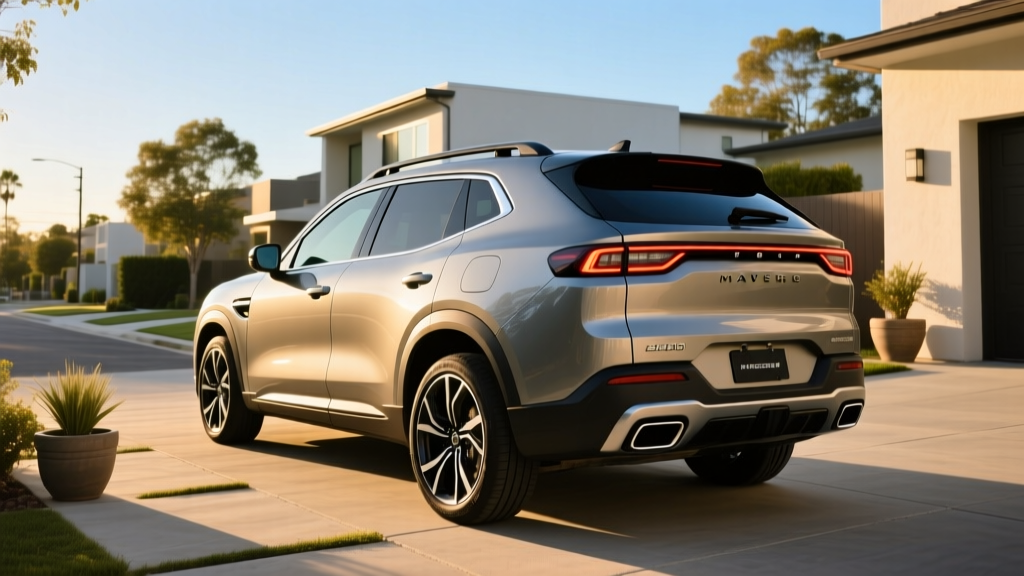
The Ford Maverick Hybrid has carved out a unique position in the compact truck market: it is one of the few vehicles that pairs a hybrid powertrain with available all-wheel drive in a sub-$30,000 package. For buyers searching for an AWD hybrid Maverick, the 2026 model year continues to offer a compelling mix of fuel efficiency, utility, and everyday practicality — but understanding exactly what this truck delivers (and where it falls short) requires a close look at the numbers.
This guide covers the 2026 Maverick Hybrid AWD in detail: EPA fuel economy, real-world MPG expectations, powertrain specs, battery warranty, pricing, tax credit eligibility, and how it stacks up against plug-in hybrids and full battery-electric trucks.
HEV vs PHEV: What the Maverick Hybrid Actually Is
Before diving into specs, it is essential to clarify what the Maverick Hybrid is — and what it is not. The Maverick Hybrid is a conventional hybrid electric vehicle (HEV), not a plug-in hybrid (PHEV). This distinction matters because it determines how you fuel the truck, what kind of electric-only range you get, and whether you qualify for federal tax incentives.
| Feature | HEV (Maverick Hybrid) | PHEV (e.g., Toyota RAV4 Prime) | BEV (e.g., Ford F-150 Lightning) |
|---|---|---|---|
| Plug-in charging required? | No — self-charging via engine + regen | Yes — plug in for electric-only miles | Yes — plug in for all driving |
| Electric-only range | ~1 mile at low speed | 30–42 miles typical | 230–320+ miles (full battery) |
| Battery size | ~1.1 kWh (small buffer) | 13–18 kWh usable | 70–130+ kWh |
| Gas engine | Yes — primary power source | Yes — kicks in after battery depletes | None |
| Federal tax credit (§30D) | Not eligible | Up to $7,500 (if eligible) | Up to $7,500 (if eligible) |
The Maverick Hybrid's small battery pack charges entirely through regenerative braking and the gasoline engine. You never plug it in. The electric motor assists the engine during acceleration and low-speed driving, reducing fuel consumption — but the truck cannot sustain highway speeds on electric power alone for more than brief stretches.
Fuel Economy: EPA Ratings and Real-World MPG
Fuel economy is the primary reason buyers choose the Maverick Hybrid over the turbocharged EcoBoost variant. Here is what the EPA rates the 2026 AWD Hybrid Maverick at, per fueleconomy.gov:
| Drivetrain | City MPG | Highway MPG | Combined MPG |
|---|---|---|---|
| FWD Hybrid | 42 | 33 | 38 |
| AWD Hybrid | 40 | 34 | 37 |
| AWD 2.0L EcoBoost (gas) | 22 | 29 | 25 |
The AWD system costs you roughly 2 MPG in the city compared to front-wheel drive, but the combined figure of 37 MPG still dramatically outpaces the EcoBoost AWD's 25 MPG combined. Over 15,000 miles per year at $3.40/gallon, that translates to roughly $720 in annual fuel savings for the hybrid AWD over the gas AWD — and the gap widens if gas prices rise.
Real-World MPG: What Owners Actually See
Hybrids tend to outperform their EPA ratings in city driving, where regenerative braking and electric-motor assist are most active. Many Maverick Hybrid owners report 43–47 MPG in urban stop-and-go traffic, exceeding the 40 MPG city sticker. Highway driving tells a different story: at sustained 70–80 MPH speeds, the hybrid advantage shrinks, and real-world highway MPG often lands between 30–33 MPG, slightly below the EPA highway estimate.
If your commute is mostly city and suburban driving, the Maverick Hybrid AWD will likely beat its EPA numbers. If you spend most of your time on the interstate, expect figures closer to the low 30s. Cold weather (below 30°F) typically reduces hybrid efficiency by 10–15%, as the engine runs more frequently to provide cabin heat and maintain battery temperature.
Powertrain Specs: Engine, Motor, and Combined Output
| Specification | 2026 Maverick Hybrid AWD |
|---|---|
| Engine | 2.5L Atkinson-cycle inline-4 |
| Engine horsepower | 162 hp @ 5,600 rpm |
| Electric motor output | ~126 hp (front); rear e-motor for AWD |
| Combined system horsepower | 191 hp |
| Transmission | eCVT (planetary gearset, no traditional gears) |
| Drivetrain | Electronic AWD (rear e-motor engages as needed) |
| 0–60 MPH | ~7.8 seconds (estimated) |
| Towing capacity (hybrid AWD) | 2,000 lbs (standard); 2,000 lbs max |
| Payload capacity | ~1,500 lbs |
| Battery type | Lithium-ion, ~1.1 kWh |
The Maverick Hybrid uses Ford's fourth-generation hybrid system, which pairs a naturally aspirated 2.5-liter four-cylinder engine with an electric motor integrated into the transaxle. The AWD system is fully electronic — there is no mechanical driveshaft to the rear wheels. Instead, a separate rear-mounted electric motor engages the rear axle when the system detects slip or when additional traction is needed.
The 191 combined horsepower is adequate for daily driving and merging, but it is not a performance truck. The eCVT delivers smooth, linear acceleration without the shift shock of a conventional automatic, but it also means the engine can drone under hard acceleration (a common trait of Atkinson-cycle hybrid systems). The 2,000-pound towing limit is the trade-off: if you need the 4,000-pound tow rating available on the EcoBoost AWD with the tow package, the hybrid is not the right choice.
Pricing, Trims, and Tax Credit Eligibility
The 2026 Maverick Hybrid AWD is available across multiple trim levels. Pricing reflects Ford's current MSRP structure:
| Trim | MSRP (AWD Hybrid) |
|---|---|
| XL | ~$28,490 |
| XLT | ~$30,290 |
| Lariat | ~$33,690 |
| Lobo (if available) | TBD / EcoBoost only |
The AWD system adds approximately $1,500–$2,000 over the FWD Hybrid depending on trim. Ford has made the hybrid powertrain a no-cost option on most trims (you choose hybrid or EcoBoost at the same base price), though AWD availability and pricing can shift by model year.
Does the Maverick Hybrid Qualify for a Federal Tax Credit?
No. The Maverick Hybrid is a conventional HEV and does not qualify for the IRS §30D New Clean Vehicle Credit. That credit — up to $7,500 — is reserved for battery electric vehicles (BEVs) and plug-in hybrids (PHEVs) that meet battery sourcing, critical mineral, MSRP cap, and buyer income requirements.
Some states offer their own incentives for hybrids, but these are increasingly rare as state programs shift focus to PHEVs and BEVs. Check your state's energy or DMV website for any current hybrid rebates, but do not count on one.
Battery Warranty, Reliability, and Replacement Cost
Hybrid battery longevity is one of the most common concerns among first-time hybrid buyers. Here is the reality for the Maverick Hybrid:
Ford Hybrid Battery Warranty:
- 8 years / 100,000 miles (whichever comes first) — standard across all 50 states
- 10 years / 150,000 miles in California Air Resources Board (CARB) states (CA, CO, CT, ME, MA, NJ, NY, OR, RI, VT, WA, and others adopting CARB standards)
- Coverage: battery capacity loss below a defined threshold, defects, and premature failure
Ford's hybrid system has been in production across multiple vehicles (Escape Hybrid, Fusion Hybrid, Maverick Hybrid) for over a decade, and widespread battery failures are uncommon. The Maverick's ~1.1 kWh battery is small and operates within a narrow state-of-charge window (the system never fully charges or fully depletes it), which significantly reduces degradation stress compared to a full EV battery.
What Does a Hybrid Battery Replacement Cost?
If the battery fails outside the warranty period, replacement costs for the Maverick Hybrid battery pack currently range from $2,500 to $4,000 (parts and labor), based on Ford dealer pricing and independent hybrid repair shops. This is substantially less than a full EV battery replacement ($8,000–$20,000+), because the hybrid battery is small. Many hybrid batteries last 150,000–200,000+ miles without significant issues, based on long-term data from Ford's Escape and Fusion Hybrid platforms.
Overall reliability for the Maverick Hybrid has been solid. The eCVT transmission has no traditional gears or clutch packs to wear out, and the regenerative braking system reduces wear on the friction brakes (many hybrid owners report original brake pads lasting 80,000+ miles).
Maverick Hybrid AWD vs. PHEV Trucks vs. Full EV Trucks
If you are cross-shopping an AWD hybrid Maverick against electrified trucks, here is how the landscape breaks down in 2026:
| Vehicle | Type | EPA Combined | Electric Range | Starting MSRP | Tax Credit |
|---|---|---|---|---|---|
| Ford Maverick Hybrid AWD | HEV | 37 MPG | ~1 mi (low speed) | ~$28,490 | None |
| Ford F-150 Lightning (STD Range) | BEV | 70 MPGe | ~240 mi | ~$52,000 | Up to $7,500* |
| Chevrolet Silverado EV | BEV | 63–68 MPGe | ~350–400 mi | ~$55,000 | Up to $7,500* |
| Ram 1500 Ramcharger | EREV | TBD (est. 30+ MPG gas) | ~145 mi (est.) | ~$55,000+ | Up to $7,500* |
* §30D credit eligibility depends on MSRP caps ($80,000 for trucks), buyer income limits ($300K MFJ / $150K single), battery sourcing requirements, and point-of-sale transfer rules. Verify current eligibility at irs.gov.
The Maverick Hybrid occupies a distinct niche: it is the most affordable electrified truck available, it requires zero charging infrastructure, and it delivers strong city MPG. The trade-offs are limited electric-only capability, lower towing capacity, and no tax credit. If you need a true electric-commute truck with 30+ miles of gas-free driving, a PHEV or BEV is the better fit — but those start at $50,000+ and require home charging access.
Pros — AWD Hybrid Maverick
- 40 MPG city / 37 combined — best-in-class for an AWD truck
- Sub-$30K starting price with no charging setup needed
- Proven hybrid system with 8–10 year battery warranty
- Strong real-world city MPG (often exceeds EPA)
- Electronic AWD handles rain, snow, and light trails
- 4.5-foot bed with useful payload (~1,500 lbs)
Cons — AWD Hybrid Maverick
- 2,000-lb towing limit (half the EcoBoost AWD max)
- No federal tax credit (HEV, not PHEV/BEV)
- Highway MPG drops to low 30s at sustained speed
- eCVT drone under hard acceleration
- No DC fast charging or meaningful electric-only range
- AWD hybrid availability can be limited by dealer allocation
Who Should Buy the AWD Hybrid Maverick?
Choose the AWD Hybrid Maverick if:
- Your daily driving is mostly city and suburban (where the 40+ MPG city advantage shines)
- You want AWD for snow or rain but don't want to pay EV prices
- You cannot install a home charger or lack reliable public charging access
- Your towing needs are light (under 2,000 lbs — bikes, a small trailer, a jet ski)
- You want the lowest total cost of ownership in a compact truck
Choose a PHEV or full EV truck instead if:
- You want 30+ miles of electric-only commuting (PHEV) or zero gas (BEV)
- You have home Level 2 charging and want to capture the $7,500 federal credit
- You need 4,000+ lbs of towing capacity
- You drive predominantly highway miles (where the hybrid advantage narrows)
Frequently Asked Questions
How many MPG does the AWD Hybrid Maverick get?
The EPA rates the 2026 Maverick Hybrid AWD at 40 city / 34 highway / 37 combined MPG. Real-world city driving often yields 43–47 MPG thanks to regenerative braking. Highway driving at 70–80 MPH typically returns 30–33 MPG. Cold weather reduces efficiency by roughly 10–15%.
Does the Maverick Hybrid need to be plugged in?
No. The Maverick Hybrid is a conventional HEV. Its small lithium-ion battery charges through regenerative braking and the gasoline engine. There is no plug, no charging cable, and no electric-only commute mode. You fuel it exclusively at the gas pump.
Is the Maverick Hybrid AWD reliable?
Ford's hybrid powertrain has been in production for over a decade across the Escape, Fusion, and Maverick lines. The eCVT is mechanically simple (no traditional gears), and the small hybrid battery operates in a narrow charge window that minimizes degradation. The battery is warrantied for 8 years/100,000 miles (10 years/150,000 miles in CARB states). Out-of-warranty replacement runs approximately $2,500–$4,000.
Does the Maverick Hybrid qualify for any tax credit?
The Maverick Hybrid does not qualify for the federal §30D New Clean Vehicle Credit, which is limited to BEVs and PHEVs meeting battery sourcing, MSRP, and income requirements. Some states may offer minor hybrid incentives, but these are uncommon in 2026. Check your state energy office for current programs.
How does the Maverick Hybrid AWD compare to the EcoBoost AWD?
The EcoBoost 2.0L AWD delivers 250 hp and a 4,000-lb tow rating (with the tow package), but averages only 25 MPG combined. The Hybrid AWD gives you 191 hp, a 2,000-lb tow limit, and 37 MPG combined. If towing and power are priorities, the EcoBoost wins. If fuel savings and lower operating costs matter more, the Hybrid is the clear choice. The hybrid also saves roughly $720/year in fuel over the EcoBoost at current gas prices.
What is the total range of the Maverick Hybrid AWD?
With a 16.5-gallon fuel tank and 37 MPG combined, the Maverick Hybrid AWD delivers approximately 610 miles of total range on a single tank under mixed driving conditions. City-heavy driving can push this above 650 miles.
Can I get the Maverick Hybrid with a crew cab?
Yes. The 2026 Maverick is offered exclusively as a four-door SuperCrew (crew cab) across all trims and powertrains, including the Hybrid AWD. There is no regular-cab or extended-cab configuration.