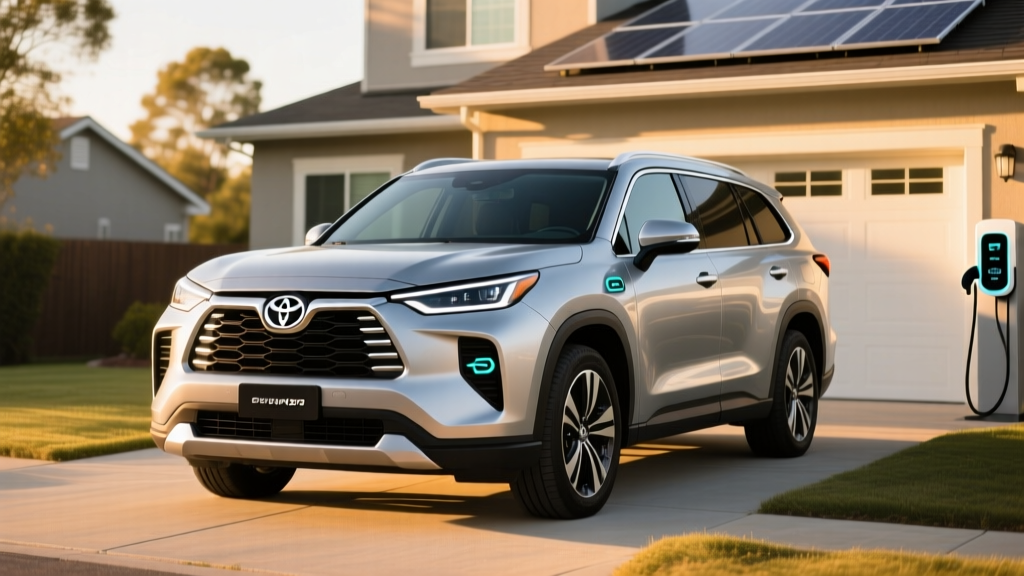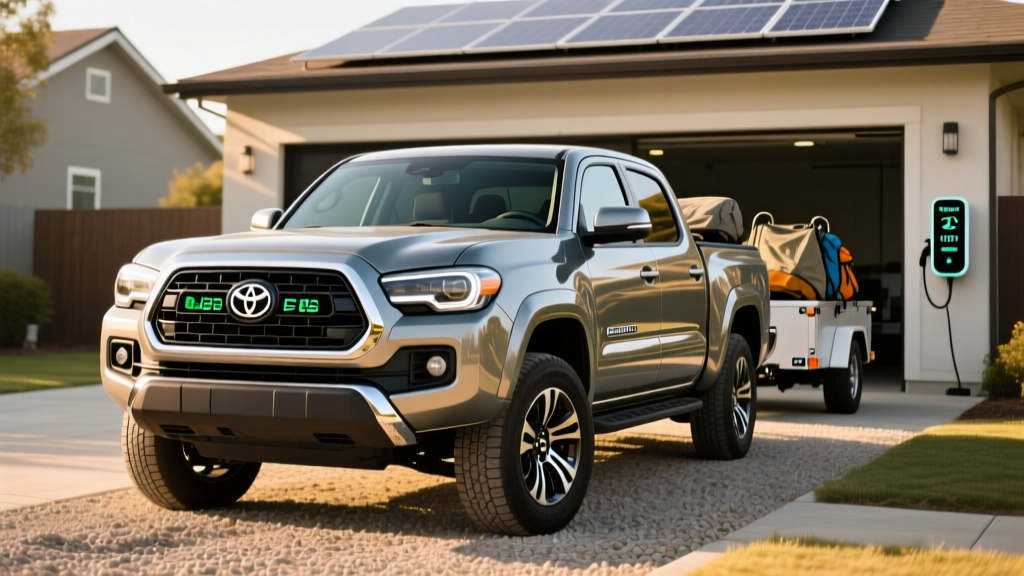
Quick Verdict: Toyota's Only Hybrid Truck Is the Tacoma i-FORCE MAX
Shoppers searching for a Toyota hybrid truck have exactly one option in the 2026 model year: the Toyota Tacoma i-FORCE MAX. This is a conventional hybrid (HEV), not a plug-in — you never plug it in, and there is no electric-only driving mode. Instead, Toyota pairs a turbocharged 2.4-liter four-cylinder engine with an electric motor integrated into the eight-speed automatic transmission, delivering 326 combined horsepower and a meaningful bump in low-end torque for towing and off-road use.
The i-FORCE MAX powertrain is available across multiple Tacoma trims — from the trail-focused TRD Off-Road to the luxury-leaning Limited — making it the most versatile hybrid truck in Toyota's lineup. If you were hoping for a hybrid Tundra, Toyota dropped the Tundra Hybrid (also branded i-FORCE MAX) after the 2024 model year to retool its powertrain strategy, leaving the Tacoma as the sole Toyota hybrid truck for 2026.
A conventional hybrid (HEV) like the Tacoma i-FORCE MAX uses a small battery (typically 1–2 kWh) recharged by regenerative braking and the engine. You never plug it in. A plug-in hybrid (PHEV) has a larger battery (10–20+ kWh), can drive on electricity alone for 20–50 miles, and must be plugged in to realize its full efficiency benefit. The 2026 Tacoma is an HEV only — Toyota does not offer a Tacoma PHEV.
Fuel Economy: How Many MPG Does the Tacoma Hybrid Get?
The 2026 Tacoma i-FORCE MAX carries EPA fuel-economy ratings that vary slightly by trim and drivetrain configuration. Below are the official figures from fueleconomy.gov:
| Configuration | City MPG | Highway MPG | Combined MPG |
|---|---|---|---|
| 4x2 (RWD) | 23 | 27 | 24 |
| 4x4 (AWD) | 22 | 26 | 23 |
| TRD Off-Road 4x4 | 21 | 25 | 22 |
Real-World MPG vs. EPA Sticker
Conventional hybrids typically exceed their EPA city rating in stop-and-go driving, where regenerative braking recaptures energy most aggressively. Tacoma i-FORCE MAX owners routinely report 25–27 MPG in mixed city driving on 4x2 models. Highway cruising at 75+ MPH, however, often drops fuel economy to 22–24 MPG — aerodynamic drag on a body-on-frame pickup overwhelms the hybrid system's efficiency advantage at sustained speed.
In cold weather (below 35°F), expect a 5–10% reduction in fuel economy. The engine runs richer during warm-up, and the hybrid battery's charge acceptance decreases. This is normal for all HEVs and is less pronounced than the range loss seen in full EVs.
Powertrain Specs: Engine, Motor, and Combined Output
| Specification | Value |
|---|---|
| Engine | 2.4L turbocharged inline-4 |
| Electric Motor | Integrated into 8-speed automatic transmission |
| Combined Horsepower | 326 hp |
| Combined Torque | 465 lb-ft |
| Hybrid Battery | ~1.87 kWh (NiMH), sealed, self-charging |
| Transmission | 8-speed automatic |
| 0–60 mph (est.) | ~6.5 seconds |
| Max Towing Capacity | 6,000 lbs (properly equipped) |
| Max Payload | 1,705 lbs |
The 465 lb-ft of torque is the headline figure — it arrives low in the rev range thanks to the electric motor's instant torque delivery, making the Tacoma i-FORCE MAX noticeably more responsive off the line and when merging onto highways compared to the non-hybrid 278-hp i-FORCE turbo-four. For towing, the hybrid system smooths out the initial pull from a stop and reduces transmission hunting on grades.
HEV vs. PHEV vs. EV: Which Truck Fits Your Needs?
Choose the Tacoma HEV If:
- You want better fuel economy without changing your habits (no plugging in)
- You tow regularly and want the torque advantage
- You lack access to home or workplace charging
- You want Toyota's proven hybrid reliability record
Look at a PHEV or Full EV If:
- You have home Level 2 charging and want electric-only daily commuting (PHEV: 30–40 mi; BEV: 250+ mi)
- You want to eliminate gasoline for daily driving entirely
- You qualify for the §30D federal tax credit (up to $7,500 for qualifying new EVs/PHEVs — HEVs do not qualify)
- Lower per-mile "fuel" cost matters more than towing capability
Toyota does not offer a Tacoma PHEV or a Tacoma EV for 2026. If you need a plug-in Toyota truck, you are currently out of luck — the closest Toyota plug-in option is the RAV4 Prime PHEV (42 miles electric-only, 94 MPGe), which is a compact SUV, not a truck. For a full-electric truck, competitors like the Ford F-150 Lightning, Rivian R1T, and Chevrolet Silverado EV are the alternatives, though none match the Tacoma's midsize footprint.
Pricing, Trims, and Tax Credit Eligibility
The 2026 Tacoma i-FORCE MAX hybrid powertrain is available on the following trims (MSRP, including destination):
- TRD Off-Road: ~$47,000
- Limited: ~$53,000
- TRD Pro: ~$65,000
- Trailhunter: ~$58,000
No. The 2026 Toyota Tacoma i-FORCE MAX is a conventional hybrid (HEV) and does not qualify for the IRS §30D Clean Vehicle Credit (up to $7,500). That credit applies only to plug-in electric vehicles (BEVs and PHEVs) meeting battery-sourcing, MSRP cap, and buyer income requirements per IRS guidelines. Some states offer modest rebates for conventional hybrids — check your state energy office — but there is no federal incentive for HEV purchases in 2026.
Battery Warranty, Reliability, and Replacement Cost
Toyota covers the Tacoma i-FORCE MAX hybrid battery for 10 years or 150,000 miles (whichever comes first) under its Hybrid System Warranty. This is one of the strongest hybrid battery warranties in the industry and applies in all 50 states.
Reliability Track Record
Toyota has built more than 25 million hybrid vehicles since the original Prius in 1997, and its hybrid powertrains consistently rank at or near the top of long-term reliability surveys from Consumer Reports and J.D. Power. The i-FORCE MAX system uses a proven architecture — a motor-generator sandwiched between the engine and transmission — with fewer wear components than a conventional powertrain (no alternator, no starter motor, regenerative braking reduces brake pad wear).
Battery Replacement Cost
If the hybrid battery fails outside of warranty, replacement cost for the Tacoma i-FORCE MAX battery pack typically ranges from $2,500 to $4,500 including labor at a Toyota dealer. Independent hybrid specialists often offer refurbished packs for $1,500–$2,500. Given the 10-year/150,000-mile warranty and Toyota's reliability history, out-of-pocket replacement during typical ownership is uncommon.
The 12-volt auxiliary battery (a standard AGM unit, not the hybrid traction battery) may need replacement every 4–6 years at a cost of $200–$350 — this is routine maintenance, identical to any gas vehicle.
Real-World Ownership: What to Expect
The Tacoma i-FORCE MAX shines in specific driving scenarios:
- City and suburban driving: The hybrid system's regenerative braking and electric-motor assist deliver 25–27 MPG in stop-and-go conditions — a meaningful improvement over the non-hybrid Tacoma's ~20 MPG city.
- Towing: The 465 lb-ft of torque makes trailer starts and highway merging significantly easier. Fuel economy while towing a 4,000-lb trailer drops to roughly 13–15 MPG, which is typical for the class.
- Highway cruising: At 70–80 MPH, the hybrid advantage diminishes. Expect 22–24 MPG — only marginally better than the non-hybrid turbo-four at sustained speed.
- Off-road: TRD Off-Road and Trailhunter trims use the hybrid's low-end torque for precise crawl control. The battery pack is mounted under the rear seat and does not reduce ground clearance.
Maintenance costs are slightly lower than a conventional gas truck. The hybrid system eliminates the starter motor and alternator, and regenerative braking extends brake pad life to 60,000–80,000 miles in typical driving. Toyota recommends the same 10,000-mile oil change interval as the non-hybrid model.
Pros and Cons
Pros
- 465 lb-ft of torque excellent for towing and off-road
- 22–24 combined MPG is strong for a body-on-frame midsize truck
- No plug-in charging required — works like a normal truck
- 10-year / 150,000-mile hybrid battery warranty
- Toyota's industry-leading hybrid reliability record
- Available across multiple trims (Off-Road to Limited)
Cons
- No federal tax credit — HEVs are ineligible for §30D
- Hybrid powertrain adds ~$3,000–$4,000 over non-hybrid trims
- Highway MPG advantage is modest vs. non-hybrid
- No PHEV or EV Tacoma option exists for 2026
- Towing capacity (6,000 lbs) trails some V-6 competitors
- i-FORCE MAX not available on base SR or SR5 trims
Frequently Asked Questions
How many MPG does the Toyota Tacoma hybrid get?
The 2026 Tacoma i-FORCE MAX is EPA-rated at 22–24 MPG combined depending on trim and drivetrain (23 city / 27 highway for 4x2; 22 city / 26 highway for 4x4). Real-world city driving often yields 25–27 MPG thanks to regenerative braking, while sustained highway driving at higher speeds returns 22–24 MPG.
Is the Tacoma hybrid a plug-in? Do I need to charge it?
No. The Tacoma i-FORCE MAX is a conventional hybrid (HEV). The small hybrid battery recharges itself through regenerative braking and the gasoline engine. You never plug it in, and there is no electric-only driving mode. Treat it exactly like a gas truck at the fuel pump — just fill up and go.
Does the Toyota hybrid truck qualify for a tax credit?
The Tacoma i-FORCE MAX does not qualify for the federal §30D Clean Vehicle Credit, which is reserved for plug-in EVs and PHEVs with qualifying battery sourcing. There is no federal tax incentive for conventional hybrids in 2026. Some states may offer small rebates — check your local energy authority.
How long will the Tacoma hybrid battery last?
Toyota's hybrid batteries are engineered for the life of the vehicle. The hybrid battery is covered by a 10-year / 150,000-mile warranty. Based on Toyota's track record with millions of hybrid vehicles, most hybrid batteries last well beyond 150,000 miles without issue. Replacement, if needed outside warranty, runs $2,500–$4,500.
Can the Tacoma hybrid tow as much as the gas-only model?
The i-FORCE MAX hybrid is rated to tow up to 6,000 lbs when properly equipped — comparable to the non-hybrid turbo-four Tacoma. The hybrid's advantage is not a higher maximum tow rating but the 465 lb-ft of low-end torque, which makes starting from a stop with a trailer and climbing grades noticeably easier and smoother.
Why doesn't Toyota make a hybrid Tundra in 2026?
Toyota discontinued the Tundra i-FORCE MAX hybrid after the 2024 model year as part of a broader powertrain restructuring. The company has not announced a replacement hybrid or plug-in Tundra for 2026. For a full-size Toyota truck, only the twin-turbo V-6 i-FORCE (non-hybrid) is currently available.
Should I buy the Tacoma hybrid or a full-electric truck?
Choose the Tacoma i-FORCE MAX hybrid if you need a midsize truck for towing, off-road, or rural driving where charging infrastructure is sparse, and you want improved fuel economy without changing your fueling habits. Choose a full-electric truck (Ford F-150 Lightning, Rivian R1T, Chevy Silverado EV) if you have reliable home charging, primarily drive in urban/suburban areas, want the lowest per-mile fuel cost, and can work within current EV towing and range limitations. For most truck buyers who tow regularly or lack home charging, the Tacoma HEV is the more practical choice in 2026.