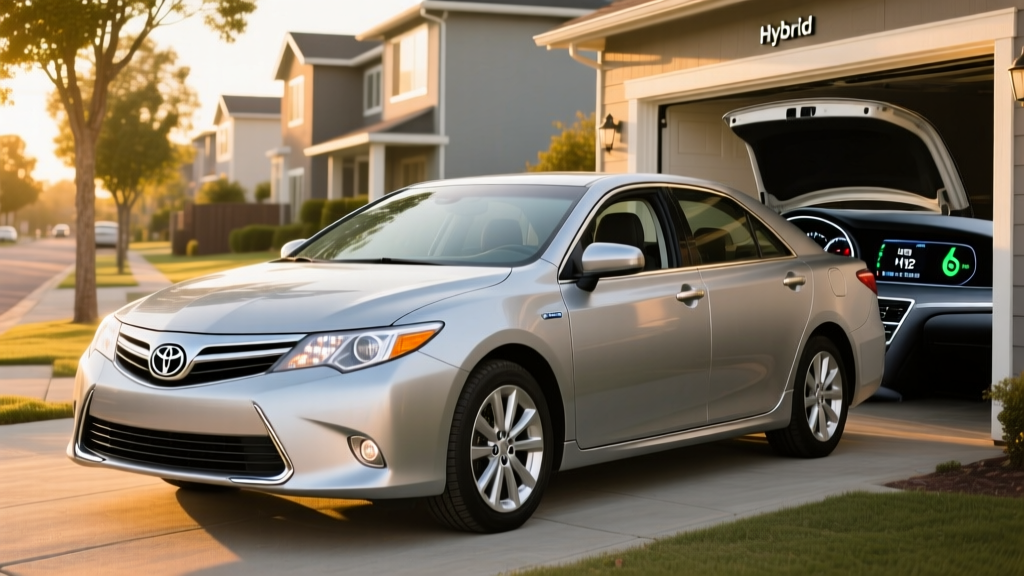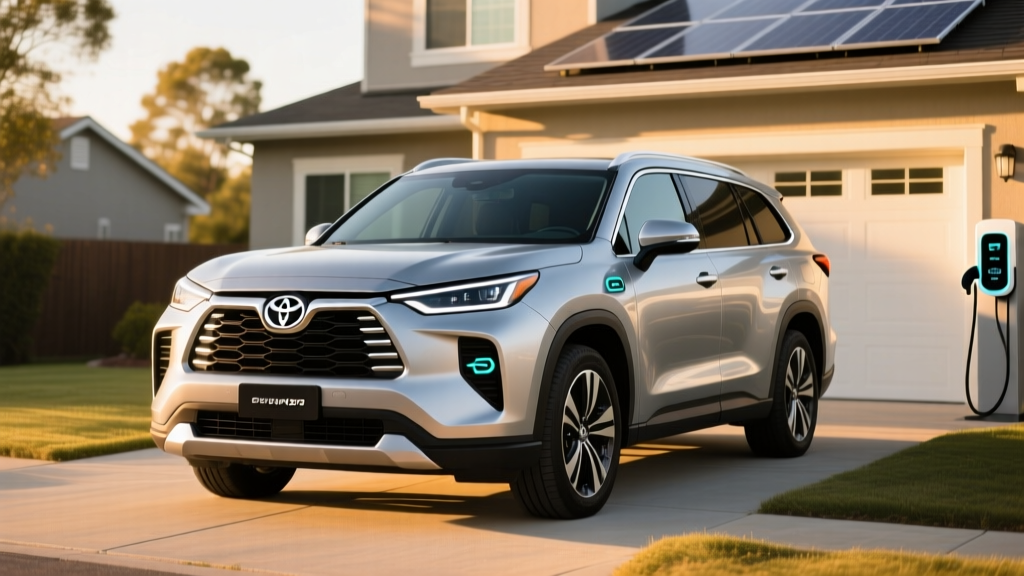
The three-row hybrid SUV segment has a clear fuel-economy benchmark, and the 2026 Toyota Grand Highlander Hybrid continues to hold it. With EPA ratings reaching 36 MPG combined on the standard hybrid powertrain and a Hybrid MAX option that trades a few miles per gallon for serious acceleration, Toyota gives large families two distinct flavors of electrified efficiency. But EPA stickers only tell part of the story — real-world driving conditions, trim selection, and the choice between the standard hybrid and the performance-oriented Hybrid MAX all shift the numbers you'll see at the pump.
This guide breaks down every official figure, pairs them with real-world expectations, and answers the questions that matter before you sign: Which powertrain actually saves more money? Does this hybrid qualify for any tax credit? And how long will that hybrid battery really last?
2026 Toyota Grand Highlander Hybrid MPG: The Official EPA Numbers
Toyota offers the 2026 Grand Highlander in two hybrid configurations. The standard hybrid pairs a 2.5-liter four-cylinder engine with front and rear electric motors for all-wheel drive (AWD) or front-wheel drive (FWD). The Hybrid MAX swaps in a turbocharged 2.4-liter four-cylinder with a more powerful electric motor system, delivering substantially more horsepower at a measurable fuel-economy cost.
| Powertrain | Drivetrain | City MPG | Highway MPG | Combined MPG | Combined HP |
|---|---|---|---|---|---|
| Standard Hybrid (2.5L I4) | FWD | 37 | 34 | 36 | 245 |
| Standard Hybrid (2.5L I4) | AWD | 36 | 32 | 34 | 245 |
| Hybrid MAX (2.4L Turbo I4) | AWD | 27 | 28 | 27 | 362 |
Source: EPA Fuel Economy (fueleconomy.gov). Figures reflect 2026 model-year EPA testing.
Standard Hybrid vs. Hybrid MAX: Which Powertrain Fits Your Driving?
The standard hybrid and the Hybrid MAX share a nameplate but serve fundamentally different priorities. Here's how they stack up beyond fuel economy:
| Specification | Standard Hybrid | Hybrid MAX |
|---|---|---|
| Engine | 2.5L naturally aspirated I4 | 2.4L turbocharged I4 |
| Combined Horsepower | 245 hp | 362 hp |
| 0–60 MPH (est.) | ~7.8 sec | ~5.6 sec |
| Transmission | eCVT (planetary gearset) | 6-speed automatic |
| Towing Capacity | 3,500 lbs | 5,000 lbs |
| EPA Combined MPG (AWD) | 34 | 27 |
| Fuel Tank | 17.9 gal | 17.9 gal |
| Total Range (est. combined) | ~608 miles | ~483 miles |
The standard hybrid's eCVT is not a traditional belt-driven CVT — it uses a planetary gearset that seamlessly blends engine and motor power. This system is one of the most proven hybrid drivetrains on the road, with millions of miles of service history across Toyota's lineup. The Hybrid MAX uses a conventional 6-speed automatic, which gives it a more traditional driving feel and better towing capability, but sacrifices some efficiency in the process.
The math that matters: If you drive 15,000 miles per year at $3.50/gallon, the standard hybrid AWD (34 MPG combined) costs roughly $1,544 annually in fuel. The Hybrid MAX (27 MPG) costs about $1,944 — a difference of ~$400/year. Over a 5-year ownership period, the standard hybrid saves approximately $2,000 in fuel. The Hybrid MAX buyer is paying for performance and towing, not fuel savings.
HEV vs. PHEV vs. Full EV: Where Does the Grand Highlander Fit?
Understanding the Grand Highlander Hybrid's place in the market requires clarity on three electrified vehicle categories. This is a conventional hybrid (HEV) — it does not plug in, has no electric-only driving range to speak of (the battery assists the engine at low speeds but cannot propel the vehicle alone for meaningful distances), and requires zero charging infrastructure.
HEV vs. PHEV vs. BEV — Quick Reference
| Category | Plugs In? | Electric-Only Range | Example |
|---|---|---|---|
| HEV (Conventional Hybrid) | No | None (motor assists engine) | Grand Highlander Hybrid |
| PHEV (Plug-In Hybrid) | Yes | 20–45 miles typical | Toyota RAV4 Prime |
| BEV (Battery Electric) | Yes | 200–400+ miles | Kia EV9 |
Toyota does not currently offer a Grand Highlander PHEV in the U.S. market for the 2026 model year. If plug-in capability is a priority, the closest Toyota alternative is the RAV4 Prime (42 miles electric-only, 94 MPGe) — but it seats five, not seven or eight. For three-row PHEV options, shoppers look to competitors like the Jeep Grand Cherokee 4xe (25 miles electric) or the Kia Sorento PHEV (32 miles electric).
Who should choose the Grand Highlander Hybrid (HEV)? Buyers who want three-row seating, 500+ miles of total range, zero charging hassle, and a meaningful fuel-economy improvement over a gas-only SUV — without paying the premium or accepting the range limitations of a full EV. It's ideal for apartment dwellers without home charging access, frequent road-trippers, and families in areas with sparse public charging infrastructure.
Who should look at a full EV instead? If you have reliable Level 2 home charging, a daily commute under 50 miles, and don't regularly tow or take long road trips through charging deserts, a three-row EV like the Kia EV9 (300+ mile range) will deliver lower per-mile energy costs and zero tailpipe emissions — though at a higher purchase price.
2026 Grand Highlander Hybrid Pricing by Trim
Toyota positions the Grand Highlander Hybrid across multiple trims, with the standard hybrid available from LE through Limited, and the Hybrid MAX reserved for upper trims. Pricing below reflects 2026 MSRP including destination charge:
| Trim | Powertrain | Drivetrain | MSRP (incl. destination) |
|---|---|---|---|
| LE | Standard Hybrid | FWD | $46,120 |
| LE | Standard Hybrid | AWD | $47,520 |
| XLE | Standard Hybrid | AWD | $49,870 |
| Limited | Standard Hybrid | AWD | $53,605 |
| Limited | Hybrid MAX | AWD | $55,105 |
| Platinum | Hybrid MAX | AWD | $59,405 |
Source: Toyota.com — pricing subject to change; verify with dealer.
Does the Grand Highlander Hybrid Qualify for a Federal Tax Credit?
No. The 2026 Grand Highlander Hybrid is a conventional hybrid (HEV), not a plug-in vehicle. Under current IRS §30D rules, only plug-in electric vehicles (BEVs and PHEVs with sufficient battery capacity) qualify for the federal clean vehicle credit. Conventional hybrids do not qualify for the $7,500 federal credit or the up-to-$4,000 used EV credit.
Some states offer their own incentives for hybrid vehicles, though these are increasingly rare as state programs shift focus to plug-in vehicles. Check your state's energy office or department of environmental quality for current programs. A few states still offer modest rebates or HOV lane access for high-efficiency hybrids, but amounts and eligibility vary widely by jurisdiction.
Hybrid Battery Warranty, Lifespan, and Replacement Cost
Hybrid battery longevity is one of the most common concerns among first-time hybrid buyers — and it's largely a solved problem in modern Toyotas. The Grand Highlander uses a nickel-metal hydride (NiMH) battery pack in the standard hybrid and a lithium-ion pack in the Hybrid MAX. Toyota's hybrid battery designs prioritize longevity over energy density; these are not the same high-stress packs found in full EVs.
Real-world lifespan data: Toyota's hybrid battery packs routinely last 150,000–200,000+ miles before significant degradation. The Prius, Camry Hybrid, and Highlander Hybrid have extensive track records showing battery survival well past the warranty period. Capacity loss in a conventional hybrid is less consequential than in an EV because the battery is small (roughly 1.6 kWh usable in the standard hybrid) and the engine is always available as backup. Even with 20–30% degradation, the hybrid system continues to function — you'll simply see slightly reduced fuel economy.
Replacement cost if out of warranty: A replacement hybrid battery pack for the Grand Highlander is estimated at $3,000–$5,000 (parts and labor) based on current Highlander Hybrid pricing. Third-party refurbished battery options can reduce this to $1,500–$2,500. Given the 10-year/150,000-mile warranty and the proven track record of Toyota hybrid systems, battery replacement is a low-probability expense for most owners.
5-Year Ownership Cost Snapshot
To put the Grand Highlander Hybrid's value in context, here's a 5-year/75,000-mile ownership estimate for the standard hybrid AWD versus a comparable gas-only three-row SUV averaging 22 MPG combined:
| Cost Category | Grand Highlander Hybrid AWD (34 MPG) | Gas 3-Row SUV (22 MPG) |
|---|---|---|
| Purchase Price (MSRP avg.) | $49,870 | $44,500 |
| Fuel Cost (75,000 mi @ $3.50/gal) | $7,721 | $11,932 |
| Estimated Maintenance (5 yr) | $3,200 | $3,800 |
| Federal Tax Credit | $0 | $0 |
| 5-Year Total (purchase + fuel + maint.) | $60,791 | $60,232 |
The hybrid's fuel savings of ~$4,200 over five years nearly offset its higher purchase price. Factor in the hybrid's typically stronger resale value (Toyota hybrids command premiums on the used market), and the total cost of ownership tilts in the hybrid's favor for most buyers. Maintenance costs are slightly lower on the hybrid because regenerative braking reduces brake pad wear, and the eCVT has no traditional transmission fluid service intervals.
Pros and Cons: The Honest Assessment
Pros
- Class-leading 34–36 MPG combined for a three-row SUV
- 608-mile total range (standard hybrid) — fewer fuel stops on road trips
- Proven Toyota hybrid reliability with 10-yr/150k-mi battery warranty
- Hybrid MAX offers 362 hp and 5,000-lb towing for those who need it
- No charging infrastructure required — works for apartment dwellers
- Strong resale value typical of Toyota hybrid nameplates
Cons
- No federal tax credit — HEV doesn't qualify under §30D
- Hybrid MAX drops to 27 MPG — a significant efficiency penalty
- Highway MPG dips to ~29–31 real-world at 75+ MPH (standard hybrid)
- Starting MSRP ~$46K — premium over many non-hybrid three-row SUVs
- No PHEV option available — can't do electric-only school runs
- Third row is usable but tight for adults on long trips
Frequently Asked Questions
How many MPG does the 2026 Grand Highlander Hybrid get?
The standard hybrid FWD earns an EPA-estimated 37 city / 34 highway / 36 combined MPG. The AWD version rates 36 city / 32 highway / 34 combined. The Hybrid MAX AWD rates 27 city / 28 highway / 27 combined. Real-world results vary: expect 32–35 combined for the standard hybrid in mixed driving, and 24–26 for the Hybrid MAX.
Does the Grand Highlander Hybrid need to be plugged in?
No. The Grand Highlander Hybrid is a conventional hybrid (HEV). It charges its own small battery through regenerative braking and the gasoline engine. You never plug it in — you simply fuel it like any other vehicle.
Is there a Grand Highlander Plug-In Hybrid (PHEV) version?
Not for the 2026 model year. Toyota does not offer a plug-in variant of the Grand Highlander in the U.S. market. If you need electric-only driving capability in a Toyota, the RAV4 Prime (42 miles electric, 5 seats) is the closest option. For a three-row PHEV, consider the Kia Sorento PHEV or Jeep Grand Cherokee 4xe.
How long will the hybrid battery last, and what does replacement cost?
Toyota's hybrid batteries are designed to last the life of the vehicle. Real-world data from Toyota's hybrid lineup shows packs regularly exceeding 150,000–200,000 miles. The battery is warranted for 10 years/150,000 miles. Out-of-warranty replacement runs approximately $3,000–$5,000, with refurbished options available for less.
Does the 2026 Grand Highlander Hybrid qualify for any tax credit?
The federal §30D clean vehicle credit applies only to plug-in vehicles (BEVs and PHEVs). The Grand Highlander Hybrid, as a conventional HEV, does not qualify for the federal credit. Some states may offer small incentives for high-efficiency vehicles — check your state's energy office for current programs.
Is the Hybrid MAX worth the MPG trade-off?
It depends on your priorities. If you need 5,000-lb towing capacity or simply want a 362-hp three-row SUV that hits 60 MPH in ~5.6 seconds, the Hybrid MAX delivers. But you'll sacrifice 7 MPG combined versus the standard hybrid, costing roughly $400 more per year in fuel. For most family-hauler buyers, the standard hybrid AWD at 34 MPG combined is the smarter financial choice.
How does the Grand Highlander Hybrid compare to the regular Highlander Hybrid?
The Grand Highlander is approximately 6.5 inches longer than the standard Highlander, with a genuinely usable third row and more cargo space behind it. The standard Highlander Hybrid rates 35–36 MPG combined (slightly better due to less weight and drag), but its third row is best suited for children. If you regularly carry passengers in the third row, the Grand Highlander is the clear choice; if the third row is occasional use, the smaller Highlander Hybrid saves money and fuel.
What is the total driving range on a full tank?
The standard hybrid AWD, with its 17.9-gallon tank and 34 MPG combined EPA rating, delivers approximately 608 miles of total range. In real-world driving at 32 MPG combined, expect roughly 570 miles. The Hybrid MAX, at 27 MPG combined, provides about 483 miles per tank. Both figures significantly exceed most gas-only three-row SUVs, which typically manage 380–440 miles per fill-up.
Always verify current pricing, specifications, and incentive availability with Toyota's official site, fueleconomy.gov, and IRS.gov before purchasing. Tax credit rules and state incentives are subject to change.