Quick Verdict: The PHEV Sweet Spot for SUV Buyers
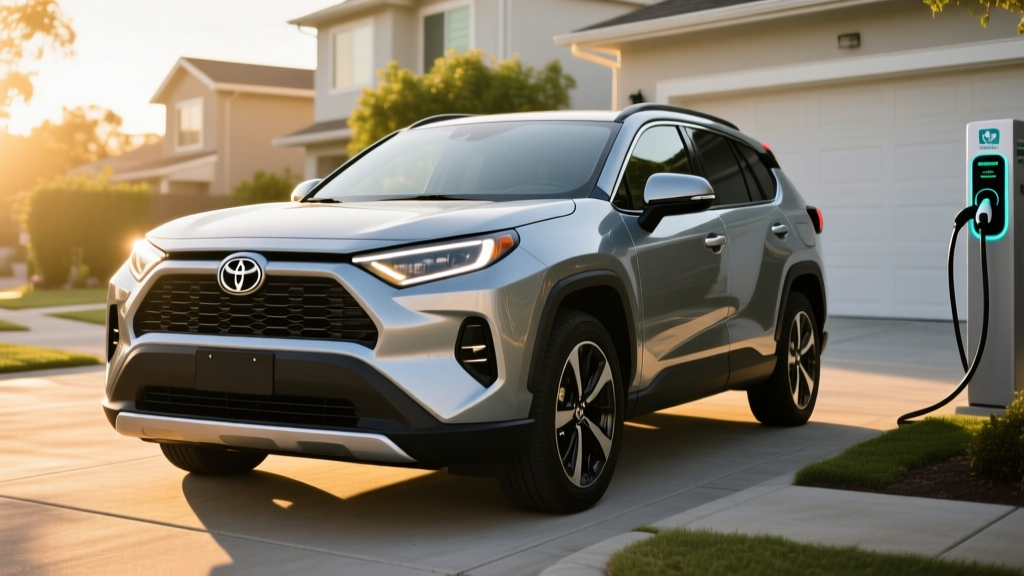
The Toyota RAV4 Prime plug-in hybrid occupies a rare position in the electrified-SUV market: it delivers meaningful electric-only commuting range, all-wheel drive, and over 300 horsepower in a compact crossover that starts around $44,000. For buyers who want daily electric driving without surrendering the flexibility of a gas engine for road trips, the RAV4 Prime remains one of the most compelling PHEVs available in 2026 — even as full-electric competitors like the Hyundai Ioniq 5 and Tesla Model Y push harder on range and charging speed.
This guide breaks down every number that matters: EPA efficiency, real-world MPG, electric-only range, battery chemistry and warranty, charging logistics, federal tax-credit eligibility under current §30D rules, and total cost of ownership. We'll also clarify where the RAV4 Prime PHEV fits versus the standard RAV4 Hybrid (HEV) and full battery-electric alternatives.
HEV vs PHEV: What's the Actual Difference?
Toyota sells two electrified RAV4 variants, and confusing them is the single most common mistake shoppers make:
RAV4 Hybrid (HEV)
- No plug. The small 1.6 kWh nickel-metal hydride battery charges exclusively through regenerative braking and the gasoline engine.
- EPA rating: 41 MPG city / 38 MPG highway / 40 MPG combined.
- No electric-only driving beyond very low-speed, short-distance creep.
- Starting MSRP: ~$33,000 (2026 LE AWD).
- No federal tax credit.
RAV4 Prime (PHEV)
- Plug-in capable. The 18.1 kWh lithium-ion battery charges via Level 1 or Level 2 AC power (no DC fast charging).
- EPA rating: 94 MPGe (electric + gas combined) / 38 MPG (gas-only after battery depletion).
- 42 miles of EPA electric-only range — enough for most daily commutes without burning fuel.
- Starting MSRP: ~$44,590 (2026 SE trim).
- Tax-credit eligibility varies — see our §30D breakdown below.
The core trade-off: you pay roughly $11,000 more upfront for the Prime, but you gain 42 miles of electric commuting, 302 combined horsepower (versus 219 hp in the HEV), and the ability to pre-condition the cabin while plugged in. If your daily round-trip commute is under 40 miles and you have access to a standard 120V or 240V outlet, the Prime can operate as an EV Monday through Friday and a hybrid on weekends.
Range, Efficiency, and Powertrain Specs
| Specification | 2026 Toyota RAV4 Prime (PHEV) |
|---|---|
| EPA Electric-Only Range | 42 miles |
| Total Combined Range (EV + Gas) | ~600 miles |
| EPA MPGe (Electric + Gas) | 94 MPGe |
| EPA MPG (Gas-Only, After Depletion) | 38 MPG combined (40 city / 36 highway) |
| Battery Capacity | 18.1 kWh (lithium-ion, NMC chemistry) |
| Usable Battery Capacity | ~14.5 kWh (Toyota reserves buffer to protect longevity) |
| Combined Horsepower | 302 hp |
| Gasoline Engine | 2.5L 4-cylinder Atkinson-cycle, 177 hp |
| Front Electric Motor | 134 kW (180 hp) |
| Rear Electric Motor (AWD-i) | 40 kW (54 hp) |
| 0–60 mph | 5.7 seconds |
| Drivetrain | Electronic AWD (eAWD) |
| Max AC Charge Rate | 6.6 kW (Level 2) |
| DC Fast Charging | Not available |
| Cargo Volume (behind rear seats) | 33.5 cu ft |
Real-World Range Reality Check
The EPA rates the RAV4 Prime at 42 miles of electric-only range. In real-world testing, expect 36–44 miles depending on conditions:
- Ideal conditions (55–65°F, flat terrain, moderate speed): 42–44 miles is achievable, sometimes slightly exceeding EPA.
- Highway driving at 70+ mph: Expect 32–36 electric miles — aerodynamic drag at speed drains the battery faster.
- Cold weather (below 32°F): Expect 28–34 miles. Lithium-ion chemistry loses efficiency in cold, and cabin heating draws significant energy unless you precondition while plugged in.
- Hilly terrain: Regenerative braking on descents partially offsets uphill losses, but net range drops 5–10%.
Once the battery is depleted, the RAV4 Prime operates as a conventional hybrid at 38 MPG combined — still excellent for a 302-hp AWD crossover. The 14.5-gallon fuel tank provides roughly 550 miles of gas-only range, yielding a total combined range near 600 miles.
Charging: What You Need at Home (and What It Costs)
The RAV4 Prime does not support DC fast charging. It charges exclusively via AC power through a J1772 connector (the universal standard for non-Tesla Level 2 charging in the US). Here's what to expect at each level:
| Charging Level | Power | Time (0–100%) | Setup |
|---|---|---|---|
| Level 1 (120V household outlet) | ~1.4 kW | ~12 hours | Included cordset; no installation needed |
| Level 2 (240V, 16A) | 3.3 kW | ~5.5 hours | Standard home wall charger or public L2 |
| Level 2 (240V, 32A+) | 6.6 kW (vehicle max) | ~2.5 hours | Requires upgraded onboard charger (included on XSE trim; optional on SE) |
Practical charging advice: Most RAV4 Prime owners charge overnight on Level 1 or Level 2. If you plug in when you get home from work at 6 PM, even Level 1 (1.4 kW) will fully recharge the 18.1 kWh battery by 6 AM — enough for your morning commute. A Level 2 home charger is a quality-of-life upgrade that lets you top up in a few hours if you make multiple trips per day.
Home Level 2 installation costs typically range from $500–$1,500 for a basic 240V outlet (NEMA 14-50) plus a portable EVSE, or $800–$2,500 for a hardwired wall-mounted charger including electrician labor and permits. If your electrical panel is at capacity or located far from the garage, costs can exceed $3,000 with a panel upgrade. Always get a quote from a licensed electrician before purchasing equipment.
Cost per mile on electricity: At the US average residential rate of ~$0.16/kWh, a full charge of the RAV4 Prime's usable 14.5 kWh costs roughly $2.32 — or about 5.5 cents per electric mile. Compare that to $3.50/gallon gasoline at 38 MPG, which is ~9.2 cents per mile. The electric mode cuts fuel cost nearly in half per mile driven.
Pricing, Trims, and Tax-Credit Eligibility
| Trim | 2026 MSRP (est.) | Key Features |
|---|---|---|
| SE | $44,590 | 6.6 kW onboard charger, heated front seats, SofTex, 8" touchscreen, 18" wheels |
| XSE | $48,075 | Panoramic moonroof, 9" touchscreen, wireless CarPlay, premium audio, 19" wheels |
| XSE (with Premium Package) | $51,500+ | Ventilated seats, 360° camera, heated steering wheel, JBL audio, head-up display |
Federal §30D Tax Credit: Does the RAV4 Prime Qualify?
Under current IRS rules for the Clean Vehicle Credit (§30D), PHEVs must meet strict requirements. Here's the eligibility checklist for the 2026 RAV4 Prime:
- MSRP cap: SUVs must be priced at or below $80,000. ✅ All RAV4 Prime trims qualify.
- Buyer income cap: AGI must not exceed $150,000 (single), $225,000 (head of household), or $300,000 (joint). ✅ Depends on your tax situation.
- Battery sourcing (critical minerals): A percentage of critical minerals must be sourced from the US or FTA partners. ⚠️ Toyota has worked to shift supply chains, but eligibility for the full $7,500 credit vs. the partial $3,750 credit depends on the model year's sourcing compliance. Check the IRS eligible vehicle list before purchasing.
- Battery component manufacturing: A percentage of battery components must be manufactured or assembled in North America. ⚠️ This requirement tightens annually. Verify current-year status on IRS.gov.
- Point-of-sale transfer: Since 2024, buyers can transfer the credit to the dealer at purchase, reducing the sale price directly rather than waiting to claim it on their tax return.
Bottom line: The RAV4 Prime may qualify for up to $7,500, $3,750, or $0 depending on your income, the specific model year's battery-sourcing compliance, and current IRS guidance. Always verify eligibility on irs.gov and consult a tax professional before relying on the credit in your purchase decision.
Battery Longevity, Warranty, and Replacement Cost
Toyota Hybrid Battery Warranty
Toyota covers the RAV4 Prime's high-voltage lithium-ion battery with a 10-year / 150,000-mile warranty (whichever comes first) in all 50 states, covering defects and capacity loss below a specified threshold (typically ~70% of original capacity). The conventional hybrid components and powertrain are covered under a separate 5-year / 60,000-mile powertrain warranty, with the broader hybrid system covered for 8 years / 100,000 miles.
Real-world degradation data: Toyota's hybrid batteries have an excellent longevity track record. Data aggregated from high-mileage Prius and RAV4 Hybrid fleets shows average capacity loss of roughly 1–2% per year under normal use. The RAV4 Prime's larger 18.1 kWh pack operates with a significant buffer (~3.6 kWh reserved above and below usable range), which reduces stress on the cells and slows degradation.
After 10 years of typical use, owners can expect the battery to retain approximately 85–90% of its original capacity — meaning the 42-mile electric range might decrease to 36–38 miles. This is well within acceptable daily-commute territory for most owners.
Battery replacement cost: If the battery fails outside warranty coverage, a replacement high-voltage pack for the RAV4 Prime currently costs between $5,000 and $7,500 including parts and labor at a Toyota dealership. Third-party refurbishers offer reconditioned packs for $3,000–$4,500. However, given Toyota's warranty terms and the chemistry's proven durability, most original owners will never face this cost.
Reliability: The RAV4 Prime's powertrain is a variation of Toyota's hybrid synergy drive system, which has been in continuous production since 1997. Toyota consistently ranks at or near the top of J.D. Power and Consumer Reports reliability surveys for hybrid vehicles. The RAV4 lineup has earned the IIHS Top Safety Pick+ designation in recent model years.
Real-World MPG: What Owners Actually Report
| Driving Scenario | EPA Rating | Real-World Expectation |
|---|---|---|
| City (gas-only mode) | 40 MPG | 38–44 MPG (regen braking helps in stop-and-go) |
| Highway (gas-only mode) | 36 MPG | 33–37 MPG (aero drag at 70+ mph reduces efficiency) |
| Combined (gas-only mode) | 38 MPG | 35–40 MPG |
| Electric-only (mixed driving) | 94 MPGe | 85–100 MPGe (varies with temperature and speed) |
| Electric-only range | 42 miles | 28–44 miles (highly dependent on weather and speed) |
A key insight for hybrid efficiency: hybrids consistently beat their EPA city ratings in real-world driving because regenerative braking recovers energy in stop-and-go traffic that a gas car wastes as heat. The RAV4 Prime is no exception. Owners who commute in urban or suburban traffic frequently report 40–44 MPG in gas-only city driving.
Highway efficiency is the opposite story. At sustained speeds above 70 mph, aerodynamic drag dominates, and the electric motors contribute less. Expect gas-only highway MPG to land slightly below the EPA rating — particularly with roof cargo boxes, aggressive tires, or cold temperatures.
The biggest efficiency variable is how often you charge. An owner who charges nightly and commutes 30 miles round-trip may go months between fill-ups, effectively achieving 100+ MPGe over the course of a quarter. An owner who never plugs in will see 38 MPG — still excellent, but no different from driving a standard RAV4 Hybrid while paying $11,000 more for the car.
RAV4 Prime vs Full EV vs Standard Hybrid: Which Fits You?
Choose the RAV4 Prime (PHEV) If:
- Your daily commute is 20–40 miles round-trip and you have access to a 120V or 240V outlet at home.
- You take road trips of 200+ miles several times per year and don't want to plan around public charging infrastructure.
- You want AWD and quick acceleration (302 hp, 5.7-second 0–60) without the EV price premium.
- You live in a region with harsh winters where EV range loss and charging-desert gaps are a concern.
- You want to "dip your toes" into electric driving without committing fully.
Choose the RAV4 Hybrid (HEV) If:
- You have no access to any plug at home or work (apartment, street parking, no garage outlet).
- Your budget is closer to $33,000–$38,000.
- You want simplicity — no charging cables, no battery-management thinking, just fill up and go.
- Your daily driving is varied and unpredictable, making electric-only range less useful.
Choose a Full EV (e.g., Tesla Model Y, Hyundai Ioniq 5) If:
- You can install a Level 2 home charger and your daily driving stays under 250 miles.
- You want the lowest per-mile fuel cost and near-zero routine maintenance (no oil, no spark plugs, no exhaust system).
- You're motivated by tailpipe-emissions elimination (though grid electricity source matters for total lifecycle emissions).
- You want access to DC fast charging for road trips (150–250 kW on modern EVs vs. 0 kW on the RAV4 Prime).
Pros, Cons, and Ownership Considerations
Pros
- 42 miles of real, usable electric range covers most daily commutes
- 302 hp makes it the quickest RAV4 Toyota sells (5.7s 0–60)
- Standard eAWD provides confident traction in rain and snow
- 38 MPG gas-only means no penalty when you forget to charge
- 10-year / 150,000-mile hybrid battery warranty
- Strong resale value and proven Toyota reliability
- Preconditioning while plugged in saves battery in cold weather
- Potential federal tax credit up to $7,500 (verify eligibility)
Cons
- No DC fast charging — road trips run on gas only
- $44,590 starting price is $11K+ above the standard RAV4 Hybrid
- Cargo space slightly reduced vs. non-hybrid RAV4 (battery packaging)
- Tax-credit eligibility uncertain due to battery-sourcing rules
- 6.6 kW Level 2 charge rate is modest — 2.5 hours for a full charge
- Infotainment system lags behind competitors in responsiveness
- Limited availability — high demand often means dealer markups or waitlists
- Insurance premiums can run 10–15% higher than the standard RAV4 Hybrid
Total 5-year ownership cost estimate: According to data from sources like fueleconomy.gov and industry analysts, the RAV4 Prime's 5-year total cost of ownership (including depreciation, fuel, insurance, maintenance, and tax credits) typically falls between $42,000 and $50,000 depending on trim, mileage, local electricity rates, and whether you claim the federal credit. This is competitive with fully electric SUVs once you factor in the Prime's lower depreciation and the absence of range-anxiety risk.
Frequently Asked Questions
How many MPG does the Toyota RAV4 Prime get?
The EPA rates the RAV4 Prime at 94 MPGe when operating in combined electric-and-gas mode. Once the battery is depleted, it achieves 38 MPG combined (40 city / 36 highway) as a conventional hybrid. In real-world driving, city MPG often exceeds the EPA rating thanks to regenerative braking, while highway MPG may fall slightly short at sustained high speeds.
How far can the RAV4 Prime go on electric power alone?
The EPA rates the RAV4 Prime at 42 miles of electric-only range. Real-world results range from about 28 miles in freezing cold highway driving to 44 miles in mild conditions at moderate speeds. For most owners with a sub-40-mile commute, the Prime covers daily driving entirely on electricity when charged nightly.
Can the RAV4 Prime DC fast charge?
No. The RAV4 Prime charges exclusively via AC power (Level 1 at 120V or Level 2 at 240V). Its maximum onboard charge rate is 6.6 kW, which fills the battery in approximately 2.5 hours on a Level 2 circuit. There is no DC fast-charging port. This is a deliberate trade-off: adding DC fast-charging hardware would increase weight, cost, and packaging complexity for a vehicle whose battery is small enough to charge quickly on AC power overnight.
Is the RAV4 Prime reliable, and what does battery replacement cost?
Toyota's hybrid powertrain has one of the strongest reliability records in the industry, with over 25 years of continuous refinement since the first Prius. The RAV4 Prime's lithium-ion battery is covered by a 10-year / 150,000-mile warranty. Real-world degradation data from Toyota hybrid fleets suggests approximately 1–2% capacity loss per year. Out-of-warranty battery replacement costs $5,000–$7,500 at a dealership, though most owners will never need one.
Does the RAV4 Prime qualify for the federal tax credit?
Eligibility depends on multiple factors under IRS §30D: the vehicle must meet battery-sourcing and critical-mineral requirements, the buyer's AGI must fall below income caps ($150K single / $300K joint), and the MSRP must be under $80,000 (all RAV4 Prime trims qualify). The credit can be up to $7,500, $3,750, or $0 depending on current-year sourcing compliance. Always check the IRS eligible vehicle list and consult a tax professional before purchasing.
Should I buy the RAV4 Prime or a full electric SUV?
If you have reliable home charging, rarely drive more than 250 miles in a day, and want the lowest operating cost and minimal maintenance, a full EV like the Tesla Model Y or Hyundai Ioniq 5 is a strong choice. If you take long road trips, live in a cold climate with sparse charging infrastructure, or simply want the option to drive without ever plugging in, the RAV4 Prime PHEV gives you electric commuting with gas-engine flexibility — and you'll never be stranded waiting for a broken charger.
How does the RAV4 Prime compare to the standard RAV4 Hybrid?
The standard RAV4 Hybrid (HEV) gets 40 MPG combined, costs about $11,000 less, and never needs to be plugged in. The RAV4 Prime (PHEV) adds 42 miles of electric-only range, 83 more horsepower, and the ability to pre-condition the cabin on grid power. If you can charge at home and your commute fits within 42 miles, the Prime pays back its premium through fuel savings and a smoother, quieter daily drive. If you can't charge, the standard HEV is the smarter buy.