Quick Verdict: The RAV4 Hybrid XSE Sits in the Sweet Spot
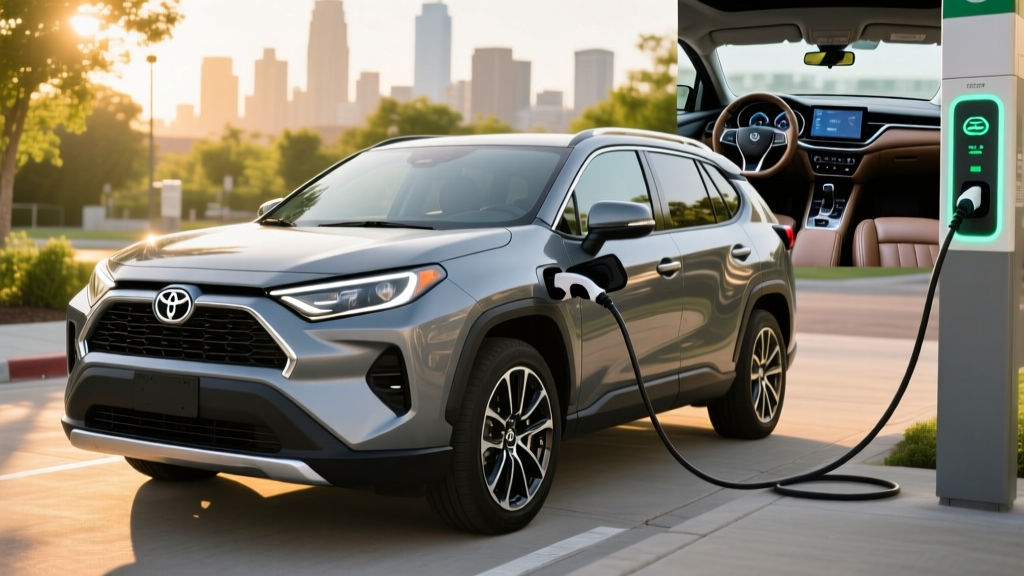
The 2026 Toyota RAV4 Hybrid XSE occupies a precise niche: buyers who want the fuel-economy gains of electrification without ever plugging in. This is a conventional hybrid (HEV), not a plug-in hybrid (PHEV) — meaning it recovers energy through regenerative braking and its gasoline engine to charge a small traction battery. No charging cord, no range anxiety, no behavior change required.
The XSE trim specifically targets drivers who want sportier aesthetics and tuning without stepping into the fully loaded Limited or the plug-in RAV4 Prime. With an EPA-estimated 39 MPG combined, 219 combined system horsepower, and standard electronic all-wheel drive, it remains one of the most efficient compact SUVs on the market. But how do those numbers translate to real roads, and what does long-term battery ownership actually look like?
EPA Fuel Economy vs. Real-World MPG
The EPA rates the 2026 RAV4 Hybrid AWD at 41 MPG city, 38 MPG highway, and 39 MPG combined. These figures apply across most Hybrid trims with AWD, including the XSE.
| Metric | EPA Estimate |
|---|---|
| City MPG | 41 MPG |
| Highway MPG | 38 MPG |
| Combined MPG | 39 MPG |
| Fuel Tank Capacity | 14.5 gallons |
| EPA Total Range | ~565 miles |
Real-world expectation: Toyota hybrids routinely exceed their EPA city estimates because the electric motor handles low-speed driving where gasoline engines are least efficient. In urban and suburban driving, 43-45 MPG is achievable. Highway cruising at 75+ MPH tends to drop efficiency to 34-36 MPG due to aerodynamic drag — a physics limitation shared by all SUVs. In cold weather (below 32°F), expect a 5-8% reduction as the engine runs more frequently for cabin heat and battery conditioning. Over a mixed-driving year of 15,000 miles, owners typically report 37-41 MPG actual.
HEV vs. PHEV: Where the RAV4 Hybrid XSE Fits
Toyota sells two electrified RAV4 variants, and confusing them is one of the most common buyer mistakes. Here's the structural difference:
Conventional Hybrid (HEV) — RAV4 Hybrid XSE
- No plug. The 1.6 kWh nickel-metal hydride (NiMH) traction battery charges exclusively through regenerative braking and the gasoline engine.
- No electric-only driving range beyond very low-speed, short-distance creep (under 1 mile at low speeds).
- No federal tax credit under current IRS §30D rules — the credit applies only to plug-in vehicles with ≥7 kWh battery capacity.
- Lower MSRP than the RAV4 Prime PHEV by roughly $7,000-$9,000.
Plug-In Hybrid (PHEV) — RAV4 Prime
- Requires plugging in to access its 42 miles of EPA-rated electric-only range.
- 18.1 kWh lithium-ion battery with Level 2 AC charging (~2.5 hours at 240V/32A).
- No DC fast charging capability — a common limitation among PHEVs due to battery size and cost trade-offs.
- 302 combined HP and available for the federal tax credit (eligibility varies by sourcing rules and buyer income).
The decision is straightforward: If you cannot charge at home or work, the HEV (XSE) is the correct choice. If you have reliable Level 2 access and a commute under 42 miles, the Prime PHEV eliminates most daily gasoline use — at a significantly higher purchase price.
Powertrain and Performance Specs
| Specification | Value |
|---|---|
| Engine | 2.5L 4-cylinder Dynamic Force (176 hp, 163 lb-ft) |
| Front Electric Motor | 118 hp, 149 lb-ft |
| Rear Electric Motor (AWD) | 54 hp, 89 lb-ft |
| Combined System Output | 219 hp |
| Transmission | Electronic Continuously Variable (eCVT) |
| Drivetrain | Electronic On-Demand AWD |
| 0-60 MPH | 7.4 seconds (est.) |
| Towing Capacity | 1,750 lbs |
| Traction Battery | 1.6 kWh NiMH (sealed, no plug) |
The XSE trim features a sport-tuned suspension with firmer damping than the LE, XLE, and Woodland Edition trims. It doesn't change the powertrain output, but it tightens body roll and steering response modestly. The electronic AWD system engages the rear motor automatically under acceleration, slip, or low-traction conditions — it is not a mechanical AWD system with a driveshaft, which reduces weight and parasitic loss but means the rear axle provides assist rather than true off-road capability.
Battery Warranty, Degradation, and Replacement Cost
Battery Warranty Coverage
Toyota covers the hybrid traction battery for 10 years or 150,000 miles (whichever comes first) in all 50 states. This applies to the original owner and is transferable to subsequent owners. The warranty guarantees the battery will retain sufficient capacity to function as designed — Toyota does not publish a specific percentage threshold, but replacement is covered if the battery fails or degrades to a point where hybrid system performance is materially impaired.
Degradation reality: Toyota's NiMH hybrid batteries have an exceptionally well-documented longevity record. The RAV4 Hybrid has been in production since the 2016 model year, and fleet data from high-mileage owners (150,000+ miles) shows typical capacity retention of 85-92%. Unlike the larger lithium-ion batteries in full EVs, the RAV4 Hybrid's 1.6 kWh pack is never deeply cycled — the system maintains a narrow state-of-charge window (roughly 40-80%) to minimize stress. This is why degradation is minimal.
Replacement cost if out of warranty: A new OEM hybrid battery from Toyota currently costs between $3,500 and $4,500 including installation at a dealership. Third-party refurbished NiMH modules are available for $1,500-$2,500 installed. For context, this is roughly equivalent to a major transmission repair on a conventional gasoline vehicle — significant, but not catastrophic, and far less expensive than a full EV battery replacement ($8,000-$20,000+).
Pricing, Trims, and Tax Credit Eligibility
The 2026 Toyota RAV4 Hybrid XSE carries an MSRP of approximately $37,960 including destination charge. Key standard equipment on the XSE includes SofTex synthetic leather seats, a 10.5-inch touchscreen with wireless Apple CarPlay and Android Auto, 19-inch alloy wheels, sport-tuned suspension, and Toyota Safety Sense 3.0 (adaptive cruise, lane tracing, pre-collision with pedestrian detection, blind-spot monitor).
Federal Tax Credit Status
The RAV4 Hybrid (HEV) does not qualify for the federal §30D clean vehicle credit. Under current IRS rules, the credit requires a plug-in electric vehicle with a battery capacity of at least 7 kWh. The RAV4 Hybrid's 1.6 kWh NiMH battery falls well below this threshold. The plug-in RAV4 Prime is the variant that may qualify, subject to MSRP caps ($80,000 for SUVs), buyer income limits ($300,000 joint / $150,000 single), and battery component/critical mineral sourcing requirements that change annually. Consult a tax professional for personal eligibility.
Some states offer additional incentives for hybrids that do not require plug-in capability — check your state's energy office or department of revenue for current programs. These are separate from federal §30D and vary significantly by jurisdiction.
Who Should Buy the RAV4 Hybrid XSE — and Who Shouldn't
Choose the RAV4 Hybrid XSE If:
- You have no access to home or workplace charging and cannot install a Level 2 outlet.
- Your priority is minimizing fuel cost without changing any driving or refueling habits.
- You want AWD capability for snow and rain without the fuel penalty of a conventional AWD SUV.
- You plan to own the vehicle 8-12 years and value Toyota's long-term reliability data.
- You want a lower purchase price than the RAV4 Prime while still gaining ~35% better fuel economy over the gas-only RAV4.
Consider an Alternative If:
- You can charge at home and want daily electric-only commuting → RAV4 Prime PHEV or a full BEV like the Hyundai Ioniq 5.
- You need more than 1,750 lbs of towing capacity → look at body-on-frame hybrids like the Toyota Tacoma Hybrid or a larger SUV.
- You want third-row seating → the Toyota Highlander Hybrid or Grand Highlander Hybrid.
- You want the absolute lowest fuel cost and have charging access → a full EV eliminates gasoline entirely.
Frequently Asked Questions
How many MPG does the RAV4 Hybrid XSE actually get in real driving?
Most owners report 37-41 MPG combined over a full year of mixed driving. City-heavy routes tend to push this toward 42-45 MPG because the electric motor handles stop-and-go efficiently. Sustained highway driving above 70 MPH drops to 34-36 MPG. Cold weather reduces efficiency by roughly 5-8% due to increased engine operation for cabin heat.
Does the RAV4 Hybrid need to be plugged in?
No. The RAV4 Hybrid is a conventional HEV — it has no charging port. The traction battery charges exclusively through regenerative braking and the gasoline engine. You refuel only at gas stations, exactly like a conventional vehicle.
How far can the RAV4 Hybrid drive on electric power alone?
Less than 1 mile, and only at very low speeds (under 25 MPH) in specific conditions like parking lots or heavy traffic creep. This is not a meaningful electric-only range. If you want substantial electric-only driving, you need the RAV4 Prime PHEV (42 miles EPA electric-only) or a full battery-electric vehicle.
Is the hybrid battery reliable, and what does replacement cost?
Toyota's NiMH hybrid batteries are among the most proven in the industry, with extensive fleet data showing 85-92% capacity retention at 150,000+ miles. The battery is warranted for 10 years/150,000 miles. Out-of-warranty replacement costs $3,500-$4,500 OEM or $1,500-$2,500 with refurbished modules.
Does the RAV4 Hybrid XSE qualify for any federal tax credit?
No. Under current IRS §30D rules, only plug-in vehicles with batteries of 7 kWh or larger are eligible. The RAV4 Hybrid's 1.6 kWh battery does not meet this threshold. The RAV4 Prime (PHEV) may qualify depending on sourcing requirements, buyer income, and MSRP caps. Check fueleconomy.gov for the latest eligible vehicle list.
How does the XSE trim differ from other RAV4 Hybrid trims?
The XSE adds sport-tuned suspension, 19-inch wheels, SofTex sport seats, a black roof option, and unique exterior styling over the XLE. It shares the identical 219 hp hybrid powertrain and 39 MPG combined EPA rating. It does not include the premium audio, panoramic roof, or heated/ventilated front seats available on the Limited trim.