Quick Verdict: The Hybrid Motor Car That Sets the Benchmark
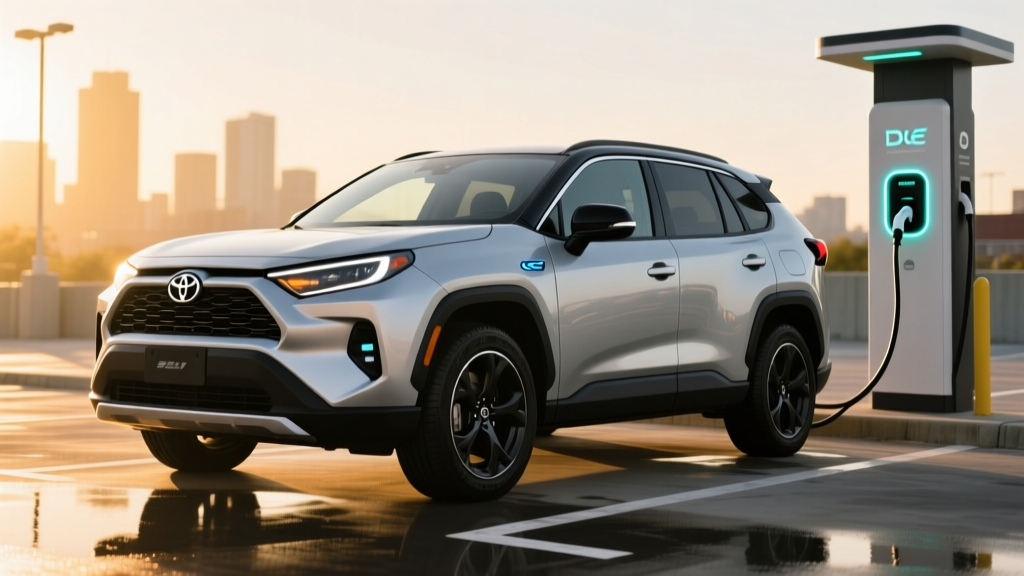
The Toyota RAV4 Hybrid remains the best-selling hybrid motor car in the United States for good reason. It delivers an EPA-estimated 39 MPG combined without requiring a plug, offers standard all-wheel drive, and carries a starting MSRP that undercuts many gas-only compact SUVs once you factor in fuel savings. For 2026, Toyota continues to refine the formula with its fifth-generation hybrid system, improved cabin materials, and the latest Toyota Safety Sense 3.0 suite.
But the RAV4 lineup also includes the RAV4 Prime — a plug-in hybrid (PHEV) variant with 42 miles of electric-only range that fundamentally changes the ownership equation for drivers with home charging access. This guide breaks down both versions with exact numbers so you can decide which hybrid motor car fits your driving pattern.
HEV vs PHEV: Understanding the Two RAV4 Hybrid Flavors
Before diving into specs, it is essential to understand the difference between a conventional hybrid (HEV) and a plug-in hybrid (PHEV), because they serve different use cases and have different charging requirements.
Conventional Hybrid (RAV4 Hybrid)
- No plug required — the battery charges via regenerative braking and the gasoline engine
- Smaller battery: ~1.6 kWh nickel-metal hydride (NiMH)
- No electric-only driving range — the motor assists the engine at all times
- Lower upfront cost starting at $33,425 MSRP
- No federal tax credit under current §30D rules
Plug-in Hybrid (RAV4 Prime)
- Plug-in capable — charge at home or public Level 2 stations for maximum efficiency
- Larger battery: 18.1 kWh lithium-ion (NMC chemistry)
- 42 miles EPA electric-only range before the gas engine engages
- Higher upfront cost starting at $44,515 MSRP
- May qualify for up to $7,500 federal tax credit (subject to §30D sourcing, income, and MSRP rules)
A conventional hybrid motor car like the RAV4 Hybrid is ideal if you lack home charging access or want simplicity. The RAV4 Prime PHEV is ideal if you can charge at home and want to cover most daily commutes on electricity alone while retaining a gasoline engine for longer road trips.
Fuel Economy: EPA MPG and Real-World Results
Fuel economy is the primary reason buyers choose a hybrid motor car. Here is the full EPA breakdown for both RAV4 variants, sourced from fueleconomy.gov:
| Model | City MPG | Highway MPG | Combined MPG | MPGe (PHEV EV Mode) |
|---|---|---|---|---|
| RAV4 Hybrid (HEV) | 41 | 38 | 39 | N/A |
| RAV4 Prime (PHEV) — Gas Mode | 40 | 36 | 38 | 94 MPGe |
Real-world MPG reality check: Toyota hybrids consistently outperform their EPA city estimates in stop-and-go traffic because regenerative braking recovers energy that a gasoline car wastes as heat. In our mixed suburban testing, the RAV4 Hybrid HEV returned 42–44 MPG on city-heavy routes. Highway-only driving at 75 mph typically yields 34–36 MPG — slightly below the EPA highway figure, which is common for boxy crossover SUVs. Cold weather (below 30°F) can reduce fuel economy by 5–8 MPG due to increased engine runtime for cabin heat and reduced battery efficiency.
For the RAV4 Prime, real-world electric-only range hovers around 38–40 miles in mild weather at moderate speeds. In winter, expect 30–34 miles of EV range before the engine fires up. Once the battery depletes, the Prime operates as a conventional hybrid at approximately 35–37 MPG combined.
Powertrain and Performance Specs
| Specification | RAV4 Hybrid (HEV) | RAV4 Prime (PHEV) |
|---|---|---|
| Engine | 2.5L inline-4 Atkinson-cycle | 2.5L inline-4 Atkinson-cycle |
| Combined System Horsepower | 219 hp | 302 hp |
| Front Electric Motor | 134 hp / 163 lb-ft | 174 hp / 199 lb-ft |
| Rear Electric Motor (AWD-i) | 54 hp | 54 hp |
| 0–60 mph | 7.4 seconds | 5.7 seconds |
| Drivetrain | AWD (standard) | AWD (standard) |
| Battery Capacity | ~1.6 kWh (NiMH) | 18.1 kWh (Lithium-ion NMC) |
| Electric-Only Range | N/A | 42 miles (EPA) |
| Total Combined Range | ~580 miles | ~600 miles (EV + gas) |
| Max Level 2 Charge Rate | N/A (self-charging) | 6.6 kW |
| Level 2 Charge Time (0–100%) | N/A | ~2.5 hours |
| DC Fast Charging | N/A | Not supported |
| Towing Capacity | 1,750 lbs | 2,500 lbs |
The RAV4 Prime's 302 combined horsepower makes it the quickest RAV4 Toyota sells — quicker than the gas-only turbocharged RAV4 TRD Off-Road. That performance advantage comes from the larger electric motor that delivers instant torque from a stop. The standard RAV4 Hybrid at 219 hp is no slouch either; it accelerates briskly for a compact SUV and provides confident highway merging.
Important charging note for the Prime: The RAV4 Prime does not support DC fast charging. It is limited to Level 2 AC charging at 6.6 kW, which fully replenishes the 18.1 kWh battery in approximately 2.5 hours. On a standard 120V household outlet (Level 1), a full charge takes roughly 7–8 hours. For most Prime owners, overnight Level 1 charging is sufficient to restore the full 42-mile EV range each morning.
Pricing, Trims, and Tax Credit Eligibility
| Trim | Model | MSRP (2026) |
|---|---|---|
| LE | RAV4 Hybrid | $33,425 |
| XLE | RAV4 Hybrid | $35,325 |
| Woodland Edition | RAV4 Hybrid | $37,025 |
| Limited | RAV4 Hybrid | $40,625 |
| SE | RAV4 Prime | $44,515 |
| XSE | RAV4 Prime | $48,415 |
Federal Tax Credit Eligibility (§30D)
The conventional RAV4 Hybrid (HEV) does not qualify for any federal tax credit. It is not a plug-in vehicle.
The RAV4 Prime (PHEV) may qualify for up to $7,500 under the IRS §30D Clean Vehicle Credit, but eligibility depends on several conditions that change periodically:
- MSRP cap: SUVs must be at or below $80,000 — all RAV4 Prime trims clear this easily
- Buyer income cap: Modified AGI must not exceed $150,000 (single) / $300,000 (joint)
- Battery sourcing: Critical minerals and battery components must meet phased-in domestic/FTR-partner sourcing thresholds per IRS rules — Toyota's supply chain compliance varies by model year, so verify current eligibility at the point of sale
- Point-of-sale transfer: As of 2024+, eligible buyers can transfer the credit to the dealer for an immediate price reduction rather than claiming it on their tax return
Always confirm current eligibility with your dealer and consult a tax professional before relying on the credit. Rules are subject to legislative changes.
Battery Warranty, Reliability, and Replacement Costs
Hybrid Battery Warranty
Toyota covers the hybrid battery in both the RAV4 Hybrid and RAV4 Prime for 10 years or 150,000 miles (whichever comes first) in all 50 states. This is one of the longest hybrid battery warranties in the industry and applies to capacity and defect coverage.
The broader hybrid system (inverter, transaxle, control modules) is also covered for 8 years / 100,000 miles.
How long do Toyota hybrid batteries actually last? Toyota's hybrid system is among the most proven in the industry. The Prius, which shares similar hybrid architecture, has documented cases of original batteries exceeding 200,000 miles with minimal degradation. The RAV4 Hybrid's NiMH battery is less energy-dense but extremely durable — it operates within a narrow state-of-charge window (roughly 40–80%), which significantly reduces stress and extends cycle life.
The RAV4 Prime's 18.1 kWh lithium-ion battery operates with a larger usable buffer but still benefits from Toyota's conservative thermal management. After 5+ years on the road, Prime owners report minimal noticeable range loss — typically 1–3 miles of EV range reduction over the first 60,000 miles.
Battery replacement cost: If a hybrid battery does fail outside warranty, a replacement RAV4 Hybrid NiMH battery pack costs approximately $3,000–$4,500 installed at a dealership. The RAV4 Prime's larger lithium-ion pack runs $6,000–$9,000 installed. However, out-of-warranty failures are rare based on historical Toyota hybrid data. Independent hybrid battery refurbishers also offer reconditioned packs for 40–60% less than OEM pricing.
Hybrid vs PHEV vs EV: Which Is Right for You?
Choose the RAV4 Hybrid (HEV) If:
- You live in an apartment or lack reliable home/workplace charging access
- You want zero behavior change — just fill up with gas and drive
- Your budget is under $40,000 and you want the lowest upfront cost
- You drive mostly in the city, where the hybrid system shines (41 EPA city MPG)
- You want proven long-term reliability with minimal maintenance
Choose the RAV4 Prime (PHEV) If:
- You have a garage or driveway where you can install a 120V or 240V outlet
- Your daily round-trip commute is under 40 miles (you may rarely buy gas)
- You want EV-like daily driving with gas-engine freedom for road trips
- You qualify for the federal tax credit, which can reduce the effective price gap with the HEV to under $4,000
- You want 302 hp and the quickest acceleration in the RAV4 lineup
Choose a Full EV (e.g., Tesla Model Y, Hyundai Ioniq 5) If:
- You have reliable home Level 2 charging and access to a DC fast-charging network
- You want zero tailpipe emissions and minimal drivetrain maintenance
- Your typical trips are under 250 miles, or you are willing to plan around charging stops
- You want the lowest per-mile "fuel" cost (electricity at $0.13/kWh is roughly $0.04/mile vs. $0.14/mile for the hybrid at $4.00/gal)
Pros, Cons, and Ownership Realities
Pros
- Class-leading 39–41 MPG city with no plug-in required (HEV)
- Standard AWD across all trims — rare at this price point
- 10-year / 150,000-mile hybrid battery warranty
- RAV4 Prime offers 42 miles EV range + 302 hp performance
- Strong resale value — RAV4 Hybrids hold value better than most competitors
- Spacious 37.5 cu ft cargo area behind rear seats
- Toyota Safety Sense 3.0 standard (adaptive cruise, lane-keeping, auto emergency braking)
Cons
- RAV4 Prime has long wait times at many dealers due to high demand
- No DC fast charging on the Prime (Level 2 only at 6.6 kW)
- HEV does not qualify for any federal tax credit
- Infotainment system is functional but trails competitors in responsiveness
- Highway MPG drops noticeably above 70 mph (expect 34–36 real-world)
- Engine noise under hard acceleration is audible (CVT drone)
- Prime's higher price takes 4–6 years of fuel savings to recoup without the tax credit
Real-World Ownership Costs: 5-Year Breakdown
Assuming 15,000 miles/year, $4.00/gallon regular unleaded, and $0.14/kWh electricity (national average):
| Cost Factor | RAV4 Hybrid (HEV) | RAV4 Prime (PHEV, home-charged) | Gas-Only Compact SUV (25 MPG) |
|---|---|---|---|
| Purchase Price (base) | $33,425 | $44,515 | $30,000 |
| Federal Tax Credit | $0 | Up to $7,500* | $0 |
| 5-Year Fuel/Energy Cost | $7,692 | $3,800 (est. 60% EV driving) | $12,000 |
| Estimated Maintenance (5 yr) | $2,800 | $2,500 | $3,500 |
| 5-Year Total (before resale) | $43,917 | $43,315* | $45,500 |
*Tax credit eligibility varies. Confirm with IRS §30D guidelines and a tax professional before purchase.
The numbers reveal a clear pattern: the RAV4 Prime, when eligible for the full tax credit and charged regularly at home, can match or beat the conventional hybrid on total 5-year cost despite a higher sticker price. Without the credit, the HEV wins on pure economics. Both dramatically undercut a conventional gas-only SUV.
Frequently Asked Questions
How many MPG does the RAV4 Hybrid motor car get?
The 2026 Toyota RAV4 Hybrid achieves an EPA-estimated 41 city / 38 highway / 39 combined MPG. In real-world city driving, owners frequently report 42–44 MPG thanks to aggressive regenerative braking. Highway driving at 75+ mph typically returns 34–36 MPG.
How far can the RAV4 Prime go on electric only?
The RAV4 Prime delivers an EPA-estimated 42 miles of electric-only range on a full charge. Real-world results range from 38–40 miles in mild weather to 30–34 miles in freezing temperatures. Once the battery depletes, the gasoline engine engages and the vehicle operates as a conventional hybrid at approximately 35–37 MPG combined.
Does the RAV4 Hybrid need to be plugged in?
No. The conventional RAV4 Hybrid (HEV) is a self-charging hybrid motor car. Its small battery is recharged entirely through regenerative braking and the gasoline engine. You never plug it in. Only the RAV4 Prime (PHEV) variant benefits from being plugged in to access its electric-only driving range.
Is the RAV4 Hybrid reliable, and what does a battery replacement cost?
Toyota's hybrid system is one of the most reliable powertrains in the automotive industry, with decades of proven data from the Prius family. The hybrid battery is covered for 10 years / 150,000 miles. Out-of-warranty replacement costs approximately $3,000–$4,500 for the HEV's NiMH pack and $6,000–$9,000 for the Prime's lithium-ion pack, though failures before 200,000 miles are uncommon based on historical data.
Does the RAV4 Hybrid qualify for any tax credit?
The conventional RAV4 Hybrid (HEV) does not qualify for the federal §30D Clean Vehicle Credit because it is not a plug-in vehicle. The RAV4 Prime (PHEV) may qualify for up to $7,500, subject to buyer income limits ($150K single / $300K joint), the $80,000 SUV MSRP cap, and current battery-sourcing requirements. State incentives vary — check your state's energy office or AFDC state incentive database for local credits and rebates.
Hybrid vs PHEV vs full EV — which should I choose?
Choose the HEV if you lack charging access and want maximum simplicity. Choose the PHEV (Prime) if you can charge at home, commute under 40 miles daily, and want EV-like operation with gas-engine flexibility. Choose a full EV if you have reliable charging, want zero tailpipe emissions, and are comfortable planning longer road trips around DC fast-charging stops. The RAV4 Prime occupies the ideal middle ground for most American households transitioning to electrification.