The Quick Verdict on RAV4 Hybrid Efficiency
The Toyota RAV4 Hybrid remains the benchmark compact SUV for buyers who want electrified efficiency without plugging in. For the 2026 model year, the EPA rates it at 41 MPG city / 38 MPG highway / 40 MPG combined — numbers that consistently hold up in real-world driving and even improve in stop-and-go traffic thanks to regenerative braking. If you're researching Toyota RAV4 Hybrid fuel efficiency, the short answer is this: it delivers roughly 30-40% better fuel economy than a comparable gas-only compact SUV, with no change in your fueling routine.
But the RAV4 lineup also includes the RAV4 Prime, a plug-in hybrid (PHEV) that offers 42 miles of electric-only range and up to 94 MPGe when running on battery. Choosing between the conventional hybrid (HEV) and the Prime (PHEV) depends on your commute, charging access, and budget. This guide breaks down every efficiency figure, battery spec, and ownership cost you need to decide.
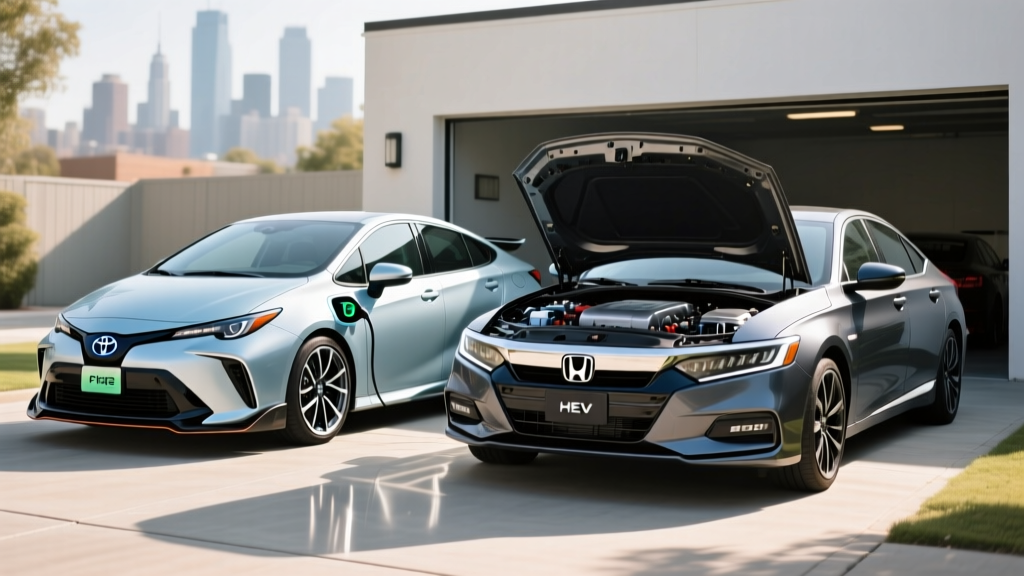
HEV vs. PHEV: Which RAV4 Is Which?
Toyota sells two electrified RAV4 variants. Confusing them is easy — and costly if you expect plug-in capability from the standard hybrid.
Conventional Hybrid (HEV) — RAV4 Hybrid
- No plug. The battery recharges via regenerative braking and the gasoline engine.
- You fuel it exactly like a gas car — at any gas station.
- Efficiency is measured in MPG (miles per gallon).
- Lower purchase price; no home charging equipment needed.
Plug-In Hybrid (PHEV) — RAV4 Prime
- Requires plugging in to unlock its electric-only range and peak efficiency.
- Has a much larger battery (18.1 kWh) that you charge at home or at public Level 2 stations.
- Efficiency is measured in MPGe (miles per gallon equivalent) on battery, then MPG once the battery depletes.
- Higher purchase price; eligible for federal tax credit (with conditions).
If you cannot charge at home or at work, the conventional RAV4 Hybrid is the correct choice. The Prime's efficiency advantage collapses if you never plug it in — you'd be hauling a heavier, more expensive vehicle for no benefit.
EPA Fuel Economy: RAV4 Hybrid vs. RAV4 Prime vs. Gas Baseline
Here's how the three RAV4 powertrains stack up on the EPA cycle, with data from fueleconomy.gov:
| Metric | RAV4 Gas (AWD) | RAV4 Hybrid (AWD) | RAV4 Prime (PHEV) |
|---|---|---|---|
| City MPG | 27 | 41 | 40 (after battery depletes) |
| Highway MPG | 35 | 38 | 36 (after battery depletes) |
| Combined MPG | 30 | 40 | 38 (gas-only mode) |
| Combined MPGe (electric) | N/A | N/A | 94 MPGe |
| Electric-Only Range | 0 mi | 0 mi | 42 mi |
| Total Range (gas + electric) | ~445 mi | ~580 mi | ~600 mi |
Understanding MPGe: Miles Per Gallon Equivalent converts electricity consumption into the energy equivalent of one gallon of gasoline (33.7 kWh). The RAV4 Prime's 94 MPGe applies only while the battery has charge. Once the 42-mile electric range depletes, the vehicle operates as a conventional hybrid at 38 combined MPG.
Real-World MPG: What Owners Actually Report
EPA estimates are a useful baseline, but hybrid fuel efficiency behaves differently than gas cars in real-world conditions — often in the owner's favor.
Real-World RAV4 Hybrid MPG Expectations:
- City / suburban driving: 42-45 MPG — hybrids excel here because regenerative braking recaptures energy at every stop, and the engine shuts off at idle.
- Highway cruising (70+ mph): 35-38 MPG — the electric motor contributes less at sustained high speed, and aerodynamic drag dominates.
- Cold weather (below 30°F): 33-37 MPG — the engine runs more frequently to generate cabin heat and warm the catalytic converter, reducing electric-motor reliance.
- Mixed driving (annual average): 38-42 MPG for most owners, closely matching the EPA combined figure.
This city-better, highway-worse pattern is the opposite of a conventional gas car. If your commute involves heavy traffic and frequent stops, the RAV4 Hybrid's real-world efficiency will likely exceed the EPA sticker. On a long road trip at 75 mph through flat terrain, expect it to fall a few MPG short.
For the RAV4 Prime, real-world electric range varies with temperature and driving style. In mild weather with moderate acceleration, owners report 40-45 miles on a charge. In freezing temperatures with the heater running, expect 30-35 miles before the gasoline engine kicks in.
Powertrain Specs: What Drives the Efficiency
| Specification | RAV4 Hybrid | RAV4 Prime |
|---|---|---|
| Engine | 2.5L 4-cyl Atkinson cycle | 2.5L 4-cyl Atkinson cycle |
| Combined Net Horsepower | 219 hp | 302 hp |
| Electric Motors | Front + rear (eAWD) | Front + rear (eAWD), higher output |
| Hybrid Battery (usable) | ~1.6 kWh (NiMH) | 18.1 kWh (lithium-ion) |
| Transmission | eCVT | eCVT |
| Drivetrain | AWD (standard) | AWD (standard) |
| 0-60 mph | 7.4 sec | 5.7 sec |
| Towing Capacity | 1,750 lbs | 2,500 lbs |
The RAV4 Hybrid uses a small nickel-metal hydride (NiMH) battery pack that buffers energy between the regenerative braking system and the electric motors. It's not designed to be plugged in — the gas engine and regen keep it charged. The Atkinson-cycle engine sacrifices some peak power for thermal efficiency, which is why a 2.5L four-cylinder produces relatively modest horsepower on its own but achieves 40 MPG combined.
The RAV4 Prime swaps in a far larger 18.1 kWh lithium-ion pack and more powerful electric motors, yielding 302 combined horsepower — making it the quickest RAV4 Toyota sells. Its larger battery is what enables 42 miles of pure electric driving at speeds up to 84 mph.
RAV4 Prime Charging Specs
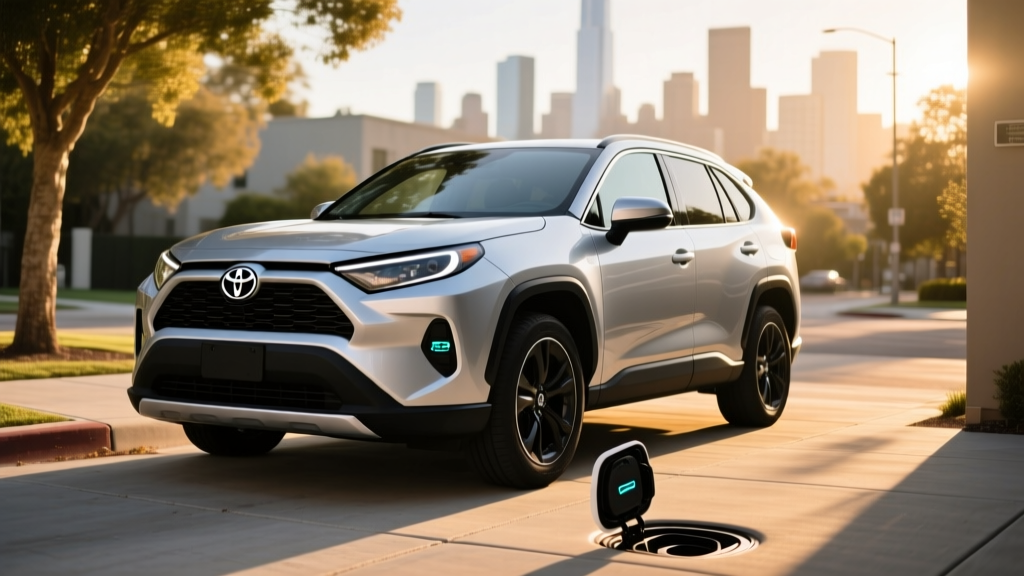
The Prime can be charged via its J1772 port (Level 1 and Level 2 AC charging). It does not support DC fast charging — a deliberate Toyota decision to preserve battery longevity and keep costs down.
| Charge Level | Power | 0-100% Time |
|---|---|---|
| Level 1 (120V household) | ~1.4 kW | ~12 hours |
| Level 2 (240V, 3.3 kW onboard) | 3.3 kW | ~5.5 hours |
| Level 2 (240V, optional 6.6 kW onboard)* | 6.6 kW | ~2.5 hours |
| DC Fast Charge | Not supported | N/A |
*6.6 kW onboard charger availability varies by trim and model year. Verify on the specific vehicle's window sticker.
Battery Warranty, Lifespan, and Replacement Cost
Battery longevity is consistently the top concern among hybrid shoppers. Toyota addresses this with one of the strongest hybrid battery warranties in the industry.
Toyota Hybrid Battery Warranty
Coverage: 10 years / 150,000 miles (whichever comes first), transferable to subsequent owners.
What's covered: Defects and capacity loss below a defined performance threshold. Toyota's hybrid system warranty also covers the inverter, electric motors, and related control electronics for the same period.
Applies to: Both the RAV4 Hybrid (NiMH pack) and RAV4 Prime (lithium-ion pack).
How Long Do RAV4 Hybrid Batteries Actually Last?
Toyota's hybrid synergy drive system has been in production since 1997 (Prius). Fleet data and owner surveys indicate that RAV4 Hybrid battery packs routinely last 150,000 to 200,000+ miles before any notable capacity loss. The NiMH pack in the standard hybrid is less energy-dense than a full EV battery but also undergoes shallower charge cycles — Toyota's software keeps the battery in a narrow state-of-charge window (roughly 40-80%) to minimize degradation.
The RAV4 Prime's larger lithium-ion pack follows similar management principles, though its deeper cycling (you can use the full 42-mile range) means slightly more wear per mile on battery. Even so, reports of Prime battery failures within the warranty period are rare.
Battery Replacement Cost
If the hybrid battery does fail outside warranty, replacement costs have moderated significantly:
- RAV4 Hybrid (NiMH): $2,000–$3,500 for a new OEM battery pack installed at a Toyota dealer. Refurbished/remanufactured packs are available for $1,200–$2,000.
- RAV4 Prime (Li-ion): $5,000–$8,000 for a new OEM pack, reflecting the larger capacity and lithium-ion chemistry.
For context, at 40 MPG and $3.50/gallon fuel, a RAV4 Hybrid driven 15,000 miles/year spends roughly $1,313 annually on gas. A battery replacement at year 12 would represent about 1.5-2.5 years of fuel cost — not a catastrophic expense for a vehicle that may have already saved thousands over a gas-only equivalent.
Pricing, Trims, and Tax Credit Eligibility
| 2026 Model | Starting MSRP | Federal Tax Credit |
|---|---|---|
| RAV4 Hybrid LE | ~$34,500 | None |
| RAV4 Hybrid XLE | ~$36,500 | None |
| RAV4 Hybrid Woodland Edition | ~$38,000 | None |
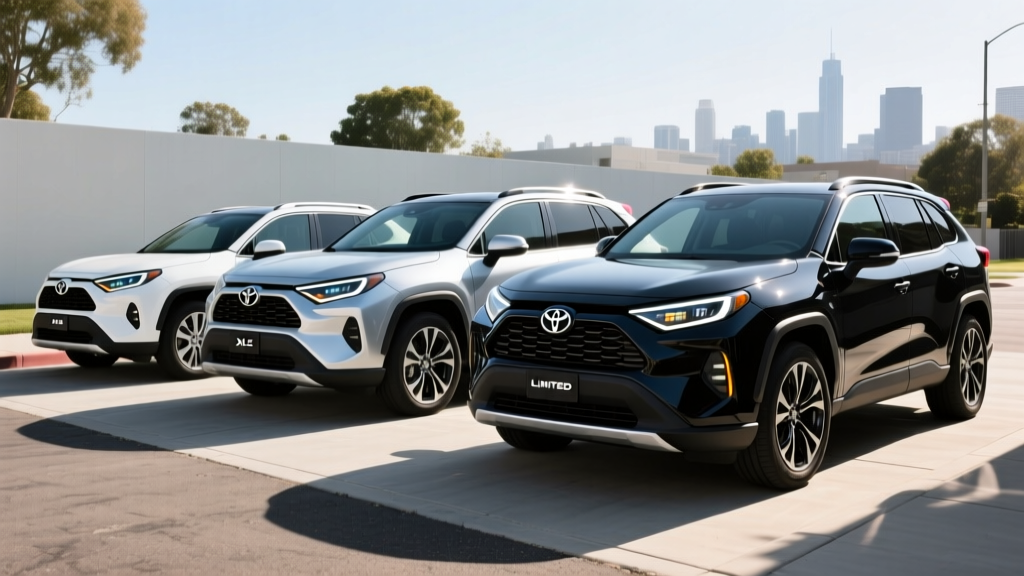
| RAV4 Hybrid Limited | ~$41,000 | None |
| RAV4 Prime SE | ~$45,500 | Up to $7,500* |
| RAV4 Prime XSE | ~$48,500 | Up to $7,500* |
*MSRP figures are approximate for the 2026 model year and may vary by dealer and destination charges.
Federal Tax Credit: Only the Prime Qualifies
The conventional RAV4 Hybrid does not qualify for the federal §30D clean vehicle credit. That credit is reserved for plug-in vehicles with battery capacity ≥7 kWh — which excludes the standard hybrid's ~1.6 kWh NiMH pack.
The RAV4 Prime, with its 18.1 kWh lithium-ion battery, may qualify for up to $7,500 under current IRS rules — but eligibility is conditional. Per IRS §30D guidelines, you must meet all of the following:
- Income caps: Modified adjusted gross income ≤ $150,000 (single), $225,000 (head of household), or $300,000 (joint filers).
- MSRP cap: The vehicle's MSRP must not exceed $80,000 for SUVs — both Prime trims clear this easily.
- Battery sourcing requirements: A percentage of critical minerals and battery components must be sourced from the U.S. or free-trade-agreement countries. These thresholds increase annually and may reduce the credit to $3,750 or eliminate it depending on the specific battery supply chain for your vehicle's build date.
- Point-of-sale transfer: As of 2024, you can transfer the credit to the dealer at purchase, reducing your out-of-pocket cost immediately rather than waiting for a tax refund.
Critical caveat: Toyota's battery sourcing has been a moving target. Before relying on the full $7,500 credit, verify the specific vehicle's eligibility using the IRS's official VIN-check tool at fueleconomy.gov or consult a tax professional. Credit rules are subject to legislative change.
State and Utility Incentives
Many states and utilities offer additional rebates for PHEVs. California's CVRP, Colorado's state credit, and various utility company rebates may stack on top of the federal credit for the RAV4 Prime. The conventional hybrid may qualify for smaller utility rebates in some jurisdictions, but these are less common. Check your state energy office and local utility for current programs.
Hybrid vs. PHEV vs. Full EV: Which Fits Your Life?
Choose the RAV4 Hybrid (HEV) If:
- You cannot charge at home (apartment, street parking, no garage).
- You want maximum simplicity — fuel up at any gas station, no apps, no cables.
- Your budget is under $40,000 and you don't want to wait for tax-credit paperwork.
- You drive 12,000-15,000 miles/year in mixed conditions and want 40 MPG without thinking about it.
Choose the RAV4 Prime (PHEV) If:
- You can install a Level 2 charger at home (240V outlet or hardwired station).
- Your daily round-trip commute is under 40 miles — meaning you could drive months between fill-ups.
- You want 302 hp and 5.7-second 0-60 times alongside efficiency.
- You qualify for the federal tax credit, effectively bringing the Prime's price close to the Hybrid Limited.
Choose a Full EV (e.g., Tesla Model Y, Hyundai Ioniq 5) If:
- You want zero tailpipe emissions and the lowest per-mile energy cost.
- You have reliable home charging and access to DC fast-charging corridors for road trips.
- You're ready to plan charging stops on long trips (though 250+ kW chargers have made this far quicker than in prior years).
- You want minimal maintenance — no oil changes, no gas engine service intervals.
Pros and Cons at a Glance
Pros
- 40 MPG combined — best-in-class for AWD compact SUVs
- City MPG exceeds highway MPG — ideal for commuters
- No plug required; zero change to fueling routine
- 10-year / 150,000-mile hybrid battery warranty
- Strong resale value and Toyota reliability reputation
- Standard AWD on all hybrid trims
- ~580 miles of total range per tank
Cons
- No federal tax credit for the standard hybrid
- Highway MPG drops to ~36-38 at 75+ mph
- Cold weather reduces efficiency by 10-15%
- Modest 219 hp — adequate, not quick (Prime solves this)
- 1,750-lb towing capacity limits utility vs. truck-based SUVs
- Infotainment system lags behind competitors in responsiveness
- Dealer markups on hybrid trims remain common in high-demand markets
5-Year Cost of Ownership: Hybrid vs. Gas
Using 15,000 miles/year, $3.50/gallon regular unleaded, and EPA combined figures:
| 5-Year Cost | RAV4 Gas AWD (30 MPG) | RAV4 Hybrid (40 MPG) | RAV4 Prime (w/ daily charging) |
|---|---|---|---|
| Fuel / energy cost | $8,750 | $6,563 | $3,200–$4,500 |
| Purchase price (approx.) | $33,000 | $34,500 | $38,000 (after $7,500 credit) |
| Maintenance (5 yr) | $2,500 | $2,200 | $2,000 |
| Total 5-year (fuel + purchase + maint.) | $44,250 | $43,263 | $43,200–$44,500 |
The RAV4 Hybrid saves roughly $2,200 in fuel over five years versus the gas model, nearly offsetting its higher purchase price. The Prime's economics are strongest when you charge daily and rarely use gasoline — potentially cutting fuel costs by 50-60% versus the gas model, with the tax credit absorbing the price premium.
Frequently Asked Questions
How many MPG does the Toyota RAV4 Hybrid get?
The EPA rates the 2026 RAV4 Hybrid at 41 MPG city, 38 MPG highway, and 40 MPG combined. In real-world city driving with frequent stops, owners often see 42-45 MPG. Highway cruising at 75+ mph typically yields 35-38 MPG. Cold weather can reduce combined efficiency to 33-37 MPG.
How far can the RAV4 Prime go on electric only?
The EPA rates the RAV4 Prime at 42 miles of electric-only range. Real-world results vary: expect 40-45 miles in mild weather and 30-35 miles in freezing temperatures with cabin heating active. Once the battery depletes, the Prime operates as a conventional hybrid at 38 combined MPG.
Do I need to plug in the RAV4 Hybrid?
No. The standard RAV4 Hybrid is a conventional hybrid (HEV). Its small battery recharges automatically through regenerative braking and the gasoline engine. You fuel it at any gas station, exactly like a regular car. Only the RAV4 Prime (PHEV) benefits from plugging in.
Is the RAV4 Hybrid reliable, and what does battery replacement cost?
Toyota's hybrid system has an extensive track record dating to 1997. The RAV4 Hybrid's battery is covered by a 10-year / 150,000-mile warranty. Real-world data shows these packs commonly lasting 150,000-200,000+ miles. If replacement is needed out of warranty, expect $2,000-$3,500 for the standard hybrid (NiMH) and $5,000-$8,000 for the Prime (lithium-ion).
Does the RAV4 Hybrid qualify for a federal tax credit?
The standard RAV4 Hybrid does not qualify for the federal §30D clean vehicle tax credit, as it lacks a plug and its battery is below the 7 kWh minimum. The RAV4 Prime (PHEV) may qualify for up to $7,500, subject to buyer income caps ($150K single / $300K joint), MSRP limits ($80K for SUVs), and battery sourcing requirements. Verify eligibility at the point of sale using the IRS VIN tool, as sourcing rules change annually.
How does RAV4 Hybrid fuel efficiency compare to a full EV?
A full EV like the Hyundai Ioniq 5 or Tesla Model Y delivers 100+ MPGe and zero tailpipe emissions, with per-mile energy costs roughly 40-60% lower than the RAV4 Hybrid's gasoline cost. However, EVs require home charging infrastructure, longer trip planning around DC fast chargers, and a higher upfront purchase price. The RAV4 Hybrid offers a compelling middle ground: 33% better fuel economy than a gas SUV with zero lifestyle changes.
Is the RAV4 Hybrid's eCVT the same as a regular CVT?
No. Toyota's eCVT is a planetary gearset that blends power from the gasoline engine and electric motors. It has no belt, no pulleys, and none of the "rubber-band" feel associated with traditional CVTs. It's one of the most durable and smooth transmissions in the industry, with no routine maintenance required.
Sources: fueleconomy.gov (EPA estimates), Toyota Motor Corporation (manufacturer specifications), IRS.gov (§30D tax credit rules). All pricing and credit eligibility figures reflect 2026 model year data and are subject to change. Consult a tax professional for personal credit eligibility.