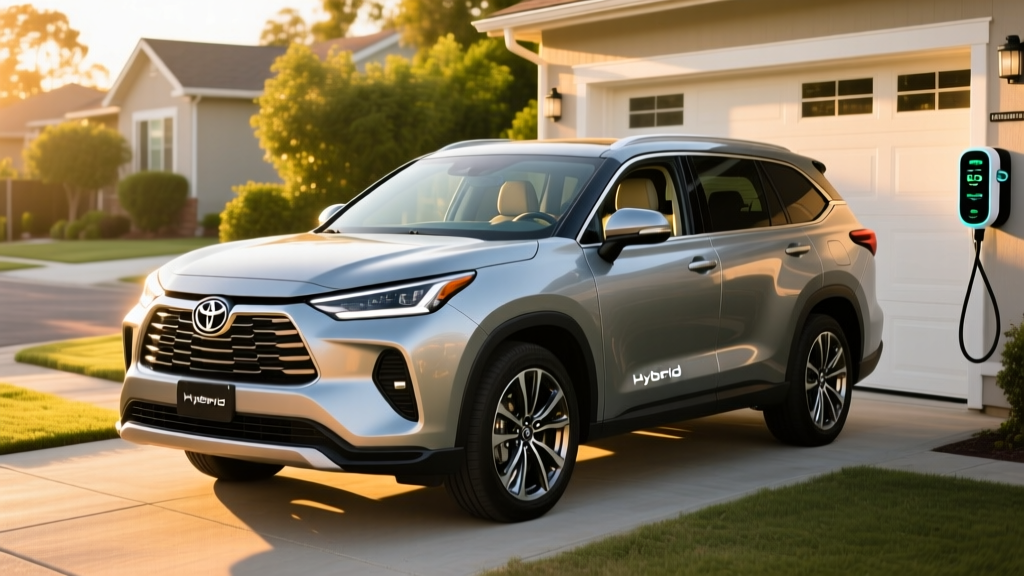
If you're searching for a toyota hybrid suv 2015, you're likely evaluating the used market for a fuel-efficient crossover that won't break the bank. The 2015 model year is a pivotal one in Toyota's hybrid SUV timeline: the RAV4 Hybrid hadn't yet launched (it debuted for the 2016 model year), but the 2015 Toyota Highlander Hybrid was firmly on sale as a three-row midsize option. This guide breaks down exactly what you're getting with a 2015-era Toyota hybrid SUV — EPA fuel economy, real-world MPG, battery longevity, replacement costs, and whether a decade-old hybrid is still a smart buy in 2026.
Which Toyota Hybrid SUVs Were Available in 2015?
Toyota's hybrid SUV lineup in the 2015 model year consisted of a single model sold in the U.S.:
- 2015 Toyota Highlander Hybrid — a three-row midsize SUV with a V6 hybrid powertrain, AWD, and seating for up to seven.
The compact RAV4 Hybrid was announced in early 2015 but did not reach dealerships until the 2016 model year (late 2015). If you're shopping specifically for a RAV4 Hybrid, you'll need to look at 2016+ model years. The Highlander Hybrid, however, was well-established by 2015, having been refreshed for the 2014 model year with Toyota's second-generation hybrid system.
Neither the 2015 Highlander Hybrid nor the 2016 RAV4 Hybrid is a plug-in hybrid (PHEV). Both are conventional hybrids (HEVs) — they charge their batteries through regenerative braking and the gasoline engine. You never plug them in.
HEV vs PHEV: What 2015 Toyota Hybrid SUV Buyers Need to Know
A common source of confusion among used-car shoppers is the difference between a conventional hybrid and a plug-in hybrid. Here's the distinction:
| Feature | Conventional Hybrid (HEV) | Plug-In Hybrid (PHEV) |
|---|---|---|
| Plug in to charge? | No — self-charging via regen + engine | Yes — external charging required for EV mode |
| Electric-only range | Less than 1 mile (low-speed assist only) | 25–42 miles typical (model-dependent) |
| Battery size | 1.5–3.5 kWh (small) | 13–18 kWh (larger) |
| Federal tax credit (new) | None (expired years ago) | Up to $7,500 under §30D (new vehicles only) |
| 2015 Toyota example | Highlander Hybrid, RAV4 Hybrid (2016+) | Prius Plug-in (not an SUV); RAV4 Prime launched 2021 |
Key takeaway: The 2015 Toyota hybrid SUV (Highlander Hybrid) is a conventional HEV. It does not plug in, has no meaningful electric-only range, and does not qualify for any federal tax credit — new or used. If you want a Toyota PHEV SUV with electric-only range, you'd be looking at the RAV4 Prime (2021+) or the newer Highlander PHEV (available in select markets).
2015 Toyota Highlander Hybrid: Fuel Economy & Real-World MPG
The headline number for any hybrid buyer is fuel economy. Here's what the EPA rated the 2015 Highlander Hybrid at, based on data from fueleconomy.gov:
| Metric | Value |
|---|---|
| City MPG | 27 MPG |
| Highway MPG | 28 MPG |
| Combined MPG | 28 MPG |
| Fuel type | Regular unleaded (87 octane) |
| Annual fuel cost (est.) | ~$1,950 (15,000 mi/yr at $3.50/gal) |
Real-World MPG: What Owners Actually Report
Toyota hybrids tend to perform close to — and sometimes slightly above — their EPA estimates in mixed driving, particularly in city conditions where regenerative braking recovers the most energy. Owner-reported data from Fuelly and Edmunds forums consistently shows the 2015 Highlander Hybrid averaging 26–29 MPG combined in real-world use.
Factors that reduce real-world MPG:
- Highway-heavy driving at 75+ mph: Aerodynamic drag dominates; expect 24–26 MPG.
- Cold weather (below 35°F): The engine runs more frequently to heat the cabin, dropping city MPG by 2–4 MPG.
- Heavy cargo or towing: The Highlander Hybrid is rated for 3,500 lbs towing; loaded, expect 22–24 MPG.
- Aged hybrid battery: A degraded battery (10+ years old) may reduce regen efficiency by 1–2 MPG — more on this below.
For context, the non-hybrid 2015 Highlander V6 AWD is EPA-rated at 18 city / 24 highway / 20 combined. The hybrid's 28 combined represents a 40% improvement — substantial for a 4,500-lb three-row SUV.
Powertrain Specs: What's Under the Hood
| Specification | Detail |
|---|---|
| Engine | 3.5L V6 Atkinson-cycle |
| Engine horsepower | 236 HP @ 5,800 RPM |
| Electric motor | Front + rear permanent-magnet motors |
| Combined net horsepower | 280 HP |
| Transmission | eCVT (electronically controlled CVT) |
| Drivetrain | AWD-i (electric rear axle, no mechanical driveshaft) |
| 0–60 mph | ~7.8 seconds |
| Hybrid battery | Nickel-metal hydride (NiMH), ~3.5 kWh |
| Towing capacity | 3,500 lbs |
The Highlander Hybrid uses Toyota's AWD-i system, which employs a separate rear electric motor to power the rear wheels when needed. There's no mechanical connection between the front and rear axles — the rear motor engages during acceleration, low-traction conditions, and regenerative braking. This system is lighter and more efficient than a traditional AWD setup but provides less aggressive torque vectoring than a mechanical system.
Hybrid Battery Lifespan, Warranty & Replacement Cost
- Original warranty: 8 years / 100,000 miles (10 years / 150,000 miles in CARB states including CA, NY, MA, and others)
- Battery chemistry: Nickel-metal hydride (NiMH)
- Expected lifespan: 150,000–200,000+ miles with normal use
- Replacement cost (2026): $2,500–$4,500 (OEM new), $1,500–$2,500 (remanufactured)
This is the number-one concern for anyone buying a 2015 hybrid in 2026: the vehicle is now 11 years old. Is the hybrid battery a ticking time bomb?
The short answer: probably not, but verify before buying. Toyota's NiMH hybrid batteries have proven remarkably durable. The 2015 Highlander Hybrid uses a mature NiMH pack that degrades gradually rather than failing catastrophically. Many first-generation Prius batteries lasted 200,000+ miles, and the Highlander's larger pack has more thermal mass and less stress per cell.
Signs of Hybrid Battery Degradation
- Reduced MPG: A drop of 3+ MPG below the car's historical average can signal battery weakness.
- Frequent engine cycling: The engine starts and stops more often than normal, even at low loads.
- State-of-charge swings: Using an OBD-II scanner with an app like Dr. Prius or Torque, you can monitor individual module voltages. A spread of more than 0.2V between modules suggests imbalance.
- Check hybrid system warning: A dashboard warning light indicates a fault — get the codes read immediately.
Replacement Options in 2026
If the battery does need replacement, you have several paths:
- Toyota OEM new battery: ~$3,500–$4,500 installed at a dealer. Best longevity guarantee.
- Remanufactured battery: ~$1,500–$2,500 installed at independent hybrid specialists (e.g., Green Bean Battery). Often carries a lifetime warranty.
- Individual module replacement: A qualified hybrid technician can replace only the weak modules for $500–$1,200. This is a temporary fix if only 1–2 modules are failing.
Pre-purchase recommendation: Before buying any 2015 Highlander Hybrid, have the hybrid battery health-checked using Toyota's Techstream diagnostic tool or an aftermarket hybrid battery tester. A 20-minute test can reveal module imbalance and remaining capacity. Budget $200–$300 for this inspection — it's the most important line item on your used-hybrid checklist.
2015 Highlander Hybrid: Pricing on the Used Market (2026)
As of early 2026, the 2015 Toyota Highlander Hybrid trades on the used market in the following ranges, depending on mileage, condition, and trim (LE, XLE, Limited, Platinum):
| Trim | Mileage Range | Typical Price |
|---|---|---|
| LE (base) | 100,000–140,000 mi | $14,000–$17,000 |
| XLE | 90,000–130,000 mi | $16,000–$19,500 |
| Limited | 80,000–120,000 mi | $17,500–$22,000 |
| Platinum | 70,000–110,000 mi | $19,000–$24,000 |
Tax Credit Eligibility
The 2015 Highlander Hybrid does not qualify for any federal tax credit. The original hybrid tax credit for the Highlander Hybrid expired in 2010 when Toyota hit its 60,000-unit phaseout cap. The current IRS §30D Clean Vehicle Credit applies only to new plug-in electric vehicles (BEVs and PHEVs) meeting battery-sourcing, MSRP, and buyer income requirements — it does not cover conventional hybrids or used vehicles of this age.
Some states offer used-EV credits (e.g., up to $4,000 for used BEVs/PHEVs under §25E), but these also exclude conventional HEVs. Check your state's energy office for any local hybrid incentives, but expect none at the federal level.
Who Should Buy a 2015 Toyota Hybrid SUV — And Who Shouldn't
- You need three rows and AWD with better fuel economy than a gas V6
- You don't have access to home or workplace charging (no plug needed)
- You want proven Toyota hybrid reliability with widely available service
- Your budget is $15,000–$22,000 for a used family SUV
- You drive 12,000–18,000 miles/year and want fuel savings without upfront EV cost
- You want electric-only driving or plug-in capability (consider RAV4 Prime or a BEV)
- You primarily drive highway miles at 75+ MPH (hybrid advantage shrinks)
- You want the latest ADAS features (2015 predates Toyota Safety Sense standard fitment)
- You want a compact SUV (wait for a 2016+ RAV4 Hybrid)
- You're concerned about a 10-year-old hybrid battery and don't want to budget for potential replacement
Hybrid vs PHEV vs Full EV: Which Fits Your Situation?
The 2015 Highlander Hybrid occupies a specific niche. Here's how it compares to the alternatives in 2026:
- HEV (this vehicle): Best for drivers without reliable charging access who want better MPG without changing habits. No plug, no range anxiety, minimal maintenance change from gas.
- PHEV (e.g., RAV4 Prime, 2021+): Best for drivers with home charging who want 42 miles of electric-only commuting plus gas flexibility for road trips. More expensive upfront; eligible for tax credits when new.
- Full EV (e.g., Tesla Model Y, Hyundai Ioniq 5): Best for drivers with home charging who want zero tailpipe emissions, lowest per-mile fuel cost, and minimal drivetrain maintenance. Requires charging infrastructure planning.
Reliability & Safety Record
The 2015 Highlander Hybrid benefits from Toyota's long-standing reputation for hybrid system reliability. The eCVT transmission has no traditional clutch packs or bands to wear — it uses a planetary gearset that's essentially bulletproof with normal fluid maintenance. The hybrid inverter, motor-generators, and battery management system were mature technology by 2015, having been refined across multiple Prius generations.
From IIHS testing, the 2015 Highlander earned a Top Safety Pick rating with Good marks in most crashworthiness categories. However, it received an Acceptable (not Good) rating in the small overlap front test — a category where many 2015-era vehicles fell short. The NHTSA gave it a 4-star overall rating out of 5.
Important note for 2026 buyers: Toyota Safety Sense (TSS-P), which includes automatic emergency braking, lane departure warning, and adaptive cruise control, was not standard on the 2015 Highlander. It became standard on the Highlander for the 2017 model year. If advanced driver-assistance features are a priority, look at 2017+ models.
Frequently Asked Questions
How many MPG does the 2015 Toyota Highlander Hybrid get?
The EPA rates it at 27 city / 28 highway / 28 combined. Real-world owners typically report 26–29 MPG combined, with city driving often exceeding the EPA estimate thanks to regenerative braking. Highway-only driving at high speeds can drop to 24–26 MPG.
Does the 2015 Toyota hybrid SUV need to be plugged in?
No. The 2015 Highlander Hybrid is a conventional hybrid (HEV). It charges its battery through regenerative braking and the gasoline engine. You fuel it like any other car — with gasoline. There is no plug, no charging cable, and no electric-only range to manage.
Is the hybrid battery in a 2015 Highlander likely to fail?
At 11 years old, the battery is past its original 8-year/100,000-mile warranty (or 10-year/150,000-mile in CARB states). Toyota's NiMH batteries commonly last 150,000–200,000+ miles. Many 2015 Highlander Hybrids on the road today still have their original batteries. However, you should budget $2,000–$4,500 for a potential replacement and have the battery health-checked before purchase.
What does a replacement hybrid battery cost?
A new OEM Toyota battery runs $3,500–$4,500 installed. Remanufactured batteries from hybrid specialists cost $1,500–$2,500 and often include a lifetime warranty. Individual module replacement (if only a few cells are weak) can be done for $500–$1,200 by a qualified hybrid technician.
Does the 2015 Highlander Hybrid qualify for any tax credit?
No. The original hybrid vehicle tax credit for Toyota expired in 2010. The current federal §30D Clean Vehicle Credit and §25E Used Clean Vehicle Credit apply only to plug-in electric vehicles (BEVs and PHEVs), not conventional hybrids. No federal tax incentive is available for purchasing a 2015 Highlander Hybrid in 2026.
Should I buy a 2015 Highlander Hybrid or wait for a newer RAV4 Hybrid?
If you need three rows of seating, the Highlander Hybrid is the right choice — the RAV4 Hybrid only seats five. If two rows suffice and you can stretch your budget to $20,000–$28,000, a 2017–2019 RAV4 Hybrid offers better MPG (32–34 combined), newer safety tech (Toyota Safety Sense standard), and a younger battery. For plug-in capability with 42 miles of EV range, the 2021+ RAV4 Prime is the upgrade path, though used examples start around $32,000+.