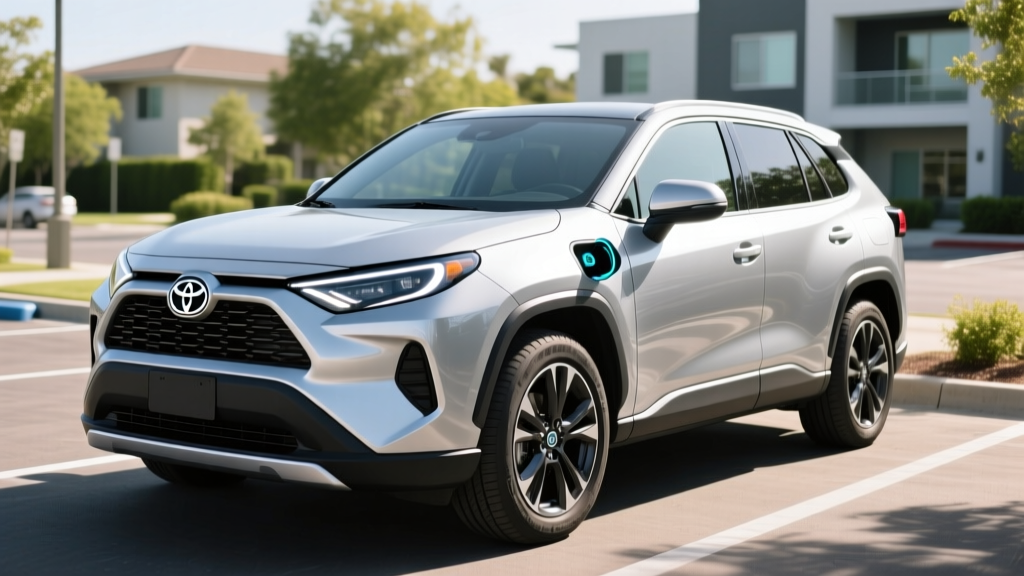
If you've been searching for a co hybrid — likely meaning a compact or crossover hybrid SUV — the Toyota RAV4 hybrid lineup is the benchmark you'll measure everything else against. For 2026, Toyota continues to offer the RAV4 in two distinct electrified flavors: the conventional hybrid (HEV) and the plug-in hybrid (PHEV, sold as the RAV4 Prime). Both pair a 2.5-liter four-cylinder engine with electric motors, but their daily driving experiences, fuel economy, and ownership costs diverge sharply.
This guide breaks down exact EPA figures, real-world MPG expectations, battery warranties, and whether the HEV or PHEV version (or a full EV) makes sense for your driveway. All specs reflect the 2026 model year.
HEV vs PHEV: Understanding the Two RAV4 Hybrid Powertrains
The single most important decision when shopping a RAV4 hybrid is whether you want a conventional hybrid (HEV) or a plug-in hybrid (PHEV). The distinction is not cosmetic — it changes how you fuel the vehicle, how far you can drive on electricity, and whether you're eligible for federal tax incentives.
| Feature | RAV4 Hybrid (HEV) | RAV4 Prime (PHEV) |
|---|---|---|
| Plug-in required? | No — self-charging via engine + regen | Yes — plug in to access electric-only range |
| Battery size | 1.6 kWh (NiMH) | 18.1 kWh (lithium-ion) |
| Electric-only range | N/A (motor assists at low speed only) | 42 miles (EPA) |
| Combined horsepower | 219 hp | 302 hp |
| DC fast charging | N/A | No — Level 2 AC only |
| 0-60 mph | 7.4 seconds | 5.7 seconds |
| Drivetrain | AWD (standard) | AWD (standard) |
The HEV captures energy from braking and the engine to keep its small battery topped up. You never plug it in. The PHEV's much larger 18.1 kWh battery lets you complete most daily commutes on electricity alone, then seamlessly switches to hybrid mode once the charge depletes — giving you the combined range of a gas tank plus a battery.
Fuel Economy: EPA MPG and Real-World Expectations
Hybrid fuel economy is where the RAV4 earns its reputation. Here are the official EPA figures from fueleconomy.gov:
| Model | City MPG | Highway MPG | Combined MPG | MPGe (PHEV electric mode) |
|---|---|---|---|---|
| 2026 RAV4 Hybrid (HEV) AWD | 41 | 38 | 40 | N/A |
| 2026 RAV4 Prime (PHEV) AWD | 40 (hybrid mode) | 36 (hybrid mode) | 38 (hybrid mode) | 94 MPGe |
Real-world MPG reality check: Toyota hybrids tend to exceed their EPA city rating in stop-and-go traffic because regenerative braking recaptures more energy at lower speeds. Owners consistently report 42-44 MPG in urban driving with the HEV. Highway mileage, however, often falls 2-4 MPG below the sticker — expect 34-36 MPG at sustained 70+ mph speeds, since aerodynamic drag reduces the hybrid system's advantage. In cold weather (below 30°F), expect a 5-8% MPG drop as the engine runs more frequently for cabin heat.
For the RAV4 Prime in hybrid mode (battery depleted), real-world figures track closely with the HEV — around 36-38 combined — because you're essentially driving a slightly heavier RAV4 Hybrid.
Electric-Only Range and Total Range (PHEV)
The RAV4 Prime's 42-mile EPA electric-only range covers the average American's daily round-trip commute (roughly 35 miles, per Census data). In mild weather with moderate acceleration, 45-48 miles is achievable. In winter or at highway speeds, expect 32-36 miles before the gas engine engages.
Charging the RAV4 Prime's 18.1 kWh battery takes about 2.5 hours on a 240V Level 2 outlet (using the included 6.6 kW onboard charger) or roughly 12 hours on a standard 120V household outlet. The RAV4 Prime does not support DC fast charging — a deliberate Toyota decision to preserve cargo space and keep weight down. For most PHEV owners who charge overnight at home, this is a non-issue.
Powertrain Specs and Performance
| Specification | RAV4 Hybrid (HEV) | RAV4 Prime (PHEV) |
|---|---|---|
| Engine | 2.5L 4-cyl Atkinson cycle | 2.5L 4-cyl Atkinson cycle |
| Engine output | 176 hp / 163 lb-ft | 177 hp / 165 lb-ft |
| Front electric motor | 118 hp | 180 hp |
| Rear electric motor | 54 hp | 54 hp |
| Net combined system hp | 219 hp | 302 hp |
| Transmission | eCVT | eCVT |
| 0-60 mph | 7.4 sec | 5.7 sec |
| Towing capacity | 1,750 lbs | 2,500 lbs |
The RAV4 Prime's 302 combined horsepower makes it the quickest RAV4 Toyota sells — quicker, in fact, than many sport-turbo compact SUVs. The instant torque from the front motor delivers responsive acceleration from stops and confident highway merging. The HEV's 219 hp is adequate for daily driving but feels noticeably more relaxed under hard throttle.
Pricing, Trims, and Tax Credit Eligibility
Here's where the math gets interesting — and where many buyers get confused about incentives.
2026 RAV4 Hybrid (HEV) MSRP:
- LE: ~$33,500
- XLE: ~$35,500
- XLE Premium: ~$37,800
- Woodland Edition: ~$38,200
- Limited: ~$41,000
2026 RAV4 Prime (PHEV) MSRP:
- SE: ~$44,500
- XSE: ~$48,000
- The RAV4 Prime (PHEV) may qualify for up to $7,500 in federal tax credits, but eligibility depends on battery component and critical mineral sourcing requirements that shift annually. As of 2026, the RAV4 Prime's partial credit eligibility must be verified at irs.gov at time of purchase.
- Buyer income caps apply: $150,000 single / $300,000 joint modified AGI.
- The point-of-sale transfer option allows dealers to apply the credit as a down-payment reduction if eligible.
- The RAV4 Hybrid (HEV) does not qualify for the §30D new clean vehicle credit — it applies only to plug-in vehicles with ≥7 kWh battery capacity.
Always confirm current eligibility with your tax professional before purchasing.
Battery Warranty, Reliability, and Replacement Costs
10 years / 150,000 miles (whichever comes first) — covers the hybrid battery pack against defects and capacity loss below a defined threshold. This applies to both the HEV and PHEV. Toyota's conventional hybrid batteries have demonstrated exceptional longevity, with many first-generation Prius and RAV4 Hybrid units exceeding 200,000 miles without replacement.
Replacement cost if out of warranty:
- RAV4 Hybrid (HEV) NiMH battery: approximately $3,000-$4,000 (parts + labor)
- RAV4 Prime (PHEV) lithium-ion battery: approximately $8,000-$12,000 (parts + labor)
Toyota hybrids consistently earn top reliability marks. The eCVT transmission has no conventional gears or belts to wear — it's a planetary gearset that's proven virtually bulletproof. The RAV4 Hybrid has been an IIHS Top Safety Pick in recent model years, and the powertrain's simplicity (no turbo, no multi-speed automatic) means fewer failure points over a 15-year ownership span.
Who Should Choose the RAV4 Hybrid vs a Full EV or Gas SUV?
Choose the RAV4 Hybrid (HEV) if:
- You can't charge at home (apartment, street parking, no garage)
- You want maximum simplicity — no plugs, no apps, no charging planning
- Your budget is under $40,000 and you want AWD with 40+ MPG
- You take frequent long road trips and don't want to plan around chargers
Choose the RAV4 Prime (PHEV) if:
- You can install a Level 2 charger at home
- Your daily commute is under 40 miles round-trip (you'll rarely use gas)
- You want EV-like daily driving with gas-engine backup for road trips
- You want 302 hp and qualify for some portion of the federal tax credit
Choose a full EV (e.g., Tesla Model Y, Hyundai Ioniq 5) if:
- You have reliable home charging and your trips rarely exceed 250 miles
- You want to eliminate oil changes, spark plugs, and exhaust maintenance entirely
- You want to maximize the federal tax credit and reduce per-mile fuel cost to ~$0.04-$0.06/mile
- 40+ MPG real-world (HEV) with no behavior change required
- Standard AWD across all trims
- 10-year/150,000-mile hybrid battery warranty
- Proven reliability with massive service network
- RAV4 Prime: 42 miles EV range + 302 hp
- Strong resale value
- HEV doesn't qualify for federal EV tax credit
- PHEV has no DC fast charging
- Infotainment lags competitors in responsiveness
- PHEV cargo space reduced by battery (33.5 vs 37.5 cu ft)
- Prime limited to two trims (SE, XSE) — no luxury option
- Dealer markups on Prime remain common in some markets
2026 RAV4 Hybrid FAQ
How many MPG does the RAV4 Hybrid get in real driving?
The EPA rates the 2026 RAV4 Hybrid AWD at 41 city / 38 highway / 40 combined. In real-world city driving, many owners report 42-44 MPG thanks to aggressive regenerative braking. Highway driving at 70+ mph typically yields 34-36 MPG. Cold weather reduces these figures by roughly 5-8%.
How far can the RAV4 Prime go on electric only?
The EPA rates the RAV4 Prime at 42 miles of electric-only range. In mild weather with gentle driving, 45-48 miles is realistic. In winter or at highway speeds, expect 32-36 miles before the gas engine activates.
Does the RAV4 Hybrid qualify for a tax credit?
The conventional RAV4 Hybrid (HEV) does not qualify for the federal §30D clean vehicle credit — that credit applies only to plug-in vehicles. The RAV4 Prime (PHEV) may qualify for up to $7,500 depending on current battery sourcing rules, your income, and the MSRP cap. Check IRS.gov for current eligibility before purchasing.
Is the RAV4 Hybrid battery expensive to replace?
Out of warranty, the HEV battery replacement runs approximately $3,000-$4,000 and the Prime's lithium-ion pack costs $8,000-$12,000. However, Toyota's hybrid batteries are warrantied for 10 years/150,000 miles, and real-world data shows many lasting well beyond 200,000 miles. Replacement is rarely needed within typical ownership periods.
Do I need to plug in the RAV4 Hybrid?
No. The conventional RAV4 Hybrid (HEV) is self-charging — it captures energy through regenerative braking and the gasoline engine. Only the RAV4 Prime (PHEV) benefits from being plugged in to access its 42-mile electric range. If you never plug in the Prime, it simply operates as a slightly heavier (and slightly less efficient) conventional hybrid.
How long does it take to charge the RAV4 Prime?
On a 240V Level 2 outlet using the 6.6 kW onboard charger, a full charge takes approximately 2.5 hours. On a standard 120V household outlet, expect about 12 hours. The RAV4 Prime does not support DC fast charging.