Quick Verdict: The Prius Prime Plug-In Hybrid at a Glance
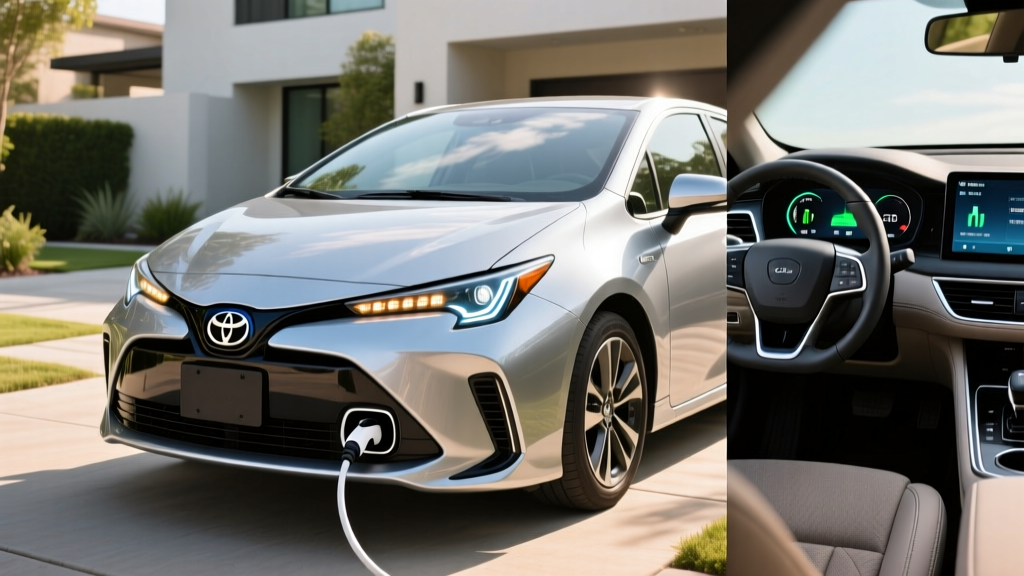
The Toyota Prius Prime plug-in hybrid occupies a narrow but valuable lane in the electrified-vehicle market. It pairs a usable 44-mile electric-only range with a proven hybrid powertrain that delivers 52 MPG once the battery is depleted — meaning you never face range anxiety on road trips, yet you can commute most weekdays without burning a drop of gasoline. For 2026, the Prius Prime continues with the fifth-generation platform introduced for 2023, carrying the same 13.6 kWh lithium-ion battery pack, 220 combined horsepower, and striking fastback design that finally shed the Prius's economy-car stigma.
This guide breaks down every number that matters: real-world MPG versus EPA estimates, charging logistics, battery longevity, federal tax-credit eligibility under current IRS §30D rules, and whether the Prime makes more financial sense than a conventional Prius HEV or a full battery-electric vehicle.
| Spec | Value |
|---|---|
| Powertrain | 2.0L inline-4 + permanent-magnet motor (PHEV) |
| Combined Horsepower | 220 hp |
| Battery (usable) | 13.6 kWh lithium-ion |
| EPA Electric-Only Range | 44 miles (SE trim); 40 miles (XSE / XSE Premium) |
| EPA MPGe (electric + gas) | 127 MPGe combined |
| EPA MPG (charge-sustaining / gas only) | 52 city / 48 hwy / 50 combined (SE); 50 combined (XSE) |
| Total Combined Range | ~440 miles (electric + gas) |
| 0–60 mph | 6.6 seconds |
| Level 2 Charge Time (0–100%) | ~4 hours at 3.3 kW (J1772) |
| DC Fast Charging | Not available |
| Drivetrain | Front-wheel drive (AWD not offered on Prime) |
| Battery Warranty | 10 years / 150,000 miles |
| Starting MSRP | ~$33,445 (SE); ~$37,295 (XSE Premium) |
HEV vs. PHEV: What Separates the Prius Prime from the Standard Prius
Understanding the difference between a conventional hybrid and a plug-in hybrid is the single most important decision in this purchase.
| Feature | Prius (HEV) | Prius Prime (PHEV) |
|---|---|---|
| Plug-in charging required? | No — self-charging via regen + engine | Yes — plug in to access 44-mi EV range |
| Battery capacity | ~1.0 kWh (small buffer) | 13.6 kWh usable |
| Electric-only driving | ~1 mile at low speed | 44 miles at highway-capable speed |
| EPA combined MPG (gas) | 57 combined (LE FWD) | 50–52 combined |
| EPA MPGe | N/A | 127 MPGe |
| Horsepower | 194 hp | 220 hp |
| Starting MSRP | ~$28,345 | ~$33,445 |
| Federal tax credit eligible? | No | Potentially — see §30D details below |
The practical difference: If you can charge at home or at work and your daily round-trip commute is under 40 miles, the Prius Prime effectively operates as an EV on weekdays and a hybrid on road trips. If you lack reliable plug-in access, the standard Prius HEV is the smarter buy — you get 57 MPG combined without ever plugging in, and you save roughly $5,000 on the purchase price.
Electric-Only Range, MPGe, and Real-World MPG
The EPA rates the 2026 Prius Prime SE at 44 miles of electric-only range and 127 MPGe combined. The heavier XSE and XSE Premium trims lose 4 miles to larger wheels and extra equipment, landing at 40 miles EV and 114 MPGe. Once the battery is depleted, the Prime operates as a conventional hybrid, returning 52 city / 48 highway / 50 combined MPG (SE) or 48 city / 47 highway / 48 combined (XSE).
Real-World Range vs. EPA Sticker
EPA electric range: 44 miles (SE)
Expect in practice: 36–42 miles in mild weather with mixed city/highway driving; as low as 30–34 miles in freezing temperatures with cabin heat running. The Prius Prime's heat pump (standard on XSE trims) mitigates some cold-weather loss compared to resistive heating, but lithium-ion batteries inherently lose efficiency below 40°F.
Gas-mode MPG reality: Owners consistently report exceeding the EPA city estimate. Toyota hybrids leverage regenerative braking and engine-off coasting more aggressively in stop-and-go traffic, so 55–60 MPG in city driving is common. Highway driving at 75+ mph may drop to 44–47 MPG.
| Trim | EV Range | MPGe | City MPG | Hwy MPG | Combined MPG |
|---|---|---|---|---|---|
| SE | 44 mi | 127 | 52 | 48 | 50 |
| XSE | 40 mi | 114 | 50 | 47 | 48 |
| XSE Premium | 40 mi | 114 | 50 | 47 | 48 |
For authoritative EPA data, see the official Prius Prime listing on fueleconomy.gov.
Charging the Prius Prime: What You Need to Know
The Prius Prime uses a J1772 connector for Level 1 and Level 2 AC charging. It does not support DC fast charging — a deliberate engineering decision by Toyota, as the 13.6 kWh battery is small enough that overnight Level 2 charging is practical and DC infrastructure adds cost and weight.
| Charging Level | Power | 0–100% Time | Use Case |
|---|---|---|---|
| Level 1 (120V household outlet) | ~1.4 kW | ~11 hours | Overnight top-up if no Level 2 available |
| Level 2 (240V home or public) | 3.3 kW (onboard charger limit) | ~4 hours | Daily home charging; workplace charging |
| DC Fast Charge | N/A | N/A | Not supported |
Key detail: The Prime's onboard charger maxes out at 3.3 kW. Even if you plug into a 7.2 kW or 11.5 kW Level 2 station, the car will only draw 3.3 kW. That means a full charge takes roughly 4 hours regardless of the station's rated output. For a 44-mile battery, this is rarely a problem — most owners plug in overnight and wake up to a full charge.
Home charging cost: At the US average residential rate of ~$0.16/kWh, a full 13.6 kWh charge costs roughly $2.18 — about 5 cents per electric mile. Compare that to gasoline at $3.30/gallon and 50 MPG, which works out to ~6.6 cents per mile. The savings widen dramatically if you have access to off-peak utility rates or workplace charging.
Powertrain and Performance
The 2026 Prius Prime pairs a 2.0-liter Atkinson-cycle inline-4 engine with a high-output permanent-magnet motor-generator, routed through Toyota's e-CVT planetary gearset. The combined system output is 220 horsepower — a substantial jump from the prior-generation Prime's 121 hp. Toyota quotes a 0–60 mph time of 6.6 seconds, making this the quickest Prius ever sold and genuinely responsive in highway merging scenarios.
Unlike the standard Prius (which offers AWD-e with a rear motor on some trims), the Prime is front-wheel drive only. The larger battery and additional weight over the rear axle mean Toyota has not engineered an all-wheel-drive variant. If AWD is a priority, look at the standard Prius AWD or consider a PHEV SUV like the Toyota RAV4 Prime.
Pricing, Trims, and Federal Tax Credit Eligibility
The 2026 Prius Prime is offered in three trims:
- SE: ~$33,445 MSRP — 17-inch wheels, best range/MPG, Toyota Safety Sense 3.0, 8-inch touchscreen
- XSE: ~$36,295 MSRP — 19-inch wheels, SofTex seats, heat pump, 12.3-inch touchscreen
- XSE Premium: ~$37,295 MSRP — adds panoramic roof, heated/ventilated front seats, JBL audio
Does the Prius Prime Qualify for the Federal Tax Credit?
Under current IRS §30D rules, the Prius Prime may qualify for up to $3,750 of the federal plug-in vehicle tax credit — but eligibility depends on multiple factors that change periodically. Here is the checklist:
- MSRP cap: Vehicle MSRP must be ≤ $55,000 for sedans (the Prius Prime qualifies on all trims).
- Buyer income cap: Modified AGI must not exceed $150,000 (single), $225,000 (head of household), or $300,000 (joint).
- Battery sourcing: The critical-minerals and battery-component requirements under the Inflation Reduction Act tighten annually. The credit splits into two halves ($3,750 for critical minerals + $3,750 for battery components). As of 2026, meeting both halves is increasingly difficult for vehicles with any supply-chain ties to foreign entities of concern (FEOC). Toyota has historically sourced components from Japan and other allied nations, but the exact credit amount varies — check the latest IRS §30D guidance before purchasing.
- Point-of-sale transfer: If eligible, you can transfer the credit to the dealer at purchase, reducing your out-of-pocket cost immediately rather than waiting for a tax refund.
- Tax liability: The credit is non-refundable — you must have sufficient federal tax liability to claim it (unless transferred at point of sale).
Bottom line: Do not assume the full $7,500. Many Prius Prime buyers in 2026 qualify for $3,750 (one half of the credit), depending on battery-component sourcing at the time of manufacture. Always verify the specific VIN's eligibility on fueleconomy.gov and consult a tax professional.
Battery Warranty, Reliability, and Replacement Cost
Hybrid Battery Warranty
Toyota covers the Prius Prime's hybrid battery pack for 10 years or 150,000 miles, whichever comes first — one of the longest hybrid-battery warranties in the industry. This applies to all 50 states. The warranty guarantees the battery will retain sufficient capacity to function as designed; Toyota defines this as retaining above ~70% of original capacity during the warranty period.
Longevity data: Toyota's hybrid battery packs have an excellent real-world track record. Third-generation Prius batteries (2010–2015) routinely exceed 200,000 miles with moderate degradation. The Prime's larger lithium-ion pack benefits from conservative charge-discharge buffering — Toyota never lets the battery reach true 0% or 100% state of charge, which significantly extends cycle life. Expect 15–20+ years of service before meaningful capacity loss.
Replacement cost: If the battery does need replacement out of warranty, a new OEM Prius Prime battery pack currently costs approximately $4,000–$6,000 including labor. Refurbished packs are available for $2,000–$3,500. Given the 10-year warranty and Toyota's track record, this is a low-probability expense for most owners.
Overall vehicle reliability is a Toyota hallmark. The Prius platform has consistently earned top marks from Consumer Reports and J.D. Power. The e-CVT transmission has no belts, clutches, or bands to wear — it is fundamentally a set of planetary gears that is nearly bulletproof. The NHTSA vehicle page and IIHS should be checked for the latest crash-test ratings as they are released for the current model year.
Prius Prime vs. Full EV vs. Gas Car: Which Fits You?
Choose the Prius Prime (PHEV) If:
- You can charge at home (Level 1 or 2) and your daily commute is under 44 miles round-trip
- You take regular road trips and don't want to plan around DC fast-charging stations
- You want EV-like daily driving without committing to a full BEV's higher purchase price
- You live in an area with sparse public charging infrastructure
Choose a Full EV (e.g., Tesla Model 3, Hyundai Ioniq 6) If:
- You have reliable home Level 2 charging and rarely drive more than 250 miles in a single day
- You want zero tailpipe emissions and minimal maintenance (no oil changes, no gas engine)
- You qualify for the full $7,500 federal credit on an eligible BEV, narrowing the price gap
Choose the Standard Prius (HEV) If:
- You cannot charge at home or at work
- You want the lowest purchase price and highest gas-only MPG (57 combined)
- Your driving is mostly long-distance highway, where PHEV electric-range advantage is minimal
Choose a Gas Car If:
- You drive very few miles per year (<5,000) and the hybrid premium won't pay back
- You need a specific body style not available as a hybrid (e.g., certain trucks or sports cars)
5-Year Ownership Cost Snapshot
| Cost Factor | Prius Prime SE | Prius HEV LE | Gas Sedan (30 MPG avg) |
|---|---|---|---|
| Purchase price (MSRP) | $33,445 | $28,345 | $28,000 |
| Est. federal credit | −$3,750 | $0 | $0 |
| Fuel / electricity (75k mi) | ~$2,800 | ~$4,950 | ~$8,250 |
| Maintenance (est.) | ~$2,200 | ~$2,400 | ~$3,500 |
| Insurance (est. avg) | ~$7,500 | ~$7,000 | ~$6,800 |
| 5-year total (approx.) | ~$42,195 | ~$42,695 | ~$46,550 |
Assumptions: 15,000 miles/year; 60% of Prime miles on electricity at $0.16/kWh; gas at $3.30/gal; Prius Prime assumes daily home charging. Actual costs vary by region, driving pattern, and electricity rate. Insurance estimates are national averages — get quotes for your ZIP code.
Pros and Cons
Pros
- 44-mile EV range covers most daily commutes without gasoline
- 52 MPG combined in gas mode — best-in-class for a PHEV sedan
- 220 hp and 6.6-second 0–60 — genuinely quick for the segment
- 10-year / 150,000-mile hybrid battery warranty
- No range anxiety — 440+ mile total range with gas engine
- Proven Toyota reliability and strong resale value
- Eligible for partial §30D federal tax credit (up to $3,750)
Cons
- No DC fast charging — limits usefulness of public fast-charging networks
- 3.3 kW onboard charger is slow compared to some PHEV competitors
- AWD not available on Prime (FWD only)
- ~$5,100 price premium over standard Prius HEV
- XSE trim loses 4 miles of EV range to larger wheels
- Rear-seat headroom is tight for taller passengers due to fastback roofline
- Federal tax credit may be only $3,750 (not full $7,500) depending on sourcing rules
Frequently Asked Questions
How many MPG does the Prius Prime get?
The 2026 Prius Prime SE is EPA-rated at 52 city / 48 highway / 50 combined MPG when operating on gasoline alone. In real-world city driving, many owners report 55–60 MPG thanks to aggressive regenerative braking. The XSE trims rate slightly lower at 48 combined MPG.
How far can the Prius Prime go on electric only?
The SE trim delivers 44 miles of EPA-rated electric-only range; the XSE and XSE Premium deliver 40 miles. In cold weather (below freezing), expect 30–34 miles. At moderate temperatures with city-speed driving, some owners report exceeding 45 miles before the gas engine engages.
Does the Prius Prime qualify for a tax credit?
The Prius Prime may qualify for up to $3,750 under the IRS §30D federal clean vehicle credit, subject to buyer income limits ($150K single / $300K joint), the $55,000 sedan MSRP cap, and battery-component/critical-mineral sourcing requirements. The credit can be transferred to the dealer at point of sale. Always verify current eligibility on irs.gov and with your tax professional before purchasing.
Is the Prius Prime reliable? What does a battery replacement cost?
Toyota's hybrid powertrains are among the most reliable in the industry. The hybrid battery is warrantied for 10 years / 150,000 miles. Out-of-warranty replacement costs approximately $4,000–$6,000 for a new OEM pack. Real-world data from prior-generation Prius vehicles shows battery packs routinely lasting 200,000+ miles.
Do I need to plug in the Prius Prime?
To benefit from the 44-mile electric range, yes — you should plug in daily. However, if you forget or lack access, the Prime operates as a conventional hybrid and still returns 50+ MPG. You will never be stranded; the gas engine takes over seamlessly. That said, if you never plan to plug in, buy the standard Prius HEV instead — it's cheaper and gets slightly better gas-only MPG.
Can the Prius Prime DC fast charge?
No. The Prius Prime only supports Level 1 (120V) and Level 2 (240V) AC charging via a J1772 connector. A full Level 2 charge takes approximately 4 hours at the car's 3.3 kW onboard charger limit. Toyota determined that DC fast charging was unnecessary for a 13.6 kWh battery designed for overnight home charging.
How does the Prius Prime compare to a full EV?
A full EV like the Tesla Model 3 or Hyundai Ioniq 6 offers 300+ miles of range, lower per-mile energy costs, and zero tailpipe emissions — but requires reliable charging access and planning for road trips. The Prius Prime sacrifices some EV range for the security of a gas engine, making it ideal for one-car households that need flexibility. If you have home charging and rarely exceed 250 miles in a day, a full EV may save you more long-term.