The Prius Prime in 2026: Still the PHEV Benchmark?
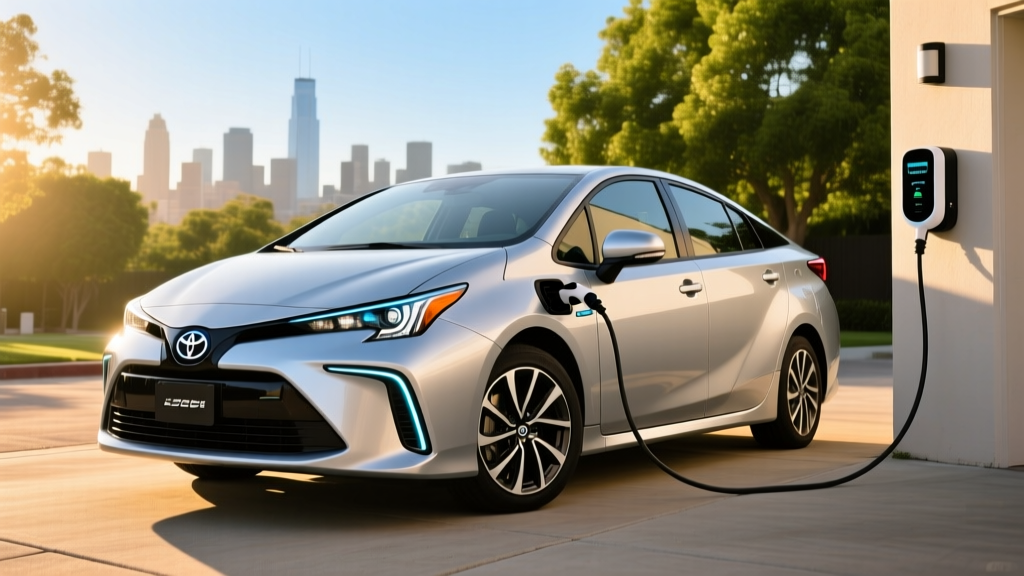
The Toyota Prius Plug-In Hybrid — officially badged as the Prius Prime — enters 2026 as one of the most compelling bridge vehicles for drivers who want meaningful electric-only commuting without the range anxiety of a full battery-electric vehicle. With a 44-mile EPA-rated EV range, a combined 52 MPGe when blending electric and gas operation, and a starting MSRP near $33,445, the Prius Prime occupies a narrow but valuable lane: genuine daily electric driving paired with a 440+ mile total range for road trips.
This guide breaks down every number that matters — from real-world MPG to battery warranty to federal tax credit eligibility under current IRS §30D rules — so you can decide whether the Prius Prime fits your driving pattern or whether a conventional HEV or full BEV makes more sense.
HEV vs PHEV: What's the Actual Difference?
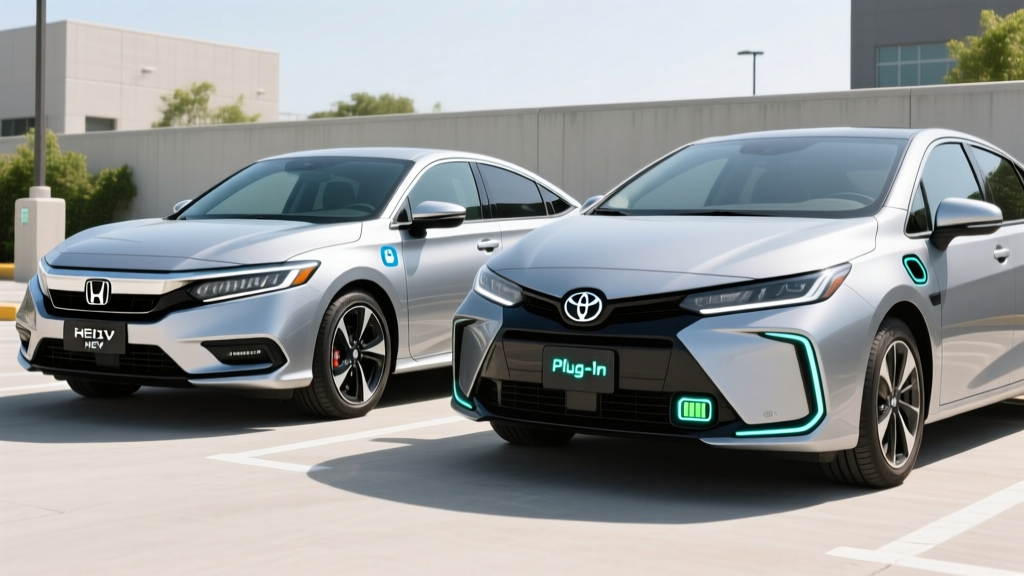
Before diving into specs, it's critical to understand the distinction between the standard Prius (HEV) and the Prius Prime (PHEV), because they serve different use cases and have different costs.
| Feature | Prius HEV (Conventional Hybrid) | Prius Prime (Plug-In Hybrid) |
|---|---|---|
| Plugs in to charge? | No — charges via regenerative braking and engine | Yes — plugs into Level 1 or Level 2 charger |
| Electric-only range | ~1 mile at very low speed | 44 miles (EPA) |
| Battery size | ~1.0 kWh (small buffer) | 13.6 kWh usable |
| EPA combined fuel economy | 57 MPG (LE FWD) | 52 MPGe (combined EV+gas); 52 MPG gas-only |
| Starting MSRP (2026) | ~$28,345 | ~$33,445 |
| Federal tax credit | None (HEVs don't qualify under §30D) | Up to $7,500 (eligibility varies — see below) |
| DC fast charging | N/A | No — Level 2 AC only |
The core trade-off: The Prius HEV is cheaper upfront, never needs plugging in, and delivers exceptional 57 MPG combined. The Prius Prime costs ~$5,100 more but lets you drive up to 44 miles on electricity alone — meaning many owners burn zero gasoline on weekday commutes and only use the engine for longer weekend trips.
Prius Prime Powertrain and Performance Specs
Toyota pairs a 2.0-liter inline-4 Atkinson-cycle engine with a pair of electric motor-generators and a lithium-ion battery pack. The result is a combined system output of 220 horsepower — a massive improvement over the prior-generation Prime's 121 hp.
| Specification | 2026 Toyota Prius Prime |
|---|---|
| Engine | 2.0L 4-cyl Atkinson cycle |
| Combined system horsepower | 220 hp |
| Electric-only motor output | 161 hp (MG2) |
| Battery capacity (usable) | 13.6 kWh lithium-ion |
| 0-60 mph | 6.6 seconds |
| Drivetrain | FWD (AWD not available on Prime) |
| EV-only top speed | ~84 mph |
| EPA EV range | 44 miles (SE trim); 40 miles (XSE/XSE Premium) |
| Total combined range (EV + gas) | ~440-470 miles |
| EPA MPGe (combined EV+gas) | 127 MPGe (SE); 114 MPGe (XSE) |
| EPA MPG (gas-only, battery depleted) | 52 MPG combined (SE); 48 MPG (XSE) |
| Cargo volume | 20.3 cu ft (behind rear seats) |
The 6.6-second 0-60 time puts the Prius Prime in genuinely quick territory for a compact hatchback — it merges and passes with confidence, a world away from the sluggish reputation of older Prius generations.
Fuel Economy: EPA Numbers vs Real-World MPG
Hybrids — and PHEVs in particular — have fuel economy figures that require context. Here's the EPA breakdown by trim:
| Trim | City MPG (gas) | Highway MPG (gas) | Combined MPG (gas) | Combined MPGe (EV+gas) | EV Range |
|---|---|---|---|---|---|
| SE | 53 | 51 | 52 | 127 MPGe | 44 mi |
| XSE | 50 | 47 | 48 | 114 MPGe | 40 mi |
| XSE Premium | 50 | 47 | 48 | 114 MPGe | 40 mi |
Source: fueleconomy.gov
Real-World MPG Expectations
EPA sticker: 52 MPG combined (SE, gas-only mode)
Real-world observation: Toyota hybrids frequently exceed EPA city estimates in stop-and-go driving because regenerative braking recovers more energy at low speeds. Expect 54-58 MPG in city commuting. Highway driving at 75+ mph typically drops to 44-48 MPG due to aerodynamic drag — a common trait in all hybrids.
Cold weather note: In sub-40°F conditions, the gasoline engine runs more frequently to provide cabin heat (the Prime uses a heat pump, but the engine still assists in very cold weather). Expect EV range to drop to 30-35 miles in winter and gas-mode MPG to dip to 42-46 MPG combined.
The key insight for PHEV owners: your actual "MPG" depends entirely on how often you charge. If you plug in nightly and commute under 40 miles round-trip, you may use 5-10 gallons of gas per month. Owners who never plug in effectively drive a very efficient 52-MPG hybrid — they're just carrying around 300+ lbs of battery they never use.
Charging the Prius Prime: What You Need to Know
The Prius Prime charges exclusively via AC — there is no DC fast charging capability, which is typical for PHEVs with smaller battery packs. Here's the breakdown:
| Charging Level | Power (kW) | 0-100% Time | Where |
|---|---|---|---|
| Level 1 (120V household outlet) | ~1.4 kW | ~11 hours | Any standard outlet |
| Level 2 (240V, 32A) | ~3.3 kW (vehicle-limited) | ~4 hours | Home wall charger, public Level 2 stations |
| DC Fast Charge | Not supported | N/A | N/A |
The onboard charger is limited to approximately 3.3 kW, meaning even if you plug into a 7.2 kW or 11.5 kW Level 2 station, the Prime will only draw 3.3 kW. This is perfectly adequate for overnight charging — a full replenishment in about 4 hours on Level 2 means you can easily top up during the workday or between errands.
Practical tip: You do not need to install a dedicated 240V circuit to own a Prius Prime. Level 1 (standard 120V outlet) will fully recharge the battery overnight in about 11 hours, which works for most daily commuters. However, a Level 2 home charger ($300-$600 for equipment, $500-$1,500 for electrician installation depending on panel proximity) gives you the flexibility to charge in 4 hours and is worth considering if your electrical panel has capacity.
Pricing, Trims, and Federal Tax Credit Eligibility
The 2026 Prius Prime is available in three trims:
- SE: ~$33,445 MSRP — 44-mile EV range, 127 MPGe
- XSE: ~$36,745 MSRP — 40-mile EV range, larger wheels, SofTex seats
- XSE Premium: ~$40,000 MSRP — adds panoramic roof, advanced parking, JBL audio
Note that the higher trims lose 4 miles of EV range due to larger 19-inch wheels and additional weight.
Does the Prius Prime Qualify for the Federal Tax Credit?
Under IRS §30D, the Prius Prime may qualify for up to $7,500 in federal tax credits, but eligibility depends on multiple factors that change frequently:
- MSRP cap: The vehicle must be under $55,000 (sedans/hatchbacks) — all Prime trims qualify ✓
- Buyer income cap: Modified AGI must not exceed $150,000 (single) / $300,000 (joint) ✓
- Battery sourcing: Critical minerals and battery components must meet phased-in domestic sourcing requirements — this is the variable factor that changes by model year and supply chain shifts
- Point-of-sale transfer: As of 2024+, you can transfer the credit to the dealer at purchase for an immediate price reduction rather than waiting to claim it on your tax return
Always verify current eligibility on irs.gov or via fueleconomy.gov before purchasing. Battery sourcing requirements have disqualified several vehicles mid-year in the past.
If the full $7,500 credit applies, the Prius Prime SE effectively drops to approximately $25,945 — undercutting many conventional hybrids and making the PHEV premium nearly disappear.
Battery Longevity, Warranty, and Replacement Cost
Hybrid battery anxiety is one of the top concerns for first-time hybrid buyers. Here's what the data shows for Toyota's hybrid systems:
Prius Prime Battery Warranty
Hybrid battery warranty: 10 years / 150,000 miles (whichever comes first) — covers capacity below 70% of original.
Hybrid system components: 8 years / 100,000 miles — covers inverter, motor-generators, control modules.
Basic vehicle warranty: 3 years / 36,000 miles bumper-to-bumper.
Powertrain warranty: 5 years / 60,000 miles.
Toyota's hybrid battery track record is among the best in the industry. The 13.6 kWh pack in the Prius Prime operates with a generous state-of-charge buffer — it never charges to true 100% or discharges to true 0%, which significantly reduces degradation stress. Real-world data from prior-generation Primes shows batteries routinely lasting 150,000-200,000+ miles with gradual capacity loss rather than sudden failure.
Battery replacement cost: If out of warranty, a Prius Prime hybrid battery replacement runs approximately $3,000-$4,500 at a Toyota dealer (parts + labor). Third-party rebuilt batteries are available for $1,500-$2,500. For context, most Prius Primes will never need a battery replacement within typical ownership periods given the 10-year/150,000-mile warranty coverage.
Who Should Buy the Prius Prime — And Who Shouldn't?
Pros
- 44-mile EV range covers most daily commutes gas-free
- 52 MPG in gas mode eliminates range anxiety on road trips
- 220 hp — genuinely quick for a hybrid (6.6s 0-60)
- Low cost per mile when charged regularly
- Strong 10-year/150k-mile battery warranty
- Potential $7,500 federal credit dramatically reduces effective price
- No home charger required (Level 1 works overnight)
Cons
- No DC fast charging — limits public charging usefulness
- 3.3 kW onboard charger is slow for public Level 2
- AWD not available on Prime (only on standard Prius HEV)
- Cargo space reduced vs. standard Prius (20.3 vs 23.8 cu ft)
- XSE/Premium trims lose 4 miles of EV range
- Tax credit eligibility subject to sourcing rule changes
Choose the Prius Prime (PHEV) If:
- Your round-trip commute is under 40 miles and you can charge at home nightly
- You want to drive electric daily but take road trips without planning charging stops
- You live in an apartment or area with unreliable public DC fast charging
- You qualify for the federal tax credit, making the PHEV premium negligible
Choose the Standard Prius (HEV) If:
- You cannot charge at home or work (no outlet access)
- You want the lowest possible upfront price (~$5,100 less than Prime)
- You drive mostly highway miles where the EV range advantage is minimal
- You want AWD availability for snow-belt climates
Choose a Full EV (BEV) If:
- You have reliable home Level 2 charging and your daily driving is under 250 miles
- You want zero maintenance on the powertrain (no engine, no oil changes)
- You want DC fast charging for road trips (150-250 kW typical)
- Local electricity rates make per-mile fuel cost significantly cheaper than even 52 MPG
Frequently Asked Questions
How many MPG does the 2026 Prius Prime get?
When the battery is depleted and the car operates as a conventional hybrid, the SE trim achieves an EPA-rated 52 MPG combined (53 city / 51 highway). The XSE and XSE Premium trims achieve 48 MPG combined (50 city / 47 highway). In real-world city driving, many owners report 54-58 MPG thanks to aggressive regenerative braking. Highway driving at sustained speeds above 70 mph typically yields 44-48 MPG.
How far can the Prius Prime go on electric only?
The SE trim delivers an EPA-rated 44 miles of electric-only range. The XSE and XSE Premium trims are rated at 40 miles due to larger wheels and additional equipment weight. In real-world conditions, expect 38-42 miles in mild weather and 30-35 miles in cold weather (below 40°F) when the battery is less efficient and cabin heating demands more energy.
Does the Prius Prime qualify for a tax credit?
The Prius Prime may qualify for up to $7,500 under the IRS §30D federal clean vehicle credit, but eligibility depends on battery component and critical mineral sourcing requirements that change over time, as well as buyer income limits ($150K single / $300K joint) and the $55,000 MSRP cap for sedans. The credit can be transferred to the dealer at point of sale for an immediate price reduction. Always verify current eligibility on fueleconomy.gov before purchasing.
Is the Prius Prime reliable, and what does battery replacement cost?
Toyota's hybrid powertrain is one of the most proven and reliable in the automotive industry. The Prius Prime's hybrid battery is covered by a 10-year/150,000-mile warranty. Out-of-warranty replacement costs approximately $3,000-$4,500 at a dealer or $1,500-$2,500 for a third-party rebuilt unit. Based on historical data from millions of Prius vehicles on the road, most hybrid batteries last well beyond 150,000 miles with gradual capacity loss rather than catastrophic failure.
Do I need to install a home charger for the Prius Prime?
No. The Prius Prime can charge on a standard 120V household outlet (Level 1) in about 11 hours, which is sufficient for overnight charging for most commuters. A 240V Level 2 home charger reduces charging time to about 4 hours and costs $800-$2,100 installed (equipment + electrician), but it is optional, not required. The Prime does not support DC fast charging.
Hybrid vs PHEV vs EV — which should I choose?
If you can charge at home and your daily driving is under 40 miles, the Prius Prime PHEV gives you electric commuting with gas-engine backup for road trips — the best of both worlds. If you can't charge at home, the conventional Prius HEV delivers 57 MPG without ever plugging in. If you have reliable home charging, rarely drive more than 250 miles in a day, and want the lowest per-mile fuel cost and zero engine maintenance, a full BEV like the Hyundai Ioniq 6 or Tesla Model 3 is a strong alternative — but requires accepting DC fast charging for road trips.