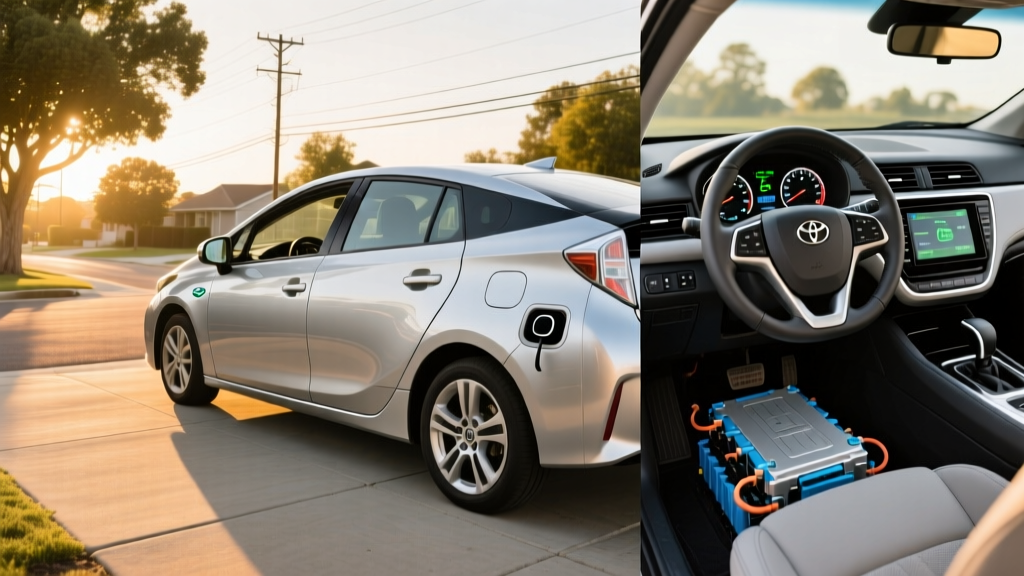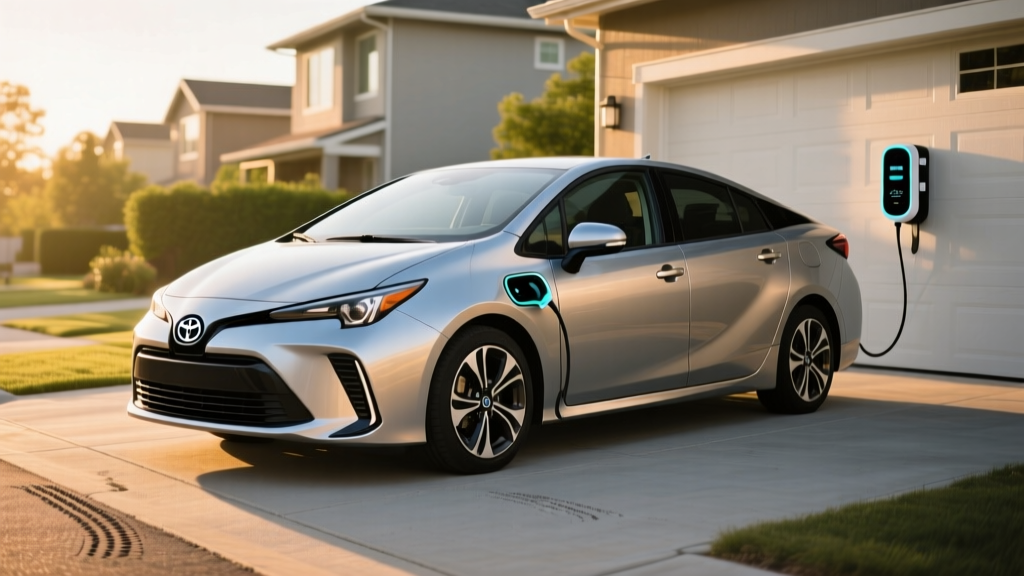
The Toyota Prius invented the mainstream hybrid segment, and the current generation (redesigned for 2023 and refreshed through 2026) finally shed the "slow eco-box" reputation. The 2026 Toyota Prius hybrid sedan delivers up to 57 MPG EPA combined, a 196-horsepower powertrain, and a design that no longer looks like a science experiment. But with the plug-in Prius Prime sitting right next to it in showrooms, buyers face a real choice: stick with the self-charging HEV, plug in for 44 miles of electric range, or jump to a full battery-electric vehicle?
This guide breaks down every number that matters — EPA and real-world MPG, powertrain specs, battery warranty, pricing, and tax-credit eligibility — so you can decide whether the Prius hybrid sedan is the right electrified car for your driveway.
HEV vs PHEV: Which Prius Are We Talking About?
Toyota sells two distinct Prius models, and confusing them is the most common buyer mistake. Here is the clean split:
| Feature | Prius (HEV) | Prius Prime (PHEV) |
|---|---|---|
| Powertrain | 2.0L 4-cyl + 2 electric motors | 2.0L 4-cyl + electric motor |
| Combined HP | 196 hp | 220 hp |
| Plug-in required? | No — self-charging via regen & engine | Yes — 120V or 240V plug |
| Battery | ~1.0 kWh lithium-ion (small buffer) | 13.6 kWh lithium-ion |
| Electric-only range | N/A (EV assist only, ~1 mi at low speed) | 44 miles (EPA, SE trim) |
| DC fast charging | No | No (Level 2 AC only) |
| Drivetrain | FWD standard, AWD available | FWD only |
| Federal tax credit | Not eligible (§30D requires plug-in) | Up to $3,750 (see eligibility below) |
If you cannot charge at home or at work, the conventional Prius HEV is the correct pick. You never plug it in — the gasoline engine and regenerative braking handle all battery charging. If you have reliable Level 2 access and a commute under 40 miles round-trip, the Prius Prime PHEV lets you drive most days on electricity alone while keeping a gas engine for road trips.
Fuel Economy: EPA Numbers and Real-World MPG
The 2026 Prius HEV lineup carries over the powertrain introduced with the generation's redesign. Front-wheel-drive models achieve the highest EPA ratings, while the available electronic all-wheel-drive (AWD-e) trims sacrifice a small amount of efficiency for traction.
| Trim / Drivetrain | City MPG | Highway MPG | Combined MPG |
|---|---|---|---|
| LE (FWD) | 57 | 56 | 57 |
| XLE / Limited (FWD) | 52 | 52 | 52 |
| LE / XLE (AWD-e) | 49 | 50 | 49 |
| Prius Prime SE (PHEV) | 127 MPGe | — | 52 MPG (gas-only) |
Source: EPA fueleconomy.gov
Real-World MPG vs. the EPA Sticker
Toyota's hybrid system excels in stop-and-go city driving, where the electric motor handles low-speed propulsion and the engine operates only at its most efficient load. In our experience and aggregated owner reports, the Prius LE FWD routinely matches or exceeds its 57 MPG city rating in warm-weather urban commuting — 58 to 62 MPG is common on flat suburban routes.
Highway driving tells a different story. At sustained 75-80 mph speeds, expect 48 to 52 MPG in the LE and 44 to 48 in the heavier Limited with its 19-inch wheels. Cold weather (below 35°F) reduces efficiency by roughly 8-12% because the engine runs more frequently to provide cabin heat and maintain battery temperature. If your commute is mostly highway, a realistic annual expectation is 50-53 MPG combined for the LE, not the EPA's 57.
Powertrain and Performance Specs
The fifth-generation Prius uses Toyota's latest hybrid synergy drive, pairing a 2.0-liter inline-four engine (150 hp, 139 lb-ft torque) with two motor-generators and a lithium-ion traction battery. Net system output is 196 horsepower for the FWD model. The AWD-e variant adds a rear-axle electric motor for a combined 199 hp.
| Specification | Prius LE (FWD) | Prius Limited (FWD) | Prius (AWD-e) |
|---|---|---|---|
| Engine | 2.0L I4 + 2 motor-generators | 2.0L I4 + 2 motor-generators | 2.0L I4 + 3 motor-generators |
| Net Horsepower | 196 hp | 196 hp | 199 hp |
| 0-60 mph | 7.0 sec | 7.0 sec | 7.0 sec (est.) |
| Drivetrain | FWD | FWD | AWD-e (electronic) |
| Curb Weight | ~3,097 lbs | ~3,228 lbs | ~3,252 lbs |
| Cargo (rear seats up) | 20.3 cu ft | 20.3 cu ft | 20.3 cu ft |
The 7.0-second 0-60 time is a dramatic improvement over the previous generation's 10-second-plus sprints. Merging onto highways and passing on two-lane roads no longer requires advance planning. The electronically controlled CVT remains smooth, though it still drones under heavy acceleration — a trade-off inherent to the power-split hybrid design.
Prius Prime PHEV: Electric-Only Range and Charging
If you're cross-shopping the Prius hybrid sedan against the plug-in Prius Prime, the Prime's 13.6 kWh battery delivers an EPA-rated 44 miles of electric-only range in the SE trim and 40 miles in the XSE and XSE Premium (due to larger 19-inch wheels and added weight).
Charging the Prime is straightforward but limited:
- Level 1 (120V household outlet): ~11 hours from empty to full
- Level 2 (240V, 3.3 kW onboard charger): ~4 hours from empty to full
- DC fast charging: Not available. The Prius Prime does not support CCS or CHAdeMO DC fast charging.
The 3.3 kW onboard charger is the Prime's main charging limitation. Competing PHEVs like the Chrysler Pacifica Hybrid offer 6.6 kW Level 2 charging. For overnight home charging this is irrelevant — 4 hours is more than enough. But if you rely on opportunistic public Level 2 top-ups during the day, you'll add only about 10-12 miles of range in a 30-minute session.
Total Combined Range
With a full charge and a full 10.6-gallon tank, the Prius Prime SE delivers a combined range of approximately 470-490 miles (44 electric + ~430 gas). The conventional Prius LE, with its 11.3-gallon tank and 57 MPG combined rating, achieves roughly 640 miles per fill-up — one of the longest ranges of any vehicle sold in the U.S.
Pricing, Trims, and Tax Credit Eligibility
The 2026 Toyota Prius starts at approximately $28,550 (LE FWD, including destination) and climbs to roughly $36,900 for the Limited. The Prius Prime SE starts around $33,450, with the XSE Premium topping out near $40,500.
| Trim | MSRP (est.) | Drivetrain | Federal Tax Credit |
|---|---|---|---|
| Prius LE | $28,550 | FWD | None |
| Prius XLE | $32,000 | FWD or AWD-e | None |
| Prius Limited | $36,900 | FWD or AWD-e | None |
| Prius Prime SE | $33,450 | FWD | Up to $3,750* |
| Prius Prime XSE | $37,000 | FWD | Up to $3,750* |
| Prius Prime XSE Premium | $40,500 | FWD | Up to $3,750* |
*Federal §30D tax credit eligibility depends on battery critical-mineral and component sourcing requirements, buyer income caps ($150K single / $300K joint), and MSRP caps ($55,000 for sedans). The Prius Prime qualifies for up to $3,750 (partial credit based on current sourcing compliance). Credit can be transferred to the dealer at point of sale as a down-payment reduction. Rules change — verify current eligibility at IRS.gov clean vehicle credit pages before purchase.
The conventional Prius HEV does not qualify for any federal purchase tax credit because §30D applies only to plug-in electric vehicles. However, the Prius HEV's lower starting price and higher MPG often result in a lower total cost of ownership than the Prime for buyers without home charging access.
Battery Warranty, Reliability, and Replacement Cost
Toyota's hybrid battery longevity is among the best-documented in the industry. The Prius has been sold in the U.S. since 2000, and fleet data shows original hybrid batteries routinely lasting 150,000 to 200,000+ miles before significant capacity loss. The current generation uses a lithium-ion pack that is lighter and more energy-dense than the older nickel-metal hydride (NiMH) batteries, with improved thermal management that reduces degradation.
What Does Replacement Cost?
If your hybrid battery does fail outside warranty, a new OEM replacement from Toyota currently costs between $2,500 and $3,500 installed at a dealership. Third-party refurbished or reconditioned batteries are available for $1,000 to $2,000 installed. Individual cell replacement (repairing just the failed modules) can cost as little as $500-$800 at specialized hybrid repair shops. These costs have decreased significantly over the past decade as the supply of refurbished packs has grown.
For context, the Prius's hybrid battery is far smaller and less expensive to replace than a full EV battery pack. A 13.6 kWh Prius Prime battery or a 1.0 kWh HEV battery is a fraction of the cost of a 75+ kWh BEV pack, which can run $10,000 to $20,000+ out of warranty.
Hybrid vs PHEV vs EV: Which Powertrain Fits You?
Choose the Prius HEV (conventional hybrid) if:
- You live in an apartment or lack access to home/work charging
- Your budget is under $30,000 and you want maximum MPG
- You regularly drive 400+ miles between fill-ups and don't want to plan charging stops
- You want zero behavior change from your current gas car routine
Choose the Prius Prime (PHEV) if:
- You can install a Level 2 charger at home or have reliable workplace charging
- Your daily round-trip commute is under 40 miles (you'll rarely use gas)
- You want EV-like daily driving with a gas backup for road trips
- You want to reduce fossil fuel consumption without full EV range planning
Choose a full battery EV (BEV) if:
- You want zero tailpipe emissions and the lowest per-mile energy cost
- You have home Level 2 charging and your daily driving is under 250 miles
- You want access to the full $7,500 federal tax credit (on eligible models)
- You're willing to plan DC fast-charging stops on road trips
The Prius HEV remains the most practical entry point into electrified driving for the majority of American buyers. It requires no infrastructure, no behavior change, and no charging anxiety — just dramatically better fuel economy than any comparable gas-only sedan.
Pros and Cons: The Honest Summary
- Best-in-class 57 MPG EPA combined (LE FWD)
- 196 hp makes it genuinely quick for a hybrid
- 640+ mile total range per tank
- 10-year / 150,000-mile hybrid battery warranty
- Low starting price ($28,550)
- AWD-e available for snow-belt buyers
- Strong reliability reputation with decades of data
- Highway MPG drops to ~48-50 (still excellent, but below EPA)
- Cargo space (20.3 cu ft) trails some compact sedans
- CVT drone under hard acceleration
- Limited trim's 19-inch wheels reduce efficiency
- No federal tax credit for the HEV version
- Rear headroom tight for taller passengers
- AWD-e is electronic only — not for serious off-road or deep snow
Frequently Asked Questions
How many MPG does the 2026 Toyota Prius hybrid get in real driving?
The Prius LE FWD is EPA-rated at 57 city / 56 highway / 57 combined. In real-world mixed driving with significant highway miles, expect 50-54 MPG combined. In warm-weather city commuting, 58-62 MPG is achievable. The heavier Limited trim with 19-inch wheels typically returns 46-52 MPG real-world.
How far can the Prius Prime go on electric only?
The Prius Prime SE delivers 44 miles of EPA-rated electric-only range. The XSE and XSE Premium trims are rated at 40 miles due to larger wheels and additional weight. Once the battery is depleted, the Prime operates as a conventional hybrid at 52 MPG combined (SE) or 48 MPG combined (XSE).
Does the Toyota Prius qualify for any federal tax credit?
The conventional Prius HEV does not qualify for the §30D federal clean vehicle credit — that credit applies only to plug-in vehicles. The Prius Prime PHEV may qualify for up to $3,750 depending on current battery-sourcing compliance, your income (caps: $150K single, $300K joint), and the sedan MSRP cap of $55,000. Always verify eligibility at IRS.gov before purchasing.
Is the Prius hybrid battery reliable, and what does replacement cost?
Toyota hybrid batteries have an exceptional longevity record, with many lasting 150,000-200,000+ miles. Toyota backs the traction battery with a 10-year / 150,000-mile warranty. If replacement is needed out of warranty, expect $2,500-$3,500 for a new OEM battery or $1,000-$2,000 for a refurbished unit, installed.
Do I need to plug in the regular Prius hybrid?
No. The conventional Prius HEV charges its small battery entirely through regenerative braking and the gasoline engine. There is no plug and no charging cord. Only the Prius Prime (PHEV) requires plugging in to access its electric-only range.
Is the Prius a good choice vs. a full electric vehicle?
If you lack home charging, frequently drive more than 250 miles in a day, live in an area with sparse DC fast-charging infrastructure, or want the lowest purchase price, the Prius HEV is the more practical choice. If you have home charging, a short commute, and want zero tailpipe emissions, a full EV like the Hyundai Ioniq 6 or Tesla Model 3 may offer lower operating costs — but at a higher upfront price.