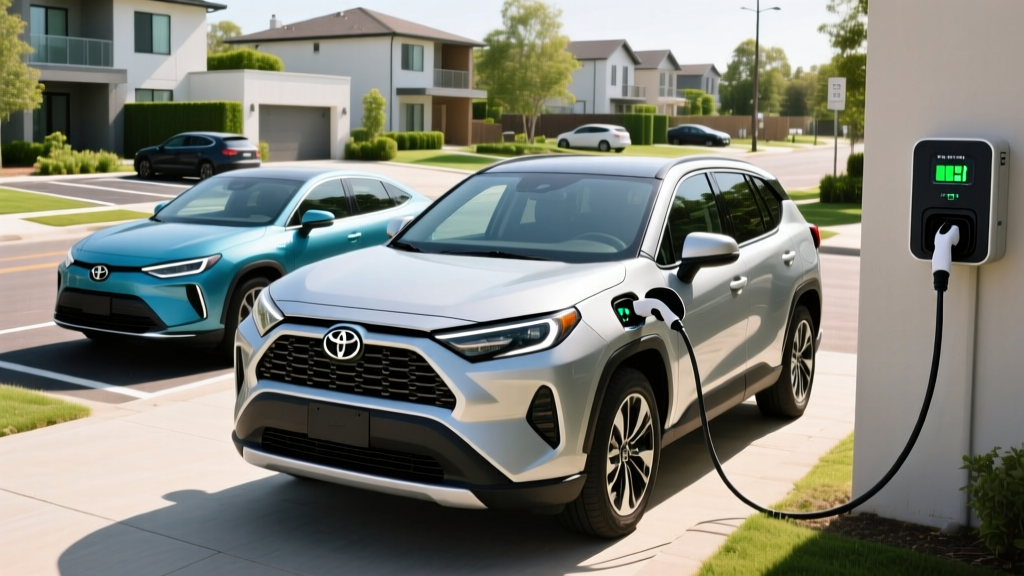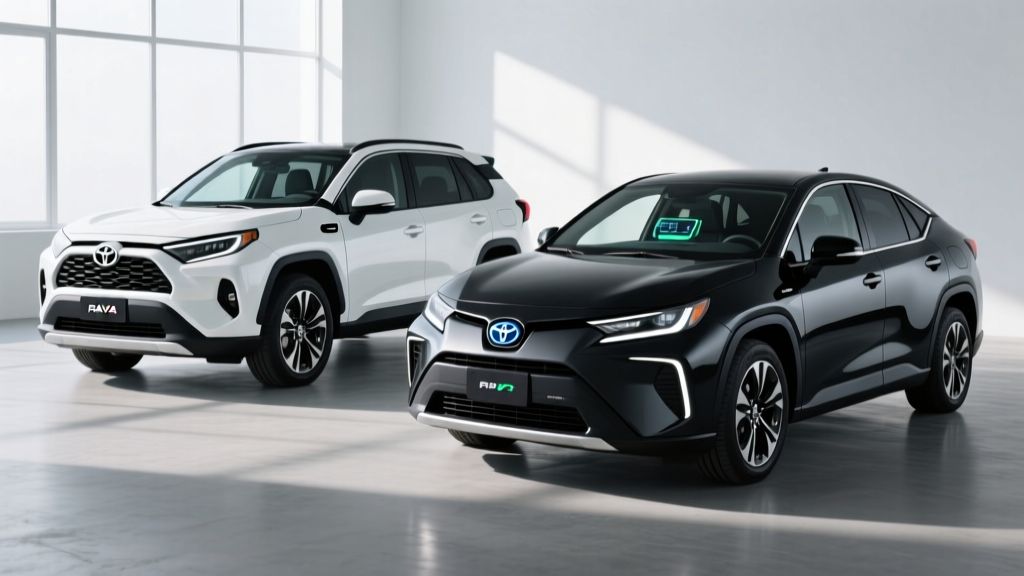
Toyota's plug-in hybrid lineup in 2026 comes down to two vehicles that dominate the PHEV sales charts: the RAV4 Prime and the Prius Prime. Both pair a gasoline engine with a sizable traction battery you can recharge from a wall outlet, giving you genuine electric-only commuting range before the hybrid system kicks in. If you've been searching for Toyota plug-in hybrid models to compare against a full EV or a conventional hybrid, this guide gives you the exact specs, real-world expectations, and ownership math you need.
HEV vs PHEV — What's the Difference?
Conventional Hybrid (HEV): Uses a small battery (typically 1–2 kWh) recharged solely by regenerative braking and the gas engine. You never plug it in. Examples: standard RAV4 Hybrid, Prius (non-Prime).
Plug-In Hybrid (PHEV): Carries a much larger battery (13–18+ kWh) that you recharge from a Level 1 or Level 2 outlet. This enables 40+ miles of electric-only driving before the gas engine takes over. Examples: RAV4 Prime, Prius Prime.
2026 Toyota RAV4 Prime: Specs, Range, and Real-World MPG
| Spec | 2026 RAV4 Prime SE | 2026 RAV4 Prime XSE |
|---|---|---|
| Powertrain | 2.5L 4-cyl + 2 electric motors (AWD) | 2.5L 4-cyl + 2 electric motors (AWD) |
| Combined Horsepower | 302 hp | 302 hp |
| Battery (usable) | ~14.9 kWh (NMC lithium-ion) | ~14.9 kWh (NMC lithium-ion) |
| EV-Only Range (EPA) | 42 miles | 42 miles |
| MPGe (EV mode) | 94 MPGe combined | 94 MPGe combined |
| MPG (hybrid mode) | 38 city / 35 hwy / 36 combined | 38 city / 35 hwy / 36 combined |
| Total Combined Range | ~600 miles | ~600 miles |
| Level 2 Charge Time (240V) | ~2.5 hours (6.6 kW onboard charger) | ~2.5 hours (6.6 kW onboard charger) |
| DC Fast Charge | No | No |
| 0–60 mph | 5.7 seconds | 5.7 seconds |
| Base MSRP | $46,500 | $50,500 |
2026 Toyota Prius Prime: Specs, Range, and Real-World MPG
| Spec | Prius Prime SE | Prius Prime XSE | Prius Prime XSE Premium |
|---|---|---|---|
| Powertrain | 2.0L 4-cyl + 1 electric motor (FWD) | 2.0L 4-cyl + 1 electric motor (FWD) | 2.0L 4-cyl + 1 electric motor (FWD) |
| Combined Horsepower | 220 hp | 220 hp | 220 hp |
| Battery (usable) | ~13.6 kWh (NMC lithium-ion) | ~13.6 kWh (NMC lithium-ion) | ~13.6 kWh (NMC lithium-ion) |
| EV-Only Range (EPA) | 44 miles | 40 miles | 40 miles |
| MPGe (EV mode) | 127 MPGe combined | 117 MPGe combined | 117 MPGe combined |
| MPG (hybrid mode) | 50 city / 47 hwy / 48 combined | 50 city / 47 hwy / 48 combined | 50 city / 47 hwy / 48 combined |
| Total Combined Range | ~475 miles | ~440 miles | ~440 miles |
| Level 2 Charge Time (240V) | ~4 hours (3.5 kW onboard charger) | ~4 hours (3.5 kW onboard charger) | ~4 hours (3.5 kW onboard charger) |
| DC Fast Charge | No | No | No |
| 0–60 mph | 6.6 seconds | 6.6 seconds | 6.6 seconds |
| Base MSRP | $33,975 | $37,225 | $40,225 |
RAV4 Prime vs Prius Prime: Head-to-Head Comparison
| Category | RAV4 Prime | Prius Prime | Winner |
|---|---|---|---|
| EV Range | 42 mi | 44 mi (SE) | Prius Prime |
| Hybrid MPG | 36 combined | 48 combined | Prius Prime |
| Power | 302 hp / 5.7s 0–60 | 220 hp / 6.6s 0–60 | RAV4 Prime |
| AWD | Standard (electronic) | Not available | RAV4 Prime |
| Cargo Space | 33.5 cu ft (rear seats up) | 20.3 cu ft (rear seats up) | RAV4 Prime |
| L2 Charge Speed | 6.6 kW (~2.5 hr) | 3.5 kW (~4 hr) | RAV4 Prime |
| Starting Price | $46,500 | $33,975 | Prius Prime |
| Towing | 2,500 lbs | Not rated | RAV4 Prime |
Federal Tax Credits and Incentives for Toyota PHEVs
The federal §30D clean vehicle credit offers up to $7,500 for qualifying new PHEVs, but eligibility is layered and changes periodically. Here's the framework as of the 2026 model year:
- Battery capacity: Must be ≥ 7 kWh — both Toyota PHEVs qualify (13.6 and 14.9 kWh).
- MSRP cap: SUVs/vans/pickups ≤ $80,000; sedans ≤ $55,000. The RAV4 Prime (SUV classification) and Prius Prime (sedan) both fall under their respective caps.
- Buyer income cap: Modified AGI ≤ $150,000 (single) / $300,000 (joint). Exceed this and you're ineligible regardless of the vehicle.
- Battery sourcing & critical minerals: The vehicle must meet escalating domestic-content thresholds for battery components and critical minerals. This is the requirement most likely to disqualify a given model year. Check the IRS's current eligible-vehicle list at the point of purchase — Toyota's qualification status can shift between model years as supply chains change.
- Point-of-sale transfer: If eligible, you can transfer the credit to the dealer at purchase for an immediate price reduction rather than waiting to claim it on your tax return.
Beyond federal credits, many states offer additional rebates — California's Clean Fuel Rebate, for example, can stack on top. Check your state energy office or utility provider for local PHEV incentives.
Battery Warranty, Reliability, and Replacement Costs
Toyota PHEV Battery Warranty
Hybrid battery coverage: 10 years / 150,000 miles (whichever comes first) in all 50 states — this applies to both the RAV4 Prime and Prius Prime traction batteries.
Warranty trigger: Toyota covers the battery if it drops below approximately 60–70% of original capacity, depending on diagnostic thresholds. Normal degradation within that range is considered acceptable.
Powertrain warranty: 5 years / 60,000 miles on the hybrid transaxle, inverter, and related components.
Toyota's hybrid system reliability is among the most proven in the industry. The Prius platform has accumulated over two decades of real-world data, and the RAV4 Hybrid powertrain has been in production since 2016. The PHEV variants use larger batteries and more powerful motors, but the underlying architecture is well-established.
If a battery replacement is needed out of warranty, expect the following approximate costs:
- Prius Prime battery: $4,000–$6,000 (parts + labor at a dealership)
- RAV4 Prime battery: $6,000–$9,000 (larger pack, more complex installation)
Independent hybrid shops and refurbished battery options can reduce these figures by 30–50%. In practice, Toyota PHEV battery failures before 150,000 miles are uncommon — most units retain 85–90% capacity at the 10-year mark based on fleet data from earlier-generation Prius PHEVs.
Hybrid vs PHEV vs Full EV: Which Toyota Fits Your Life?
Choose a Toyota PHEV if:
- Your daily commute is under 40 miles round-trip and you can charge at home overnight (Level 1 or Level 2).
- You take regular road trips of 300+ miles where charging infrastructure is sparse or unreliable.
- You want EV-like commuting costs without any range limitation.
- You live in a cold climate where EV range loss of 20–30% in winter is a dealbreaker.
- You need AWD and towing (RAV4 Prime) but can't commit to a full EV SUV.
Choose a conventional Toyota HEV (standard Prius or RAV4 Hybrid) if:
- You cannot charge at home (apartment, street parking, no garage outlet).
- Your budget is tighter — HEVs cost $5,000–$10,000 less than their PHEV counterparts.
- You don't need electric-only mode and are satisfied with 45–50 MPG from the standard hybrid.
Choose a full EV (bZ4X or competitor) if:
- You have reliable home Level 2 charging and your daily driving is under 250 miles.
- You want zero tailpipe emissions and minimal maintenance (no oil changes, no engine).
- You qualify for the full $7,500 federal credit on a qualifying EV, making the effective price competitive with a PHEV.
Charging Your Toyota PHEV at Home: What You Need
Neither the RAV4 Prime nor the Prius Prime supports DC fast charging — this is by design. PHEV batteries are small enough that Level 2 AC charging fully replenishes them in a few hours, which is all most owners need for overnight top-ups.
| Charging Level | Power (kW) | RAV4 Prime (0–100%) | Prius Prime (0–100%) |
|---|---|---|---|
| Level 1 (120V household) | ~1.4 kW | ~12 hours | ~10 hours |
| Level 2 (240V, 32A) | Up to 6.6 kW (RAV4) / 3.5 kW (Prius) | ~2.5 hours | ~4 hours |
| DC Fast Charge | N/A | Not supported | Not supported |
Key distinction — kW vs kWh: The RAV4 Prime's battery holds ~14.9 kWh of energy. Its onboard charger accepts up to 6.6 kW of power, meaning it can refill that 14.9 kWh in roughly 2.5 hours (14.9 ÷ 6.6 ≈ 2.3 hours, plus charging taper). The Prius Prime's smaller 3.5 kW onboard charger is the bottleneck, not your wall connector — even a 48A Level 2 station will only deliver 3.5 kW to the Prius Prime.
A dedicated 240V Level 2 home charger (such as a ChargePoint Home Flex or Emporia VUE) typically costs $500–$800 for the unit plus $500–$2,000 for professional electrician installation, depending on your panel capacity and run length. For PHEV owners, a simpler 240V outlet (NEMA 14-50) with the included mobile charger may suffice — confirm with a licensed electrician.
Ownership Economics: Toyota PHEV vs Gas vs EV
Let's run a simplified 5-year cost comparison for the Prius Prime SE vs a comparable gas compact sedan vs a full EV, assuming 12,000 miles/year, $3.50/gallon gas, and $0.14/kWh electricity:
| Cost Factor | Prius Prime SE (PHEV) | Gas Compact Sedan (30 MPG) | Comparable EV (250 mi range) |
|---|---|---|---|
| Purchase Price (MSRP) | $33,975 | $28,000 | $38,000 |
| Fed. Tax Credit (est.) | Up to $7,500* | $0 | Up to $7,500* |
| 5-Yr Fuel/Energy Cost | ~$3,200** | ~$7,000 | ~$2,800 |
| 5-Yr Maintenance (est.) | ~$2,500 | ~$3,500 | ~$1,800 |
| 5-Yr Total (approx.) | ~$32,175 | ~$38,500 | ~$35,100 |
* Tax credit eligibility depends on income, MSRP caps, and battery sourcing rules — verify at irs.gov before purchasing.
** Assumes 80% of miles driven on electricity (home charging nightly) and 20% on gasoline for longer trips.
The PHEV's financial advantage hinges on one variable: whether you actually plug it in. A PHEV that's never charged is just a heavier, more expensive hybrid. If you commit to nightly Level 1 or Level 2 charging, the Prius Prime can cover most commutes on $0.80–$1.50 of electricity per day versus $5–$8 in gasoline.
Pros and Cons of Toyota's Plug-In Hybrids
✓ Pros
- 40+ miles of real-world EV range covers most commutes
- No range anxiety — gas engine covers any distance
- Industry-leading 10-year/150,000-mile battery warranty
- Excellent hybrid-mode MPG (36–48 combined)
- RAV4 Prime offers AWD, 302 hp, and 2,500-lb towing
- Prius Prime SE starts under $34,000 — one of the cheapest PHEVs
- Strong resale value and proven reliability track record
✗ Cons
- No DC fast charging on either model
- Prius Prime's 3.5 kW onboard charger is slow for Level 2
- RAV4 Prime has long waitlists and dealer markups in many markets
- Prius Prime is FWD only — no AWD option
- Cargo space reduced vs gas counterparts (battery packaging)
- Federal tax credit eligibility depends on battery sourcing — not guaranteed
- PHEV premium over standard hybrid is $5,000–$8,000
Frequently Asked Questions
How many MPG does the Toyota RAV4 Prime get?
The EPA rates the RAV4 Prime at 38 city / 35 highway / 36 combined MPG in hybrid mode (after the battery is depleted). In EV mode, it achieves 94 MPGe combined. Real-world owners frequently report 37–40 MPG in mixed city driving in hybrid mode, slightly above the EPA estimate thanks to regenerative braking in stop-and-go conditions.
How far can the Prius Prime go on electric only?
The EPA rates the Prius Prime SE at 44 miles of electric-only range and the XSE/XSE Premium at 40 miles (the heavier wheels and added equipment reduce range slightly). In real-world driving, expect 38–50 miles depending on temperature, terrain, and driving style. Gentle city driving in mild weather can push past the EPA figure; highway speeds and freezing temperatures reduce it.
Does the RAV4 Prime or Prius Prime qualify for the $7,500 federal tax credit?
Both vehicles meet the battery-capacity and MSRP-cap requirements. However, eligibility under §30D also depends on battery component sourcing, critical mineral thresholds, and your personal income. These sourcing rules change annually. Always verify current eligibility on the IRS clean vehicle credit page before purchasing, or ask your dealer to confirm point-of-sale transfer eligibility at the time of purchase.
Do Toyota plug-in hybrids need to be plugged in?
They don't need to be plugged in to function — if you never charge them, they operate as conventional hybrids with excellent MPG. However, you lose the entire economic and environmental benefit of the PHEV if you don't plug in. The larger battery adds weight and cost; if you can't charge at home or work, a standard Toyota HEV is a better and cheaper choice.
Is a Toyota PHEV reliable, and what does battery replacement cost?
Toyota's hybrid systems have one of the strongest reliability records in the industry, backed by 20+ years of Prius data. The PHEV traction battery is covered for 10 years / 150,000 miles. Out-of-warranty replacement costs approximately $4,000–$6,000 for the Prius Prime and $6,000–$9,000 for the RAV4 Prime. Real-world degradation data from earlier PHEV generations suggests 85–90% battery capacity retention at 10 years for most owners.
Can I DC fast charge a Toyota PHEV on a road trip?
No. Neither the RAV4 Prime nor the Prius Prime has a DC fast-charge port. They accept only AC charging via a J1772 connector (Level 1 at 120V or Level 2 at 240V). On road trips, you simply drive in hybrid mode using gasoline — the electric range is designed for daily commuting, not highway fast-charging stops.
What's the total range of the RAV4 Prime and Prius Prime?
The RAV4 Prime delivers approximately 600 miles of total combined range (42 miles electric + ~558 miles on its 14.5-gallon tank in hybrid mode). The Prius Prime SE provides roughly 475 miles total (44 electric + ~431 on its 11.4-gallon tank). Both figures are sufficient for multi-state road trips without range concern.
Sources: fueleconomy.gov (EPA range and MPG data), toyota.com (manufacturer specifications), irs.gov (§30D credit rules). All specifications reflect 2026 model year data available at time of publication. Tax credit rules are subject to change — verify current eligibility before purchase.