Why Buyers Search for a Toyota Twin-Turbo V8 Hybrid
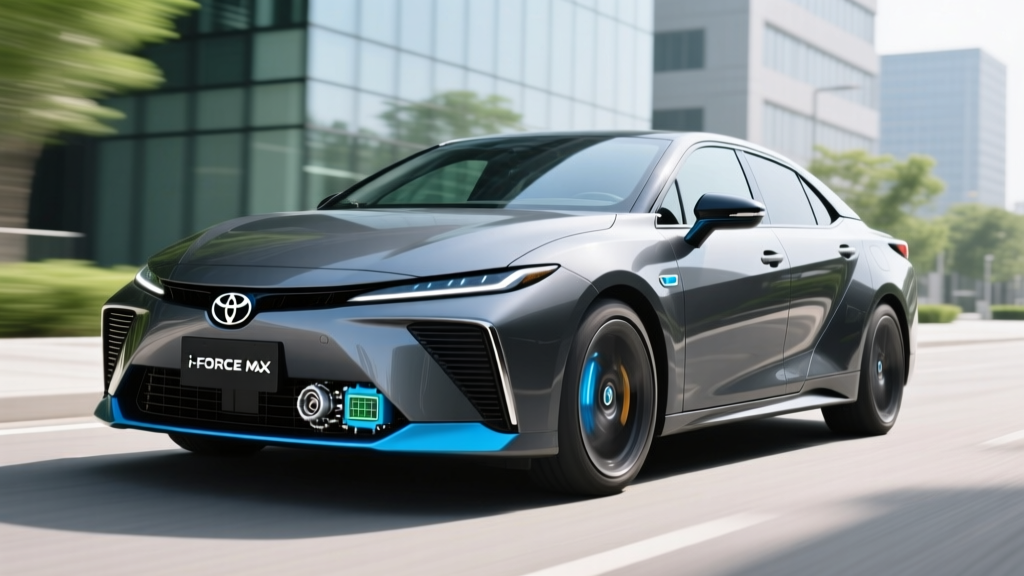
If you've been searching for a "Toyota twin-turbo V8 hybrid," you're not alone — but you won't find one. What you will find is Toyota's i-FORCE MAX powertrain: a twin-turbocharged 3.4-liter V6 paired with a hybrid electric motor system that produces 437 horsepower and 583 lb-ft of torque. That output exceeds Toyota's outgoing 5.7L naturally aspirated V8 (381 hp, 401 lb-ft) while delivering substantially better fuel economy.
The i-FORCE MAX debuted in the 2022 Tundra and 2023 Sequoia and remains Toyota's flagship hybrid truck/SUV powertrain for the 2026 model year. It's a conventional hybrid (HEV), not a plug-in — meaning it generates its own electricity through regenerative braking and the engine. You never plug it in.
HEV vs. PHEV: What the i-FORCE MAX Is (and Isn't)
| Feature | i-FORCE MAX (HEV) | Plug-in Hybrid (PHEV) |
|---|---|---|
| Plug-in charging? | No — self-charging | Yes — plugs into Level 1/2 |
| Electric-only driving | Very limited, low-speed only | 20–40+ miles typical |
| Battery size | 1.87 kWh (NiMH) | 13–25+ kWh (lithium-ion) |
| Federal tax credit (§30D) | Not eligible | Up to $7,500 if eligible |
| Best for | Towing, off-grid, no home charging | Short commutes, home charging access |
The i-FORCE MAX is a conventional hybrid. It recovers energy through regenerative braking and uses the electric motor to assist acceleration and enable brief low-speed electric operation. There is no EV-only range to speak of — typically under 1 mile at parking-lot speeds.
2026 i-FORCE MAX Powertrain Specs
| Specification | Value |
|---|---|
| Engine | 3.4L twin-turbo V6 (V35A-FTS) |
| Electric motor | 36 kW (48 hp) motor integrated in bell housing |
| Combined output | 437 hp @ 5,200 rpm / 583 lb-ft @ 2,400 rpm |
| Transmission | 10-speed automatic |
| Hybrid battery | 1.87 kWh, sealed NiMH |
| Drivetrain | RWD or part-time 4WD (Tundra); 4WD standard (Sequoia) |
| Max towing (Tundra) | Up to 12,000 lbs (properly equipped) |
| 0–60 mph (Tundra 4WD) | ~5.7 seconds |
The electric motor sits between the engine and transmission in a P2 hybrid architecture. It smooths the turbo V6's power delivery, fills in torque while turbos spool, and enables engine-off coasting and low-speed crawling. The 1.87 kWh battery is small by PHEV standards — it's a power-assist buffer, not an energy reservoir.
Fuel Economy: EPA Numbers and Real-World MPG
This is where the i-FORCE MAX separates from the old V8 and from non-hybrid twin-turbo trucks. Here are the EPA estimates for current applications:
| Vehicle | Drivetrain | City MPG | Highway MPG | Combined MPG |
|---|---|---|---|---|
| 2026 Tundra i-FORCE MAX | 4WD | 19 | 22 | 20 |
| 2026 Tundra i-FORCE MAX | RWD | 20 | 24 | 22 |
| 2026 Sequoia i-FORCE MAX | 4WD | 19 | 22 | 20 |
| 2026 Sequoia i-FORCE MAX | RWD | 21 | 24 | 22 |
Real-World MPG vs. EPA Sticker
EPA Combined: 20–22 MPG
Real-world expectation: 17–21 MPG
Owner-reported data and independent testing show the i-FORCE MAX often meets or slightly exceeds EPA city estimates (the hybrid system shines in stop-and-go traffic where regen braking recharges the battery). Highway MPG tends to run 1–3 MPG below the sticker at sustained 75+ mph speeds — aerodynamic drag dominates at highway speed in these large vehicles. Towing drops economy to 10–14 MPG depending on trailer weight and terrain, which is typical for the class but worth planning for.
vs. the old 5.7L V8: The outgoing naturally aspirated V8 Tundra returned 13 city / 17 highway / 15 combined. The i-FORCE MAX delivers roughly 30–35% better fuel economy while producing 15% more horsepower and 45% more torque.
How Many MPG Does the Toyota Twin-Turbo Hybrid Get?
The short answer: 20 MPG combined for 4WD, 22 MPG combined for RWD in both the Tundra and Sequoia. That's not Prius territory, but for a body-on-frame vehicle producing 437 hp and towing up to 12,000 lbs, it's remarkably efficient. For context:
- Ford F-150 3.5L EcoBoost V6 (non-hybrid): 19–20 MPG combined
- Ford F-150 PowerBoost hybrid: 22–23 MPG combined
- Ram 1500 5.7L HEMI V8 eTorque: 17–19 MPG combined
- Chevy Silverado 6.2L V8: 16–17 MPG combined
The i-FORCE MAX sits competitively with Ford's PowerBoost hybrid and handily beats conventional V8 offerings. If fuel economy is your top priority in a full-size truck, the Ford F-150 PowerBoost edges it out by 2–3 MPG combined, but the Toyota delivers more peak torque.
Hybrid vs. PHEV vs. Full EV: Which Fits Your Needs?
Choose the i-FORCE MAX (HEV) If:
- You tow frequently (boats, trailers, campers over 7,000 lbs)
- You lack reliable home or workplace charging access
- You drive in remote areas where charging infrastructure is sparse
- You want V8-class power without V8 fuel bills
- You prefer Toyota's long-term hybrid reliability track record
Choose a PHEV (e.g., Jeep Wrangler 4xe, Toyota RAV4 Prime) If:
- Your daily commute is under 30–40 miles round-trip
- You can install a Level 2 charger at home
- You want electric-only driving for daily errands
- You want to reduce fuel consumption by 50%+ on short trips
Choose a Full BEV (e.g., Rivian R1T, Ford F-150 Lightning) If:
- You have home charging and rarely tow over 7,000 lbs
- Your daily driving is under 250 miles
- You want to eliminate fuel stops and reduce maintenance
- You qualify for the §30D federal tax credit (up to $7,500, subject to income, MSRP, and battery sourcing requirements)
The i-FORCE MAX occupies a specific niche: maximum capability with moderate efficiency gains and zero lifestyle change. No plugs, no range planning, no charging apps. You fuel up at any gas station and drive.
Pricing, Trims, and Tax Credit Eligibility
For the 2026 model year, the i-FORCE MAX is available on mid-to-upper Tundra trims and across the Sequoia lineup:
| Vehicle / Trim | Starting MSRP (approx.) |
|---|---|
| Tundra Limited i-FORCE MAX 4WD | ~$62,500 |
| Tundra Platinum i-FORCE MAX 4WD | ~$68,000 |
| Tundra TRD Pro i-FORCE MAX 4WD | ~$73,000 |
| Sequoia Limited i-FORCE MAX 4WD | ~$67,000 |
| Sequoia Platinum i-FORCE MAX 4WD | ~$73,500 |
| Sequoia Capstone i-FORCE MAX 4WD | ~$80,000 |
Prices are approximate and vary by dealer, options, and destination charges. Check Toyota's configurator for exact pricing.
Does the i-FORCE MAX Qualify for a Federal Tax Credit?
No. Under current IRS §30D rules, the federal clean vehicle credit applies only to plug-in electric vehicles (PHEVs and BEVs) with sufficient battery capacity. The i-FORCE MAX's 1.87 kWh hybrid battery does not meet the minimum threshold. Conventional hybrids (HEVs) have not qualified for a federal purchase credit since the original Toyota Prius credit expired years ago.
Some states offer hybrid-specific incentives or HOV lane access — check your state's energy office or DMV for current programs. However, these are typically modest compared to the §30D credit available on qualifying PHEVs and BEVs.
Reliability and Hybrid Battery Longevity
Toyota's hybrid systems have an exceptional reliability record built over 25+ years since the original Prius. The i-FORCE MAX uses a proven NiMH battery chemistry (nickel-metal hydride) that Toyota has refined across millions of vehicles. Key longevity facts:
i-FORCE MAX Hybrid Battery Warranty
- Hybrid battery warranty: 10 years / 150,000 miles (whichever comes first), transferable to subsequent owners
- Hybrid system components: 8 years / 100,000 miles
- Powertrain warranty (engine/transmission): 5 years / 60,000 miles
- Expected battery lifespan: 150,000–200,000+ miles based on Toyota hybrid fleet data
What Does Hybrid Battery Replacement Cost?
If the hybrid battery fails outside warranty, replacement costs typically range from $2,000 to $4,000 including labor for a refurbished or new OEM unit. This is significantly less than a full EV battery replacement ($8,000–$20,000+) because the i-FORCE MAX battery is small (1.87 kWh) and uses mature NiMH chemistry.
In practice, Toyota hybrid battery failures before 150,000 miles are uncommon. The system's battery management keeps the state of charge in a narrow, conservative window (roughly 40–80%), avoiding the deep cycles that accelerate degradation. Many first-generation Prius batteries lasted well beyond 200,000 miles.
Twin-Turbo V6 Reliability Considerations
The V35A-FTS engine is newer than Toyota's legendary naturally aspirated V8s, and twin-turbo engines inherently have more components (turbochargers, intercoolers, additional plumbing). Early Tundra reports (2022–2023 models) included some turbo-related complaints and a recall for wastegate actuator issues on early production units. By the 2026 model year, Toyota has issued software updates and hardware revisions to address these. Long-term turbo durability on high-mileage examples (100,000+ miles) is still being established — something to monitor if you plan to keep the vehicle beyond the powertrain warranty.
Pros
- 437 hp / 583 lb-ft exceeds the old V8 by wide margins
- 20–22 MPG combined is excellent for a 5,800+ lb vehicle
- No plug-in required — zero lifestyle change from a gas truck
- 10-year/150,000-mile hybrid battery warranty
- Strong towing capacity (up to 12,000 lbs Tundra)
- Proven Toyota hybrid system architecture
Cons
- No federal tax credit eligibility (HEV, not PHEV/BEV)
- Real-world highway MPG often 1–3 below EPA estimate
- Only available on mid-to-upper trims (~$62K+ starting)
- Towing fuel economy drops to 10–14 MPG
- Twin-turbo long-term reliability less proven than NA V8
- No electric-only driving range for emissions-free city driving
Frequently Asked Questions
Does Toyota make a twin-turbo V8 hybrid?
No. Toyota's i-FORCE MAX is a twin-turbo V6 hybrid (3.4L V6 + electric motor = 437 hp). It replaces the outgoing 5.7L V8 in the Tundra and Sequoia, delivering more power and torque with better fuel economy. Toyota does not currently offer a twin-turbo V8 in any production vehicle.
How many MPG does the Toyota twin-turbo hybrid get?
The EPA rates the i-FORCE MAX at 20 MPG combined (4WD) and 22 MPG combined (RWD) in both the Tundra and Sequoia. Real-world results typically range from 17–21 MPG depending on driving style, speed, and load. City driving often meets or exceeds the EPA estimate thanks to regenerative braking.
Do I need to plug in the i-FORCE MAX?
No. The i-FORCE MAX is a conventional hybrid (HEV), not a plug-in hybrid (PHEV). It charges its small 1.87 kWh battery through regenerative braking and the gasoline engine. You fuel it like any other truck — at a gas station.
Is the i-FORCE MAX reliable?
Toyota's hybrid systems have an excellent long-term reliability record spanning 25+ years. The hybrid battery carries a 10-year/150,000-mile warranty. The twin-turbo V6 engine is newer technology than Toyota's old naturally aspirated V8, and early production models had some turbo-related issues that have since been addressed. Long-term turbo durability at high mileage is still being established.
What is the hybrid battery replacement cost?
Out-of-warranty hybrid battery replacement for the i-FORCE MAX typically costs $2,000–$4,000 including labor. The 1.87 kWh NiMH battery is small and uses mature chemistry, keeping replacement costs far below full EV battery replacements. Most Toyota hybrid batteries last 150,000–200,000+ miles.
Does the i-FORCE MAX qualify for any tax credit?
The i-FORCE MAX does not qualify for the federal §30D clean vehicle tax credit, which requires plug-in capability and a minimum battery capacity that conventional hybrids don't meet. Some states may offer minor hybrid incentives — check your state energy office. If tax credits are a priority, consider a qualifying PHEV or BEV.
How does the i-FORCE MAX compare to Ford's PowerBoost hybrid?
The Ford F-150 PowerBoost (3.5L twin-turbo V6 hybrid) produces 430 hp / 570 lb-ft and returns 22–23 MPG combined — slightly better fuel economy than the i-FORCE MAX's 20–22 MPG. The Toyota delivers 7 more horsepower and 13 more lb-ft of torque, plus a higher max tow rating. Both are excellent; the choice often comes down to brand loyalty, dealer experience, and specific trim/feature preferences.