The Short Answer: Yes, Toyota Makes Two Hybrid Trucks
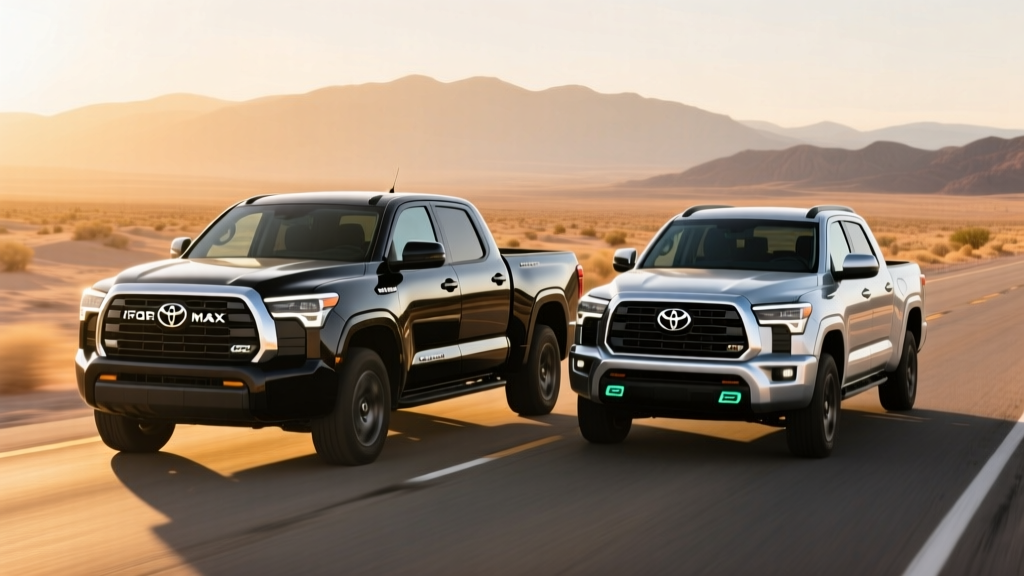
If you've been asking "does Toyota make a hybrid truck?" the answer is a definitive yes — and in 2026, Toyota offers hybrid powertrains across both of its truck lineups. The full-size Toyota Tundra i-FORCE MAX pairs a twin-turbo V6 with an electric motor for serious towing and meaningful fuel-economy gains over the standard gas model. The midsize Toyota Tacoma i-FORCE MAX brings the same hybrid philosophy to the trail-ready segment. Neither is a plug-in hybrid (PHEV); both are conventional hybrids (HEVs) that recharge their small batteries through regenerative braking and the engine — no charging cord required.
These aren't plug-in trucks competing with the Ford F-150 Lightning or Rivian R1T. They're engineered for buyers who want truck capability with a 2–4 MPG improvement over the gas-only alternatives, without changing how they refuel. Here's exactly what Toyota's hybrid trucks deliver in specs, efficiency, and ownership cost.
HEV vs PHEV: What Toyota's Hybrid Trucks Actually Are
Conventional Hybrid (HEV) — What Toyota's trucks are:
- No plug, no charging cord — you refuel with gasoline only
- Small battery (typically 1–2 kWh) recharged by the engine and regenerative braking
- Electric motor assists the gas engine for better acceleration and efficiency
- No electric-only driving range to speak of (brief low-speed EV mode only)
- No federal EV tax credit eligibility under IRS §30D
Plug-in Hybrid (PHEV) — What Toyota's trucks are NOT:
- Larger battery (typically 12–20+ kWh) that you plug in to charge
- 20–40+ miles of electric-only driving before the gas engine kicks in
- Can qualify for the federal §30D tax credit (up to $7,500) if requirements are met
- Examples: Toyota RAV4 Prime, Jeep Wrangler 4xe
Toyota has not announced a plug-in hybrid version of the Tundra or Tacoma for the 2026 model year. If you need electric-only commuting in a truck, you'd need to look at a full BEV like the F-150 Lightning or wait for PHEV truck offerings from other manufacturers. But if your goal is better fuel economy and more torque without plugging in, Toyota's i-FORCE MAX hybrids are purpose-built for that.
2026 Toyota Tundra i-FORCE MAX: MPG, Power, and Specs
The Tundra i-FORCE MAX is Toyota's hybrid option for full-size truck buyers. It replaces the old V8 with a 3.4-liter twin-turbo V6 paired with an electric motor-generator integrated into the bell housing of the 10-speed automatic transmission. The result is more torque than the standard i-FORCE V6, smoother low-speed behavior, and a measurable bump in fuel economy.
| Specification | Tundra i-FORCE MAX (2026) | Tundra i-FORCE (Gas Only) |
|---|---|---|
| Powertrain | 3.4L Twin-Turbo V6 + Electric Motor | 3.4L Twin-Turbo V6 |
| Combined Horsepower | 437 hp | 389 hp |
| Combined Torque | 583 lb-ft | 479 lb-ft |
| Transmission | 10-Speed Automatic | 10-Speed Automatic |
| EPA City MPG | 20 MPG | 17–18 MPG |
| EPA Highway MPG | 24 MPG | 22–23 MPG |
| EPA Combined MPG | 22 MPG | 19–20 MPG |
| Max Towing Capacity | Up to 11,175 lbs | Up to 12,000 lbs |
| Battery Type | Sealed Nickel-Metal Hydride (NiMH) | N/A |
| Drivetrain | RWD or 4WD | RWD or 4WD |
Source: EPA Fuel Economy and Toyota Tundra Specifications. Exact MPG varies by trim, cab configuration, and 2WD vs 4WD.
Real-World MPG Note: The Tundra i-FORCE MAX's hybrid system shines most in stop-and-go city driving and light-load cruising, where regenerative braking recaptures energy and the electric motor handles low-speed launches. In real-world highway driving at 70+ MPH with a loaded bed or trailer, expect fuel economy to drop closer to 17–19 MPG — the aerodynamic penalty of a full-size truck overwhelms the hybrid advantage at sustained high speeds. City drivers will see the biggest gap between the i-FORCE MAX and the gas-only Tundra.
2026 Toyota Tacoma i-FORCE MAX: The Midsize Hybrid Option
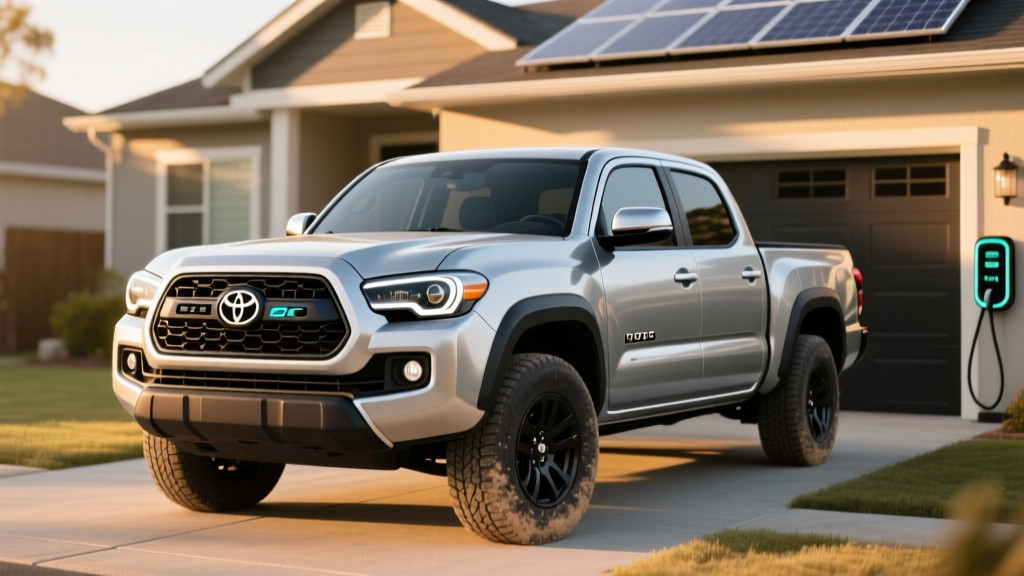
The current-generation Tacoma (redesigned for 2024 on the TNGA-F platform) offers the i-FORCE MAX hybrid powertrain on TRD Off-Road, TRD Pro, and select other trims. Like the Tundra, it pairs a turbocharged engine with an electric motor, but here it's a 2.4-liter turbocharged four-cylinder. The hybrid system prioritizes low-end torque for trail crawling and towing while squeezing out better fuel economy than the standard turbo-four.
| Specification | Tacoma i-FORCE MAX (2026) | Tacoma i-FORCE (Gas Only) |
|---|---|---|
| Powertrain | 2.4L Turbo I-4 + Electric Motor | 2.4L Turbo I-4 |
| Combined Horsepower | 326 hp | 278 hp |
| Combined Torque | 465 lb-ft | 317 lb-ft |
| Transmission | 8-Speed Automatic | 8-Speed Automatic |
| EPA City MPG | 23 MPG | 20–21 MPG |
| EPA Highway MPG | 27 MPG | 26 MPG |
| EPA Combined MPG | 25 MPG | 22–23 MPG |
| Max Towing Capacity | Up to 6,000 lbs | Up to 6,500 lbs |
| Drivetrain | 4WD (standard on MAX trims) | RWD or 4WD |
Source: EPA Fuel Economy and Toyota Tacoma Specifications. MPG figures reflect 4WD configurations typical of i-FORCE MAX trims.
The Tacoma i-FORCE MAX's 465 lb-ft of torque is the headline number here — it arrives low in the rev range thanks to the electric motor, making it exceptionally responsive off-road and when pulling a trailer from a stop. The 2–3 MPG improvement over the gas model matters less in absolute terms than the drivability upgrade.
Pricing, Trims, and Tax Credit Eligibility
Neither the Tundra i-FORCE MAX nor the Tacoma i-FORCE MAX qualifies for the federal IRS §30D Clean Vehicle Credit. That credit applies only to plug-in electric vehicles (BEVs and PHEVs) meeting battery-sourcing, MSRP, and buyer income requirements. Since Toyota's hybrid trucks are conventional HEVs with no plug, they are ineligible for the $7,500 federal credit.
| Model & Trim | 2026 MSRP (Approx.) | Federal Tax Credit |
|---|---|---|
| Tundra Limited i-FORCE MAX | ~$62,500 | $0 (HEV — not eligible) |
| Tundra Platinum i-FORCE MAX | ~$69,000 | $0 (HEV — not eligible) |
| Tundra 1794 Edition i-FORCE MAX | ~$70,500 | $0 (HEV — not eligible) |
| Tundra TRD Pro i-FORCE MAX | ~$74,000 | $0 (HEV — not eligible) |
| Tacoma TRD Off-Road i-FORCE MAX | ~$48,500 | $0 (HEV — not eligible) |
| Tacoma TRD Pro i-FORCE MAX | ~$65,000 | $0 (HEV — not eligible) |
State incentives may apply. Some states offer rebates or tax incentives for conventional hybrids, though these are far less common than EV/PHEV incentives. Check your state's energy office or department of revenue for current programs. A few states offer reduced registration fees or HOV lane access for hybrid vehicles, but these vary significantly by jurisdiction and change frequently.
Battery Reliability, Warranty, and Replacement Costs
Hybrid battery longevity is the top concern for first-time hybrid buyers, and this is where Toyota's track record is a significant advantage. Toyota has been building hybrid powertrains since the 1997 Prius, and the company's hybrid battery warranty reflects decades of real-world data on NiMH and lithium-ion hybrid pack durability.
Toyota Hybrid Battery Warranty:
- Coverage: 10 years / 150,000 miles (whichever comes first) on the hybrid battery and all hybrid-system components
- Applies to: Tundra i-FORCE MAX, Tacoma i-FORCE MAX, and all Toyota hybrids from 2020 onward
- What's covered: Hybrid battery pack, inverter, electric motor-generator, hybrid control module
- Transferability: Warranty transfers to subsequent owners automatically
What does a Toyota hybrid battery replacement cost? If you drive past the warranty period and the hybrid battery fails, replacement costs for Toyota truck hybrid packs typically range from $3,000 to $5,000 including labor at a dealership. Independent hybrid specialists may offer refurbished pack installations for $2,000–$3,500. However, Toyota's NiMH hybrid packs have demonstrated exceptional longevity — it's common for them to last well beyond 200,000 miles with gradual capacity loss rather than sudden failure. The Tundra and Tacoma use a relatively small battery compared to a PHEV or BEV, meaning fewer cells and lower replacement complexity.
For context, IIHS and long-term reliability surveys consistently place Toyota's hybrid systems among the most dependable in the industry. The hybrid components add complexity, but Toyota's execution has been refined over millions of vehicles.
Hybrid Truck vs Full EV Truck vs Gas Truck: Which Fits You?
Choose the Tundra/Tacoma i-FORCE MAX (HEV) if:
- You tow regularly and need maximum range without stopping to charge
- You don't have reliable access to home or workplace charging
- You want better fuel economy without changing your refueling habits
- You value Toyota's long-term reliability reputation and 10-year hybrid warranty
- You frequently drive in remote areas with sparse charging infrastructure
- You want more low-end torque than the gas model offers
Choose a full EV truck (F-150 Lightning, Rivian R1T, Silverado EV) if:
- You have Level 2 home charging and most of your driving is under 250 miles/day
- You want the lowest per-mile fuel cost (electricity vs gasoline)
- You qualify for the $7,500 federal tax credit and want to offset a higher purchase price
- You want a front trunk (frunk) and zero tailpipe emissions
- You rarely tow heavy loads long distances (towing cuts EV range by 40–50%)
- You want minimal drivetrain maintenance (no oil changes, fewer moving parts)
| Factor | Toyota Hybrid Truck (HEV) | Full EV Truck (BEV) | Gas-Only Truck |
|---|---|---|---|
| Fuel/Energy Cost per Mile | ~$0.14–$0.17 | ~$0.04–$0.08 | ~$0.18–$0.22 |
| Refueling/Recharging | Gas station, 5 min | Home overnight or 30–45 min DC fast charge | Gas station, 5 min |
| Federal Tax Credit | $0 | Up to $7,500 (if eligible) | $0 |
| Towing Range Impact | Moderate MPG drop (~15–20%) | Severe range drop (~40–50%) | Moderate MPG drop (~15–20%) |
| Maintenance Cost | Standard gas + hybrid system | Minimal (no oil, fewer fluids) | Standard gas engine |
| Cold-Weather Impact | Minor MPG reduction | 20–30% range loss | Minor MPG reduction |
| Upfront Price Premium | ~$3,000–$5,000 over gas | ~$10,000–$20,000 over gas | Baseline |
Fuel cost estimates based on $3.50/gallon gas, $0.15/kWh electricity, and EPA combined ratings. Actual costs vary by region, driving style, and utility rates.
Real-World Ownership: What Hybrid Truck Owners Should Expect
The i-FORCE MAX system is transparent in daily driving. Unlike early hybrids that felt rubbery or disconnected, Toyota's truck hybrid systems engage the electric motor seamlessly — most drivers won't notice when the system switches between electric assist, gas-only, and regenerative braking modes. The 10-speed (Tundra) and 8-speed (Tacoma) transmissions do the work of managing both power sources without the droning CVT feel that plagued older hybrids.
Where the hybrid advantage shows up:
- City and suburban driving: Stop-and-go traffic lets regenerative braking recharge the pack frequently, and the electric motor handles low-speed acceleration. This is where you'll see the largest MPG gap over the gas-only model — sometimes 3–4 MPG better in heavy traffic.
- Trailer launches and low-speed towing: The instant torque from the electric motor makes boat-ramp launches and low-speed maneuvering with a trailer noticeably smoother.
- Idle-reduction: The hybrid system can shut off the gas engine at stops and during light-load cruising, reducing fuel burn and engine wear.
Where the hybrid advantage shrinks:
- Sustained highway towing: At 65–75 MPH with a heavy trailer, the gas engine does nearly all the work. Expect towing MPG in the 10–14 range for the Tundra, similar to the gas model.
- High-speed unloaded driving: Above 70 MPH, aerodynamic drag dominates, and the hybrid system's contribution to efficiency diminishes.
Frequently Asked Questions
Does Toyota make a plug-in hybrid truck?
No. As of the 2026 model year, Toyota does not offer a plug-in hybrid (PHEV) version of the Tundra or Tacoma. Both trucks are available only as conventional hybrids (HEV) under the i-FORCE MAX badge or as gas-only models. If Toyota introduces a PHEV truck, it would likely debut on the Tacoma first given its smaller platform, but no such model has been announced.
How many MPG does the Toyota Tundra hybrid get?
The 2026 Tundra i-FORCE MAX achieves an EPA-estimated 20 city / 24 highway / 22 combined MPG in 4WD configurations. The gas-only Tundra with the standard i-FORCE V6 gets approximately 17 city / 22 highway / 19 combined. That 2–3 MPG combined improvement translates to roughly 50–80 fewer gallons of fuel per year at 15,000 miles of driving — a savings of approximately $175–$280 annually at $3.50/gallon.
How many MPG does the Toyota Tacoma hybrid get?
The 2026 Tacoma i-FORCE MAX with 4WD achieves an EPA-estimated 23 city / 27 highway / 25 combined MPG. The gas-only Tacoma i-FORCE 4WD returns approximately 20 city / 26 highway / 22 combined. The Tacoma hybrid's efficiency advantage is most pronounced in city driving where regenerative braking contributes the most energy recapture.
Do Toyota hybrid trucks need to be plugged in?
No. The Tundra i-FORCE MAX and Tacoma i-FORCE MAX are conventional hybrids. Their small battery packs recharge entirely through regenerative braking and the gasoline engine. You never plug them in. You simply fill up at a gas station as you would with any other truck.
Is the Toyota hybrid truck system reliable?
Toyota's hybrid systems are among the most proven in the automotive industry, with over 25 years of production experience since the original Prius. The i-FORCE MAX system uses a well-understood NiMH battery pack and a motor-generator integrated into the transmission — fewer failure points than early hybrid designs. Toyota backs the hybrid battery and all hybrid-system components with a 10-year / 150,000-mile warranty, reflecting strong internal confidence in longevity.
What does it cost to replace a Toyota Tundra or Tacoma hybrid battery?
Out-of-warranty hybrid battery replacement for the Tundra or Tacoma i-FORCE MAX typically costs between $3,000 and $5,000 at a Toyota dealership, including parts and labor. Refurbished or aftermarket options may reduce this to $2,000–$3,500. However, Toyota's hybrid battery packs rarely fail catastrophically — they tend to lose capacity gradually over 200,000+ miles, and the 10-year warranty covers most ownership periods.
Does the Toyota hybrid truck qualify for any tax credit?
No. The federal IRS §30D Clean Vehicle Credit applies only to plug-in electric vehicles (battery-electric and plug-in hybrid) that meet battery component sourcing, MSRP cap, and buyer income requirements. Since the Tundra and Tacoma i-FORCE MAX are conventional hybrids with no plug-in capability, they do not qualify. Some states may offer minor incentives for hybrid vehicles — check your state's energy or revenue department for current programs.
Hybrid truck vs full EV truck — which should I buy?
If you tow frequently, drive in remote areas, lack home charging access, or regularly exceed 300 miles between stops, the Toyota hybrid truck is the practical choice — you get better fuel economy and more torque without range anxiety or charging logistics. If you have Level 2 home charging, mostly drive under 250 miles per day, want the lowest per-mile energy cost, and qualify for the $7,500 federal credit, a full EV truck like the F-150 Lightning or Rivian R1T will save you more money over time. The hybrid truck is the bridge solution: it improves efficiency without requiring any change in behavior.