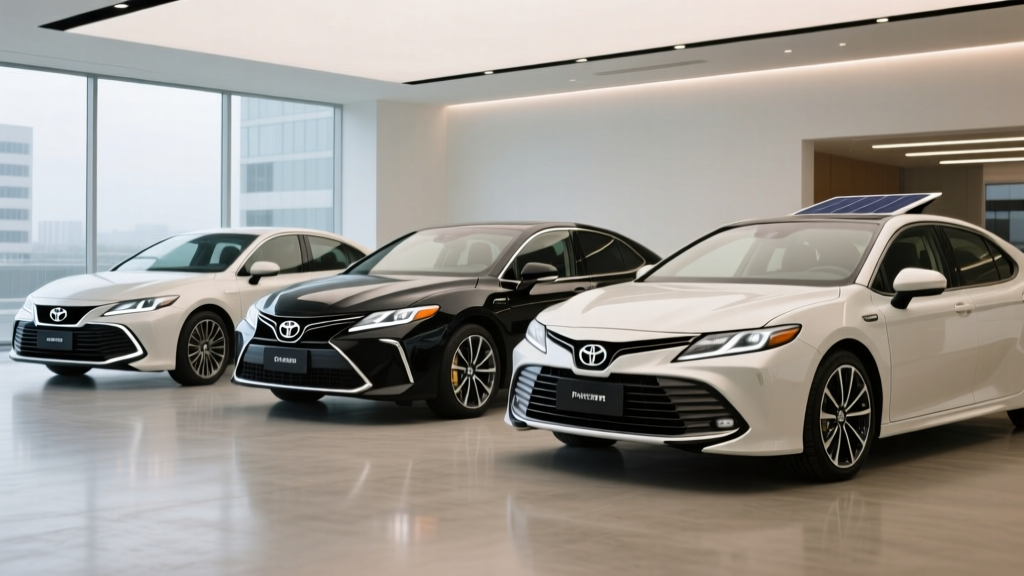
If you have been searching for a Toyota hybrid sedan that delivers outstanding fuel economy without the range anxiety or charging logistics of a full EV, you have more options than ever in 2026. Toyota now offers three distinct hybrid sedans — the mainstream Camry Hybrid, the premium Crown, and the efficiency champion Prius (including the Prius Prime plug-in hybrid). Each targets a different buyer, and the differences in MPG, powertrain, and pricing matter far more than the brochure suggests.
This guide breaks down every 2026 Toyota hybrid sedan with exact EPA figures, real-world fuel economy observations, powertrain specs, battery warranty details, and current federal tax credit eligibility — so you can pick the right one without guesswork.
HEV vs PHEV: Understanding Toyota's Two Hybrid Types
Before comparing models, it is critical to distinguish between Toyota's two hybrid architectures. Confusing them is the most common mistake hybrid shoppers make.
| Feature | Conventional Hybrid (HEV) | Plug-In Hybrid (PHEV) |
|---|---|---|
| Plug-in charging? | No — recharges via engine & regen | Yes — plug in for electric-only miles |
| Electric-only range | Less than 1 mile at low speed | 25–44 miles (model dependent) |
| Battery size | ~1.0–1.6 kWh (small buffer) | 13.6 kWh usable (Prius Prime) |
| Federal tax credit | Not eligible under §30D | Up to $3,750 (sourcing dependent) |
| Best for | No home charging access; simplicity | Home charging + short daily commutes |
Conventional hybrids like the Camry Hybrid and standard Crown use a small battery paired with Toyota's Hybrid Synergy Drive. The gasoline engine and electric motor work together seamlessly, and the battery recharges through regenerative braking and engine power. You never plug in. Plug-in hybrids like the Prius Prime add a larger battery and a charge port, giving you a meaningful electric-only commute before the gas engine kicks in.
2026 Toyota Camry Hybrid: The Mainstream MPG Leader
The Camry Hybrid remains Toyota's volume hybrid sedan and one of the best-selling hybrid vehicles in America. For 2026, it continues with the fifth-generation Toyota Hybrid System (THS) built around a 2.5-liter four-cylinder engine paired with front and optional rear electric motors.
| Spec | Camry Hybrid FWD | Camry Hybrid AWD |
|---|---|---|
| Combined Horsepower | 225 hp | 232 hp |
| Engine | 2.5L I4 + 1 front motor | 2.5L I4 + front & rear motors |
| EPA City MPG | 53 | 51 |
| EPA Highway MPG | 50 | 49 |
| EPA Combined MPG | 52 | 50 |
| Battery | ~1.6 kWh lithium-ion (hybrid buffer) | |
| 0–60 mph | ~7.2 sec | ~7.0 sec |
| Base MSRP (LE) | $30,495 | $31,995 |
The Camry Hybrid is a conventional HEV — it does not plug in and does not qualify for the federal §30D EV tax credit. However, its fuel savings are substantial. According to fueleconomy.gov, a Camry Hybrid LE at 52 MPG combined saves an estimated $3,500 in fuel costs over five years compared to the average new vehicle.
Real-World MPG vs. EPA Sticker
Toyota hybrids frequently exceed their EPA city estimates because the electric motor handles low-speed driving where gas engines are least efficient. In mixed suburban driving with frequent stops, owners routinely report 54–56 MPG. Highway-only trips at 75+ mph tend to yield 46–48 MPG — slightly below the EPA highway sticker. Cold weather (below 35°F) reduces fuel economy by roughly 5–10% as the engine runs more often for cabin heat.
2026 Toyota Crown: The Premium Hybrid Sedan Alternative
The Crown sits above the Camry in Toyota's lineup, offering a more upscale interior, standard AWD, and two distinct hybrid powertrains. It is positioned as a premium sedan without a luxury-badge price tag.
| Spec | Crown Hybrid (XLE/Limited) | Crown Hybrid Max (Platinum) |
|---|---|---|
| Combined Horsepower | 236 hp | 340 hp |
| Powertrain | 2.5L I4 hybrid + AWD | 2.4L turbo hybrid + AWD |
| EPA City MPG | 42 | 29 |
| EPA Highway MPG | 41 | 32 |
| EPA Combined MPG | 41 | 30 |
| 0–60 mph | ~7.6 sec | ~5.1 sec |
| Base MSRP | $42,590 (XLE) | $54,590 (Platinum) |
The standard Crown hybrid prioritizes efficiency at 41 MPG combined, while the Hybrid Max powertrain in the Platinum trim trades MPG for 340 horsepower and genuine sport-sedan acceleration. Both are conventional HEVs — no plug-in option is offered, and neither qualifies for the federal EV tax credit.
Real-world driving in the standard Crown hybrid mirrors the Camry pattern: city MPG often exceeds the EPA estimate in stop-and-go traffic, while sustained highway driving at higher speeds drops into the upper 30s. The Hybrid Max, tuned for performance, delivers roughly 28–31 MPG in mixed driving — closer to its EPA rating but far thirstier than the standard system.
2026 Toyota Prius & Prius Prime: The Efficiency Champions
The redesigned Prius generation continues into 2026 with dramatically improved styling and a substantial power bump over its predecessors. The standard Prius is a conventional HEV; the Prius Prime is the plug-in hybrid variant — and it is the only Toyota sedan currently eligible for a partial federal tax credit.
| Spec | Prius (HEV) | Prius Prime (PHEV) |
|---|---|---|
| Combined Horsepower | 194 hp (FWD) / 196 hp (AWD) | 220 hp |
| Engine | 2.0L I4 hybrid | 2.0L I4 + larger motor |
| EPA Combined MPG | 57 (LE FWD) / 54 (XSE) | 52 MPG (hybrid mode) / 127 MPGe |
| EPA City / Highway | 57 / 56 (LE FWD) | 50 city / 47 hwy (charge-sustaining) |
| Electric-Only Range | N/A | 44 miles (SE) / 40 miles (XSE/XS) |
| Battery Capacity | ~1.0 kWh (buffer) | 13.6 kWh usable (lithium-ion) |
| Level 2 Charge Time | N/A | ~4 hours (240V, 16A) |
| DC Fast Charging | N/A | Not supported |
| Total Combined Range | ~620 miles | ~460 miles (gas + electric) |
| 0–60 mph | ~7.0 sec | ~6.6 sec |
| Base MSRP | $29,445 (LE) | $34,095 (SE) |
Prius Prime Charging: What You Need to Know
The Prius Prime charges exclusively on Level 1 (120V household outlet, ~11 hours for a full charge) or Level 2 (240V, ~4 hours). It does not support DC fast charging — this is a deliberate Toyota engineering choice common among PHEVs, which have smaller batteries that make DC infrastructure cost-prohibitive. For most PHEV owners who charge overnight at home, this is not a practical limitation.
Federal Tax Credit Eligibility for Toyota Hybrid Sedans
This is where hybrid shoppers frequently get confused. Under current IRS §30D Clean Vehicle Credit rules for 2026:
- Conventional hybrids (Camry Hybrid, Crown, standard Prius): NOT eligible. The §30D credit requires a minimum 7 kWh battery and plug-in capability. Standard Toyota hybrids have ~1.0–1.6 kWh batteries and no charge port.
- Prius Prime (PHEV): Potentially eligible for up to $3,750 — not the full $7,500. The credit splits into two halves: $3,750 for battery-component sourcing and $3,750 for critical-mineral sourcing. As of 2026, the Prius Prime typically qualifies for the critical-minerals half but not the battery-component half due to supply-chain origin requirements. Exact eligibility depends on the vehicle's VIN and manufacturing date.
- Buyer income caps apply: Modified AGI must not exceed $150,000 (single), $225,000 (head of household), or $300,000 (joint).
- MSRP cap: The Prius Prime qualifies because its MSRP is below the $55,000 sedan cap.
- Point-of-sale transfer: You can transfer the credit to the dealer at purchase, reducing your out-of-pocket cost immediately rather than waiting to claim it on your tax return.
Always verify credit eligibility with your tax professional and confirm the specific vehicle's credit status on the IRS Clean Vehicle credit lookup before purchasing. Rules and sourcing requirements have shifted multiple times since 2023.
Battery Warranty, Reliability, and Replacement Costs
Hybrid battery longevity is the number-one concern for first-time hybrid buyers. Toyota addresses this with robust warranty coverage and two decades of proven hybrid powertrain durability.
• Hybrid battery: 10 years / 150,000 miles (whichever comes first)
• Hybrid system components (inverter, motor, ECU): 8 years / 100,000 miles
• Powertrain warranty: 5 years / 60,000 miles
These warranties are transferable to subsequent owners.
Toyota's hybrid battery replacement cost varies by model. For the Camry Hybrid, a new OEM hybrid battery pack runs approximately $3,000–$4,000 including labor at a dealership. The Prius Prime's larger 13.6 kWh PHEV battery costs roughly $5,000–$7,000 to replace. However, real-world data from fleet operators and long-term owners shows Toyota hybrid batteries frequently last 200,000–300,000 miles before significant degradation — well beyond the warranty period. Independent repair shops also offer refurbished hybrid batteries for 40–60% less than OEM pricing.
Toyota's hybrid reliability record is among the best in the industry. The Hybrid Synergy Drive eliminates the traditional transmission, starter motor, and alternator — all common failure points in gas-only vehicles. Regenerative braking also reduces brake pad wear, with many owners reporting 80,000+ miles on original brake pads.
Hybrid vs PHEV vs EV: Which Toyota Sedan Fits You?
Choose a conventional HEV (Camry Hybrid, Crown, standard Prius) if:
- You cannot charge at home (apartment, street parking, no garage)
- You want maximum simplicity — no cables, no charging apps, no planning
- Your budget is under $35,000 and you want the lowest total cost of ownership
- You drive mostly city/suburban miles where hybrid efficiency peaks
Choose the Prius Prime PHEV if:
- You have home Level 2 charging (or can install it) and a commute under 40 miles
- You want electric-only daily driving but need gas-engine flexibility for road trips
- You want to reduce gasoline consumption by 70–80% on typical workweeks
- Partial federal tax credit eligibility (up to $3,750) improves the value equation
Choose a full EV (bBEV) instead if:
- You have reliable home charging and your daily drive is under 250 miles
- You want zero tailpipe emissions and zero gasoline expenses
- You qualify for the full $7,500 federal tax credit on an eligible EV
- You are ready to plan around public DC fast charging for road trips
Real-World Ownership Costs: 5-Year Comparison
| Cost Factor | Camry Hybrid LE ($30,495) | Prius Prime SE ($34,095) | Camry Gas LE (~$28,000) |
|---|---|---|---|
| Federal Tax Credit | $0 | Up to $3,750 | $0 |
| Effective Purchase Price | $30,495 | ~$30,345 | $28,000 |
| 5-Year Fuel/Energy Cost* | ~$4,800 | ~$2,900 (mixed EV/gas) | ~$8,300 |
| Estimated Maintenance (5 yr) | ~$2,200 | ~$2,100 | ~$3,400 |
| 5-Year Total Operating Cost | ~$7,000 | ~$5,000 | ~$11,700 |
*Based on 15,000 miles/year, $3.40/gal gas, $0.14/kWh electricity, and Prius Prime driven 70% on electric. Source: fueleconomy.gov estimates and real-world averages.
The Prius Prime wins on operating costs if you can charge at home daily. The Camry Hybrid wins on simplicity and the lowest effective purchase price. Both dramatically undercut the gas-only Camry on five-year running costs.
Pros and Cons: Toyota Hybrid Sedans at a Glance
Pros
- Class-leading fuel economy: 41–57 MPG combined depending on model
- Proven reliability with 10-year/150,000-mile hybrid battery warranty
- No charging infrastructure needed (HEV models)
- Strong resale value — Toyota hybrids hold value better than most EVs
- Prius Prime offers 44 miles electric + gas flexibility for road trips
- Lower maintenance costs vs. gas-only vehicles (no traditional transmission)
Cons
- No DC fast charging on Prius Prime — Level 2 only
- Conventional hybrids (HEV) get zero federal tax credit
- Crown Hybrid Max sacrifices MPG (30 combined) for performance
- AWD hybrid systems reduce MPG by 2–4 MPG vs FWD
- Prius Prime cargo space reduced vs. standard Prius (battery placement)
- Hybrid battery replacement ($3,000–$7,000) is a long-term cost risk
Frequently Asked Questions
How many MPG does a Toyota hybrid sedan get?
It depends on the model. The 2026 Prius LE leads at 57 MPG combined (57 city / 56 highway). The Camry Hybrid LE achieves 52 MPG combined (53 city / 50 highway). The Crown standard hybrid gets 41 MPG combined. The Crown Hybrid Max gets 30 MPG combined. In real-world city driving, Camry and Prius owners often exceed EPA city estimates by 2–4 MPG thanks to the electric motor's efficiency at low speeds.
How far can the Prius Prime go on electric only?
The 2026 Prius Prime SE is EPA-rated at 44 miles of electric-only range. The XSE and XS trims, which have larger wheels and more weight, are rated at 40 miles. Real-world range varies from 28 miles (cold weather, highway speeds) to 50 miles (mild weather, suburban driving). Once the battery depletes, the car operates as a conventional hybrid at 52 MPG combined.
Is the Toyota hybrid system reliable? What does battery replacement cost?
Toyota's hybrid system is among the most reliable powertrains on the market, with two decades of refinement. The hybrid battery is warrantied for 10 years / 150,000 miles. Real-world data shows many Toyota hybrid batteries lasting 200,000+ miles. If replacement is eventually needed, expect $3,000–$4,000 for a Camry Hybrid battery and $5,000–$7,000 for a Prius Prime battery at a dealership, with refurbished options available for less. The hybrid system also eliminates the traditional transmission, starter, and alternator — reducing overall repair frequency.
Does any Toyota hybrid sedan qualify for a federal tax credit?
Only the Prius Prime plug-in hybrid may qualify — and only for up to $3,750 (not the full $7,500), depending on battery sourcing requirements and your income level. Conventional hybrids (Camry Hybrid, Crown, standard Prius) do not qualify for the §30D federal credit because they lack the minimum 7 kWh battery and plug-in capability. Always verify eligibility on IRS.gov and with a tax professional before purchase.
Do I need to plug in a Toyota hybrid?
No — unless you choose the Prius Prime. The Camry Hybrid, Crown Hybrid, and standard Prius are conventional hybrids (HEVs) that recharge their small batteries through regenerative braking and the gasoline engine. You simply fill up with gas and drive. The Prius Prime (PHEV) benefits from plugging in to access its 40–44 miles of electric range, but it will still operate as a hybrid even if you never plug it in.
Should I buy a Toyota hybrid or a full EV?
If you have reliable home charging, drive under 250 miles daily, and want the lowest operating costs with zero gas usage, a full EV is compelling. If you lack home charging, take frequent long road trips, live in an area with sparse public charging, or want to avoid any range planning, a Toyota hybrid sedan eliminates those concerns while still cutting fuel costs by 40–60% versus a gas-only car. The Prius Prime PHEV offers a middle ground — electric commuting with gas-engine road-trip freedom.