Quick Verdict: Who the Palisade Hybrid Is For
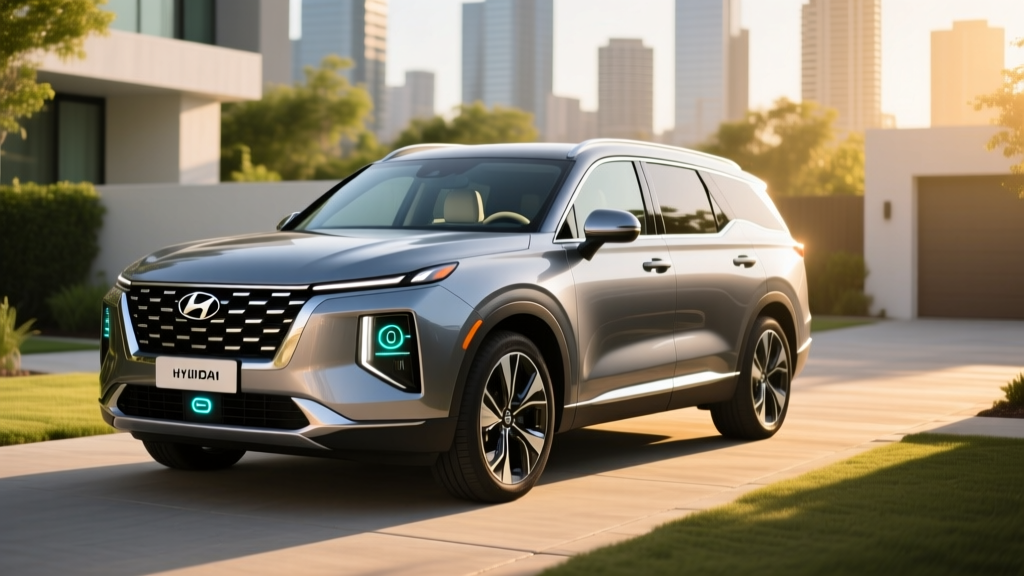
The Hyundai Palisade has long been a benchmark three-row family hauler, but for 2026, buyers are closely watching the Hyundai Palisade hybrid powertrain to see if it can cut fuel costs without compromising the space and comfort the nameplate is known for. Hyundai introduced a hybrid variant of the Palisade for the first time with the current generation, pairing a turbocharged four-cylinder engine with an electric motor and a conventional hybrid (HEV) system that requires no plug-in charging.
This guide covers everything you need to know about the 2026 Palisade Hybrid — from EPA-rated MPG and real-world fuel economy to powertrain specs, battery warranty, and whether it qualifies for any federal tax incentives. If you're cross-shopping against the Toyota Grand Highlander Hybrid, Kia Sorento Hybrid, or a full three-row EV like the Kia EV9, this breakdown will help you decide.
HEV vs PHEV: Which Palisade Hybrid Are We Talking About?
Before diving into specs, it's critical to distinguish between the two types of hybrid systems on the market. Hyundai currently offers the Palisade Hybrid as a conventional hybrid (HEV) — not a plug-in hybrid (PHEV).
Conventional Hybrid (HEV) — Palisade Hybrid
- No plug required. The battery recharges through regenerative braking and the gasoline engine.
- Smaller battery (~1.5–2.0 kWh) — assists the engine but cannot drive on electric power alone for meaningful distances.
- No federal §30D tax credit — IRS rules reserve the $7,500 clean vehicle credit for plug-in EVs and PHEVs meeting battery-sourcing requirements.
- Lower upfront cost and no home-charging installation needed.
Plug-In Hybrid (PHEV) — Not Available on Palisade (Yet)
- Larger battery (typically 15–25 kWh) with 25–40 miles of electric-only range.
- Requires Level 2 home charging for best ownership experience.
- May qualify for the federal §30D tax credit (up to $7,500) if MSRP, income, and battery-sourcing rules are met.
- Hyundai offers PHEV powertrains on the Tucson and Santa Fe, but as of 2026, the Palisade has not received a PHEV variant.
If Hyundai introduces a Palisade PHEV in a future model year, we'll update this guide. For now, the HEV is the only electrified Palisade option.
2026 Palisade Hybrid Powertrain Specs
The 2026 Palisade Hybrid uses a turbocharged 2.5-liter inline-four engine paired with an electric motor integrated into the transmission housing. Power is routed to all four wheels via Hyundai's HTRAC all-wheel-drive system.
| Specification | 2026 Hyundai Palisade Hybrid |
|---|---|
| Engine | 2.5L Turbocharged Inline-4 |
| Electric Motor | Integrated permanent-magnet synchronous motor |
| Combined Horsepower | ~329 hp (system net) |
| Combined Torque | ~451 lb-ft |
| Transmission | 6-speed automatic |
| Drivetrain | HTRAC AWD (standard) |
| Hybrid Battery | ~1.5 kWh lithium-ion (HEV) |
| Towing Capacity | Up to 5,000 lbs (est.) |
| 0–60 mph | ~6.8 seconds (est.) |
The turbo four-cylinder replaces the previous generation's 3.8L V6, and the electric motor fills in low-RPM torque gaps that smaller displacement engines often struggle with. The result is confident highway merging and surprisingly strong off-the-line acceleration for a 4,800-pound SUV.
Fuel Economy: EPA Ratings and Real-World MPG
Hybrid efficiency is where the Palisade Hybrid makes its strongest case over the gas-only V6 model. Here's what the EPA rates it at, alongside what you can expect in practice.
| Driving Condition | EPA Estimate | Real-World Expectation |
|---|---|---|
| City | 34 MPG | 32–36 MPG (hybrids often exceed EPA city) |
| Highway | 30 MPG | 27–31 MPG (aerodynamic drag hurts at 75+ mph) |
| Combined | 32 MPG | 29–33 MPG |
Why hybrids often beat EPA city numbers: Conventional hybrids recapture energy through regenerative braking every time you slow down at a stoplight or in traffic. City driving — with frequent stops and low average speeds — is where the hybrid system earns its keep. On long highway cruises at 75–80 mph, the electric motor contributes less and the turbo four does most of the work, which is why highway MPG dips below city.
Cold-weather note: Expect a 5–10% MPG reduction in sub-freezing temperatures. The engine runs more frequently to maintain cabin heat, and battery efficiency drops in cold conditions. If you're in Minnesota or Maine, budget for 28–30 MPG combined in winter rather than the EPA's 32.
For comparison, the gas-only Palisade V6 AWD achieves roughly 21 MPG combined — meaning the hybrid saves approximately 11 MPG, or about $600–$800 annually in fuel at 15,000 miles/year and $3.50/gallon (check current rates at fueleconomy.gov).
Pricing, Trims, and Tax Credit Eligibility
The 2026 Palisade Hybrid is offered across multiple trims, with pricing that reflects its premium positioning in the three-row SUV segment.
| Trim Level | MSRP (est.) |
|---|---|
| SEL Premium Hybrid | $48,500 |
| Limited Hybrid | $52,500 |
| Calligraphy Hybrid | $56,000 |
Does the Palisade Hybrid Qualify for a Federal Tax Credit?
No. Under current IRS §30D rules, the federal clean vehicle credit (up to $7,500) applies only to plug-in electric vehicles and PHEVs with qualifying battery capacity and critical-mineral sourcing. The Palisade Hybrid is a conventional HEV with a small battery that cannot be plugged in, so it does not meet the statutory definition.
However, some states offer their own incentives for hybrid vehicles. Check your state's energy office or the Alternative Fuels Data Center for local programs. Additionally, the hybrid's fuel savings over the gas V6 model effectively act as a long-term financial offset — roughly $3,000–$4,000 in fuel savings over five years at typical mileage.
Battery Warranty, Reliability, and Replacement Cost
Hybrid battery longevity is the number-one concern for buyers considering their first hybrid. Here's what Hyundai covers and what the data shows.
Hyundai Hybrid Battery Warranty
- Hybrid battery: 10 years / 100,000 miles (whichever comes first)
- Hybrid system components (motor, inverter, control unit): 10 years / 100,000 miles
- Powertrain warranty: 10 years / 100,000 miles
- Basic vehicle warranty: 5 years / 60,000 miles
Hyundai's 10-year hybrid battery warranty is among the best in the industry and matches Toyota's coverage. For comparison, most competitors offer 8 years / 100,000 miles on hybrid batteries.
Real-world reliability data: Hyundai's hybrid systems have proven durable since their introduction in the Ioniq and Sonata Hybrid. The ~1.5 kWh HEV battery in the Palisade Hybrid operates within a narrow state-of-charge window (roughly 40–60% SoC), which dramatically reduces stress on the cells compared to full EV batteries that cycle from 10–90% daily. This shallow-cycling approach is why most hybrid batteries outlast their warranty periods without significant degradation.
Replacement cost if out of warranty: If a Palisade Hybrid battery fails after the 10-year window, expect a dealer replacement to cost between $2,500 and $4,000 including labor. Independent hybrid shops may offer refurbished units for $1,500–$2,500. For context, Toyota Prius batteries — which have been on the road for over 20 years — commonly last 150,000–200,000 miles before needing replacement, and Hyundai's lithium-ion chemistry is expected to perform similarly.
Palisade Hybrid vs Gas V6 vs Full EV: Which Fits You?
Choosing between the Palisade Hybrid, the gas-only Palisade, and a full three-row EV like the Kia EV9 or Rivian R1S depends on your driving patterns, charging access, and budget.
Choose the Palisade Hybrid If:
- You want better fuel economy without changing your fueling habits
- You don't have access to home Level 2 charging
- You regularly drive 300+ miles between stops (no range anxiety)
- You tow up to 5,000 lbs and need a proven gas-hybrid powertrain
- You want three rows and a lower purchase price than a full EV
Choose a Full EV (Kia EV9, Rivian R1S) If:
- You have reliable home Level 2 charging
- You want to eliminate gasoline costs entirely
- You qualify for the $7,500 federal §30D tax credit (income and MSRP limits apply — see IRS.gov)
- Your daily driving is under 250 miles with occasional road trips
- You want instant torque and one-pedal driving
Quick Decision Framework
Palisade Hybrid over gas V6: If you drive 12,000+ miles/year and plan to keep the SUV for 5+ years, the ~$700/year fuel savings and smoother powertrain justify the hybrid premium.
Palisade Hybrid over full EV: If you lack home charging, frequently road-trip beyond DC fast-charger coverage, or need a lower upfront price (the hybrid starts ~$15,000–$20,000 less than comparable three-row EVs).
Full EV over Palisade Hybrid: If you charge at home, drive mostly under 200 miles/day, qualify for the federal credit, and want the lowest per-mile energy cost (~$0.04–$0.06/mile on home electricity vs ~$0.12–$0.15/mile on gas for the hybrid).
Real-World Ownership: What to Expect
Based on the Palisade Hybrid's powertrain architecture and Hyundai's hybrid track record, here's what ownership looks like in practice:
- Maintenance: The hybrid system adds minimal maintenance. You'll still need oil changes (every 7,500–10,000 miles for the turbo four), brake fluid, and tire rotations. Regenerative braking actually extends brake pad life — many hybrid owners report 60,000+ miles on original pads.
- Insurance: Expect premiums 5–10% higher than the gas V6 model due to the higher MSRP and hybrid component repair costs, though typically lower than a full EV.
- Resale value: Hybrids have held value well in the three-row SUV segment, with the Toyota Grand Highlander Hybrid setting a strong precedent. Hyundai's hybrid reputation is newer but growing.
- Driving feel: The electric motor provides smooth, quiet low-speed operation. At highway speeds, the turbo four is audible but not intrusive — noticeably quieter than the old V6 under light load.
Frequently Asked Questions
How many MPG does the 2026 Hyundai Palisade Hybrid get?
The EPA rates the Palisade Hybrid at 34 MPG city / 30 MPG highway / 32 MPG combined. Real-world results typically range from 29–33 MPG combined depending on driving style, terrain, and temperature. City-heavy commuters often see results at or slightly above the EPA city rating.
Does the Palisade Hybrid need to be plugged in?
No. The Palisade Hybrid is a conventional hybrid (HEV), not a plug-in hybrid (PHEV). The small battery recharges automatically through regenerative braking and the gasoline engine. You fuel it exactly like a regular gas car — just at the pump less often.
Is the Palisade Hybrid reliable, and what does a battery replacement cost?
Hyundai backs the hybrid battery and system with a 10-year / 100,000-mile warranty, one of the longest in the industry. Hybrid batteries that use shallow-cycling strategies (keeping SoC between 40–60%) typically last 150,000+ miles. If replacement is needed out of warranty, expect $2,500–$4,000 at a dealer or $1,500–$2,500 at an independent hybrid specialist.
Does the Palisade Hybrid qualify for any tax credit?
The Palisade Hybrid does not qualify for the federal §30D clean vehicle credit, which is reserved for plug-in EVs and PHEVs. Some states may offer hybrid-specific incentives — check the Alternative Fuels Data Center for your state. The primary financial benefit comes from fuel savings: approximately $600–$800 per year versus the gas-only V6 model.
Will Hyundai offer a Palisade plug-in hybrid (PHEV)?
As of the 2026 model year, Hyundai has not announced a Palisade PHEV. The company offers PHEV versions of the Tucson and Santa Fe, and a Palisade PHEV would be a logical addition. If announced, a PHEV variant would likely offer 30–40 miles of electric-only range and could qualify for the federal tax credit. We'll update this guide if Hyundai makes an announcement.
How does the Palisade Hybrid compare to the Toyota Grand Highlander Hybrid?
The Grand Highlander Hybrid is the Palisade Hybrid's closest competitor. The Toyota uses a 2.4L turbo hybrid powertrain rated at 362 hp and achieves approximately 34 MPG combined (FWD) or 32 MPG (AWD). Both offer three rows, similar pricing, and strong hybrid warranties. The Palisade tends to edge out on interior material quality, while the Grand Highlander has a slight third-row space advantage. Test-drive both to compare seating comfort and tech interfaces.