Why the Toyota Hybrid Camry Dominates the Midsize Sedan Market
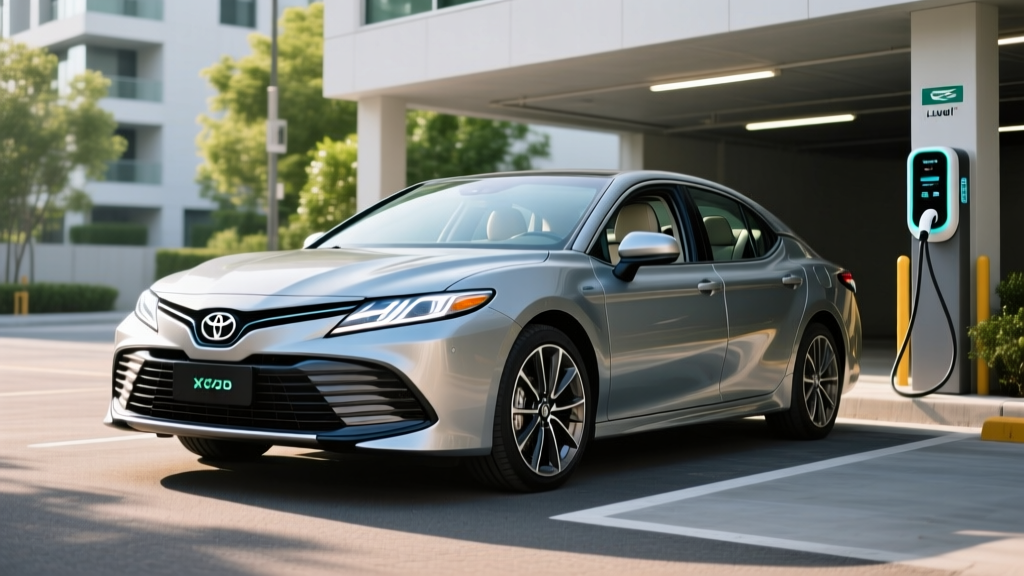
When Toyota made every 2025 Camry a hybrid, it was a gamble. For 2026, that bet has paid off: the Toyota Hybrid Camry remains the best-selling midsize sedan in America, and for good reason. With EPA ratings reaching 51 MPG combined, standard electronic all-wheel drive across every trim, and a starting MSRP under $30,000, it occupies a sweet spot that neither full EVs nor conventional gas sedans can easily match.
This guide covers everything a buyer needs to know about the 2026 Toyota Hybrid Camry — from exact EPA fuel economy figures by trim to real-world MPG observations, powertrain specs, long-term battery reliability, and how it stacks up against plug-in hybrids and full battery-electric vehicles. If you're cross-shopping the Camry Hybrid against the Hyundai Sonata Hybrid, Honda Accord Hybrid, or even a Tesla Model 3, the data below will clarify which powertrain fits your driving pattern.
HEV vs PHEV: Where the Camry Hybrid Fits
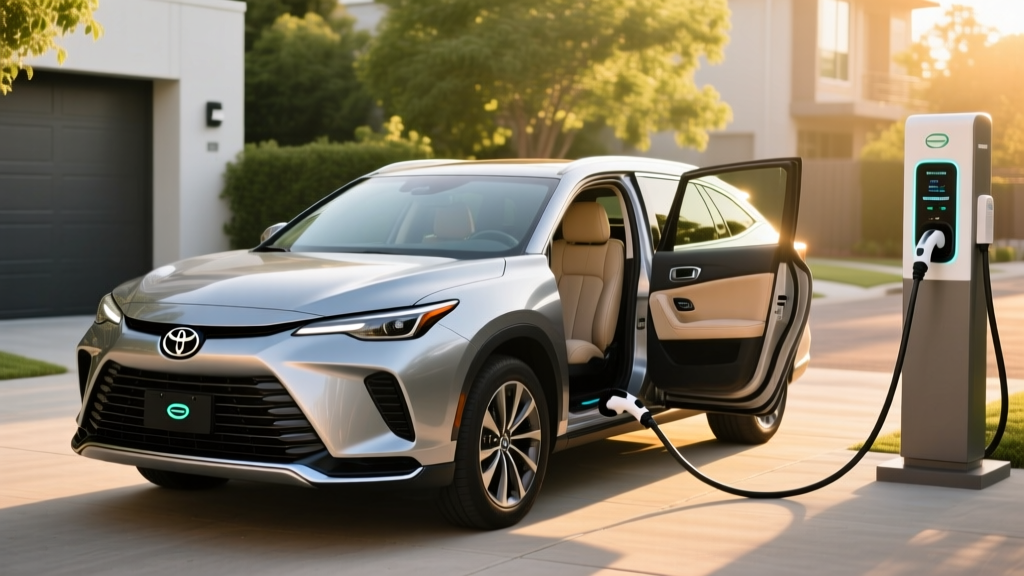
Before examining the numbers, it's essential to distinguish between the two hybrid architectures on the market. The Toyota Hybrid Camry is a conventional hybrid electric vehicle (HEV). It does not plug in. Its 1.6 kWh nickel-metal hydride (NiMH) traction battery charges exclusively through regenerative braking and the gasoline engine. You fuel it like any other car — no charging cable, no outlet, no range anxiety about finding a plug.
A plug-in hybrid electric vehicle (PHEV), such as the Toyota RAV4 Prime or Prius Prime, carries a larger battery (typically 13–20 kWh) that can be charged from a wall outlet or public charger, delivering 25–44 miles of electric-only driving before the gas engine engages. The Camry does not currently offer a PHEV variant in the U.S. market.
HEV vs PHEV — Quick Reference
| Feature | HEV (Camry Hybrid) | PHEV (e.g., Prius Prime) |
|---|---|---|
| Plugs in? | No | Yes (120V or 240V) |
| Electric-only range | ~1 mile at low speed | 25–44 miles |
| Battery size | 1.6 kWh (NiMH) | 13.6 kWh (Li-ion) |
| Federal tax credit (§30D) | Not eligible | Up to $7,500 (if eligible) |
| Best for | No home charging, high-mileage commuters | Home chargers with short daily commutes |
The Camry Hybrid's value proposition is simplicity: you never change your fueling habits, yet you cut fuel consumption roughly in half compared to a typical turbocharged gas midsize sedan.
EPA Fuel Economy: MPG by Trim Level
The 2026 Camry Hybrid uses Toyota's fifth-generation hybrid system pairing a 2.5-liter Dynamic Force four-cylinder engine with two motor-generators and an electronic continuously variable transmission (eCVT). Electronic on-demand all-wheel drive (AWD) adds a rear-mounted electric motor and is standard on every 2026 trim — a notable shift from prior years where AWD was optional or trim-dependent.
| Trim | City MPG | Highway MPG | Combined MPG | Drivetrain |
|---|---|---|---|---|
| LE | 51 | 49 | 51 | AWD |
| SE | 44 | 43 | 44 | AWD |
| XLE | 44 | 43 | 44 | AWD |
| XSE | 44 | 43 | 44 | AWD |
Source: EPA / fueleconomy.gov
The LE trim achieves its 51/49/51 split thanks to lighter 17-inch alloy wheels, a less aggressive final-drive ratio, and the absence of power-adjustable sport seats and larger infotainment hardware that add weight to upper trims. The 7-MPG gap between the LE and the SE/XLE/XSE trims is one of the largest intra-model spreads in the segment — worth considering if fuel economy is your top priority.
Real-World MPG: What Owners Actually See
EPA figures are measured under controlled laboratory conditions. In real-world driving, the Toyota Hybrid Camry tends to exceed its EPA city rating — a hallmark of Toyota's series-parallel hybrid system, which runs the electric motor heavily at low speeds and in stop-and-go traffic where regenerative braking recaptures energy continuously.
Based on aggregated owner data from fueleconomy.gov's My MPG tracker and independent testing, expect the following:
- City / suburban driving: 48–55 MPG (LE trim) — frequent stops maximize regen
- Highway cruising (70–75 mph): 42–47 MPG — the gas engine carries more load at sustained speed
- Cold weather (below 32°F): 38–44 MPG — the engine runs longer to heat the cabin and warm the catalytic converter
- Mixed real-world average: 44–50 MPG for LE owners; 39–44 MPG for SE/XLE/XSE owners
The key insight: if your commute is mostly city and suburban, the Camry Hybrid LE will likely beat its sticker. If you drive 80% highway miles at 75+ mph, a turbocharged gas sedan's highway efficiency advantage narrows the gap — though the Camry Hybrid still wins on combined figures.
Powertrain Specs: What's Under the Hood
| Engine | 2.5L Dynamic Force 4-cylinder (A25A-FXS) |
| Engine output | 184 hp @ 6,000 rpm / 163 lb-ft @ 5,200 rpm |
| Front electric motor | 100 kW (134 hp) / 155 lb-ft |
| Rear electric motor (AWD) | 30 kW (40 hp) / 76 lb-ft |
| Net combined system horsepower | 232 hp (AWD) |
| Transmission | eCVT (planetary gearset, no belt) |
| Traction battery | 1.6 kWh NiMH (sealed, no plug) |
| 0–60 mph | ~7.1 seconds (AWD) |
| Fuel tank | 13.2 gallons (regular 87 octane) |
The 232 net horsepower figure represents the combined output of the engine and front motor at peak simultaneous delivery — not a simple sum of peak ratings, since the engine and motors reach peak output at different RPMs. The result is confident highway merging and passing, a meaningful upgrade from the 208-hp fourth-generation Camry Hybrid.
The eCVT is not a belt-and-pulley CVT like those found in some competitors. Toyota's planetary gearset design has no belts to wear and is one of the most durable transmissions in the industry, with many examples exceeding 200,000 miles without service.
Pricing, Trims, and Tax Credit Eligibility
| Trim | MSRP (incl. destination) | Key Features |
|---|---|---|
| LE | $29,795 | 8" touchscreen, TSS 3.0, 17" alloys |
| SE | $31,395 | Sport-tuned suspension, 19" wheels, paddle shifters |
| XLE | $34,195 | Leather-trimmed, 12.3" display, heated front seats |
| XSE | $35,495 | Sport + premium combo, panoramic roof available |
Federal and State Incentives
The Toyota Hybrid Camry, as a conventional HEV, does not qualify for the federal §30D Clean Vehicle Credit. That credit — up to $7,500 — is reserved for plug-in electric vehicles (BEVs and PHEVs) meeting battery-sourcing, MSRP, and buyer-income requirements outlined by the IRS.
However, some states offer separate incentives for high-efficiency hybrids. Check your state's energy office or department of environmental quality for current programs. Additionally, some employers and utilities offer rebates for purchasing vehicles exceeding 40 MPG combined — worth investigating locally.
Battery Reliability, Warranty, and Replacement Cost
Hybrid battery longevity is consistently the top concern among first-time hybrid buyers. Here's what the data shows for the Camry Hybrid:
Hybrid Battery Warranty
- Coverage: 10 years / 150,000 miles (whichever comes first)
- What's covered: Traction battery assembly, battery control module, inverter with converter
- Capacity threshold: Toyota warrants the battery against defects and abnormal capacity loss
- Transferable: Yes — warranty follows the vehicle, not the original owner
- Hybrid system warranty: 8 years / 100,000 miles on hybrid-specific components (motor-generators, eCVT)
Real-World Battery Lifespan
Toyota's NiMH hybrid batteries have an exceptionally well-documented track record. Data from fleet operators, taxi services, and high-mileage owners consistently shows Camry and Prius hybrid batteries lasting 150,000–200,000+ miles before needing replacement. The NiMH chemistry is less energy-dense than lithium-ion but significantly more tolerant of the shallow charge-discharge cycles that characterize hybrid operation — the battery typically operates between 40% and 80% state of charge, avoiding the extreme states that accelerate degradation.
If replacement becomes necessary out of warranty, expect to pay:
- New OEM battery (Toyota dealer): $2,500–$4,000 installed
- Refurbished/remanufactured battery: $1,200–$2,200 installed
- Individual module replacement (specialty hybrid shops): $500–$1,200 for targeted repair
For context, a conventional gas sedan's transmission replacement at similar mileage often costs $3,000–$5,000 — making the hybrid battery no more of a financial risk, and statistically less likely to fail within typical ownership periods.
Driving Experience and Technology
The fifth-generation Camry Hybrid is a substantially more engaging car than its predecessor. The 232-hp AWD powertrain delivers linear acceleration with none of the "rubber-band" feeling associated with older CVTs. The electronic AWD system engages the rear motor automatically during acceleration, low-trition conditions, and cornering — adding stability without the parasitic drivetrain losses of a mechanical AWD system.
Toyota Safety Sense 3.0 is standard across all trims and includes:
- Pre-Collision System with Pedestrian Detection
- Full-Speed Range Dynamic Radar Cruise Control
- Lane Departure Alert with Steering Assist
- Lane Tracing Assist (centering in marked lanes)
- Road Sign Assist
- Proactive Driving Assist (gentle braking when approaching slower vehicles or curves)
This is a SAE Level 2 driver-assistance system. It supports steering and speed control but requires the driver to remain fully engaged, with hands on the wheel and eyes on the road at all times. It is not autonomous or self-driving.
Who Should Buy the Toyota Hybrid Camry — and Who Shouldn't
Decision Framework
Choose the Camry Hybrid if:
- You lack access to home or workplace charging (apartment, street parking, no 240V outlet)
- You drive 15,000+ miles per year and want maximum fuel savings without lifestyle changes
- You want AWD for snow/rain without the fuel penalty of a conventional AWD system
- You prioritize long-term reliability and low cost of ownership over cutting-edge tech
- Your budget is $28,000–$36,000 and you want the most efficient vehicle in that range
Consider a PHEV instead if:
- You have home Level 2 charging and a commute under 40 miles round-trip (look at the Prius Prime: 44 miles EV range, 52 MPG combined after)
- You want electric-only driving for daily errands with gas-engine flexibility for road trips
- You qualify for the §30D federal tax credit (income and sourcing requirements apply)
Consider a full EV instead if:
- You have reliable home charging and want zero tailpipe emissions
- Your daily driving is under 250 miles and you road-trip infrequently
- You want to eliminate oil changes, spark plugs, and transmission fluid entirely
- You qualify for the full $7,500 federal credit, bringing EV pricing closer to the Camry Hybrid's
Pros
- Best-in-class 51 MPG combined (LE trim)
- Standard AWD at no extra cost — unique in the segment
- 232 hp provides confident passing power
- 10-year/150,000-mile hybrid battery warranty
- No charging infrastructure required
- Strong resale value and Toyota reliability reputation
- TSS 3.0 standard on every trim
Cons
- No PHEV option for electric-only commuting
- SE/XLE/XSE trims lose 7 MPG vs. LE
- No federal tax credit eligibility
- Rear seat slightly tighter than Honda Accord Hybrid
- Cargo volume (15.1 cu ft) is average, not class-leading
- eCVT drone under hard acceleration (less pronounced than prior gens)
Frequently Asked Questions
How many MPG does the Toyota Hybrid Camry get?
The 2026 Camry Hybrid LE achieves an EPA-estimated 51 city / 49 highway / 51 combined MPG. The SE, XLE, and XSE trims are rated at 44 city / 43 highway / 44 combined due to larger wheels, added weight, and sport-tuned calibration. In real-world city driving, many LE owners report exceeding 50 MPG; highway cruising at 75 mph typically yields 42–47 MPG.
Does the Camry Hybrid need to be plugged in?
No. The Camry Hybrid is a conventional HEV. Its battery charges entirely through regenerative braking and the gasoline engine. You simply fill it with regular 87-octane gasoline like any other car. There is no plug, no charging cable, and no electric-only driving mode beyond brief low-speed maneuvers.
Does the Toyota Hybrid Camry qualify for any tax credit?
Not at the federal level. The IRS §30D Clean Vehicle Credit applies only to plug-in vehicles (BEVs and PHEVs). As a conventional hybrid, the Camry Hybrid is ineligible. Some states and utilities offer separate efficiency rebates — check your local programs. The fuel savings alone ($700–$900/year vs. a 30-MPG gas sedan) typically offset any incentive gap within a few years.
How reliable is the Camry Hybrid, and what does battery replacement cost?
Toyota's hybrid system is among the most proven in the automotive industry, with over 25 years of continuous production since the original Prius. The hybrid battery is warrantied for 10 years/150,000 miles, and real-world data shows most batteries lasting 150,000–200,000+ miles. Out-of-warranty replacement runs $2,500–$4,000 for a new OEM unit, or $1,200–$2,200 for a refurbished battery. The eCVT has no wear-prone belts and routinely exceeds 200,000 miles.
Hybrid vs PHEV vs EV — which powertrain fits me?
If you can't charge at home, the Camry Hybrid (HEV) is the clear winner — no infrastructure needed, maximum MPG. If you have home charging and a short commute, a PHEV like the Prius Prime lets you drive 44 miles on electricity daily while keeping a gas engine for road trips. If you have home charging, drive under 250 miles daily, and want zero tailpipe emissions plus lower maintenance, a full EV (like the Tesla Model 3 or Hyundai Ioniq 6) may be the better long-term choice — especially if you qualify for the $7,500 federal credit.
Is the Camry Hybrid AWD system good in snow?
The electronic on-demand AWD engages the 40-hp rear motor automatically when the system detects front-wheel slip, providing meaningful traction improvement over FWD in light to moderate snow and rain. It's not a substitute for dedicated winter tires in severe conditions, but it outperforms FWD competitors and adds negligible weight and efficiency penalty compared to mechanical AWD systems.
How does the Camry Hybrid compare to the Honda Accord Hybrid?
The Camry Hybrid LE's 51 MPG combined edges out the Accord Hybrid's 48 MPG combined. The Camry also offers standard AWD (not available on the Accord Hybrid) and a longer hybrid battery warranty (10/150k vs. Honda's 8/100k). The Accord Hybrid counters with slightly more rear legroom and a more conventional driving feel from its two-motor system. Both are excellent; the Camry wins on efficiency and all-weather capability.