The 2026 Highlander Lineup: Hybrid, Plug-In Hybrid, or Gas?
The three-row SUV segment rarely offers genuine powertrain choice, but the 2026 Toyota Highlander stands apart. Buyers can choose a conventional hybrid (HEV) that never needs plugging in, a plug-in hybrid (PHEV) variant — often searched as the plug in Highlander — that delivers short-range electric-only commuting, or a traditional gas model. Each serves a different ownership pattern, and the differences in fuel cost, tax credit eligibility, and daily convenience are substantial.
This guide breaks down exact EPA figures, real-world expectations, battery warranties, and federal incentive rules so you can match the right Highlander powertrain to your driving life.
HEV vs. PHEV: What's the Difference?
| Feature | Highlander Hybrid (HEV) | Highlander Plug-In Hybrid (PHEV) |
|---|---|---|
| Plugs in? | No — self-charging via regenerative braking and engine | Yes — charges via Level 1/Level 2 outlet or station |
| Electric-only driving | Brief low-speed EV mode only | Full electric-only range for commuting |
| Battery size | ~1.6 kWh (small, assists engine) | ~18.1 kWh usable (enables EV-only trips) |
| Federal tax credit | Not eligible | Eligible (up to $7,500, subject to §30D rules) |
| Best for | Drivers who want better MPG without lifestyle change | Drivers with home charging and short commutes |
Fuel Economy: EPA MPG and Real-World Expectations
The Highlander Hybrid's 2.5-liter four-cylinder engine paired with Toyota's fourth-generation hybrid system delivers class-leading efficiency for a three-row SUV. Here's how the numbers break down according to fueleconomy.gov:
| Powertrain | City MPG | Highway MPG | Combined MPG | Combined MPGe (PHEV EV mode) |
|---|---|---|---|---|
| Highlander Hybrid (FWD) | 36 | 35 | 36 | N/A |
| Highlander Hybrid (AWD) | 35 | 34 | 35 | N/A |
| Highlander PHEV (AWD) | 35 (hybrid mode) | 34 (hybrid mode) | 35 (hybrid mode) | 64 MPGe |
Real-World MPG: What Owners Actually See
Toyota's hybrid system excels in stop-and-go traffic, where regenerative braking and electric motor assist do the heavy lifting. Many Highlander Hybrid owners report 37–39 MPG in city driving, exceeding the EPA city estimate. Highway driving at sustained 75+ mph, however, tends to drop to 31–33 MPG because the heavier three-row body and boxy shape work against aerodynamic efficiency.
For the PHEV variant, your effective fuel economy depends entirely on charging discipline. If you charge nightly and commute under 30 miles, you may burn almost no gasoline on weekdays. Once the battery depletes, the PHEV reverts to hybrid mode at roughly 35 MPG combined — essentially identical to the standard HEV.
Highlander PHEV: Electric-Only Range
EPA electric-only range: 30 miles
Real-world expectation: 25–28 miles in mixed driving; 20–23 miles in cold weather (below 32°F) or at sustained highway speeds above 65 mph. Total combined range (electric + gas tank): approximately 530 miles.
Powertrain Specs: Horsepower, Battery, and Performance
| Specification | Highlander Hybrid | Highlander PHEV |
|---|---|---|
| Engine | 2.5L 4-cylinder + 2 electric motors | 2.5L 4-cylinder + 2 electric motors (higher-output) |
| Combined horsepower | 243 hp | 302 hp |
| Drivetrain | FWD or electronic AWD | Electronic AWD (standard) |
| 0–60 mph | ~7.8 seconds | ~6.6 seconds |
| Traction battery (usable) | ~1.6 kWh (NiMH) | ~18.1 kWh (Lithium-ion) |
| Towing capacity | 3,500 lbs | 3,500 lbs |
The PHEV's additional electric motor output gives it noticeably stronger acceleration — a meaningful advantage when merging onto highways or climbing grades with a full cabin of passengers. Both powertrains use Toyota's eCVT, which delivers smooth, stepless acceleration without the shift shock of a traditional automatic.
Charging the Plug-In Highlander: Times, Levels, and Practicalities
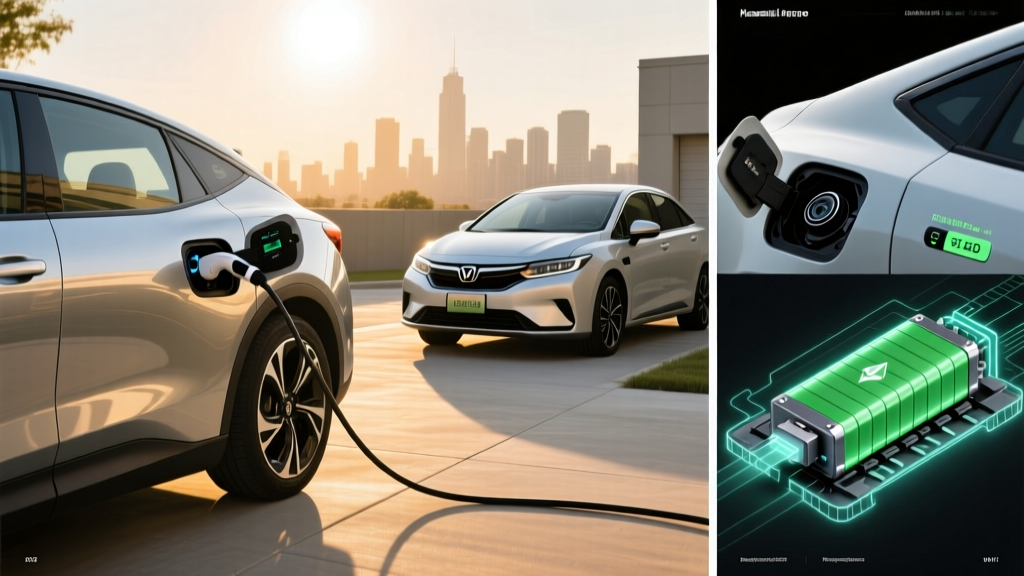
If you're researching the plug in Highlander, charging logistics will determine whether the PHEV makes sense for your household. Here's what to expect:
| Charging Level | Power (kW) | Time to Full Charge (0–100%) | Where |
|---|---|---|---|
| Level 1 (120V household outlet) | ~1.4 kW | ~12–14 hours | Any standard outlet |
| Level 2 (240V home charger) | ~3.3 kW (vehicle-limited) | ~5.5 hours | Home garage, workplace |
| DC Fast Charging | Not supported | N/A | N/A |
A critical detail: the Highlander PHEV's onboard charger is capped at approximately 3.3 kW. Even if you plug into a 7.2 kW or 11.5 kW Level 2 station, the vehicle will only accept 3.3 kW. This means a full charge from empty takes roughly 5.5 hours regardless of charger capacity.
The PHEV does not support DC fast charging. This is typical for PHEVs with smaller batteries — the 18.1 kWh pack doesn't justify the cost and weight of DC fast-charge hardware. For most owners, overnight Level 2 charging at home is the intended workflow.
Level 2 Home Charger Installation Cost Estimate
| Item | Cost Range |
|---|---|
| Level 2 charger (hardware) | $300–$700 |
| Electrician labor (240V circuit run) | $500–$2,000 |
| Electrical panel upgrade (if needed) | $1,500–$3,000 |
| Permit | $50–$200 |
| Total (typical, no panel upgrade) | $850–$2,900 |
Final cost depends on your home's existing electrical capacity, panel amperage, and the distance from panel to charger location. Always get a quote from a licensed electrician.
Pricing, Trims, and Federal Tax Credit Eligibility
The 2026 Highlander Hybrid starts at approximately $40,970 (LE FWD) and climbs to roughly $52,000 for the Platinum AWD trim. The Highlander PHEV, offered in limited trims (typically XLE and above), starts around $48,500.
Federal Tax Credit (§30D) for the Highlander PHEV
The Highlander PHEV may qualify for the federal plug-in vehicle tax credit under IRS §30D rules, but eligibility is not guaranteed for every buyer. Key requirements for 2026:
- MSRP cap: SUVs must have an MSRP at or below $80,000 — the Highlander PHEV qualifies.
- Buyer income cap: Modified adjusted gross income must not exceed $150,000 (single), $225,000 (head of household), or $300,000 (joint filers).
- Battery sourcing: Critical minerals and battery components must meet phased-in domestic-content thresholds that tighten annually. Toyota's supply chain compliance varies by model year — verify with your dealer at point of sale.
- Point-of-sale transfer: Eligible buyers can transfer the credit to the dealer for an immediate price reduction at purchase, rather than waiting to claim it on their tax return.
- Credit amount: Up to $7,500 ($3,750 for critical minerals + $3,750 for battery components), depending on which sourcing thresholds the vehicle meets.
The conventional Highlander Hybrid (HEV) does not qualify for the §30D federal tax credit, as it cannot be plugged in. Some states and utilities offer separate rebates for conventional hybrids — check your local programs.
Battery Warranty, Reliability, and Replacement Costs
Toyota Hybrid Battery Warranty
Hybrid battery: 10 years / 150,000 miles (whichever comes first), transferable to subsequent owners.
Hybrid system components: 8 years / 100,000 miles.
Powertrain: 5 years / 60,000 miles.
Toyota's hybrid reliability track record is among the strongest in the industry. The Prius, now in its fifth generation, has demonstrated that Toyota's hybrid battery packs routinely last 200,000+ miles with minimal degradation. The Highlander Hybrid uses a proven nickel-metal hydride (NiMH) pack in the HEV and a lithium-ion pack in the PHEV, both managed by Toyota's conservative thermal management system that avoids extreme states of charge.
Battery Replacement Cost: What If It Fails?
Out-of-warranty hybrid battery replacement for the Highlander Hybrid typically costs $3,000–$5,000 including labor at a dealership. The PHEV's larger lithium-ion pack is more expensive: expect $6,000–$9,000 for a full replacement. However, given Toyota's 10-year/150,000-mile warranty and historical durability data, most owners will never face this expense. Third-party refurbishment services are also emerging, offering reconditioned packs for 40–60% less than OEM new.
For context, IIHS has consistently rated the Highlander highly for safety, and Toyota's overall brand reliability rankings from Consumer Reports and J.D. Power remain top-tier, reducing long-term ownership risk.
Who Should Buy the Hybrid, PHEV, or Skip to a Full EV?
Choose the Highlander Hybrid (HEV) If:
- You don't have access to home or workplace charging
- You want 35+ MPG with zero behavior change — no plugging in, no range planning
- You drive a mix of city and highway and want proven, simple reliability
- You want the lowest purchase price among electrified Highlandlanders
Choose the Plug-In Highlander (PHEV) If:
- You have a garage or driveway where you can install a Level 2 charger
- Your daily commute is under 30 miles round-trip (you'll drive mostly on electricity)
- You want the option of electric commuting but need 500+ mile road-trip range without charging stops
- You qualify for the §30D tax credit, narrowing the price gap with the HEV
Choose a Full EV (like the Toyota bZ4X or Kia EV9) If:
- You have reliable home charging and your daily driving is under 250 miles
- You want zero tailpipe emissions and the lowest per-mile fuel cost
- You're ready to plan around DC fast-charging on road trips
- You want to eliminate oil changes and engine maintenance entirely
Highlander Hybrid Pros
- 36 MPG combined in a three-row SUV
- No plug-in needed — seamless ownership
- 10-year/150,000-mile battery warranty
- Strong resale value and reliability record
- 3,500-lb towing capacity
Highlander Hybrid Cons
- Modest 243 hp — adequate but not quick
- No federal tax credit for the HEV
- Third-row space tight for adults on long trips
- eCVT drone under hard acceleration
Highlander PHEV Pros
- 30 miles electric-only for daily commuting
- 302 hp — strongest Highlander powertrain
- Up to $7,500 federal tax credit (if eligible)
- 530+ mile total range eliminates road-trip anxiety
Highlander PHEV Cons
- ~$7,500 price premium over HEV before credit
- 3.3 kW onboard charger limits Level 2 speed
- No DC fast charging
- Electric range drops significantly in cold weather
Frequently Asked Questions
How many MPG does the Toyota Highlander Hybrid get?
The 2026 Highlander Hybrid FWD is EPA-rated at 36 city / 35 highway / 36 combined MPG. The AWD variant drops by 1 MPG across the board to 35/34/35. Real-world city driving often yields 37–39 MPG thanks to Toyota's regenerative braking system, while sustained highway speeds above 75 mph typically return 31–33 MPG.
How far can the plug-in Highlander go on electric only?
The Highlander PHEV has an EPA-rated electric-only range of 30 miles. In real-world conditions, expect 25–28 miles in moderate temperatures and 20–23 miles in freezing weather or at highway speeds. Once the battery is depleted, the vehicle seamlessly switches to hybrid mode at ~35 MPG combined.
Does the Highlander Hybrid need to be plugged in?
No. The conventional Highlander Hybrid (HEV) charges its small battery entirely through regenerative braking and the gasoline engine. You fuel it like any other car — just with better MPG. Only the PHEV variant requires (or benefits from) plugging in.
Does the Highlander PHEV qualify for a federal tax credit?
It may qualify for up to $7,500 under IRS §30D, depending on your income (must be under $150K single / $300K joint), the vehicle's battery sourcing compliance, and its MSRP (must be under $80,000 for SUVs). The credit can be transferred to the dealer at point of sale for an immediate price reduction. Verify current eligibility with your dealer and a tax professional, as sourcing rules tighten annually.
Is the Highlander Hybrid reliable, and what does battery replacement cost?
Toyota's hybrid systems have an exceptional reliability record spanning over two decades. The hybrid battery is warranted for 10 years / 150,000 miles. Out-of-warranty replacement costs approximately $3,000–$5,000 for the HEV and $6,000–$9,000 for the PHEV. Based on historical data from Prius and Camry Hybrid fleets, most batteries last well beyond 200,000 miles with minimal degradation.
Can the Highlander PHEV DC fast charge?
No. The Highlander PHEV only accepts AC charging at up to 3.3 kW via Level 1 (120V) or Level 2 (240V). A full Level 2 charge takes approximately 5.5 hours. DC fast charging is not available — this is standard for PHEVs with smaller battery packs.
Hybrid vs. PHEV vs. full EV — which Highlander should I choose?
If you lack home charging, the HEV is the clear choice — 36 MPG with no lifestyle change. If you can charge at home and commute under 30 miles daily, the PHEV lets you drive mostly electric on weekdays while keeping gas-powered road-trip flexibility. If you're ready to go fully electric, consider dedicated EVs like the Kia EV9 or Toyota bZ4X for lower running costs and zero tailpipe emissions, but accept that road trips require DC fast-charging planning.