Quick Verdict: The Platinum Highlander Hybrid at a Glance
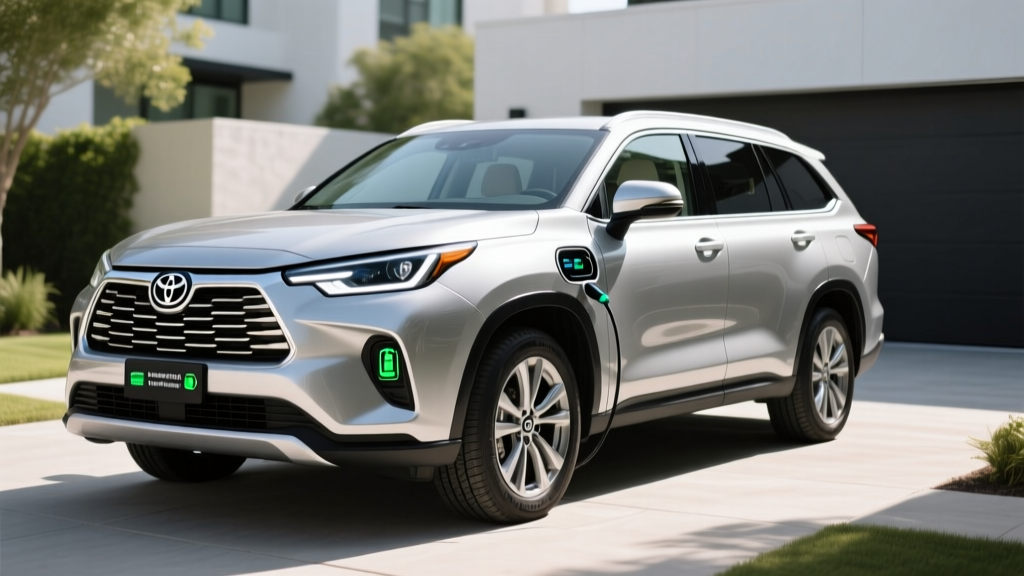
The 2020-23 Toyota Highlander Hybrid Platinum sits at the top of Toyota's three-row hybrid SUV lineup, pairing a 2.5-liter four-cylinder engine with front and rear electric motors for a combined 243 horsepower. For buyers specifically searching for the Highlander Hybrid Platinum with the front camera grille — the integrated housing for Toyota Safety Sense 2.0/2.5+ sensors — this trim delivers the most complete driver-assistance and luxury package Toyota offered in this generation.
As a conventional hybrid (HEV), the Highlander Hybrid requires no plug-in charging. It generates electricity through regenerative braking and its gasoline engine, storing energy in a compact nickel-metal hydride (NiMH) traction battery. The result: an EPA-estimated 35 MPG combined that holds remarkably steady in real-world driving — a rarity among three-row SUVs.
| Specification | 2020-23 Highlander Hybrid Platinum |
|---|---|
| Powertrain | 2.5L I4 + 2 electric motors (FWD) / 3 motors (AWD) |
| Combined Horsepower | 243 hp |
| EPA MPG (City / Hwy / Combined) | 35 / 35 / 35 (FWD) · 35 / 34 / 35 (AWD-i) |
| Traction Battery | 1.6 kWh NiMH (sealed, self-charging) |
| Drivetrain | FWD or Electronic On-Demand AWD |
| 0-60 mph | ~7.8 seconds |
| Towing Capacity | 3,500 lbs |
| Cargo Volume (behind 3rd / 2nd / 1st row) | 16.1 / 48.4 / 84.3 cu ft |
| Original MSRP (Platinum AWD) | $50,665 (2020) → $53,075 (2023) |
| Powertrain Warranty | 5 yr / 60,000 mi |
| Hybrid Battery Warranty | 10 yr / 150,000 mi (2020+) models |
EPA MPG vs. Real-World Fuel Economy
The EPA rates the Highlander Hybrid at 35 MPG city, 35 MPG highway, and 35 MPG combined for front-wheel-drive models. The Electronic On-Demand AWD (AWD-i) variant drops highway slightly to 34 MPG, keeping combined at 35.
This flat city-highway split is a hallmark of Toyota's Hybrid Synergy Drive system. Unlike turbocharged gas engines that guzzle fuel in stop-and-go traffic, the Highlander Hybrid leans heavily on its electric motors at low speeds, capturing energy through regenerative braking. The result is that city driving doesn't penalize efficiency the way it does in a conventional gas SUV.
Real-World MPG Expectations
Owner-reported data on Fuelly and Edmunds forums consistently shows the 2020-23 Highlander Hybrid averaging 30-34 MPG in mixed driving. Several factors pull real-world numbers below the EPA sticker:
- Highway cruising at 75+ mph: Aerodynamic drag dominates, and the hybrid system offers less advantage. Expect 28-31 MPG on flat interstate at 75-80 mph.
- Cold weather (below 35°F): The engine runs more frequently to heat the cabin and warm the catalytic converter, dropping observed MPG to 27-30 in winter.
- Mountain terrain: Sustained climbs stress the 2.5L engine; descents recover energy through regen but rarely fully offset uphill consumption.
- City/suburban driving (25-50 mph): This is where the hybrid shines. Many owners report 36-40 MPG in warm-weather city loops.
| Driving Scenario | Expected MPG |
|---|---|
| EPA Combined (sticker) | 35 |
| Warm-weather city (under 45 mph) | 36-40 |
| Mixed suburban/commute | 31-34 |
| Highway (70-80 mph, flat) | 28-31 |
| Cold-weather mixed (under 35°F) | 27-30 |
| Towing (light trailer, ~2,500 lbs) | 18-22 |
For a 1,200-mile monthly commute, the difference between 35 MPG (Highlander Hybrid) and 24 MPG (comparable gas-only three-row SUV) saves roughly 16 gallons per month — about $50-60 at current fuel prices.
The Front Camera Grille: What Platinum Buyers Get
The "front camera grille" referenced in many buyer searches refers to the integrated sensor housing embedded in the Highlander Platinum's upper grille. This module contains the monocular camera and millimeter-wave radar that power Toyota Safety Sense 2.5+ (2021-23 models) or TSS 2.0 (2020 models).
On the Platinum trim, this system enables:
- Pre-Collision System with Pedestrian Detection: Forward camera and radar identify vehicles, cyclists, and pedestrians, applying automatic braking.
- Full-Speed Range Dynamic Radar Cruise Control: Adaptive cruise that works down to 0 mph in traffic — a Level 1 SAE automation feature.
- Lane Departure Alert with Steering Assist and Lane Tracing Assist: Keeps the vehicle centered in marked lanes.
- Road Sign Assist: Camera recognizes speed limit, stop, and yield signs, displaying them on the multi-information display.
The Platinum also adds a 360-degree bird's-eye view camera with perimeter scan — separate from the front grille camera — which is invaluable when maneuvering this 195-inch SUV in tight parking situations.
Important note: These are Level 1-2 driver-assistance features. The driver must remain fully engaged, hands on the wheel, eyes on the road. This is not autonomous or self-driving capability.
Hybrid Powertrain Deep Dive: 243 HP and How It Works
The 2020-23 Highlander Hybrid uses Toyota's fourth-generation Hybrid Synergy Drive, pairing a 2.5-liter Atkinson-cycle inline-four (186 hp, 175 lb-ft) with electric motors:
- Front motor/generator: Integrated into the transaxle, provides primary electric drive and regenerative braking.
- Rear motor (AWD-i models): A 54-hp independent electric motor on the rear axle — no mechanical driveshaft. Engages automatically when slip is detected or during hard acceleration.
- NiMH traction battery: 1.6 kWh capacity, located under the second-row seats. This is a sealed, self-charging system — no plug, no charging cable.
Combined system output is 243 horsepower. The CVT (continuously variable transmission) delivers smooth, stepless acceleration. The 0-60 mph time of approximately 7.8 seconds is adequate for merging and passing, though not quick by turbocharged V6 standards. The trade-off is efficiency: the Highlander Hybrid sips fuel where a 3.5L V6 would gulp it.
HEV vs. PHEV vs. EV: Where the Highlander Hybrid Fits
| Factor | Highlander Hybrid (HEV) | Plug-In Hybrid (e.g., RAV4 Prime) | Battery EV (e.g., Tesla Model X) |
|---|---|---|---|
| Plug-in charging needed? | No — self-charging | Yes — 120V or 240V | Yes — Level 2 or DC fast |
| Electric-only range | ~1 mile at low speed | 30-42 miles typical | 250-350+ miles |
| Total range | ~600 miles (17.1-gal tank) | ~450-550 miles combined | 250-350 miles |
| Fuel/energy cost per mile | ~$0.09 (at $3.30/gal) | ~$0.04 electric / $0.09 gas | ~$0.04-0.06 (home charging) |
| Home charging install | None required | $500-2,000 (Level 2) | $800-3,000+ (Level 2, 40-60A) |
| Federal tax credit | Not eligible (§30D is BEV/PHEV only) | Up to $7,500 (if eligible) | Up to $7,500 (if eligible) |
| Best for | No garage/outlet access; long trips | Short commute + garage outlet | Home charging + daily driving |
The Highlander Hybrid is the right call if you lack reliable access to a charging outlet (apartment dwellers, street parkers) or regularly take road trips exceeding 300 miles where charging infrastructure is sparse. If you have a garage with a 240V outlet and a commute under 40 miles, a PHEV like the Toyota RAV4 Prime (42 miles electric-only) or a full EV may save more on fuel. However, no current PHEV or EV matches the Highlander's three-row seating capacity at this price point — the Kia EV9 is the closest electric alternative but starts above $55,000 and offers less total cargo room.
Reliability, Battery Lifespan, and Replacement Cost
Toyota's hybrid systems are among the most proven in the industry, with over 25 years of production data since the original Prius. The Highlander Hybrid's NiMH traction battery is smaller and less stressed than a full EV battery — it operates within a narrow state-of-charge window (roughly 40-80%), which significantly reduces degradation.
Hybrid Battery Warranty
For 2020 and newer Toyota hybrids, the hybrid battery warranty is 10 years or 150,000 miles (whichever comes first), transferable to subsequent owners. This was extended from the previous 8-year/100,000-mile coverage. Toyota covers battery replacement if capacity drops below a defined threshold during the warranty period.
Based on Prius and Camry Hybrid fleet data, Toyota's NiMH hybrid batteries routinely last 150,000-200,000+ miles before significant capacity loss. The Highlander Hybrid's battery is under less thermal stress than earlier generations thanks to improved cooling.
Out-of-Warranty Replacement Cost
If the hybrid battery fails outside warranty coverage:
- New OEM battery (Toyota dealer): $3,000-$4,500 installed
- Remanufactured battery: $1,500-$2,500 installed
- Individual cell/module replacement (specialty hybrid shops): $500-$1,200
These costs are far lower than full EV battery replacements ($10,000-$20,000+) because the Highlander Hybrid's 1.6 kWh battery is a fraction of the size. Many owners never need a replacement within typical ownership periods.
Toyota's warranty documentation confirms that the hybrid system components (inverter, control module, battery) are all covered under the 10-year/150,000-mile hybrid warranty, not just the battery cells.
Pricing and Tax Credit Eligibility
The 2020-23 Highlander Hybrid Platinum was Toyota's top trim, with original MSRPs climbing each model year:
- 2020 Platinum AWD: $50,665
- 2021 Platinum AWD: $51,465
- 2022 Platinum AWD: $52,275
- 2023 Platinum AWD: $53,075
On the used market (as of early 2026), expect to pay $36,000-$48,000 for a 2020-23 Platinum Hybrid depending on mileage and condition.
Federal Tax Credit Status
The conventional Highlander Hybrid (HEV) does not qualify for the IRS §30D Clean Vehicle Credit. This credit applies only to battery electric vehicles (BEVs) and plug-in hybrids (PHEVs) that meet battery sourcing, critical mineral, MSRP cap, and buyer income requirements. Since the Highlander Hybrid cannot be plugged in, it is classified as a standard hybrid and is ineligible for the $7,500 federal credit.
Some states offer separate rebates for conventional hybrids, though these are increasingly rare as incentive programs shift toward plug-in vehicles. Check your state's energy office or Alternative Fuels Data Center for current local programs.
§30D Credit — Why the Highlander Hybrid Doesn't Qualify
- ❌ Vehicle must be a BEV or PHEV with ≥4 kWh battery and plug-in capability
- ❌ Highlander Hybrid has 1.6 kWh battery, no plug — classified as HEV
- ✅ The Highlander PHEV (if Toyota releases one) could qualify, pending MSRP and sourcing rules
- ✅ Used EV credit (§25E): Up to $4,000 for qualifying used BEVs/PHEVs — still excludes HEVs
Who Should Buy the Highlander Hybrid Platinum
Pros
- 35 MPG combined in a three-row SUV — class-leading efficiency
- No plug-in charging required; no range anxiety on long trips
- Toyota Safety Sense 2.5+ standard on Platinum with front camera grille
- 10-year / 150,000-mile hybrid battery warranty
- Strong resale value; Toyota hybrid reliability track record
- AWD-i provides competent all-weather traction without fuel penalty
- Bird's-eye view camera (Platinum exclusive) aids parking
Cons
- 243 hp feels modest for a 4,500-lb SUV; passing at highway speed requires planning
- No federal tax credit eligibility (HEV, not PHEV)
- Third row is tight for adults on long trips (33.5" legroom)
- CVT drone under hard acceleration
- Platinum trim pushes $53K+ MSRP; value proposition narrows vs. Limited
- Infotainment (2020-22) uses older Toyota interface; 2023 model year improved
- No DC fast charging or EV-only driving capability
Choose the Highlander Hybrid Platinum If:
- You need three rows and can't install a home charger (apartment, no garage).
- You drive 15,000+ miles per year and want to minimize fuel costs without changing driving habits.
- You take regular road trips (400-600 miles) where charging stops would add significant time.
- You prioritize long-term reliability and low maintenance costs over acceleration performance.
Consider a PHEV or EV Instead If:
- You have a garage with a 240V outlet and a daily commute under 40 miles (a PHEV covers most driving on electricity).
- You want to claim the $7,500 federal tax credit (requires BEV or PHEV).
- You only need two rows of seats (opens up RAV4 Prime, Model Y, and other options).
- Performance matters more than efficiency (EVs deliver instant torque; this hybrid doesn't).
Frequently Asked Questions
How many MPG does the 2020-23 Highlander Hybrid actually get?
The EPA rates it at 35/35/35 MPG (city/highway/combined) for FWD and 35/34/35 for AWD-i. In real-world mixed driving, most owners see 30-34 MPG. City driving at moderate speeds can push above 36 MPG, while sustained 80-mph highway driving and cold weather can drop it to 27-30 MPG.
Does the Highlander Hybrid need to be plugged in?
No. The Highlander Hybrid is a conventional hybrid (HEV). It charges its 1.6 kWh battery through regenerative braking and the gasoline engine. There is no plug, no charging cable, and no electric-only driving range beyond very low-speed creeping (~1 mile at under 25 mph).
How long will the hybrid battery last and what does replacement cost?
Toyota's NiMH hybrid batteries typically last 150,000-200,000+ miles. The 2020+ Highlander Hybrid carries a 10-year / 150,000-mile hybrid battery warranty. Out-of-warranty replacement costs $1,500-$4,500 depending on whether you choose remanufactured or new OEM — far less than a full EV battery.
Does the Highlander Hybrid qualify for any federal tax credit?
No. The IRS §30D Clean Vehicle Credit applies only to plug-in vehicles (BEVs and PHEVs). The Highlander Hybrid is a conventional HEV with no plug-in capability and is ineligible for the $7,500 federal credit or the $4,000 used-EV credit. Some states may offer small hybrid rebates — check your local programs.
What is the front camera grille on the Platinum trim?
The front camera grille houses the monocular camera and millimeter-wave radar sensors that power Toyota Safety Sense (pre-collision braking, adaptive cruise control, lane tracing, road sign recognition). It's a distinguishing visual feature of the Platinum and Limited trims and is integral to the vehicle's driver-assistance suite. If replacing the grille after front-end damage, sensor recalibration at a Toyota dealer is required.
Is the Highlander Hybrid good for towing?
It's rated for 3,500 pounds — adequate for a small boat, utility trailer, or a pair of jet skis. However, towing significantly reduces fuel economy to roughly 18-22 MPG. For heavier towing (5,000+ lbs), you'd need to look at a body-on-frame SUV like the Toyota Sequoia Hybrid (9,000-lb rating) or a truck.
How does the Highlander Hybrid compare to a PHEV minivan like the Chrysler Pacifica Hybrid?
The Pacifica Hybrid is a plug-in hybrid with 32 miles of electric-only range and qualifies for some incentives. It offers more interior space and sliding doors. The Highlander Hybrid delivers similar total MPG (35 vs. 30 combined gas-only for the Pacifica Hybrid once the battery depletes), doesn't require plug-in access, and offers SUV styling and higher ground clearance. The choice depends on whether you can charge at home and prefer minivan practicality vs. SUV versatility.