Quick Verdict: The Highlander Hybrid in 2026
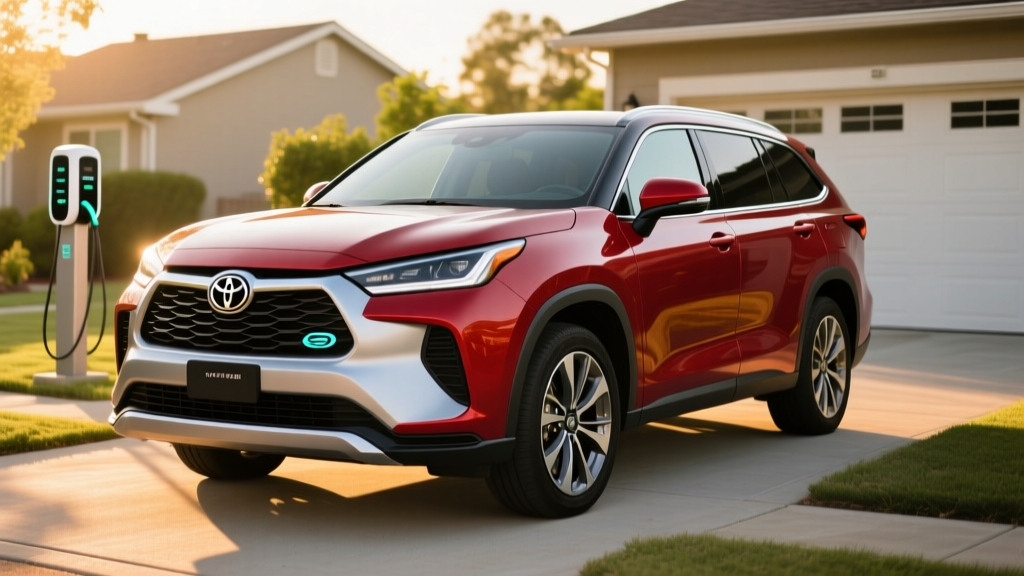
The Toyota Highlander Hybrid occupies a specific niche that few vehicles can fill: a three-row, seven-passenger SUV that returns mid-size sedan fuel economy without ever needing a plug. For 2026, Toyota continues its proven 2.5-liter four-cylinder hybrid powertrain across the Highlander lineup, delivering an EPA-estimated 35 MPG combined — a figure that holds up remarkably well in real-world mixed driving and even improves in city conditions thanks to regenerative braking.
If you've been searching for a Highlander Hybrid and wondering whether it makes sense versus a plug-in hybrid, a full electric SUV, or a conventional gas model, this guide breaks down every number that matters: real-world MPG, powertrain specs, battery longevity, pricing by trim, and the ownership math that determines whether this is the right three-row for your garage.
| Spec | Value |
|---|---|
| Powertrain | 2.5L 4-cyl + 2 electric motors (AWD-i) or 3 motors (available) |
| Combined Horsepower | 243 hp |
| EPA MPG (City / Hwy / Combined) | 35 / 35 / 35 (FWD) · 35 / 34 / 35 (AWD) |
| Drivetrain | FWD or electronic AWD (AWD-i) |
| Seating | 7 passengers (3 rows) |
| Cargo Volume (behind 3rd / 2nd / 1st row) | 16.1 / 48.4 / 84.3 cu ft |
| Towing Capacity | 3,500 lbs (hybrid) |
| Hybrid Battery | ~1.6 kWh NiMH (self-charging, no plug) |
| 0–60 mph | ~7.8 seconds |
| Starting MSRP (LE FWD) | $42,220 |
| Hybrid Battery Warranty | 10 years / 150,000 miles |
HEV vs. PHEV: What the Highlander Hybrid Actually Is
Before diving deeper, it's critical to understand what the Highlander Hybrid is — and what it isn't. This is a conventional hybrid electric vehicle (HEV), not a plug-in hybrid (PHEV). That distinction changes everything about how you own it.
| Feature | Highlander Hybrid (HEV) | Typical PHEV SUV (e.g., RAV4 Prime) | Full EV (e.g., Kia EV9) |
|---|---|---|---|
| Plug-in charging required? | No — self-charging via regen + engine | Yes — Level 1 or Level 2 | Yes — Level 2 or DC fast |
| Electric-only range | ~1 mile at low speeds | 30–42 miles | 250–310+ miles |
| Total range | ~600+ miles (17.9-gal tank) | ~500+ miles combined | 250–310 miles |
| Fuel/energy source | Gasoline only | Gasoline + electricity | Electricity only |
| Home charger needed? | No | Recommended | Essential |
| Federal tax credit (§30D)? | No | Up to $7,500 (if eligible) | Up to $7,500 (if eligible) |
The Highlander Hybrid's small ~1.6 kWh nickel-metal hydride (NiMH) battery pack charges itself through regenerative braking and the gasoline engine. You never plug it in. The electric motors assist the gas engine during acceleration, enable brief low-speed electric-only crawling, and recapture energy during deceleration. The result is dramatically better fuel efficiency than a gas-only equivalent without any change to your fueling routine.
Key takeaway: If you want electric-only commuting and have access to home charging, a PHEV like the Toyota RAV4 Prime (42 miles electric-only) or a full EV may serve you better. If you want maximum range, zero charging infrastructure requirements, and three rows, the Highlander Hybrid is purpose-built for that use case.
Fuel Economy: EPA Ratings vs. Real-World MPG
| Configuration | City MPG | Highway MPG | Combined MPG |
|---|---|---|---|
| FWD (LE, XLE, Limited) | 36 | 35 | 35 |
| AWD-i (all trims available) | 35 | 34 | 35 |
Source: EPA Fuel Economy
The Highlander Hybrid's EPA ratings are notable for their consistency — unlike most vehicles that sacrifice city MPG for highway efficiency (or vice versa), the hybrid system delivers nearly identical numbers across all driving conditions. This is because the electric motor does the heavy lifting in stop-and-go traffic, where conventional engines are least efficient.
Real-World MPG: What Owners Actually Report
Based on aggregated owner data from FuelEconomy.gov's My MPG tracker and long-term fleet testing, real-world Highlander Hybrid fuel economy typically falls in these ranges:
- City / suburban driving: 33–38 MPG (often exceeds EPA in warm climates with frequent stops)
- Highway cruising (70–75 mph): 30–34 MPG (slightly below EPA — hybrids lose their city advantage at sustained high speeds)
- Mixed driving (50/50): 32–36 MPG
- Cold weather (below 30°F): 28–32 MPG (engine runs more to heat cabin and maintain battery temperature)
The Highlander Hybrid tends to beat its EPA estimate in warm-weather city driving, where regenerative braking is most effective and the engine can shut off frequently. Highway-only road trips will see lower numbers — expect around 30–32 MPG at 75 mph with A/C running and a full load of passengers and cargo. This is still a massive improvement over the gas-only Highlander's 24 MPG combined EPA rating.
With a 17.9-gallon fuel tank, real-world total range typically spans 540 to 630 miles depending on conditions — enough for most families to go two weeks between fill-ups.
Powertrain Deep Dive: 243 HP Hybrid System
The 2026 Highlander Hybrid uses Toyota's fourth-generation hybrid system, pairing a 2.5-liter Dynamic Force four-cylinder engine (186 hp, 175 lb-ft on its own) with front and rear electric motors. Combined system output is 243 horsepower.
Here's how the powertrain breaks down:
- Gasoline engine: 2.5L inline-4, Atkinson cycle, 186 hp / 175 lb-ft
- Front electric motor: Integrated into transaxle, provides primary electric assist and regeneration
- Rear electric motor (AWD-i): 40 kW motor powering rear axle on demand — no mechanical driveshaft
- Hybrid battery: ~1.6 kWh NiMH pack, located under the second-row seats
- Transmission: eCVT (planetary gearset, not a belt-driven CVT — no rubber-band feel)
The AWD-i system is worth noting: it's an electronic all-wheel-drive system with no physical connection between the front and rear axles. The rear motor engages automatically when the system detects slip, during hard acceleration, or in low-traction conditions. It's adequate for rain, light snow, and gravel roads, but this is not a serious off-road system. For deep snow or towing on slippery grades, the 3,500-pound hybrid towing capacity is also lower than the gas Highlander's 5,000-pound rating — a trade-off of the hybrid powertrain's design.
Acceleration to 60 mph takes approximately 7.8 seconds — adequate for merging and passing but noticeably less urgent than the turbocharged gas Highlander or competitors like the Kia Sorento Hybrid (261 hp). The eCVT delivers smooth, linear power delivery without the shift shock of a traditional automatic, though some drivers notice a drone under hard acceleration as the engine holds at peak RPM.
Pricing, Trims, and Tax Credit Eligibility
The 2026 Highlander Hybrid is available across four core trims. Pricing below reflects MSRP before destination charges:
| Trim | FWD MSRP | AWD-i MSRP | Key Features |
|---|---|---|---|
| LE | $42,220 | $43,620 | 8" touchscreen, TSS 3.0, tri-zone climate |
| XLE | $46,070 | $47,470 | SofTex seats, sunroof, power liftgate, 20" wheels |
| Limited | $50,470 | $51,870 | Leather, 12.3" screen, JBL audio, heated/ventilated front seats |
| Platinum | $53,920 | $55,320 | Panoramic roof, head-up display, 360° camera, panoramic moonroof |
Does the Highlander Hybrid Qualify for a Federal Tax Credit?
No. The Highlander Hybrid does not qualify for the IRS §30D Clean Vehicle Credit. This credit — up to $7,500 for new vehicles — is available only for plug-in electric vehicles (BEVs) and plug-in hybrids (PHEVs) with a battery capacity of at least 7 kWh that meet critical mineral and battery component sourcing requirements, MSRP caps, and buyer income limits (see IRS §30D guidelines).
Because the Highlander Hybrid is a conventional HEV with a ~1.6 kWh battery and no plug-in capability, it does not meet the statutory definition of a "clean vehicle" under current federal law. There is no federal tax credit for conventional hybrids as of 2026.
State incentives: A handful of states offer modest rebates or HOV lane access for hybrids, but these vary widely by jurisdiction. Check your state's energy or DMV website for current programs — do not assume hybrid eligibility without confirming locally.
Battery Longevity, Warranty, and Replacement Cost
Toyota Hybrid Battery Warranty: 10 years or 150,000 miles (whichever comes first), covering defects and capacity loss below a defined threshold. This applies to all 2026 Highlander Hybrid models regardless of state (Toyota moved to the 10/150k standard nationwide starting with 2020 models).
Hybrid battery longevity is the single most common concern among first-time hybrid buyers — and it's the area where Toyota has the strongest track record. The Highlander Hybrid's NiMH battery pack is far less stressed than a full EV battery. It operates within a narrow state-of-charge window (roughly 40–80% SoC), never deep-cycling like an EV battery. This dramatically reduces degradation.
How Long Will the Hybrid Battery Last?
Based on data from Toyota's Prius and Camry Hybrid fleets (which use similar NiMH technology), hybrid battery packs routinely exceed 150,000–200,000 miles before requiring replacement. Many first-generation Prius vehicles (2001–2003) are still running on their original packs at 250,000+ miles. The Highlander Hybrid, introduced in 2020, has not yet accumulated enough fleet data for a definitive lifespan estimate, but Toyota's hybrid system engineering is well-proven.
Hybrid Battery Replacement Cost
If the battery does fail outside of warranty:
- Dealer replacement (new OEM pack): $3,000–$4,500 including labor
- Refurbished / reconditioned pack: $1,500–$2,500 from aftermarket suppliers
- Individual cell replacement: $500–$1,200 if only one or two modules have failed (common with NiMH packs — a specialist can replace individual cells rather than the entire pack)
For context, a full EV battery replacement runs $10,000–$20,000+. The Highlander Hybrid's small, conservatively managed NiMH pack is orders of magnitude cheaper to replace and far less likely to need it within typical ownership periods.
Reliability and Safety Ratings
Toyota's hybrid powertrain is among the most reliable in the industry. The 2.5L Dynamic Force engine has fewer moving parts under stress than a turbocharged alternative (no turbo, no high-pressure fuel system complexity), and the eCVT planetary gearset has no belts, clutches, or bands to wear out. Consumer Reports and J.D. Power consistently rate Toyota hybrids at or near the top of their reliability surveys.
Safety technology includes Toyota Safety Sense 3.0 (TSS 3.0) as standard equipment across all trims:
- Pre-Collision System with Pedestrian Detection
- Lane Departure Alert with Steering Assist
- Full-Speed Range Dynamic Radar Cruise Control
- Lane Tracing Assist
- Road Sign Assist
- Proactive Driving Assist (gentle braking/steering support)
Note: TSS 3.0 is a SAE Level 2 driver-assistance system. It requires continuous driver attention and hands-on-wheel engagement. It is not autonomous driving.
The Highlander has earned strong marks from both NHTSA (5-star overall rating in prior model years) and IIHS (Top Safety Pick in recent evaluations). Check the latest scores for the 2026 model year as they become available.
Who Should Buy the Highlander Hybrid?
Pros
- 35 MPG combined — best-in-class for a 3-row SUV
- No plug-in charging needed — zero infrastructure change
- 600+ mile real-world range per tank
- Proven Toyota hybrid reliability with 10yr/150k battery warranty
- Standard TSS 3.0 safety suite
- Strong resale value
Cons
- Modest 243 hp — not the quickest in its class
- 3,500-lb towing limit (gas model tows 5,000 lbs)
- No federal tax credit eligibility
- Third row is tight for adults on long trips
- Engine drone under hard acceleration
- Cargo space behind 3rd row is just 16.1 cu ft
Decision Framework: Is the Highlander Hybrid Right for You?
Choose the Highlander Hybrid if:
- You need three rows and want maximum fuel efficiency without plugging in
- You live in an apartment or lack home charging access (making a PHEV or EV impractical)
- Your annual mileage is high (15,000+ miles/year), amplifying fuel savings
- You want Toyota's hybrid reliability track record and strong resale value
Choose a PHEV (like the RAV4 Prime or Grand Highlander Hybrid) if:
- You have home charging and want 30–40 miles of electric-only commuting
- You want to qualify for the §30D federal tax credit (up to $7,500)
- Most of your daily driving is under 40 miles round-trip
Choose a full EV (like the Kia EV9 or Rivian R1S) if:
- You have reliable home Level 2 charging
- You want zero tailpipe emissions and the lowest per-mile energy cost
- You're ready to plan around DC fast charging for road trips
Ownership Costs: 5-Year Fuel Savings
The Highlander Hybrid's premium over the gas-only Highlander is roughly $1,600–$2,000 depending on trim. Here's how the fuel math works out over five years at 15,000 miles per year:
| Highlander Hybrid (35 MPG) | Highlander Gas AWD (24 MPG) | |
|---|---|---|
| Gallons consumed | 2,143 | 3,125 |
| Fuel cost @ $3.50/gal | $7,500 | $10,938 |
| 5-year fuel savings | ~$3,438 in the Hybrid's favor | |
The hybrid pays for its price premium in roughly 2.5 to 3 years of average driving at current fuel prices. At higher annual mileage or in states with higher gas prices (California, Washington, New York), payback accelerates to under two years. Beyond the fuel savings, the hybrid's lower brake wear (regenerative braking reduces friction brake use by 50%+) and Toyota's reputation for hybrid longevity add to the total-cost-of-ownership advantage.
Frequently Asked Questions
How many MPG does the Highlander Hybrid get?
The 2026 Highlander Hybrid is EPA-rated at 35 MPG combined (36 city / 35 highway for FWD; 35 city / 34 highway for AWD). Real-world results typically range from 30–38 MPG depending on driving conditions — city driving often exceeds the EPA estimate, while sustained highway speeds above 70 mph may return 30–32 MPG.
Does the Highlander Hybrid need to be plugged in?
No. The Highlander Hybrid is a conventional (self-charging) hybrid. Its battery charges through regenerative braking and the gasoline engine. There is no plug, no charging cable, and no need for any charging infrastructure.
Is the Highlander Hybrid a PHEV?
No. The Highlander Hybrid is an HEV (hybrid electric vehicle), not a PHEV (plug-in hybrid electric vehicle). It has no electric-only driving range beyond very low-speed crawling (~1 mile). Toyota does not currently offer a Highlander PHEV in the US market. If you want a Toyota plug-in hybrid SUV, the RAV4 Prime (42 miles electric-only) or the Grand Highlander Hybrid are the closest alternatives.
How reliable is the Highlander Hybrid battery?
Very reliable. Toyota's NiMH hybrid batteries are conservatively managed and routinely last 150,000–200,000+ miles. The battery is covered by a 10-year / 150,000-mile warranty. If replacement is ever needed, a new OEM pack costs approximately $3,000–$4,500, and refurbished options are available for $1,500–$2,500.
Does the Highlander Hybrid qualify for any tax credit?
The Highlander Hybrid does not qualify for the federal §30D Clean Vehicle Credit, which is limited to plug-in vehicles (BEVs and PHEVs) with batteries of 7 kWh or more. Some states may offer minor hybrid incentives, but there is no federal tax benefit for conventional hybrids as of 2026.
How much can the Highlander Hybrid tow?
The Highlander Hybrid is rated to tow up to 3,500 pounds — 1,500 pounds less than the gas-only Highlander's 5,000-pound rating. If you regularly tow a boat or camper above 3,500 pounds, the gas powertrain is the better choice.
Highlander Hybrid vs. Grand Highlander Hybrid — which should I pick?
The Grand Highlander offers more third-row legroom and cargo space behind the third row, plus an available Hybrid MAX powertrain with 362 hp. If third-row comfort for adults and maximum cargo are priorities, the Grand Highlander is worth the ~$2,000–$3,000 price premium. If overall efficiency and a slightly smaller footprint matter more, the standard Highlander Hybrid is the better pick.