Quick Verdict: A Proven Hybrid SUV That Still Holds Up
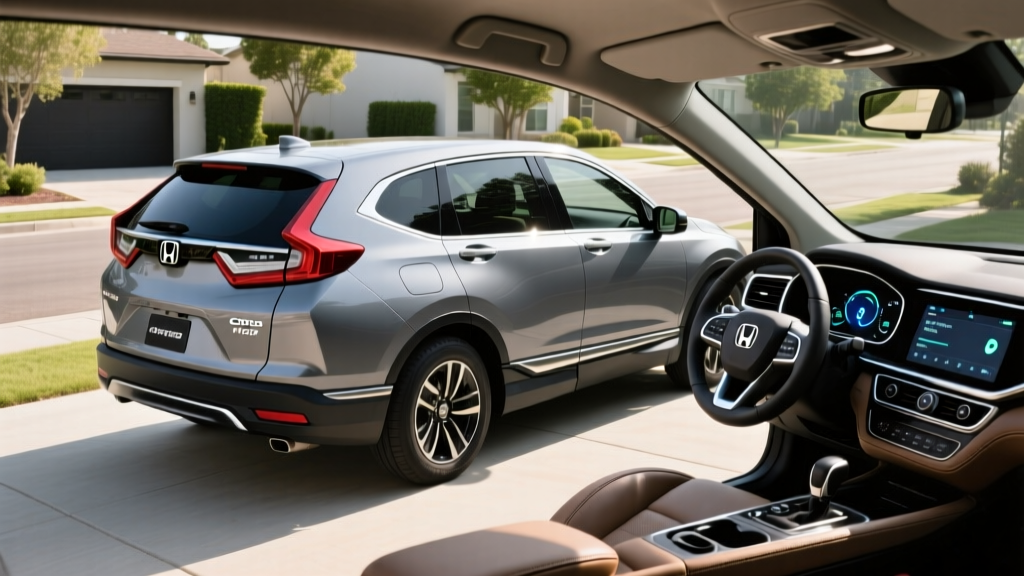
The 2020 Honda CR-V Hybrid was Honda's first hybrid CR-V sold in the United States, arriving as a fuel-sipping alternative to the turbocharged gas model. Built around Honda's two-motor hybrid system paired with a 2.0-liter Atkinson-cycle engine, it delivers an EPA-rated 40 MPG combined — a number that still ranks competitively among compact hybrid SUVs in 2026's used market. If you're shopping for a reliable, no-plug-required hybrid that prioritizes real-world city efficiency and low running costs, the 2020 CR-V Hybrid remains a strong candidate.
This is a conventional hybrid (HEV), not a plug-in hybrid (PHEV). You never plug it in. It recovers energy through regenerative braking and the engine to recharge its small battery pack. That distinction matters for buyers cross-shopping against PHEVs like the Toyota RAV4 Prime or full EVs like the Hyundai Ioniq 5.
A conventional hybrid (HEV) like the 2020 CR-V Hybrid uses a small battery (typically 1–2 kWh) charged only by the engine and regenerative braking. It cannot drive on electric power alone for more than a mile or two at low speeds. You never plug it in.
A plug-in hybrid (PHEV) has a larger battery (typically 10–20 kWh), can be plugged into a wall outlet or charger, and offers 20–40+ miles of electric-only driving before the gas engine kicks in. The CR-V did not receive a PHEV variant in the U.S. market for this model year.
Fuel Economy: EPA Ratings vs. Real-World MPG
| Metric | AWD (all trims) |
|---|---|
| City MPG | 40 |
| Highway MPG | 35 |
| Combined MPG | 40 |
| Fuel Tank Capacity | 14.0 gal |
| Total Range (est.) | ~560 miles |
Source: EPA / fueleconomy.gov
The CR-V Hybrid's city MPG actually matches its combined rating — a hallmark of Honda's two-motor hybrid system, which runs the electric motor more frequently in stop-and-go traffic where it's most efficient. The highway number dips to 35 MPG because at sustained speeds the gasoline engine operates more directly, and the aerodynamic profile of an SUV creates more drag than a sedan.
Owners and independent testers consistently report 36–42 MPG combined in mixed driving. City-heavy commutes often push results above the 40 MPG EPA sticker, while sustained highway trips at 75+ MPH may yield 32–34 MPG. Cold weather (below freezing) typically reduces fuel economy by 5–10% due to increased engine runtime for cabin heat and reduced battery efficiency. Expect roughly 480–560 miles per tank depending on conditions.
Powertrain: How Honda's Two-Motor System Works
| Specification | Value |
|---|---|
| Engine | 2.0L 4-cyl Atkinson-cycle |
| Engine Horsepower | 143 HP @ 6,200 RPM |
| Engine Torque | 129 lb-ft @ 3,500 RPM |
| Electric Motor Output | 181 HP / 232 lb-ft |
| Combined System Output | 212 HP |
| Drivetrain | AWD (standard) |
| Transmission | e-CVT (no traditional gears) |
| 0–60 MPH | ~7.5 seconds |
| Hybrid Battery | ~1.4 kWh lithium-ion |
| Towing Capacity | 1,000 lbs |
Honda's hybrid system operates in three modes without driver input. In EV Drive, the battery powers the electric motor for short low-speed bursts. In Hybrid Drive, the engine spins a generator that feeds electricity to the drive motor — the engine does not mechanically turn the wheels. In Engine Drive, at highway cruising speeds, a lock-up clutch connects the engine directly to the wheels for maximum efficiency. The rear axle is driven by a separate electric motor, giving the CR-V Hybrid standard all-wheel drive without a mechanical driveshaft.
The 212 combined horsepower makes this the most powerful CR-V variant for 2020, outpunching the turbocharged 1.5L gas model's 190 HP. Acceleration feels immediate around town thanks to the electric motor's instant torque, though highway passing above 60 MPH relies more heavily on the engine and loses some urgency.
Trims, Pricing & Tax Credit Eligibility
The 2020 CR-V Hybrid was offered in three trims, all with AWD standard:
| Trim | Original MSRP | Est. Used Price (2026) |
|---|---|---|
| EX | $31,535 | $19,000–$22,500 |
| EX-L | $34,035 | $21,500–$25,000 |
| Touring | $37,135 | $24,000–$28,000 |
Used price ranges are estimates based on 2026 market data for vehicles with 50,000–80,000 miles. Actual prices vary by region, condition, and mileage.
The 2020 Honda CR-V Hybrid does not qualify for the federal §30D new clean vehicle tax credit (up to $7,500). That credit applies only to plug-in electric vehicles (BEVs and PHEVs) meeting battery-sourcing and critical-mineral requirements — not conventional hybrids. It also does not qualify for the up-to-$4,000 used EV credit (§25E), which likewise requires plug-in capability.
Some states or local utilities may offer small rebates for hybrid purchases, but these vary by jurisdiction. Check your state energy office or utility provider for current programs. For federal credit rules, see IRS.gov §30D guidelines.
Reliability, Battery Lifespan & Warranty Coverage
Honda's hybrid powertrain in this generation has proven durable. The two-motor system has fewer moving parts than a traditional automatic transmission — no torque converter, no gear shifts, no clutch packs to wear. The CR-V Hybrid uses a lithium-ion battery pack mounted beneath the rear cargo floor.
- Hybrid Battery: 8 years / 100,000 miles (10 years / 150,000 miles in CARB states — CA, CT, ME, MA, NJ, NY, OR, RI, VT, WA, and others adopting CARB standards)
- Powertrain: 5 years / 60,000 miles
- Bumper-to-Bumper: 3 years / 36,000 miles
For a 2020 model, the original hybrid battery warranty may still be active through 2028 (or 2030 in CARB states) if mileage remains under the cap. Honda's hybrid battery warranty is transferable to subsequent owners, which benefits used buyers.
Battery replacement cost: If the hybrid battery fails outside warranty coverage, replacement typically runs $2,000–$4,000 including parts and labor at a Honda dealer. Independent hybrid specialists may offer refurbished packs for $1,500–$2,500. However, widespread failures on this generation are uncommon. Honda's hybrid batteries are designed to last the life of the vehicle under normal use, and data from high-mileage owners suggests gradual capacity loss rather than sudden failure.
For safety ratings, the 2020 CR-V earned a 5-Star Overall rating from NHTSA and was an IIHS Top Safety Pick when equipped with LED headlights (Touring trim). Honda Sensing — the brand's ADAS suite including adaptive cruise control, lane-keeping assist, and automatic emergency braking — is standard on all trims. This is a SAE Level 2 driver-assistance system, meaning the driver must remain fully engaged at all times.
Who Should Buy the 2020 CR-V Hybrid vs. a PHEV or EV?
The decision between a conventional hybrid, a plug-in hybrid, and a full battery-electric vehicle depends on your driving patterns, charging access, and budget.
Choose the CR-V Hybrid (HEV) If:
- You don't have access to home or workplace charging
- You want maximum simplicity — no plugs, no charging apps, no range planning
- Your budget is under $25,000 on the used market
- You drive 30+ miles daily in mixed city/highway conditions
- You want AWD for snow/rain without the fuel penalty of a gas-only SUV
Consider a PHEV Instead If:
- You have Level 2 home charging and a commute under 30 miles
- You want electric-only daily driving with gas backup for road trips
- You want potential tax credit eligibility (new PHEVs may qualify for §30D)
- Look at: Toyota RAV4 Prime (42 mi EV), Hyundai Tucson PHEV (33 mi EV)
Consider a Full EV Instead If:
- You have reliable home Level 2 charging
- Your daily driving is under 250 miles
- You want the lowest per-mile fuel cost and minimal maintenance
- You want federal tax credits (up to $7,500 on eligible new models)
- Look at: Hyundai Ioniq 5, Tesla Model Y, Chevrolet Equinox EV
Pros and Cons at a Glance
✓ Pros
- 40 MPG EPA combined — excellent for a compact AWD SUV
- 212 HP makes it the quickest CR-V variant of its generation
- Standard AWD with no fuel-economy penalty vs. FWD
- Spacious cargo area (33.5 cu ft rear seats up, 68.5 cu ft folded)
- Honda Sensing ADAS standard on every trim
- Strong reliability record; transferable hybrid battery warranty
- Smooth, quiet operation in EV and Hybrid modes
✗ Cons
- No plug-in option — cannot drive on electric power alone for meaningful distances
- Highway MPG (35) trails some competitors (Toyota RAV4 Hybrid: 39 hwy)
- Engine drone under hard acceleration (e-CVT characteristic)
- 1,000-lb towing capacity — lowest in its class
- No federal tax credit eligibility
- Infotainment system lacks a volume knob and can feel dated
- Road noise is noticeable at highway speeds
Frequently Asked Questions
How many MPG does the 2020 Honda CR-V Hybrid get?
The EPA rates the 2020 CR-V Hybrid at 40 MPG city, 35 MPG highway, and 40 MPG combined. Real-world results typically range from 36–42 MPG combined depending on driving mix. City-heavy driving often exceeds the EPA sticker, while sustained highway driving at high speeds may dip to the low-to-mid 30s.
Does the 2020 CR-V Hybrid need to be plugged in?
No. This is a conventional hybrid (HEV). The battery recharges through regenerative braking and the gasoline engine. There is no plug, no charging cable, and no electric-only driving range to manage. You simply fill up at a gas station like any other vehicle.
How far can the 2020 CR-V Hybrid go on electric power alone?
Only about 1 mile or less at very low speeds (under 25 MPH). The system uses electric assist frequently, but it is not designed for sustained electric-only driving. If you want meaningful electric-only range (25–42 miles), you need a plug-in hybrid like the Toyota RAV4 Prime or a full battery-electric vehicle.
Is the 2020 CR-V Hybrid reliable, and what does a battery replacement cost?
Honda's two-motor hybrid system has a strong reliability record. The hybrid battery is warrantied for 8 years/100,000 miles (10 years/150,000 miles in CARB states), and this coverage transfers to used owners. Out-of-warranty battery replacement typically costs $2,000–$4,000 at a dealer, or $1,500–$2,500 for a refurbished pack from an independent hybrid specialist. Widespread battery failures on this generation are rare.
Does the 2020 Honda CR-V Hybrid qualify for any tax credit?
No. Federal tax credits under §30D (new clean vehicles) and §25E (used clean vehicles) apply only to plug-in electric vehicles — battery-electric vehicles (BEVs) and plug-in hybrids (PHEVs). The CR-V Hybrid is a conventional HEV and does not qualify. Some state or utility programs may offer small hybrid incentives; check your local jurisdiction.
How does the CR-V Hybrid compare to the Toyota RAV4 Hybrid?
The 2020 Toyota RAV4 Hybrid is rated at 41 MPG combined (41 city / 38 highway) with 219 HP, slightly edging the CR-V Hybrid on highway efficiency and power. The RAV4 Hybrid also offers a higher towing capacity (1,750 lbs). The CR-V Hybrid counters with a more refined ride, a slightly more spacious rear seat, and a more intuitive infotainment layout. Both are strong choices — test-driving both back-to-back is the best way to decide.
What maintenance does the CR-V Hybrid require?
Routine maintenance mirrors the gas CR-V: oil changes (every 7,500–10,000 miles with synthetic), tire rotations, brake fluid, and cabin air filters. The hybrid system adds no scheduled maintenance items. Regenerative braking reduces wear on the friction brakes, often extending pad life well beyond 80,000 miles. There is no transmission fluid to change on Honda's e-CVT at normal intervals.