Quick Verdict: The Family Hybrid SUV Benchmark
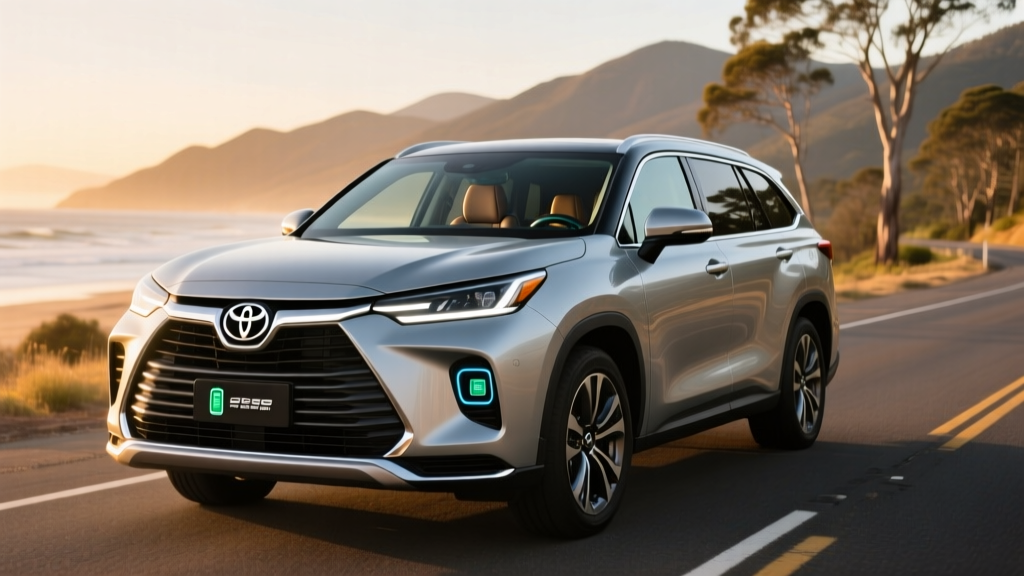
The 2026 Toyota Highlander Hybrid remains one of the most practical three-row SUVs for buyers who want meaningful fuel savings without plugging in. As a conventional hybrid electric vehicle (HEV), it requires zero behavior change — no charging cables, no range planning, no plug-in infrastructure. You simply drive it like any other SUV, and the hybrid system handles the rest. With an EPA-estimated 35 MPG combined, seating for up to eight, and Toyota's proven hybrid reliability, the Highlander Hybrid occupies a specific niche: the buyer who wants to cut fuel costs substantially but isn't ready — or able — to transition to a full battery electric vehicle (BEV).
This guide covers the 2026 Highlander Hybrid's real-world efficiency, powertrain specs, battery longevity, and how it stacks up against its plug-in sibling (the Highlander doesn't currently offer a PHEV variant in the US) and full-electric competitors like the Kia EV9. We'll also clarify federal tax credit eligibility for hybrids under current IRS rules.
HEV vs PHEV vs BEV: Where the Highlander Hybrid Fits
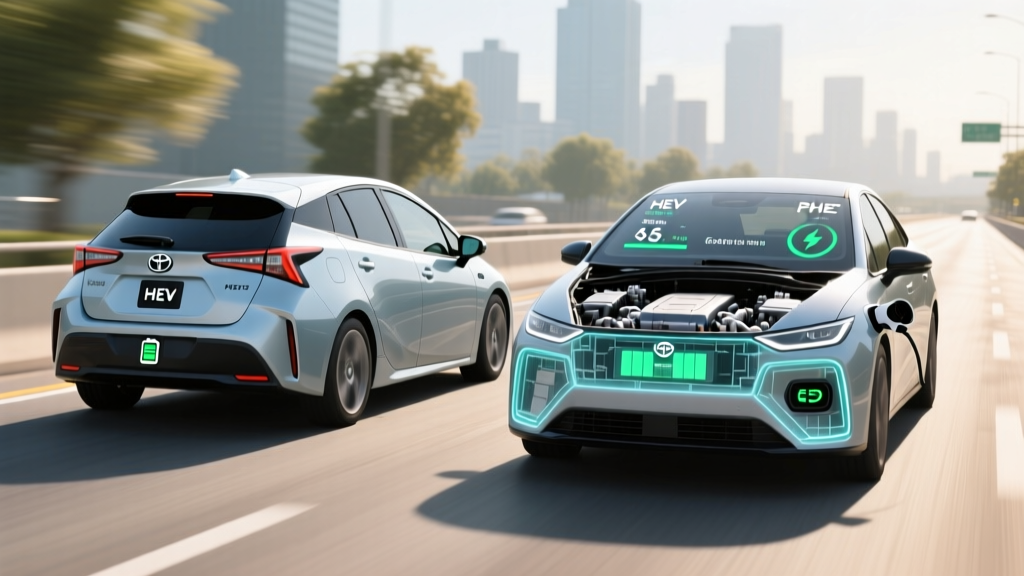
Before diving into specs, it's critical to distinguish between the three electrification levels available in the SUV market today. The Highlander Hybrid is an HEV — a conventional hybrid — and understanding what that means (and doesn't mean) shapes whether it's the right vehicle for your situation.
| Feature | HEV (Highlander Hybrid) | PHEV (e.g., Toyota RAV4 Prime) | BEV (e.g., Kia EV9) |
|---|---|---|---|
| Plug-in required? | No — self-charging via regen & engine | Yes — plug in for electric-only range | Yes — plug in for all driving |
| Electric-only range | ~1 mile at low speed | 35-42 miles typical | 250-310+ miles (full battery) |
| Total range | ~600+ miles (gas tank) | ~550+ miles (electric + gas) | 250-310+ miles (battery only) |
| Fuel/energy cost | Gas, reduced by ~30-40% | Electric for short trips, gas for long | Electric only |
| Home charging needed? | No | Recommended (Level 2) | Essential (Level 2) |
| Federal tax credit (§30D) | Not eligible | Up to $7,500 (if sourcing rules met) | Up to $7,500 (if sourcing rules met) |
| Best for | No home charger, high mileage, simplicity | Short commute + home charger + road trips | Home charger, daily driving, low running cost |
The Highlander Hybrid makes the most sense if you lack access to home or workplace charging, drive a mix of city and highway miles, and want three-row capacity without the complexity or upfront cost of a BEV. If you do have a garage and a short commute, a PHEV like the Toyota RAV4 Prime (which offers 42 miles of electric-only driving) could eliminate gas entirely on weekdays — but the RAV4 Prime is a two-row compact SUV, not a three-row midsize. Toyota does not currently offer a PHEV version of the Highlander in the United States for the 2026 model year.
Fuel Economy: EPA Ratings and Real-World MPG
The 2026 Toyota Highlander Hybrid carries over the powertrain introduced with the fourth generation, using Toyota's Series-Parallel hybrid system. Here's how the EPA rates it, broken down by drivetrain configuration:
| Configuration | City MPG | Highway MPG | Combined MPG |
|---|---|---|---|
| FWD (LE, XLE, Limited) | 36 | 35 | 36 |
| AWD (all trims available) | 35 | 34 | 35 |
Source: EPA Fuel Economy (fueleconomy.gov)
Real-World MPG: What Owners Actually See
Toyota hybrids have a well-documented tendency to exceed their EPA city ratings in stop-and-go driving, where regenerative braking recaptures the most energy. Based on aggregated owner reports and long-term testing from EV and hybrid publications, expect the following real-world results:
- City driving: 34-38 MPG (often matches or slightly exceeds EPA)
- Highway cruising (70-75 mph): 30-33 MPG (aerodynamic drag reduces hybrid advantage at speed)
- Mixed daily commute: 33-36 MPG
- Cold weather (below 30°F): 28-32 MPG (engine runs more to heat cabin and maintain battery temp)
- Mountainous terrain / loaded with cargo: 27-31 MPG
For context, the non-hybrid 2026 Highlander with its turbocharged 2.4-liter four-cylinder achieves approximately 24 MPG combined. The hybrid delivers roughly a 46% improvement in combined efficiency — translating to approximately 200 fewer gallons of gas per year at 15,000 miles driven, or about $600-$750 in annual fuel savings depending on local gas prices.
Powertrain and Performance Specs
| Specification | 2026 Toyota Highlander Hybrid |
|---|---|
| Engine | 2.5L inline-4 Atkinson-cycle |
| Electric motors | 2 (FWD) / 3 (AWD — adds rear motor) |
| Combined horsepower | 243 hp (net system output) |
| Transmission | eCVT (electronically controlled continuously variable) |
| 0-60 mph | ~7.8 seconds (AWD) |
| Drivetrain | FWD or electronic AWD (AWD-i) |
| Towing capacity | 3,500 lbs (all trims) |
| Fuel tank | 17.1 gallons |
| Hybrid battery | 1.87 kWh (sealed NiMH), self-charging |
| Curb weight | ~4,300-4,500 lbs (varies by trim/AWD) |
| Seating | 7 or 8 passengers (bench vs captain's chairs) |
The Highlander Hybrid uses Toyota's fourth-generation hybrid system. The 2.5-liter Atkinson-cycle engine produces 186 hp on its own, supplemented by front-mounted electric motors for a net system output of 243 hp. AWD models add a rear-axle electric motor (40 kW) that provides torque to the rear wheels during acceleration and slippery conditions — this is an electronic AWD system with no mechanical driveshaft.
The eCVT is not a belt-and-pulley CVT like those in some competitors; it uses a planetary gearset to blend engine and motor power seamlessly. The result is smooth, linear acceleration without the rubber-band feel some CVTs produce. The 7.8-second 0-60 time is adequate for merging and passing, though not sporty — this is a family hauler optimized for efficiency, not performance.
Hybrid Battery Longevity, Warranty, and Replacement Cost
Battery longevity is the single most common concern among first-time hybrid buyers. The Highlander Hybrid's 1.87 kWh nickel-metal hydride (NiMH) traction battery is far smaller than a BEV battery pack and operates within a narrow state-of-charge window (roughly 40-80%), which dramatically reduces degradation stress. Toyota has built millions of hybrid vehicles with this architecture since the 1997 Prius, and the long-term data is reassuring.
2026 Highlander Hybrid Battery Warranty
- Hybrid battery warranty: 10 years / 150,000 miles (whichever comes first)
- Hybrid system components: 8 years / 100,000 miles
- Powertrain warranty: 5 years / 60,000 miles
- Basic bumper-to-bumper: 3 years / 36,000 miles
Toyota's hybrid battery warranty is transferable to subsequent owners, which supports strong resale values. Source: Toyota Warranty Guide
Real-World Battery Lifespan Data
Based on fleet data and owner surveys aggregated by hybrid-focused communities and automotive analysts:
- Typical hybrid battery lifespan: 150,000-200,000+ miles before significant capacity loss
- Failure rate within warranty period: Below 2% across Toyota hybrid models
- Out-of-warranty replacement cost: $2,000-$3,500 for a new OEM battery pack (dealer installed)
- Refurbished/reconditioned replacement: $1,000-$2,000 (independent hybrid shops)
- Individual module replacement: $200-$500 (if only one or two cells fail, a specialist can swap individual modules rather than the full pack)
For comparison, a BEV battery replacement (like a Tesla Model Y or Ford Mustang Mach-E pack) typically costs $10,000-$18,000 out of warranty. The Highlander Hybrid's small NiMH pack is far cheaper to replace and far less likely to need it within the vehicle's useful life.
Pricing, Trims, and Tax Credit Eligibility
The 2026 Toyota Highlander Hybrid is available across multiple trims. Pricing below reflects manufacturer MSRP before destination charges:
| Trim | Drivetrain | MSRP (approx.) |
|---|---|---|
| LE | FWD | $42,320 |
| LE | AWD | $43,920 |
| XLE | AWD | $47,270 |
| Limited | AWD | $51,070 |
| Platinum | AWD | $54,570 |
Federal Tax Credit: Does the Highlander Hybrid Qualify?
Under current IRS §30D rules, the conventional Highlander Hybrid does not qualify for the federal Clean Vehicle Credit. The §30D credit (up to $7,500) applies only to plug-in electric vehicles — BEVs and PHEVs — that meet battery capacity, critical mineral sourcing, and battery component manufacturing requirements. A self-charging HEV like the Highlander Hybrid does not have a plug and does not meet the statutory definition of a "new clean vehicle" under the Inflation Reduction Act.
However, some states offer their own incentives for hybrid vehicles, and these vary significantly by jurisdiction. Check your state's energy office or department of environmental quality for current programs. A tax professional can confirm whether any local credits or rebates apply to your purchase.
Who Should Choose the Highlander Hybrid — And Who Shouldn't
Pros
- 35-36 MPG combined — best-in-class for a three-row gas-hybrid SUV
- No plug-in charging required — works with existing gas infrastructure
- 10-year / 150,000-mile hybrid battery warranty
- Strong Toyota reliability record and resale value
- 3,500-lb towing capacity (adequate for small trailers, boats)
- AWD available across all trims
- Smooth, quiet hybrid powertrain with no CVT drone
Cons
- No PHEV variant available — can't drive on electric-only for commutes
- No federal tax credit eligibility (§30D excludes HEVs)
- 243 hp is adequate but not quick for a 4,400-lb SUV
- Third row is tight for adults on long trips
- Infotainment system lags behind competitors in responsiveness
- Higher base price than non-hybrid Highlander (~$3,500 premium)
Choose the Highlander Hybrid If:
- You don't have home charging access (apartment, street parking, no garage) and need a three-row SUV.
- You drive 15,000+ miles per year and want to reduce fuel costs by $600-$750 annually without changing your fueling routine.
- You prioritize reliability and low maintenance costs over cutting-edge EV technology.
- You tow occasionally (3,500 lbs covers utility trailers, small campers, and jet skis).
- You live in a region with extreme cold where BEV range loss (20-40% below 20°F) is a practical concern.
Look at a BEV or PHEV Instead If:
- You have a garage and can install a Level 2 charger — a BEV like the Kia EV9 (279-mile range, ~$54,900) or a PHEV minivan like the Chrysler Pacifica Hybrid (32 miles electric-only) would cut your fuel cost further and may qualify for the $7,500 federal credit.
- Your daily commute is under 40 miles — a PHEV would let you drive on electricity most days and only use gas for road trips.
- You want the lowest possible per-mile energy cost — electricity at $0.13/kWh costs roughly $0.04/mile vs. $0.12-$0.15/mile for the Highlander Hybrid at $3.50/gallon gas.
How It Compares: Highlander Hybrid vs. Three-Row Alternatives
The Highlander Hybrid competes in a narrow segment. Most three-row SUVs are either non-hybrid or full BEVs. Here's how the key alternatives stack up:
| Vehicle | Type | Combined MPG / MPGe | Starting MSRP | §30D Credit Eligible? |
|---|---|---|---|---|
| Toyota Highlander Hybrid | HEV | 35 MPG | ~$42,320 | No |
| Toyota Grand Highlander Hybrid | HEV | 34 MPG | ~$45,120 | No |
| Kia Sorento Hybrid | HEV | 34 MPG | ~$39,090 | No |
| Hyundai Santa Fe Hybrid | HEV | 34 MPG | ~$39,500 | No |
| Kia EV9 | BEV | 88 MPGe | ~$54,900 | Potentially (varies by sourcing) |
| Chrysler Pacifica Hybrid | PHEV | 30 MPG + 82 MPGe (elec) | ~$51,095 | Potentially (varies by sourcing) |
The Grand Highlander Hybrid offers more third-row and cargo space at the cost of 1 MPG combined. The Sorento and Santa Fe hybrids are slightly cheaper but smaller in the third row. The EV9 delivers dramatically lower per-mile energy costs but requires home charging and carries a $12,000+ price premium before any credit.
Frequently Asked Questions
How many MPG does the Toyota Highlander Hybrid get?
The 2026 Highlander Hybrid achieves an EPA-estimated 36 MPG city / 35 MPG highway / 36 MPG combined in FWD configuration, and 35/34/35 in AWD. Real-world mixed driving typically yields 33-36 MPG, with city driving sometimes exceeding the EPA rating and highway-only trips at 75 mph returning 30-33 MPG.
Does the Highlander Hybrid need to be plugged in?
No. The Highlander Hybrid is a conventional hybrid (HEV), not a plug-in hybrid (PHEV). It charges its small 1.87 kWh battery through regenerative braking and the gasoline engine. You never plug it in — you simply fill it with gas like any other vehicle.
Is there a plug-in hybrid (PHEV) version of the Highlander?
As of the 2026 model year, Toyota does not offer a PHEV Highlander in the United States. If you want a Toyota PHEV SUV, the RAV4 Prime (42 miles electric-only, 38 MPG combined on gas) is the closest option, but it's a two-row compact. The Chrysler Pacifica Hybrid is the only three-row PHEV currently available in the US market.
How long will the Highlander Hybrid battery last and what does replacement cost?
Toyota's hybrid battery is warranted for 10 years / 150,000 miles. Real-world data from Toyota's hybrid fleet (millions of vehicles since 1997) suggests most hybrid batteries last 150,000-200,000+ miles before significant capacity loss. If replacement is needed out of warranty, expect $2,000-$3,500 for a new OEM pack at a dealer, or $1,000-$2,000 for a refurbished unit from an independent hybrid specialist.
Does the Highlander Hybrid qualify for any federal tax credit?
No. Under current IRS §30D rules, the federal Clean Vehicle Credit (up to $7,500) is available only for plug-in vehicles — BEVs and PHEVs — that meet battery sourcing and MSRP requirements. The conventional Highlander Hybrid is not eligible. Some state or local utility programs may offer hybrid incentives; check your jurisdiction for details.
How does the Highlander Hybrid compare to a full electric SUV like the Kia EV9?
The EV9 offers 279 miles of EPA range, dramatically lower per-mile energy costs (~$0.04/mile vs. ~$0.13/mile for the Highlander Hybrid), and potential eligibility for the $7,500 federal credit. However, the EV9 costs roughly $12,000 more upfront, requires reliable home Level 2 charging, and loses 20-40% range in extreme cold. The Highlander Hybrid is the pragmatic choice for buyers without home charging, who tow, or who frequently drive in regions with limited DC fast-charging infrastructure.
Is the Highlander Hybrid good for towing?
The 2026 Highlander Hybrid is rated for 3,500 lbs of towing capacity across all trims — the same as the non-hybrid model. This covers small enclosed trailers, pop-up campers, jet skis, and utility trailers. For heavier loads (large travel campers, horse trailers), you'd need to look at a body-on-frame SUV like the Toyota Sequoia (hybrid, 9,000 lbs) or a full-size truck.