Quick Verdict: Who the Highlander Hybrid Limited Is For
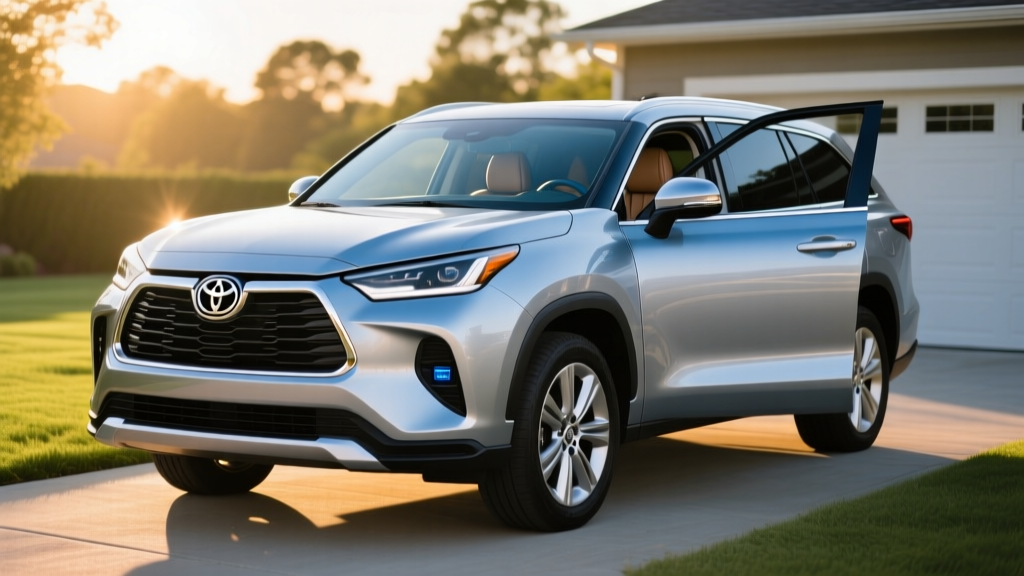
The Toyota Highlander Hybrid Limited occupies a specific niche: families who need three rows, all-wheel-drive capability, and sub-400-mile road-trip fuel stops — but who aren't ready to commit to a plug-in hybrid or full electric SUV. The Limited trim adds premium touches like leather-trimmed seats, a panoramic moonroof, and a 12.3-inch infotainment display on top of the hybrid powertrain's efficiency.
With an EPA-rated 35 MPG combined, the Highlander Hybrid undercuts most gas-only midsize SUVs by 10–12 MPG in real-world mixed driving, and it requires zero behavioral change — no plugging in, no range planning, no charging apps. If you're cross-shopping the Kia Sorento Hybrid, Honda Pilot, or Hyundai Santa Fe Hybrid, the Highlander's proven hybrid system and strong resale value make it a benchmark.
HEV vs PHEV: What the Highlander Hybrid Actually Is
Before diving into specs, a critical distinction: the Toyota Highlander Hybrid is a conventional hybrid electric vehicle (HEV), not a plug-in hybrid (PHEV). That means:
- No plug, no charging cord. The 1.6 kWh nickel-metal hydride (NiMH) traction battery recharges exclusively through regenerative braking and the gasoline engine.
- No electric-only driving range to speak of. The EV mode allows roughly 0.5–1 mile at very low speeds (under 25 mph) — useful for creeping through a parking garage, not for commuting.
- No federal tax credit. The IRS §30D clean vehicle credit applies only to plug-in vehicles (BEVs and PHEVs) with sufficient battery capacity. Conventional hybrids like this one do not qualify.
Toyota currently does not offer a Highlander Plug-In Hybrid (the RAV4 Prime fills the PHEV slot in Toyota's SUV lineup). If you need 30+ miles of electric-only range with three rows, you'd need to look at the Kia Sorento Plug-In Hybrid or the Jeep Grand Cherokee 4xe instead.
HEV vs PHEV vs BEV: Which Fits Your Family?
| Factor | HEV (Highlander Hybrid) | PHEV (e.g., Sorento PHEV) | BEV (e.g., Rivian R1S) |
|---|---|---|---|
| Plug in required? | No | Yes (for EV range) | Yes (always) |
| Electric-only range | ~0.5 mi (low speed) | 30–35 mi typical | 250–400 mi |
| Federal tax credit | None | Up to $7,500* | Up to $7,500* |
| Fuel cost (annual est.) | ~$1,650 | ~$900–$1,200 | ~$550–$750 |
| Home charger needed? | No | Recommended (Level 2) | Essential (Level 2) |
*§30D credit eligibility depends on MSRP caps, buyer income limits, battery sourcing rules, and point-of-sale transfer. See IRS.gov for current requirements.
Fuel Economy: EPA Ratings vs Real-World MPG
The 2026 Toyota Highlander Hybrid carries over the fourth-generation hybrid powertrain with an EPA-estimated 35 MPG combined for the Limited trim with Electronic On-Demand All-Wheel Drive (AWD). Front-wheel-drive models bump that to 36 MPG combined, but the Limited trim is AWD-only in most markets.
| Metric | EPA Estimate | Real-World Expectation |
|---|---|---|
| City MPG | 35 | 34–37 (hybrids excel in stop-and-go) |
| Highway MPG | 34 | 30–33 (aero drag hurts at 75+ mph) |
| Combined MPG | 35 | 32–36 |
| Total range (17.9-gal tank) | 626 mi | 570–640 mi |
| Cold-weather impact | N/A | ~10–15% loss (engine runs more for cabin heat) |
According to fueleconomy.gov, the Highlander Hybrid's combined rating has remained consistent across recent model years. The real-world advantage of a conventional hybrid is that city driving — where regenerative braking recaptures energy most frequently — often exceeds the EPA city estimate. Highway driving at sustained 75–80 mph speeds tells a different story: the 2.5-liter four-cylinder engine runs more continuously, and you'll see numbers closer to 30–31 MPG on long interstate runs.
For context, the non-hybrid 2026 Highlander (with its turbocharged 2.4L four-cylinder) returns roughly 24 MPG combined — making the hybrid roughly 45% more fuel-efficient in mixed driving.
Powertrain Specs: What's Under the Hood
The Highlander Hybrid Limited uses Toyota's well-established series-parallel hybrid system, pairing a naturally aspirated 2.5-liter inline-four engine with two front-mounted motor-generators and a separate rear electric motor for AWD. This is not a performance-oriented powertrain — it's designed for efficiency and smoothness.
| Specification | Detail |
|---|---|
| Gasoline engine | 2.5L DOHC 4-cylinder (186 hp, 179 lb-ft) |
| Front electric motors | Two motor-generators (MG1 + MG2) via eCVT |
| Rear electric motor | 40 kW (54 hp) — AWD only |
| Net combined system output | 243 hp |
| Transmission | eCVT (electronically controlled continuously variable) |
| Drivetrain | Electronic On-Demand AWD (AWD-i) |
| Traction battery | 1.6 kWh NiMH (sealed, self-charging) |
| 0–60 mph | ~7.8 seconds (estimated) |
| Towing capacity | 3,500 lbs (hybrid models) |
| Fuel tank | 17.9 gallons (regular 87 octane) |
The 243 combined horsepower is adequate for a 4,500-pound family hauler but won't win any stoplight races. The eCVT eliminates shift shock entirely — acceleration is linear and quiet, with the engine only audibly revving high during hard acceleration or steep climbs. The rear electric motor provides AWD traction without a mechanical driveshaft, reducing weight and drivetrain loss.
Towing drops to 3,500 lbs on hybrid models versus 5,000 lbs on the gas-only Highlander — a meaningful trade-off if you regularly pull a boat or camper trailer over 3,500 lbs.
Pricing, Trims, and Tax Credit Reality
The 2026 Toyota Highlander Hybrid Limited starts at approximately $51,170 MSRP (including destination charge). This positions it in the upper-middle of the three-row SUV segment, above the Honda Pilot Touring and below the Kia Telluride SX Prestige in price.
| Highlander Hybrid Trim | MSRP (est.) | Key Features |
|---|---|---|
| LE | ~$42,170 | 8-inch screen, Toyota Safety Sense 3.0 |
| XLE | ~$46,170 | SofTex seats, sunroof, 2nd-row captain's chairs |
| Limited | ~$51,170 | Leather, 12.3" screen, panoramic moonroof, JBL audio |
| Platinum | ~$54,670 | Head-up display, 360° camera, panoramic roof |
Does the Highlander Hybrid Qualify for a Tax Credit?
No. The Highlander Hybrid is a conventional HEV, not a plug-in vehicle. The federal IRS §30D clean vehicle credit requires a plug-in electric vehicle with a battery capacity of at least 7 kWh. The Highlander Hybrid's 1.6 kWh NiMH battery doesn't come close.
Some states offer modest rebates for conventional hybrids (typically $250–$500), but these vary widely by jurisdiction and are often income-limited. Check your state energy office or the Alternative Fuels Data Center for current state-level incentives. A few employers and utilities also offer hybrid purchase incentives — worth investigating before you buy.
Hybrid Battery Warranty and Replacement Cost
Hybrid battery longevity is consistently the top concern for buyers considering a used or new hybrid SUV. Toyota addresses this with one of the strongest hybrid battery warranties in the industry.
Toyota Hybrid Battery Warranty
- Coverage: 10 years / 150,000 miles (whichever comes first)
- What's covered: Hybrid battery pack, hybrid control module, inverter with converter
- Applies to: All 2020+ model year Toyota hybrids (including Highlander Hybrid)
- Transferable: Yes, warranty transfers to subsequent owners
This warranty replaced the older 8-year/100,000-mile coverage starting with the 2020 model year, reflecting Toyota's confidence in NiMH pack durability.
How Long Do Toyota Hybrid Batteries Actually Last?
Real-world data from Toyota's hybrid fleet (which includes millions of Prius, Camry Hybrid, and RAV4 Hybrid vehicles) shows NiMH packs routinely lasting 150,000–200,000+ miles with minimal degradation. The Highlander Hybrid's relatively small 1.6 kWh pack operates in a narrow state-of-charge window (roughly 40–80% SoC), which dramatically reduces cell stress and extends cycle life.
Unlike a full EV battery that cycles through 80–100% of its capacity daily, the Highlander Hybrid's battery management system never fully charges or fully depletes the pack. This "buffer" strategy is the primary reason Toyota hybrid batteries rarely need replacement within the vehicle's normal lifespan.
Hybrid Battery Replacement Cost
If replacement is needed outside warranty, expect to pay $2,000–$4,000 for a new OEM NiMH pack at a Toyota dealer, including labor. Refurbished/remanufactured packs from third-party suppliers typically run $1,200–$2,000. For context, a single individual cell module can be replaced for $100–$200 if only one module has failed — a repair some independent hybrid specialists offer.
Compared to EV battery replacements ($5,000–$20,000+), the Highlander Hybrid's battery replacement cost is modest and far less likely to be needed.
Limited Trim Features: What You Get for $51K
The Limited trim is the volume luxury choice in the Highlander Hybrid lineup. Here's what distinguishes it from the XLE below and the Platinum above:
- Interior: Leather-trimmed heated and ventilated front seats, heated second-row seats, leather-wrapped steering wheel
- Tech: 12.3-inch Toyota Audio Multimedia touchscreen with wireless Apple CarPlay and Android Auto, 11-speaker JBL premium audio, wireless phone charging pad
- Comfort: Panoramic moonroof, tri-zone automatic climate control, power-folding third row
- Safety: Toyota Safety Sense 3.0 (pre-collision with pedestrian detection, full-speed dynamic radar cruise control, lane departure alert with steering assist, lane tracing assist, road sign assist, automatic high beams)
- Exterior: 20-inch alloy wheels, hands-free power liftgate, LED projector headlights
The Limited also includes a 1,500-watt AC power outlet in the rear cargo area — useful for tailgating or emergency power for laptops and small appliances.
Driving Impressions: Efficiency vs Performance Trade-Off
On the road, the Highlander Hybrid Limited prioritizes smooth, quiet operation over sportiness. The eCVT means no gear shifts — acceleration builds in a steady, linear fashion. Around town, the electric motors do the heavy lifting at low speeds, and the gasoline engine kicks in seamlessly when more power is needed or the battery depletes to its lower buffer threshold.
The AWD-i system (electronic on-demand all-wheel drive) engages the rear electric motor automatically when front-wheel slip is detected. It's not a rock-crawling system, but it handles rain, light snow, and gravel roads with confidence. In cold-weather testing, the hybrid system performs well, though expect fuel economy to drop 10–15% in sub-30°F conditions as the engine runs more frequently to provide cabin heat.
Ride quality on the Limited's 20-inch wheels is firm but controlled — you'll feel sharp pavement imperfections more than on the XLE's 18-inch wheels. Road noise is well-managed, and the hybrid powertrain is nearly silent during low-speed electric-only operation.
The third row accommodates children comfortably but will feel tight for adults on trips longer than 30 minutes. Cargo volume behind the third row is 16.1 cubic feet — enough for a week of groceries but tight for a full-family road trip with luggage. Fold the third row and you get 48.4 cu ft; fold both rear rows for 84.3 cu ft.
Who Should Buy the Highlander Hybrid Limited?
Pros
- 35 MPG combined in a 3-row SUV — class-leading efficiency
- No plug-in required — zero lifestyle change from a gas car
- 10-year/150,000-mile hybrid battery warranty
- Strong resale value (Toyota hybrids historically depreciate slower)
- Standard AWD on Limited trim
- Proven, mature hybrid technology with massive service network
Cons
- No federal tax credit (conventional hybrid)
- 243 hp feels modest for a 4,500-lb vehicle
- 3,500-lb tow rating (vs 5,000 for gas model)
- Tight third row and cargo space vs competitors
- $51K+ MSRP on Limited without premium-badge cachet
- eCVT drone under hard acceleration
Choose the Highlander Hybrid Limited If:
- You drive 12,000–18,000 miles per year and want to minimize fuel costs without plugging in
- You need three rows occasionally but not massive cargo capacity
- You live in an area without reliable public charging infrastructure
- You prioritize long-term reliability and low depreciation over performance
- You want AWD without the fuel penalty of a traditional AWD gas SUV
Look Elsewhere If:
- You want electric-only commuting range → Consider the Kia Sorento PHEV (32 mi EV range) or wait for a potential Highlander PHEV
- You need to tow more than 3,500 lbs → The gas Highlander or a body-on-frame SUV is better
- You want maximum third-row and cargo space → The Honda Pilot or Kia Telluride offers more interior volume
- You want a federal tax credit → Only plug-in vehicles qualify under current IRS §30D rules
Frequently Asked Questions
How many MPG does the 2026 Toyota Highlander Hybrid Limited get?
The EPA rates the Highlander Hybrid Limited AWD at 35 city / 34 highway / 35 combined MPG. In real-world driving, expect 34–37 MPG in city conditions (where regenerative braking helps most) and 30–33 MPG on sustained highway trips at 75+ mph. Cold weather reduces efficiency by roughly 10–15%.
Does the Highlander Hybrid need to be plugged in?
No. The Highlander Hybrid is a conventional HEV (hybrid electric vehicle), not a plug-in hybrid. Its 1.6 kWh battery charges through regenerative braking and the gasoline engine. You simply fill up at a gas station like any other vehicle.
How far can the Highlander Hybrid drive on electric power alone?
Less than one mile, and only at very low speeds (under 25 mph) using EV mode. This is designed for parking-lot maneuvering and brief low-speed coasting — not for commuting or meaningful electric-only driving. If you need 30+ miles of EV range, you need a PHEV or BEV.
Is the Toyota Highlander Hybrid reliable?
Toyota's hybrid system is among the most proven in the industry, with over 25 years of real-world deployment since the original Prius. The Highlander Hybrid's NiMH battery pack operates within a narrow charge window that minimizes degradation. Toyota backs the hybrid battery with a 10-year/150,000-mile warranty. Long-term reliability data from Consumer Reports and J.D. Power consistently ranks Toyota hybrids above average.
What does a Highlander Hybrid battery replacement cost?
A new OEM NiMH battery pack costs approximately $2,000–$4,000 at a Toyota dealer (parts and labor). Refurbished packs run $1,200–$2,000. Individual module replacement (if only one cell fails) can cost $100–$200 at a hybrid specialist. Given the 10-year/150,000-mile warranty and typical pack lifespan of 150,000–200,000+ miles, most owners never face this expense.
Does the Highlander Hybrid qualify for any tax credit?
No federal tax credit applies. The IRS §30D clean vehicle credit requires a plug-in vehicle (BEV or PHEV) with a battery capacity of at least 7 kWh. The Highlander Hybrid's 1.6 kWh NiMH battery does not qualify. Some states and utilities offer small hybrid incentives ($250–$500) — check your state energy office for current programs.
Highlander Hybrid vs gas Highlander: is the hybrid worth the premium?
The hybrid commands roughly a $2,000–$3,000 premium over the equivalent gas trim. At 35 MPG combined versus 24 MPG for the gas model, and assuming 15,000 miles/year at $3.40/gallon, the hybrid saves approximately $900 per year in fuel. That means the hybrid premium pays for itself in roughly 2.5–3.5 years, after which every mile driven is a net savings.
Can the Highlander Hybrid tow a trailer?
Yes, but with a reduced capacity: 3,500 lbs for hybrid models versus 5,000 lbs for the gas-only Highlander. This covers small boat trailers, light utility trailers, and pop-up campers, but not larger travel trailers or heavy equipment trailers.