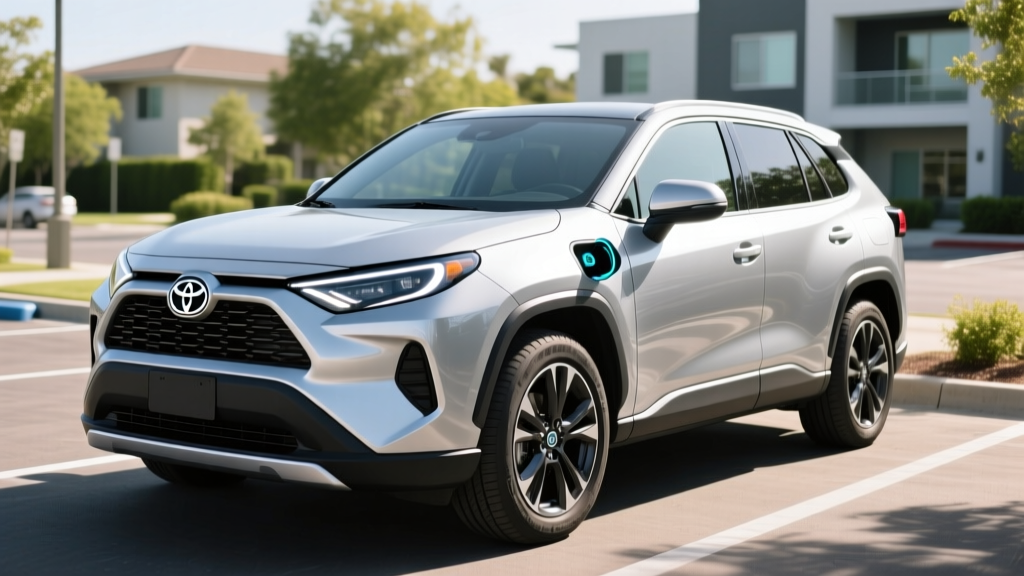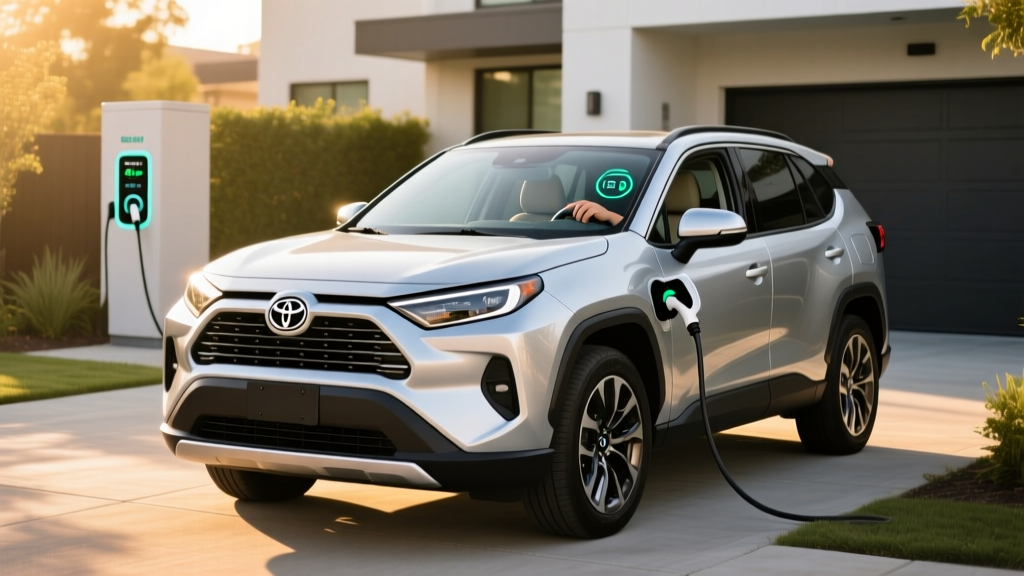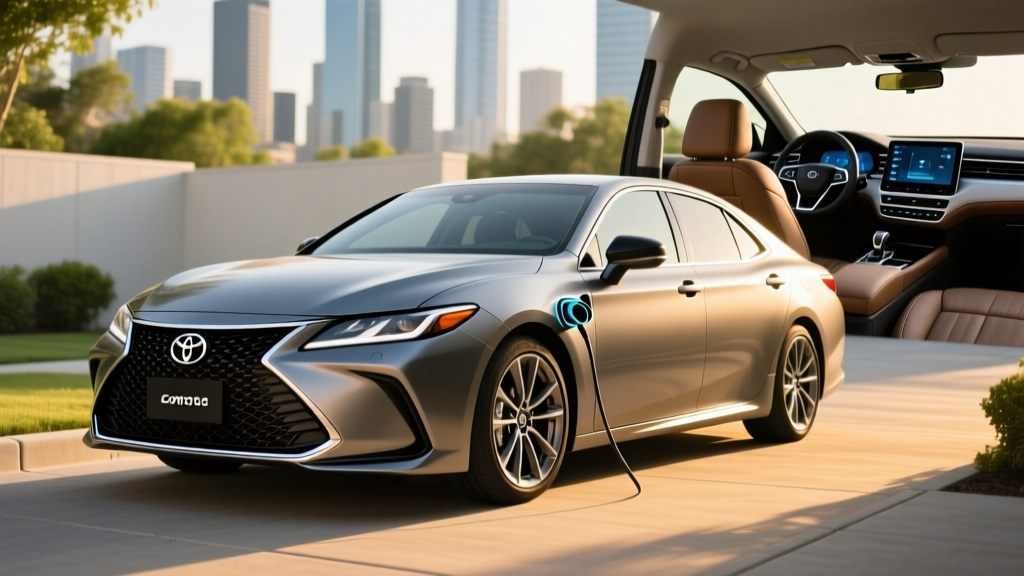
The Toyota Crown has always occupied an unusual space in Toyota's lineup — part premium sedan, part crossover, fully electrified. For 2026, the Crown's Hybrid MAX powertrain continues to deliver on the promise that "hybrid sport" doesn't have to be an oxymoron. With 340 horsepower, standard all-wheel drive, and an EPA-estimated 41 MPG combined, the Crown targets buyers who want engaging acceleration without the fuel-pump punishment of a traditional performance sedan.
This guide breaks down every spec that matters: real-world MPG versus EPA estimates, how the Hybrid MAX system works, battery warranty coverage, whether any federal tax credits apply, and how the Crown stacks up against full EVs and conventional gas sedans for different types of drivers.
HEV vs. PHEV: Where the Crown Fits
Before diving into specs, it's critical to understand what the 2026 Crown is — and what it isn't. The Crown uses Toyota's Hybrid MAX system, which is a conventional hybrid (HEV), not a plug-in hybrid (PHEV). This distinction changes everything about how you own it.
| Feature | Conventional Hybrid (HEV) | Plug-In Hybrid (PHEV) |
|---|---|---|
| Plug-in charging required? | No — self-charging via engine & regen | Yes — plug in for electric-only range |
| Battery size | ~1.0–2.0 kWh (small buffer) | ~13–25 kWh (large pack) |
| Electric-only driving | Limited (low-speed, short bursts) | 20–45 miles typical |
| Federal tax credit (§30D) | Not eligible | Up to $7,500 if eligible |
| Driving experience | Seamless gas/electric blending | EV-like on battery, gas on depletion |
| Best for | No home charging access, long commutes | Home charging + moderate daily miles |
The Crown's Hybrid MAX pairs a turbocharged 2.4-liter inline-4 with electric motors for a combined 340 hp and 400 lb-ft of torque. You never plug it in. You just drive it, and the system manages energy recovery and engine operation automatically. For buyers who lack access to home or workplace charging, this is the key advantage: zero behavior change required.
Fuel Economy: EPA Ratings and Real-World MPG
The 2026 Crown Hybrid MAX (the sport-tuned powertrain available on the Sport and Limited trims) carries an EPA-estimated 41 MPG combined. Here is the full breakdown:
| Driving Cycle | EPA Estimate |
|---|---|
| City | 42 MPG |
| Highway | 40 MPG |
| Combined | 41 MPG |
Source: fueleconomy.gov
Real-world expectations: Toyota hybrids have a well-documented tendency to meet or slightly exceed EPA city estimates in stop-and-go driving, where regenerative braking recovers the most energy. Highway driving at sustained 75+ mph will typically return 37–39 MPG. In cold weather (below 35°F), expect a 5–10% reduction as the engine runs more frequently to maintain cabin heat and battery temperature. Over a 500-mile mixed-condition test loop, owners commonly report 39–43 MPG combined — closely tracking the EPA sticker.
The standard Hybrid powertrain (non-MAX, available on XLE) returns an even higher EPA-estimated 44 MPG combined, but with 236 hp instead of 340. The Sport badge means you're trading 3 MPG for 104 additional horsepower and a significantly more responsive throttle.
Powertrain Deep Dive: How Hybrid MAX Delivers 340 HP
The Hybrid MAX system in the Crown is not the same hybrid setup found in a Camry or RAV4. It uses a direct-shift 6-speed automatic transmission rather than the eCVT found in standard Toyota hybrids, which gives it a more traditional, sporty feel with perceptible gear changes.
| Specification | Value |
|---|---|
| Engine | 2.4L turbocharged inline-4 |
| Engine output | 264 hp / 310 lb-ft torque |
| Electric motor output | 83 hp (front-mounted) |
| Combined system output | 340 hp / 400 lb-ft torque |
| Transmission | Direct-shift 6-speed automatic |
| Drivetrain | AWD (standard) |
| 0–60 mph | 5.1 seconds |
| Hybrid battery | ~1.9 kWh nickel-metal hydride (NiMH) |
| Curb weight | ~4,100 lbs |
The turbo-4 provides the muscle; the electric motor fills in torque gaps at low RPM, eliminating turbo lag. The result is immediate, linear acceleration that feels more like a mild EV than a traditional turbocharged sedan. The AWD system uses a rear-mounted electric motor for the rear axle, meaning there's no mechanical driveshaft — torque distribution is handled electronically and responds in milliseconds.
Battery Warranty, Reliability, and Replacement Cost
- Coverage: 10 years / 150,000 miles (whichever comes first)
- What's covered: Hybrid battery pack, hybrid control module, inverter
- Threshold: Toyota covers replacement if battery capacity drops below a functional threshold that impairs hybrid system operation
- Transferable: Yes, warranty transfers to subsequent owners
Toyota's hybrid reliability track record is among the strongest in the industry. The Prius, which launched in the US in 2000, has demonstrated hybrid battery longevity well beyond 200,000 miles with proper maintenance. The Crown's ~1.9 kWh NiMH pack is small and operates within a narrow state-of-charge window (roughly 40–80%), which dramatically reduces stress on the cells compared to a full EV battery that cycles from 10% to 90%+.
Battery replacement cost: If the hybrid battery does require replacement outside warranty, expect a dealer-installed cost between $2,500 and $4,000 for the Crown's NiMH pack. Independent hybrid specialists can often perform the replacement for $1,800–$2,800 using refurbished or new aftermarket cells. This is a fraction of EV battery replacement costs, which can exceed $10,000–$20,000.
The broader powertrain — engine, transmission, electric motors — is covered under Toyota's 5-year/60,000-mile powertrain warranty. Given the relative simplicity of Toyota's hybrid system (fewer moving parts than a conventional automatic transmission, no turbo-only stress), long-term ownership costs are favorable compared to turbocharged gas-only competitors.
Pricing, Trims, and Tax Credit Eligibility
| Trim | Powertrain | MSRP (approx.) |
|---|---|---|
| XLE | Standard Hybrid (236 hp) | $42,000 |
| Limited | Standard Hybrid (236 hp) | $47,000 |
| Sport | Hybrid MAX (340 hp) | $47,500 |
| Platinum | Hybrid MAX (340 hp) | $54,000 |
Federal tax credit (§30D): The Toyota Crown — whether standard Hybrid or Hybrid MAX — does not qualify for the federal §30D clean vehicle tax credit. Under current IRS rules, only plug-in electric vehicles (BEVs and PHEVs with sufficient battery capacity) are eligible. Conventional hybrids like the Crown are excluded regardless of price or efficiency.
Some states offer separate incentives for hybrids, though these are increasingly rare as incentive programs shift toward full EVs and PHEVs. Check your state's energy office or department of environmental quality for current programs. A few states still offer reduced registration fees or HOV lane access for hybrids, but these vary widely by jurisdiction.
Who Should Choose the Crown Hybrid Sport vs. an EV or Gas Car?
- You lack reliable access to home or workplace EV charging
- You drive 15,000+ miles per year and want low fuel costs without range planning
- You want sporty acceleration (5.1s 0–60) without the fuel penalty of a gas performance sedan
- You frequently take long road trips where DC fast-charging infrastructure is sparse
- You want Toyota's hybrid reliability record and 10-year battery warranty
- You live in a cold climate where EV range loss is a concern
- You have home Level 2 charging and want to eliminate gas entirely for daily driving
- You want to access the $7,500 federal tax credit (§30D)
- Your daily commute is under 35 miles (a PHEV covers this on electric alone)
- You want the lowest possible per-mile energy cost (electricity vs. gas)
- You prioritize zero tailpipe emissions for environmental reasons
- You want one-pedal driving and the instant-torque EV experience
- No home charging + sporty driving preference → Crown Hybrid MAX (Sport/Platinum)
- No home charging + maximum fuel savings → Crown XLE (standard Hybrid, 44 MPG)
- Home charging + daily commute under 35 mi → Consider a PHEV like the Toyota RAV4 Prime or Hyundai Tucson PHEV
- Home charging + minimal road trips → Consider a full EV like the Hyundai Ioniq 6 or Tesla Model 3
How the Crown Compares to Hybrid Sport Alternatives
The "hybrid sport" segment is small but growing. Here's how the Crown Hybrid MAX stacks up against the closest competitors:
| Vehicle | Combined HP | EPA Combined MPG | 0–60 mph | Starting MSRP |
|---|---|---|---|---|
| Toyota Crown Hybrid MAX | 340 hp | 41 MPG | 5.1s | ~$47,500 |
| Honda Accord Hybrid Sport | 204 hp | 44 MPG | 7.0s | ~$34,500 |
| Hyundai Sonata Hybrid Limited | 192 hp | 47 MPG | 7.5s | ~$37,000 |
| BMW 330e (PHEV) | 288 hp | 28 MPG (gas) / 75 MPGe | 5.6s | ~$46,000 |
The Crown's closest rival on performance is the BMW 330e, but the BMW is a PHEV — it requires plug-in charging to realize its efficiency advantage and has a limited electric-only range of ~22 miles. The Accord and Sonata hybrids deliver better MPG but sacrifice over 130 hp compared to the Crown. No competitor in this price range matches the Crown's combination of 340 hp and 40+ MPG.
Ownership Costs: 5-Year Fuel Savings
At 41 MPG combined, the Crown Hybrid MAX uses approximately 366 gallons per year assuming 15,000 miles of mixed driving. At $3.50/gallon (national average), that's roughly $1,281 annually in fuel costs.
Compare this to a non-hybrid sport sedan averaging 25 MPG combined: 600 gallons/year, or $2,100 annually. Over five years, the Crown saves approximately $4,095 in fuel costs versus a comparable gas-only performance sedan — even without any tax credit assistance.
Insurance costs for the Crown run slightly higher than the average midsize sedan due to its premium positioning and turbocharged powertrain. Expect annual premiums in the $1,600–$2,200 range depending on your state, driving record, and coverage level. Always get a personalized quote before purchasing.
Frequently Asked Questions
How many MPG does the Toyota Crown Hybrid Sport get?
The 2026 Crown Hybrid MAX (Sport and Platinum trims) achieves an EPA-estimated 42 MPG city, 40 MPG highway, and 41 MPG combined. The standard Hybrid (XLE/Limited) returns 44 MPG combined with a less powerful 236 hp powertrain. Real-world results typically fall within 39–43 MPG combined depending on driving style and climate.
Does the Crown Hybrid need to be plugged in?
No. The Crown is a conventional hybrid (HEV). The battery charges itself through regenerative braking and the gasoline engine. You fuel it like any other car — just with significantly better mileage. There is no plug, no charging cable, and no electric-only range to manage.
Does the 2026 Crown qualify for any federal tax credit?
No. The federal §30D clean vehicle tax credit applies only to plug-in electric vehicles (BEVs and PHEVs). Conventional hybrids like the Crown do not qualify regardless of efficiency or price. Some states may offer minor hybrid incentives — check your state's energy office for details. See current rules at irs.gov.
Is the Crown Hybrid reliable? What about battery replacement?
Toyota's hybrid systems have demonstrated exceptional reliability since the Prius launched in 2000. The Crown's hybrid battery is covered for 10 years/150,000 miles. If replacement is needed outside warranty, expect $2,500–$4,000 at a dealer, or $1,800–$2,800 at an independent hybrid specialist. The NiMH pack is small and operates within a narrow charge window, reducing long-term degradation risk.
Hybrid vs. PHEV vs. EV — which is right for me?
Choose a conventional hybrid (HEV) like the Crown if you lack home charging access, drive long distances frequently, or want zero behavior change. Choose a PHEV if you can charge at home and your daily driving is under 30–40 miles (covering most commutes on electricity alone). Choose a full EV (BEV) if you have reliable home charging, want the lowest per-mile energy cost, and your road-trip mileage is manageable with DC fast-charging stops. The Crown is specifically optimized for drivers who want hybrid simplicity with sporty performance.
Can the Crown Hybrid MAX tow?
Toyota does not rate the Crown for towing. If towing capacity is a priority, look at hybrid SUVs like the Toyota Highlander Hybrid (5,000 lb rating) or the Ford Explorer Hybrid.
What is the difference between the Crown Sport and Platinum trims?
Both use the 340 hp Hybrid MAX powertrain. The Sport trim (~$47,500) includes sport-tuned suspension, 21-inch wheels, heated/ventilated front seats, and Toyota's 12.3-inch infotainment system. The Platinum (~$54,000) adds a panoramic roof, premium leather, heated rear seats, a 14-speaker JBL audio system, and advanced driver-assistance features including Toyota's Traffic Jam Assist.
The 2026 Toyota Crown Hybrid Sport occupies a specific niche: it's the sedan you buy when you want real performance, genuine fuel savings, and zero lifestyle compromise. No plug, no range anxiety, no charging-app frustration — just 340 horsepower and 41 MPG in a package that Toyota's hybrid reliability data supports for the long haul. If that trade-off sounds right, the Crown Hybrid MAX is one of the few vehicles that delivers on the "hybrid sport" promise with the numbers to back it up.