Quick Verdict: The Efficiency Benchmark With Cargo Versatility
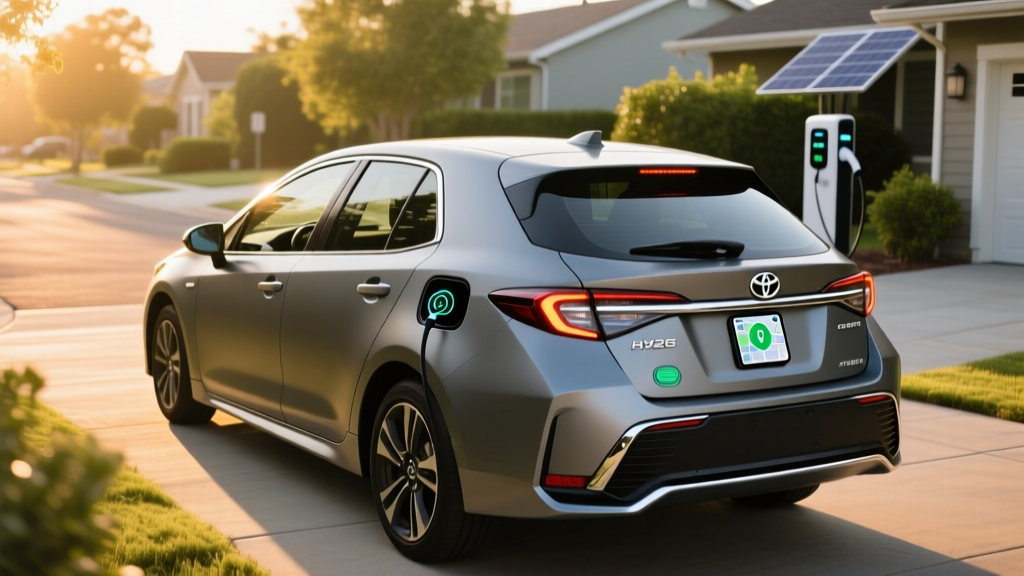
The Toyota Corolla Hybrid Hatchback occupies a precise niche: buyers who want the proven reliability and 50+ MPG efficiency of Toyota's fifth-generation hybrid system paired with the practicality of a hatchback cargo area. Unlike the Corolla Hybrid sedan, which is front-wheel drive only, the hatchback offers available electronic all-wheel drive (AWD) — a rarity among compact hybrids at this price point. For 2026, the Corolla Hybrid Hatchback continues with the 1.8-liter four-cylinder hybrid powertrain producing 196 combined horsepower, EPA-estimated fuel economy reaching 50 MPG combined on the LE trim, and a starting MSRP that undercuts most competitors in the electrified compact segment.
This is a conventional hybrid (HEV), not a plug-in hybrid (PHEV). It requires no charging infrastructure, no behavior change, and no plug. You fuel it with gasoline, and the hybrid system handles the rest — recapturing energy during braking and optimizing the gasoline engine's operating range. If you need electric-only driving or federal tax credit eligibility, you'll want to look at the Toyota Prius Prime (a PHEV) or a full battery-electric vehicle instead.
HEV vs PHEV: What the Corolla Hybrid Hatchback Actually Is
Before examining the numbers, it's essential to understand what you're buying — because the Corolla lineup includes both conventional hybrids and, in the Prius family, plug-in hybrids. The terminology matters for your daily routine and your wallet.
| Feature | Corolla Hybrid Hatchback (HEV) | Plug-in Hybrid (PHEV) Example: Prius Prime |
|---|---|---|
| Plug-in charging required? | No — gasoline only | Yes — 120V or 240V outlet |
| Electric-only range | 0 miles (motor assists engine) | ~44 miles (2026 Prius Prime) |
| Battery size | ~1.3 kWh (small buffer) | 13.6 kWh usable |
| Federal tax credit (§30D) | Not eligible | Up to $3,750 (sourcing-dependent) |
| Best for | No home charging access; simplicity | Home charging + short daily commutes |
| Total range | ~530 miles (11.4-gal tank) | ~44 mi electric + ~400 mi gas |
The Corolla Hybrid Hatchback is strictly an HEV. Its small lithium-ion traction battery (approximately 1.3 kWh) is charged exclusively through regenerative braking and the gasoline engine. There is no charge port, no Level 1 or Level 2 charging capability, and no DC fast charging. This is by design: the battery serves as an energy buffer that allows the electric motor to assist the engine during acceleration and to power the car at low speeds briefly, but it does not provide standalone electric driving range.
Fuel Economy: EPA Ratings and Real-World MPG
Fuel economy is the headline metric for any hybrid buyer. Here's how the 2026 Corolla Hybrid Hatchback breaks down by trim, per fueleconomy.gov:
| Trim / Drivetrain | City MPG | Highway MPG | Combined MPG |
|---|---|---|---|
| LE (FWD) | 53 | 46 | 50 |
| SE (FWD) | 50 | 43 | 47 |
| SE AWD / XSE AWD | 47 | 41 | 44 |
The FWD LE trim's 50 MPG combined is exceptional — among the highest of any non-plug-in vehicle sold in the US. The AWD trims sacrifice roughly 6 MPG combined due to the additional weight and mechanical drag of the rear electric motor, but 44 MPG combined with all-wheel drive remains competitive with FWD-only rivals.
Real-World MPG: What to Actually Expect
Toyota's hybrid system excels in city driving, where frequent stops maximize regenerative braking and allow the electric motor to handle low-speed propulsion. In real-world testing, Corolla Hybrid owners routinely report matching or slightly exceeding the EPA city rating — 52–55 MPG is common in stop-and-go urban traffic. Highway driving tells a different story: at sustained 70–80 MPH speeds, the gasoline engine carries more of the load, and real-world highway MPG typically falls to 40–43 MPG on FWD trims. Cold weather (below 35°F) reduces efficiency by roughly 5–8% as the engine runs more frequently to maintain cabin heat and battery temperature.
On a full 11.4-gallon tank, expect approximately 500–570 miles of real-world range depending on your driving mix. That's fewer fuel stops than virtually any non-hybrid compact car and a meaningful advantage for high-mileage commuters.
Powertrain: 196 HP With Toyota's Fifth-Gen Hybrid System
The 2026 Corolla Hybrid Hatchback uses Toyota's fifth-generation Toyota Hybrid System (THS), pairing a 1.8-liter Atkinson-cycle four-cylinder gasoline engine with one or two electric motor-generators, depending on drivetrain.
| Specification | Value |
|---|---|
| Engine | 1.8L 4-cyl Atkinson-cycle |
| Engine output | ~138 hp (standalone) |
| Electric motor(s) | 1 (FWD) / 2 (AWD, front + rear) |
| Combined net horsepower | 196 hp |
| Transmission | eCVT (planetary gearset, no fixed gears) |
| Drivetrain | FWD standard; electronic AWD available (SE, XSE) |
| 0–60 MPH (est.) | ~7.2 sec (FWD), ~7.0 sec (AWD) |
| Traction battery | ~1.3 kWh lithium-ion (sealed NiMH on base LE) |
| Fuel tank | 11.4 gallons |
| Cargo volume (rear seats up) | ~17.8 cu ft |
| Cargo volume (rear seats folded) | ~47.0 cu ft |
The 196 combined horsepower figure represents a substantial upgrade over earlier Corolla Hybrid generations, which produced just 121 hp. The AWD system uses a separate rear-mounted electric motor (not a mechanical driveshaft) that engages automatically when traction is needed — during acceleration from a stop, on slippery surfaces, or when the system detects front-wheel slip. It does not provide full-time AWD; at steady highway cruising, the rear motor disengages to minimize drag.
Pricing, Trims, and Tax Credit Eligibility
The 2026 Corolla Hybrid Hatchback is offered in three trims. Pricing below reflects MSRP including destination charge:
- LE (FWD): ~$24,995
- SE (FWD or AWD): ~$27,495 (FWD) / ~$28,895 (AWD)
- XSE (AWD): ~$30,795
Federal Tax Credit: Not Eligible Under §30D
The Corolla Hybrid Hatchback does not qualify for the federal §30D clean vehicle tax credit. Per current IRS rules, the §30D credit is available only for plug-in electric vehicles (BEVs and PHEVs) that meet battery capacity, critical mineral sourcing, and MSRP/income thresholds. Conventional hybrids like the Corolla Hybrid Hatchback — which have no plug and no meaningful electric-only range — are excluded.
Some states offer separate incentives for hybrid vehicles, though these are uncommon and vary widely by jurisdiction. Check your state's energy or environmental agency for current programs. The Corolla Hybrid's value proposition is fuel savings, not purchase incentives.
Battery Warranty, Reliability, and Replacement Cost
Toyota Hybrid Battery Warranty: 10 years / 150,000 miles (whichever comes first), covering capacity loss below a defined threshold. This applies to all 50 US states. The 12V auxiliary battery carries a separate warranty (typically 2 years/36,000 miles).
Toyota's hybrid battery longevity is among the best-documented in the industry. The Prius, which shares similar hybrid architecture, has accumulated millions of real-world miles with low battery failure rates. Independent fleet data and owner surveys consistently show Toyota hybrid batteries lasting well beyond the warranty period — 200,000+ miles without replacement is common.
Should a replacement become necessary out of warranty, a refurbished Toyota hybrid battery typically costs $2,000–$3,500 installed, while a new OEM battery runs $3,500–$5,000. These figures are substantially lower than full EV battery replacements ($8,000–$20,000+), reflecting the Corolla Hybrid's much smaller battery pack.
Overall Reliability
Toyota consistently ranks at or near the top of J.D. Power and Consumer Reports reliability surveys, and the Corolla nameplate is one of the most proven in automotive history. The hybrid system adds complexity (electric motor, inverter, battery) but eliminates others (no traditional alternator, no starter motor, reduced brake wear from regenerative braking). The eCVT transmission has no clutch packs, bands, or fixed gear ratios — it's a planetary gearset with far fewer wear components than a conventional automatic. Long-term maintenance costs for the Corolla Hybrid are typically lower than its gasoline-only counterparts.
Who Should Choose the Corolla Hybrid Hatchback?
Pros
- 50 MPG combined (LE FWD) — among the highest of any non-plug-in vehicle
- 196 hp — meaningful improvement over prior-gen Corolla Hybrids
- Available AWD — rare in the compact hybrid segment
- Hatchback cargo versatility (47 cu ft with seats folded)
- No plug-in required — works with existing gas-station infrastructure
- 10-year / 150,000-mile hybrid battery warranty
- Proven long-term reliability and low maintenance costs
Cons
- No federal tax credit eligibility
- No electric-only driving mode (0 miles EV range)
- AWD trims drop to 44 MPG combined
- XSE trim pushes past $30,000, approaching Prius territory
- Modest acceleration (~7.2 sec 0–60) — adequate, not quick
- Rear-seat space is tighter than some compact crossover rivals
Decision Framework: Hybrid vs PHEV vs EV
Choose the Corolla Hybrid Hatchback (HEV) if:
- You lack access to home or workplace charging (apartment, street parking, no 240V outlet)
- You want maximum fuel efficiency with zero behavior change
- Your daily driving exceeds 40 miles, making a PHEV's electric range insufficient
- You want AWD capability without an SUV's fuel penalty
- You prioritize lowest total cost of ownership over EV incentives
Choose a PHEV (like the Prius Prime) if:
- You have reliable home charging (120V or 240V)
- Your daily commute is under 40 miles round-trip (covers most commutes on electric only)
- You want to minimize gasoline use while keeping road-trip flexibility
- You may qualify for a partial federal or state PHEV credit
Choose a full EV (like the Tesla Model 3 or Hyundai Ioniq 6) if:
- You have home Level 2 charging and your daily driving is under 250 miles
- You want to eliminate gasoline entirely and access the full $7,500 federal credit (if eligible)
- You value instant torque, quiet operation, and zero tailpipe emissions
- You're willing to plan around public DC fast charging for longer trips
Ownership Economics: 5-Year Cost Snapshot
The Corolla Hybrid's value equation centers on fuel savings rather than incentives. At 50 MPG combined and $3.40/gallon gasoline (2026 national average), the annual fuel cost for 15,000 miles is approximately $1,020. A comparable non-hybrid compact car at 30 MPG combined would cost roughly $1,700 annually — a savings of ~$680/year or ~$3,400 over five years with the hybrid.
Maintenance costs are also favorable: regenerative braking extends brake pad life (60,000–80,000+ miles is common), the eCVT requires no fluid changes under normal service intervals, and Toyota's standard maintenance plan covers the first two years/25,000 miles. Insurance premiums for the Corolla Hybrid Hatchback are typically in line with the gasoline Corolla — hybrids do not carry the insurance surcharge that some EVs do.
Frequently Asked Questions
How many MPG does the Toyota Corolla Hybrid Hatchback get?
The EPA rates the 2026 Corolla Hybrid Hatchback LE (FWD) at 53 city / 46 highway / 50 combined MPG. The SE FWD drops to 47 combined, and AWD trims (SE AWD, XSE AWD) are rated at 44 combined. Real-world city driving often matches or slightly exceeds the EPA city figure thanks to Toyota's regenerative braking system.
Does the Corolla Hybrid Hatchback need to be plugged in?
No. The Corolla Hybrid Hatchback is a conventional hybrid (HEV), not a plug-in hybrid. It has no charge port. The small traction battery is recharged through regenerative braking and the gasoline engine. You simply fill the 11.4-gallon fuel tank with regular unleaded gasoline.
Can the Corolla Hybrid Hatchback drive on electric power alone?
Only for very brief, low-speed maneuvers (such as creeping in a parking lot). The ~1.3 kWh battery does not provide meaningful electric-only range. The electric motor primarily assists the gasoline engine during acceleration and optimizes efficiency — it is not designed for standalone propulsion beyond a fraction of a mile.
Is the Corolla Hybrid Hatchback reliable, and what does a battery replacement cost?
Toyota's hybrid system has an extensive real-world track record spanning over two decades (since the 2001 Prius). The hybrid battery is warrantied for 10 years / 150,000 miles, and failures before 200,000 miles are uncommon. Out-of-warranty replacement costs range from approximately $2,000 (refurbished) to $5,000 (new OEM), significantly less than EV battery replacements.
Does the Corolla Hybrid Hatchback qualify for any tax credit?
It does not qualify for the federal §30D clean vehicle tax credit, which is reserved for plug-in vehicles (BEVs and PHEVs). Some states may offer minor hybrid incentives, but these are rare. Check your state's energy department or the Alternative Fuels Data Center for current state-level programs.
How does the Corolla Hybrid Hatchback compare to the Prius?
The 2026 Prius (redesigned for 2023) offers a more powerful powertrain (194 hp FWD, 196 hp AWD), slightly better aerodynamics, and a more futuristic design. The Corolla Hybrid Hatchback is typically $1,000–$2,000 less expensive at comparable trims and offers a more conventional interior layout. The Prius Prime PHEV variant adds ~44 miles of electric-only range for buyers with home charging access. If you prioritize lowest purchase price and proven simplicity, the Corolla Hybrid Hatchback wins; if you want plug-in capability or slightly higher efficiency, look at the Prius family.
Is AWD worth the MPG penalty on the Corolla Hybrid Hatchback?
If you regularly drive in snow, rain, or on unpaved roads, the electronic AWD system's traction benefits justify the ~6 MPG combined penalty (44 vs 50 MPG). You still achieve fuel economy that beats most FWD-only non-hybrid compacts. If you live in a dry, mild climate, the FWD LE trim's 50 MPG combined is the efficiency-maximizing choice.
Sources: EPA fuel economy data via fueleconomy.gov; Toyota Motor Corporation official specifications; IRS §30D clean vehicle credit rules via irs.gov. Pricing and specifications reflect 2026 model year data and are subject to change. Verify current incentive eligibility with a tax professional.