The Practical Case for Toyota Corolla Hybrid Cars
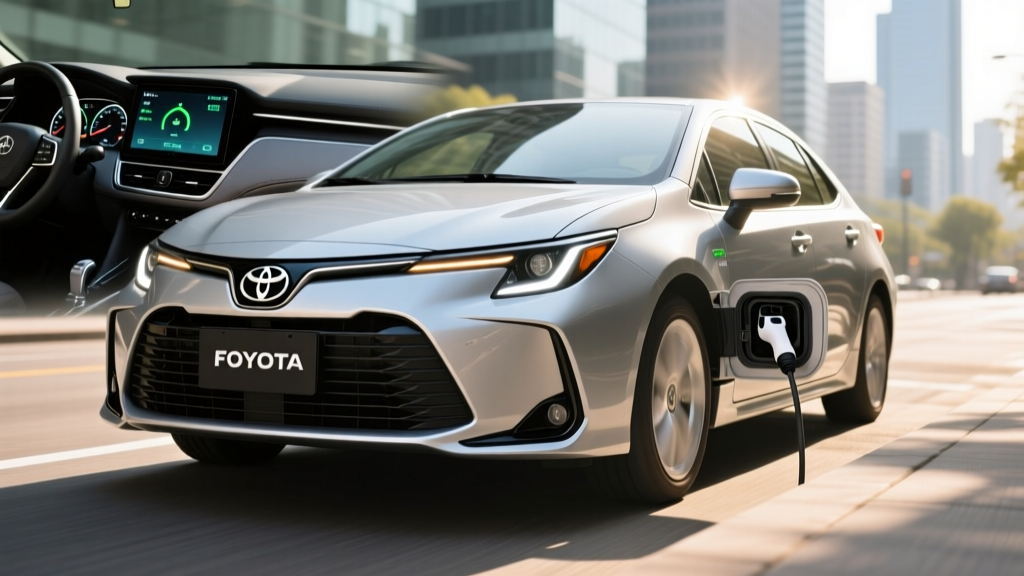
If you want to cut fuel costs without changing how you drive, plug in a charger, or spend $40,000+, the Toyota Corolla Hybrid occupies a narrow but compelling lane. It's a conventional hybrid electric vehicle (HEV) — meaning it recharges its own small battery through regenerative braking and the gasoline engine, with no plug required. For the 2026 model year, Toyota continues to offer the Corolla Hybrid in both front-wheel-drive and electronic all-wheel-drive configurations, making it one of the most fuel-efficient AWD sedans on the market.
This guide covers exactly what the 2026 Corolla Hybrid delivers in EPA-rated efficiency, real-world fuel economy, powertrain specs, pricing, and long-term battery reliability — plus how it stacks up against plug-in hybrids and full battery-electric vehicles for different types of drivers.
2026 Toyota Corolla Hybrid — Key Specifications
| Spec | LE FWD | LE AWD | SE/SE AWD |
|---|---|---|---|
| Combined System HP | 138 hp | 138 hp | 138 hp |
| Engine | 1.8L 4-cyl + 2 motor-generators | 1.8L 4-cyl + 2 motor-generators + rear motor | 1.8L 4-cyl + 2 motor-generators + rear motor |
| EPA City MPG | 53 | 51 | 50 |
| EPA Highway MPG | 46 | 44 | 43 |
| EPA Combined MPG | 50 | 48 | 47 |
| Drivetrain | FWD | AWD (electronic rear motor) | AWD (electronic rear motor) |
| Battery Type | Lithium-ion (hybrid) | Lithium-ion (hybrid) | Lithium-ion (hybrid) |
| Starting MSRP (est.) | $23,500 | $24,900 | $27,350 |
Source: fueleconomy.gov and Toyota Motor Corporation. Pricing estimated for 2026 model year based on prior-year trajectory; confirm with dealer.
How Many MPG Does the Toyota Corolla Hybrid Actually Get?
The headline number for the 2026 Corolla Hybrid LE FWD is an EPA-estimated 50 MPG combined (53 city / 46 highway). That's exceptional for a non-plug-in vehicle and puts it in the top tier of fuel-efficient sedans sold in the U.S.
EPA Fuel Economy Breakdown — 2026 Corolla Hybrid
| Trim | City MPG | Highway MPG | Combined MPG | Annual Fuel Cost* |
|---|---|---|---|---|
| LE FWD | 53 | 46 | 50 | ~$1,050 |
| LE AWD | 51 | 44 | 48 | ~$1,100 |
| SE AWD | 50 | 43 | 47 | ~$1,125 |
*Based on 15,000 miles/year, 55% city driving, $3.50/gallon regular unleaded. Your costs will vary with local fuel prices and driving habits. Source: fueleconomy.gov
Real-World MPG vs. EPA Sticker
Toyota's hybrid system excels in stop-and-go city driving, where the electric motor handles low-speed propulsion and regenerative braking recaptures energy constantly. In real-world driving, Corolla Hybrid owners frequently report exceeding EPA city estimates — seeing 55-58 MPG in urban traffic is common based on owner-reported data on platforms like Fuelly.
Highway driving tells a different story. At sustained 70-80 MPH speeds, the gasoline engine does most of the work and aerodynamic drag dominates. Expect real-world highway fuel economy closer to 40-44 MPG on the LE FWD — a modest shortfall from the 46 MPG EPA rating. Cold weather (below 35°F) further reduces efficiency by 5-10% as the engine runs more often for cabin heat and the battery operates less efficiently.
For a driver with a mixed commute of suburban errands and highway miles, a realistic expectation is 46-50 MPG combined in mild weather, dropping to 42-46 MPG in winter months.
Corolla Hybrid Powertrain: How Toyota's HEV System Works
The 2026 Corolla Hybrid uses Toyota's fifth-generation hybrid synergy drive system. Here's what's under the hood:
- 1.8-liter Atkinson-cycle 4-cylinder engine — produces approximately 96 hp on its own, optimized for thermal efficiency rather than peak power
- Two front motor-generators (MG1 and MG2) — MG1 acts as a starter and generator; MG2 provides electric drive torque and regenerative braking
- AWD models add a rear-mounted electric motor — provides up to 40 hp to the rear wheels for traction, engaging automatically during acceleration or low-grip conditions
- Combined system output: 138 hp — sufficient for 0-60 MPH in approximately 9.0 seconds (FWD) or 8.8 seconds (AWD)
- Lithium-ion hybrid battery — approximately 0.9 kWh usable capacity, mounted under the rear seat for packaging and weight distribution
The hybrid battery in a conventional HEV like the Corolla Hybrid is small by design. It doesn't need to store enough energy for electric-only driving at highway speeds — it just needs to buffer energy for short electric assists, regenerative capture, and smooth engine stop-start transitions. This small size keeps weight down and eliminates the need for any external charging.
You never plug in a Corolla Hybrid. The battery recharges through regenerative braking (converting kinetic energy back to electrical energy during deceleration) and by drawing power from the gasoline engine when needed.
HEV vs. PHEV vs. EV: Which Powertrain Fits You?
The Corolla Hybrid is a conventional HEV. Toyota does not currently offer a Corolla Plug-in Hybrid (PHEV) in the U.S. market. If you're cross-shopping, here's how these three powertrain types compare for a typical driver:
Powertrain Decision Matrix
| Factor | HEV (Corolla Hybrid) | PHEV (e.g., Prius Prime) | BEV (e.g., Tesla Model 3) |
|---|---|---|---|
| Plug-in required? | No | Yes (for full benefit) | Yes |
| Electric-only range | None (EV assist only) | ~40-45 mi | 250-360 mi |
| Total range | ~560 mi | ~440 mi (EV + gas) | 250-360 mi |
| Home charging needed? | No | Recommended (120V or 240V) | Yes (240V strongly recommended) |
| Fuel/energy cost per mile | ~$0.07 | ~$0.04 (electric) / $0.07 (gas) | ~$0.03-$0.05 |
| Federal tax credit (§30D) | Not eligible | Up to $7,500 (if eligible) | Up to $7,500 (if eligible) |
| Starting price range | $23,500 | $33,000+ | $38,000+ |
| Best for | No home charging access, budget-first, simplicity | Short commute + home charging + road trips | Home charging + daily driving under 300 mi |
Choose the Corolla Hybrid If:
- You live in an apartment or lack access to home/workplace charging
- Your priority is low purchase price and maximum simplicity
- You drive 12,000-20,000 miles/year and want fuel savings without behavioral changes
- You want AWD in a fuel-efficient sedan (rare in this price bracket)
Look at a PHEV (Prius Prime) Instead If:
- You have home charging and a commute under 40 miles round-trip
- You want to drive mostly electric daily but keep gas for road trips
- You qualify for the §30D federal tax credit, narrowing the price gap
Consider a Full EV If:
- You can install a Level 2 home charger
- Your daily driving is under 250 miles and you have access to DC fast charging for road trips
- You want the lowest per-mile energy cost and minimal maintenance
Pricing, Tax Credits, and Total Cost of Ownership
The 2026 Toyota Corolla Hybrid starts at an estimated $23,500 MSRP for the LE FWD trim, rising to approximately $27,350 for the SE AWD. These prices make it one of the most affordable hybrid vehicles in the U.S. market.
Federal Tax Credit Eligibility
The Corolla Hybrid is a conventional HEV and does not qualify for the IRS §30D federal clean vehicle tax credit. That credit (up to $7,500) is reserved for plug-in vehicles — battery electric vehicles (BEVs) and plug-in hybrids (PHEVs) — that meet battery sourcing, critical minerals, MSRP cap, and buyer income requirements under current IRS rules.
This is a common point of confusion. While the Corolla Hybrid saves you money at the pump, the purchase price is what you pay — no federal tax incentive applies. Some states may offer their own rebates for hybrid vehicles, but these are increasingly rare as state programs shift focus to plug-in vehicles. Check your state's energy office or DMV website for current local incentives.
5-Year Cost of Ownership Snapshot
| Cost Factor | Corolla Hybrid LE FWD | Corolla Gas LE (non-hybrid) | Difference |
|---|---|---|---|
| MSRP (est.) | $23,500 | $22,050 | +$1,450 |
| Fuel (5 yr / 75,000 mi) | ~$5,250 | ~$8,100 | -$2,850 |
| Maintenance (5 yr est.) | ~$2,200 | ~$2,500 | -$300 |
| Insurance (5 yr est.) | ~$6,500 | ~$6,200 | +$300 |
| Net 5-Year Cost | ~$37,450 | ~$38,850 | Hybrid saves ~$1,400 |
Assumes $3.50/gal regular unleaded; gas Corolla at 34 MPG combined. The hybrid premium pays for itself within approximately 2.5 years of average driving.
Hybrid Battery Warranty, Lifespan, and Replacement Cost
Hybrid battery longevity is the number-one concern for first-time hybrid buyers. Here's what Toyota provides:
Toyota Hybrid Battery Warranty
- Coverage: 10 years / 150,000 miles (whichever comes first)
- Applies to: Hybrid battery pack and hybrid system components (inverter, motor-generators)
- Transferable: Yes, to subsequent owners — helps resale value
- Capacity threshold: Toyota warrants the battery against defects and abnormal degradation; no specific percentage-retention threshold is published (unlike BEV warranties)
How Long Do Corolla Hybrid Batteries Actually Last?
Real-world data from Toyota's hybrid fleet (Prius, Camry Hybrid, Corolla Hybrid) shows that modern lithium-ion hybrid batteries routinely last 150,000-200,000+ miles before requiring replacement. The hybrid battery is small (~0.9 kWh) and operates in a narrow state-of-charge window (roughly 40-80%), which dramatically reduces degradation compared to a full EV battery that cycles through deeper charge ranges.
Toyota's hybrid system never fully charges or fully depletes the battery — the onboard computer manages this buffer automatically. This is why hybrid batteries outlast their warranty periods in most cases.
Replacement Cost If It Fails
If your hybrid battery does fail outside warranty coverage, a replacement from Toyota typically costs $2,000-$3,500 (parts and labor) at a dealership. Independent hybrid specialists and refurbished battery options can reduce this to $1,000-$2,000. This is a fraction of EV battery replacement costs ($5,000-$20,000+) because the hybrid battery is physically small and less complex to service.
Reliability, Safety, and Ownership Experience
Toyota's hybrid powertrain is among the most proven in the automotive industry, with over 25 years of continuous production since the original Prius. The Corolla Hybrid benefits from this maturity:
- No plug-in infrastructure dependency — eliminates the "charging desert" concern entirely
- Standard maintenance — oil changes, brake pads (which last longer thanks to regenerative braking), tire rotations, and cabin air filters. No EV-specific service items.
- Toyota Safety Sense 3.0 — includes pre-collision system with pedestrian detection, lane departure alert with steering assist, full-speed-range dynamic radar cruise control, lane tracing assist, and road sign assist
- NHTSA and IIHS ratings — the Corolla sedan platform has historically earned top scores; check IIHS and NHTSA for the latest 2026 crash-test results when published
Pros
- 50 MPG combined (LE FWD) — top-tier efficiency without plugging in
- AWD available for ~$1,400 premium — rare in the hybrid sedan segment
- 10-year / 150,000-mile hybrid battery warranty
- Proven, mature powertrain with low maintenance costs
- Starting under $24,000 — one of the cheapest hybrids available
- Regenerative braking extends brake pad life significantly
Cons
- 138 hp — adequate but not quick; 0-60 in ~9 seconds
- No federal tax credit (HEV, not plug-in)
- Modest rear-seat and cargo space vs. larger sedans or crossovers
- No plug-in variant available in the U.S. (no electric-only driving)
- Infotainment system functional but not class-leading in responsiveness
- Highway MPG trails city MPG noticeably (common for all hybrids)
Who Should Buy the 2026 Toyota Corolla Hybrid?
The Corolla Hybrid is the right choice if your priorities are low upfront cost, maximum fuel savings with zero lifestyle change, and long-term reliability. It's especially well-suited for:
- Apartment dwellers and renters who cannot install a home charger and don't want to rely on public charging infrastructure
- High-mileage commuters (15,000+ miles/year) who will recoup the hybrid premium quickly through fuel savings
- Drivers in cold climates who want AWD without the fuel-economy penalty of a conventional AWD gas car
- First-time hybrid buyers who want a no-risk entry point with Toyota's warranty backing
- Rideshare and delivery drivers for whom every MPG directly impacts earnings
It's the wrong choice if you want electric-only daily driving, you qualify for the §30D tax credit (which makes a PHEV or BEV more cost-competitive), or you need cargo space for a family. In those cases, look at the Toyota Prius Prime (PHEV), a compact electric SUV, or a larger hybrid like the RAV4 Hybrid.
Frequently Asked Questions
How many MPG does the 2026 Toyota Corolla Hybrid get?
The EPA rates the Corolla Hybrid LE FWD at 53 city / 46 highway / 50 combined MPG. AWD trims drop slightly to 47-48 combined. Real-world city driving often exceeds EPA estimates (55+ MPG), while sustained highway driving at 75+ MPH typically yields 40-44 MPG.
Does the Toyota Corolla Hybrid need to be plugged in?
No. The Corolla Hybrid is a conventional HEV that recharges its battery through regenerative braking and the gasoline engine. There is no plug, no charging cable, and no dependence on charging stations. You simply fill up at a gas station as usual.
Is there a Toyota Corolla plug-in hybrid (PHEV)?
Toyota does not sell a Corolla PHEV in the United States. If you want a Toyota plug-in hybrid, the Prius Prime offers approximately 40-45 miles of electric-only range and qualifies for potential federal tax credits. The Corolla is available only as a conventional hybrid (HEV) in the U.S.
Does the Corolla Hybrid qualify for a federal tax credit?
No. The IRS §30D clean vehicle credit applies only to plug-in electric vehicles (BEVs and PHEVs) that meet battery sourcing, MSRP, and income requirements. Conventional hybrids like the Corolla Hybrid are not eligible. Check your state's incentive programs separately — a few states still offer small hybrid rebates.
How long will the Corolla Hybrid battery last?
Toyota covers the hybrid battery for 10 years / 150,000 miles. Based on long-term fleet data from Toyota hybrids, most batteries last 150,000-200,000+ miles before needing replacement. The system keeps the battery in a narrow charge window (40-80%) to minimize degradation. Out-of-warranty replacement costs $2,000-$3,500 at a dealer, less through independent shops.
Is the Corolla Hybrid AWD system worth the extra cost?
If you live in a region with snow, rain, or loose gravel roads, the electronic AWD system (which adds a rear electric motor) provides meaningful traction benefits for a ~$1,400 premium. The fuel economy penalty is small (2-3 MPG combined). For dry-climate drivers who rarely encounter low-grip conditions, FWD is the more efficient and cost-effective choice.
How does the Corolla Hybrid compare to the Prius?
The current-generation Prius offers more power (up to 196 hp), slightly better fuel economy (up to 57 MPG combined), and is available as a PHEV (Prius Prime). However, the Prius starts approximately $4,000-$5,000 higher than the Corolla Hybrid. If budget is the priority and you don't need the extra power or hatchback cargo space, the Corolla Hybrid delivers similar efficiency at a lower price.