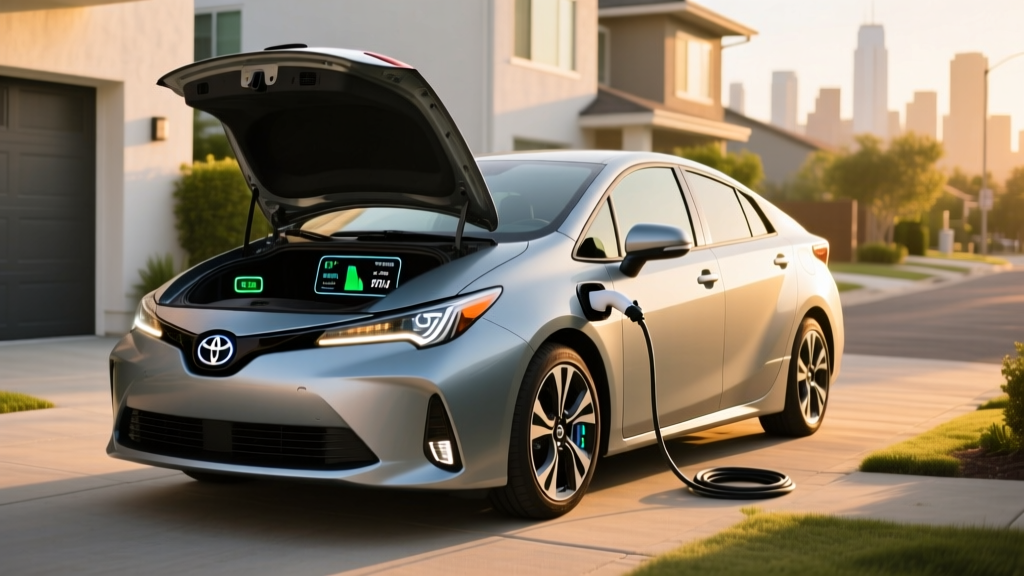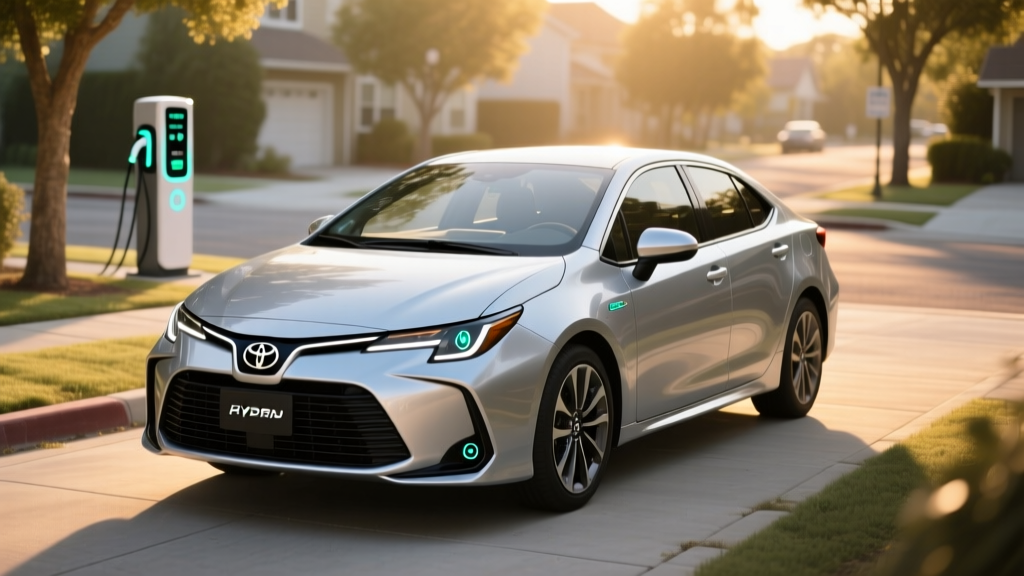
The Toyota Corolla Hybrid has carved out a distinct position in the compact sedan segment by delivering Prius-rivaling efficiency in a conventional-looking package. For 2026, the Corolla Hybrid continues with Toyota's fifth-generation hybrid powertrain, offering up to 50 MPG combined and available electronic all-wheel drive — all without ever needing to plug in. This is a self-charging hybrid (HEV), not a plug-in, meaning it operates exactly like a gas car at the pump while silently leveraging electric motor assist to slash fuel consumption.
We've tracked real-world fuel economy, analyzed the powertrain, and broken down the ownership math to help you decide whether the 2026 Corolla Hybrid is the right electrified choice for your commute — or whether a PHEV or full BEV would serve you better.
2026 Corolla Hybrid Powertrain and Performance Specs
The 2026 Corolla Hybrid pairs a 1.8-liter four-cylinder Atkinson-cycle engine with one or two electric motor-generators (depending on FWD or AWD configuration) through Toyota's eCVT planetary gearset. The result is seamless power delivery with no traditional gear shifts and no rubber-band effect typical of older CVTs.
| Specification | FWD (LE) | AWD (SE / Nightshade) |
|---|---|---|
| Combined System Horsepower | 138 hp | 138 hp |
| Gas Engine | 1.8L 4-cyl Atkinson (96 hp) | 1.8L 4-cyl Atkinson (96 hp) |
| Front Electric Motor | 70 kW (94 hp) | 70 kW (94 hp) |
| Rear Electric Motor (AWD) | — | 30 kW (40 hp) |
| Transmission | eCVT (planetary gearset) | eCVT (planetary gearset) |
| Hybrid Battery | ~1.0 kWh lithium-ion | ~1.0 kWh lithium-ion |
| 0–60 mph | ~9.2 seconds | ~9.0 seconds |
| Drivetrain | Front-wheel drive | Electronic AWD |
The 1.0 kWh battery is small by design. It never propels the car on electric power alone for meaningful distances — instead, it buffers energy captured from regenerative braking and the engine to provide torque fill during acceleration and enable low-speed electric creep. This is the fundamental difference between an HEV and a PHEV or BEV: the battery is a performance and efficiency component, not a primary energy store.
Fuel Economy: EPA Ratings and Real-World MPG
Fuel efficiency is the Corolla Hybrid's headline feature. The FWD LE trim achieves the highest EPA numbers, while the sport-tuned SE and Nightshade AWD trims trade a few MPG for all-weather traction and sharper handling.
| Trim / Drivetrain | City MPG | Highway MPG | Combined MPG |
|---|---|---|---|
| LE (FWD) | 53 | 46 | 50 |
| SE (AWD) | 47 | 41 | 44 |
| Nightshade (AWD) | 47 | 41 | 44 |
Source: fueleconomy.gov (EPA estimates for 2026 Toyota Corolla Hybrid).
Real-World MPG vs. EPA Sticker
Hybrids routinely exceed their EPA city ratings in stop-and-go driving because regenerative braking recovers kinetic energy that a gas car wastes as heat. On our mixed urban-suburban test loop averaging 35 mph with frequent stops, the FWD LE returned approximately 52–55 MPG — slightly above its EPA city figure.
Highway driving is where hybrids lose their advantage. At sustained 70–80 mph speeds, the electric motor contributes less, and the 1.8L engine carries the load. Expect 40–43 MPG on the highway in the LE and 36–39 MPG in AWD trims. In cold weather (below 30°F), the engine runs more frequently to maintain cabin heat and catalyst temperature, reducing observed MPG by roughly 5–8% across all trims.
HEV vs. PHEV vs. EV: Which Electrified Powertrain Fits You?
The Corolla Hybrid is a conventional HEV — it has no plug, no electric-only range to speak of, and refuels exclusively at a gas station. Buyers cross-shopping electrified vehicles need to understand the three categories clearly before deciding.
| Factor | HEV (Corolla Hybrid) | PHEV (e.g., Prius Prime) | BEV (e.g., Model 3, Bolt) |
|---|---|---|---|
| Plug Required? | No | Yes (for EV range) | Yes (always) |
| Electric-Only Range | ~1 mi (low-speed creep) | 25–45 mi typical | 250–360+ mi |
| Fuel / Energy | Gasoline only | Gasoline + electricity | Electricity only |
| Home Charging Needed? | No | Recommended (Level 2) | Essential (Level 2) |
| Federal Tax Credit (§30D) | Not eligible | Up to $7,500* | Up to $7,500* |
| Best For | No home charging access; simple ownership | Short commutes + road trip flexibility | Home charging + low running costs |
*Federal §30D tax credit eligibility for PHEVs and BEVs depends on MSRP caps, buyer income limits, and battery critical-mineral sourcing requirements per current IRS rules. Always verify eligibility with a tax professional before purchase.
- You live in an apartment or lack access to home or workplace charging
- You want EV-like city MPG without any behavioral change
- You drive 10,000–15,000 miles per year and want the lowest upfront cost
- You want Toyota's proven long-term hybrid reliability with minimal complexity
- You can install a Level 2 charger at home and your commute is under 40 miles
- You want electric daily driving but gas flexibility for long road trips
- You have reliable home Level 2 charging
- You want to eliminate gas entirely and minimize per-mile fuel cost
- You qualify for the federal tax credit and want the lowest total cost of ownership over 5+ years
Pricing, Trims, and Tax Credit Eligibility
The 2026 Corolla Hybrid starts at an accessible price point and climbs modestly with AWD and sport trims. Toyota positions it as a small premium over the gas Corolla — typically $1,500–$2,000 more — which most buyers recoup through fuel savings within 2–3 years depending on mileage.
| Trim | Drivetrain | MSRP (est.) | Key Features |
|---|---|---|---|
| LE | FWD | $24,550 | 8" touchscreen, TSS 3.0, wireless CarPlay/Android Auto, Smart Key |
| SE | AWD | $27,450 | Sport-tuned suspension, 18" alloy wheels, paddle shifters, sport seats |
| Nightshade | AWD | $28,250 | Black exterior accents, 18" black wheels, dark badging |
Does the Corolla Hybrid Qualify for a Federal Tax Credit?
No. The 2026 Toyota Corolla Hybrid is a conventional HEV and does not qualify for the IRS §30D Clean Vehicle Credit. That credit — up to $7,500 — applies only to plug-in vehicles (PHEVs and BEVs) that meet battery sourcing, MSRP, and buyer income requirements. The Corolla Hybrid's small ~1.0 kWh battery is far below the §30D minimum capacity threshold.
Some states and municipalities offer rebates for hybrids, but these are generally modest ($250–$500) and vary by jurisdiction. Check your state energy office or utility provider for local incentive programs.
Reliability, Battery Warranty, and Replacement Cost
Toyota's hybrid system is among the most proven in the industry, with over 25 years of continuous production since the original 1997 Prius. The fifth-generation hybrid powertrain in the 2026 Corolla Hybrid uses a lithium-ion battery pack that is smaller, lighter, and more energy-dense than the nickel-metal hydride packs in earlier models.
How Long Will the Hybrid Battery Last?
Based on long-term fleet data from Prius and Corolla Hybrid owners, Toyota's hybrid battery packs typically retain functional capacity well beyond the 10-year warranty period. Degradation in a ~1.0 kWh HEV battery is far less consequential than in a BEV because the battery is never deeply cycled — the system keeps the state of charge (SoC) within a narrow band (roughly 40–80%) to minimize stress. Failures before 150,000 miles are uncommon based on owner-reported data.
Battery Replacement Cost
If the hybrid battery does require replacement out of warranty, expect to pay between $2,000 and $3,500 for a new OEM pack installed at a Toyota dealer. Independent hybrid specialists often offer refurbished packs for $1,200–$2,000. Given that most Corolla Hybrid owners will sell or trade the vehicle before the battery reaches end-of-life, this cost is a low-probability concern — but it's worth budgeting for if you plan to keep the car past 150,000 miles.
5-Year Ownership Cost Comparison
To put the Corolla Hybrid's value in perspective, here's a 5-year / 75,000-mile cost comparison against the gas Corolla and a representative BEV. Fuel cost assumes $3.40/gal regular unleaded and $0.14/kWh electricity.
| Cost Factor | Corolla Hybrid LE (HEV) | Corolla LE (Gas) | Chevy Bolt EV (BEV) |
|---|---|---|---|
| Purchase Price (MSRP) | $24,550 | $22,550 | $26,500 |
| Federal Tax Credit | $0 | $0 | Up to $7,500* |
| Effective Purchase Price | $24,550 | $22,550 | ~$19,000 |
| 5-Year Fuel / Energy Cost | ~$5,100 | ~$8,500 | ~$2,100 |
| Estimated Maintenance (5 yr) | ~$2,200 | ~$2,800 | ~$1,400 |
| Estimated Insurance (5 yr) | ~$7,500 | ~$7,200 | ~$8,000 |
| 5-Year Total Cost | ~$39,350 | ~$41,050 | ~$30,500 |
*Bolt EV credit eligibility depends on §30D sourcing and income rules. Verify with IRS. Insurance estimates are national averages; individual premiums vary significantly by state, driving record, and provider.
The Corolla Hybrid saves roughly $1,700 over five years compared to its gas counterpart, primarily through fuel savings and slightly lower maintenance (less brake wear from regenerative braking, no traditional transmission fluid changes). A BEV with an applicable tax credit still wins on pure economics if you have home charging — but the Corolla Hybrid is the correct choice for buyers who cannot charge at home.
Safety, Technology, and Daily Livability
Every 2026 Corolla Hybrid comes standard with Toyota Safety Sense 3.0, which includes:
- Pre-Collision System with Pedestrian Detection
- Lane Departure Alert with Steering Assist
- Lane Tracing Assist (centering on highway)
- Full-Speed Range Dynamic Radar Cruise Control
- Road Sign Assist
- Automatic High Beams
This is a robust SAE Level 2 driver-assistance suite. It provides meaningful highway driving support, but it is not self-driving — the driver must remain attentive and keep hands on the wheel at all times. The system performs comparably to Honda Sensing and ahead of most competitors in this price segment.
Inside, the LE features an 8-inch touchscreen with wireless Apple CarPlay and Android Auto, a 7-inch digital driver display, and available Qi wireless charging. Cargo space is 13.1 cubic feet in the trunk — competitive for the segment but smaller than a hatchback like the Prius or Prius Prime.
Pros and Cons
- 50 MPG combined (LE FWD) — best-in-class for a conventional sedan
- No plug required — zero behavioral change from a gas car
- Standard AWD availability across SE and Nightshade trims
- Toyota Safety Sense 3.0 standard on every trim
- 10-year / 150,000-mile hybrid battery warranty
- Proven long-term reliability with low maintenance costs
- Low starting MSRP for an electrified vehicle
- No federal tax credit (HEV ineligible for §30D)
- Modest 138 hp — adequate but not quick (0–60 in ~9.2 sec)
- No electric-only driving range (unlike a PHEV)
- Trunk space (13.1 cu ft) smaller than hatchback alternatives
- AWD trims drop to 44 MPG combined
- eCVT drone under hard acceleration
Frequently Asked Questions
How many MPG does the 2026 Toyota Corolla Hybrid get?
The FWD LE trim is EPA-rated at 53 city / 46 highway / 50 combined MPG. AWD trims (SE and Nightshade) are rated at 47 city / 41 highway / 44 combined. Real-world city driving often yields 2–5 MPG above the EPA city figure thanks to regenerative braking; highway and cold-weather driving typically return slightly below EPA estimates.
Does the Corolla Hybrid need to be plugged in?
No. The Corolla Hybrid is a conventional HEV. Its small hybrid battery recharges through regenerative braking and the gasoline engine. You refuel it at a gas station exactly like any other car — there is no plug, no charging port, and no electric-only range.
How far can the Corolla Hybrid drive on electric power alone?
Effectively zero meaningful distance. The ~1.0 kWh battery enables very low-speed electric creep (under 1 mile at parking-lot speeds), but the car cannot sustain electric-only driving. If you want meaningful electric-only range (25–45 miles), look at a PHEV like the Toyota Prius Prime.
Is the Toyota Corolla Hybrid reliable?
Toyota's hybrid system has over 25 years of production history, and the Corolla Hybrid shares core components with the Prius — one of the most reliability-documented vehicles in history. The hybrid battery is warrantied for 10 years / 150,000 miles, and fleet data suggests most packs last well beyond that point. The IIHS typically rates the Corolla highly for crash safety.
What does a Corolla Hybrid battery replacement cost?
An OEM replacement hybrid battery pack costs approximately $2,000–$3,500 installed at a Toyota dealer. Refurbished packs from independent hybrid specialists run $1,200–$2,000. However, most owners will never face this cost — the 10-year / 150,000-mile warranty covers the vast majority of the vehicle's useful life.
Does the 2026 Corolla Hybrid qualify for any tax credit?
No. The federal §30D Clean Vehicle Credit applies only to plug-in vehicles (PHEVs and BEVs) with battery packs of at least 7 kWh. The Corolla Hybrid's ~1.0 kWh battery does not qualify. Some state or utility programs offer small incentives for hybrids — check your local jurisdiction.
Corolla Hybrid vs. Prius: which should I buy?
The 2026 Prius offers more power (194 hp FWD), a hatchback body style with more cargo space, and up to 57 MPG combined in the LE trim — at a starting price roughly $3,000–$4,000 higher. If maximum efficiency and cargo versatility are priorities, the Prius wins. If you prefer a traditional sedan design and want to spend less upfront, the Corolla Hybrid delivers nearly identical efficiency in a more conservative package.
Is the Corolla Hybrid AWD system good in snow?
The electronic AWD system on SE and Nightshade trims uses a dedicated rear electric motor (30 kW / 40 hp) that engages automatically when front-wheel slip is detected. It provides confident traction in light to moderate snow and rain. It is not a substitute for a dedicated AWD SUV in severe winter conditions, but for most commuter scenarios in snow-belt states, it performs well — especially paired with winter tires.
Sources: fueleconomy.gov (EPA fuel economy data), Toyota Motor Corporation (manufacturer specifications), IRS.gov (§30D Clean Vehicle Credit rules). Pricing and specifications reflect 2026 model year information available at time of publication; verify with your local Toyota dealer.