2009 GMC Yukon Hybrid: A Full-Size SUV That Pioneered Hybrid Tech
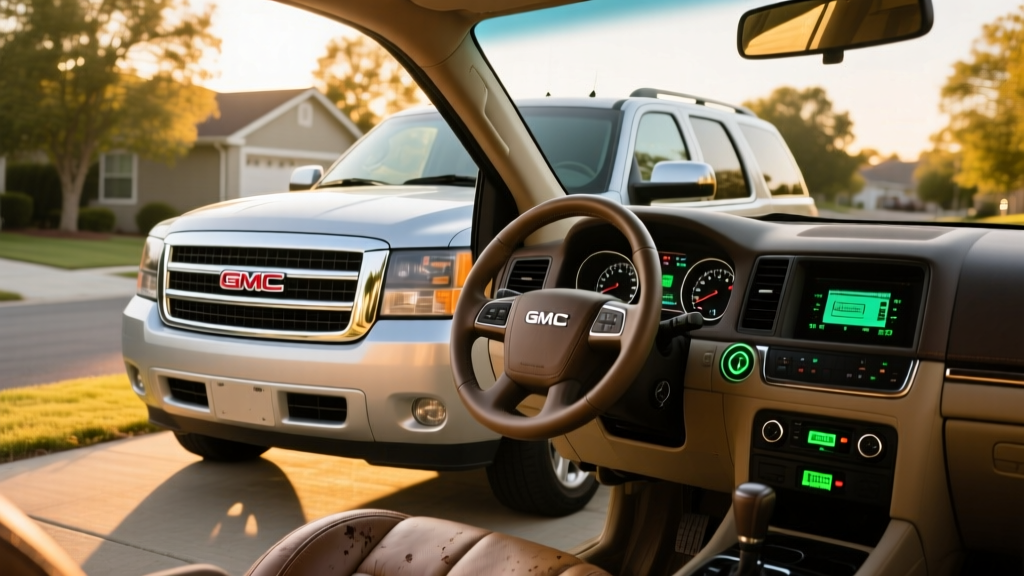
If you're researching the 2009 GMC Yukon Hybrid on the used market, you're looking at one of the earliest attempts to bring hybrid efficiency to the full-size SUV segment. Built on GM's two-mode hybrid system — the same architecture shared with the Chevrolet Tahoe Hybrid and Cadillac Escalade Hybrid — the Yukon Hybrid promised V8 towing capability with a meaningful fuel-economy bump over its gas-only sibling. In 2026, this SUV is 17 years old, which raises real questions about battery longevity, parts availability, and whether the fuel savings still pencil out for a used buyer.
This guide breaks down every critical number — EPA MPG, horsepower, battery specs, real-world efficiency, and ownership costs — so you can decide whether a used 2009 Yukon Hybrid is a smart buy or a maintenance risk.
HEV vs PHEV: Where the Yukon Hybrid Fits
The 2009 GMC Yukon Hybrid is a conventional hybrid electric vehicle (HEV), not a plug-in hybrid (PHEV). This distinction matters because it shapes everything from how you fuel it to what you can expect at the pump.
| Feature | HEV (2009 Yukon Hybrid) | PHEV (e.g., modern plug-in SUV) |
|---|---|---|
| Plug-in charging? | No — never needs plugging in | Yes — charges via Level 1 or Level 2 |
| Electric-only range | None (electric assist only at low speeds) | Typically 20–50 miles |
| Battery size | 1.8 kWh (NiMH) | 15–30+ kWh (lithium-ion) |
| Regenerative braking | Yes — recharges battery during deceleration | Yes |
| Federal tax credit (new) | None (expired long ago) | Up to $7,500 under §30D if eligible |
| Fuel type | Gasoline only | Gasoline + electricity |
The Yukon Hybrid's battery recharges exclusively through regenerative braking and the gasoline engine. You will never need to plug it in, and there is no electric-only driving range to manage. If you're looking for plug-in capability in a full-size GM SUV, that technology didn't arrive until much later in different platforms.
Powertrain and Performance Specs
The 2009 Yukon Hybrid uses GM's Two-Mode Hybrid system, which pairs a 6.0-liter Vortec V8 with two electric motors integrated into a specially designed 2-mode continuously variable transmission (ECVT). This isn't a mild hybrid system — both the engine and motors can drive the wheels, and the system can shut off the V8 entirely at low speeds, running on electric power alone up to approximately 25 mph under light loads.
| Specification | 2009 GMC Yukon Hybrid |
|---|---|
| Engine | 6.0L Vortec V8 (VVT, Active Fuel Management) |
| Engine horsepower | 332 hp @ 5,100 rpm |
| Engine torque | 367 lb-ft @ 4,100 rpm |
| Electric motors | Two AC synchronous motors (60 kW each) |
| Combined system output | 379 hp |
| Transmission | 2-mode ECVT (electrically variable) |
| Drivetrain | RWD (2WD) or 4WD available |
| 0-60 mph | ~8.0 seconds (2WD) |
| Towing capacity | ~5,800 lbs (2WD hybrid) |
| Battery type | Nickel-metal hydride (NiMH) |
| Battery capacity | ~1.8 kWh (300V system) |
| Curb weight | ~5,840 lbs (2WD) |
The Two-Mode system is notably different from the single-mode systems found in the Toyota Prius or Camry Hybrid of the same era. Mode 1 optimizes for low-speed city driving where electric assist provides the most benefit. Mode 2 engages at highway speeds and under heavy loads, including towing, where the system blends engine and motor power differently to maintain efficiency. This dual-mode architecture is what allowed GM to offer hybrid tech in a 5,800-pound SUV without sacrificing towing or acceleration.
Fuel Economy: EPA Ratings and Real-World MPG
The headline number for the 2009 Yukon Hybrid was always fuel economy relative to the gas-only Yukon, which rated just 14 city / 20 highway / 16 combined MPG with the 5.3L V8. Here's how the hybrid compared, per EPA data from fueleconomy.gov:
| Configuration | City MPG | Highway MPG | Combined MPG |
|---|---|---|---|
| Yukon Hybrid 2WD | 21 | 22 | 21 |
| Yukon Hybrid 4WD | 20 | 20 | 20 |
| Yukon 5.3L V8 2WD (gas) | 14 | 20 | 16 |
| Yukon 6.2L V8 4WD (gas) | 12 | 18 | 14 |
Real-world MPG expectations in 2026: The EPA city rating of 21 MPG for the 2WD model was genuinely impressive for a full-size SUV in 2009. In real-world driving, owners frequently reported 19–22 MPG in mixed suburban use, with highway-only trips yielding 20–23 MPG. The hybrid system's biggest advantage was in city driving, where the gas-only Yukon dropped to 14 MPG while the hybrid maintained 21. If most of your driving is stop-and-go suburban or urban, the hybrid's advantage is most pronounced.
However, a 17-year-old vehicle with a potentially degraded hybrid battery may not hit these numbers today. A weakened NiMH battery reduces the system's ability to provide electric assist and capture regenerative energy, which can drop real-world MPG by 1–3 MPG depending on battery state of health. Before purchasing, ask for a hybrid system diagnostic from a GM dealer or qualified hybrid technician.
Battery Longevity, Warranty, and Replacement Cost
The 2009 Yukon Hybrid's NiMH battery pack was originally covered by GM's hybrid component warranty: 8 years or 100,000 miles (extended to 10 years / 150,000 miles in CARB states including California, New York, Massachusetts, and others that adopted California emissions standards). In 2026, every 2009 model is well beyond the original warranty period regardless of mileage.
Original Hybrid Battery Warranty: 8 years / 100,000 miles (federal) — 10 years / 150,000 miles (CARB states)
Current Status (2026): Expired for all 2009 models. Any battery replacement is an out-of-pocket expense.
NiMH Battery Replacement Cost: $2,500–$4,500 for a refurbished or aftermarket pack; $5,000–$7,000+ for a new OEM-equivalent pack including labor at a GM dealer.
NiMH batteries in GM's two-mode system have generally proven durable, with many original packs lasting 150,000–200,000 miles before significant degradation. Unlike the lithium-ion packs in modern EVs, NiMH chemistry degrades more gradually — you'll notice reduced electric-assist contribution and slightly lower MPG rather than a sudden failure. That said, at 17 years old, any original battery is living on borrowed time.
If you're evaluating a used 2009 Yukon Hybrid, budget $3,000–$5,000 as a contingency for a hybrid battery replacement. Several aftermarket suppliers offer refurbished NiMH packs at lower cost than OEM, and independent hybrid specialists can perform the swap for less than a dealership. The two-mode hybrid transmission and electric motors have proven very reliable, with far fewer reported failures than the battery pack itself.
Who Should Buy the 2009 Yukon Hybrid in 2026?
The 2009 Yukon Hybrid occupies a narrow niche in the 2026 used market. It makes sense for a specific buyer profile and falls short for others.
Reasons to Buy
- 31% better city MPG vs gas-only Yukon (21 vs 14) — meaningful savings if you drive in stop-and-go traffic
- Full towing capability — 5,800 lbs, close to the gas model's rating
- No plug-in required — operates exactly like a conventional SUV at the gas pump
- Lower used-market price — typically $5,000–$10,000 depending on condition and mileage
- Proven powertrain — the 6.0L V8 and 2-mode transmission have strong longevity records
Reasons to Think Twice
- Hybrid battery is 17 years old — replacement is likely needed within your ownership
- No federal tax credit — the §30D credit does not apply to used conventional hybrids
- Outdated technology — no modern ADAS, infotainment, or connectivity features
- Still thirsty by modern standards — 21 MPG combined is less than a 2026 Toyota RAV4 Hybrid (39 MPG)
- Parts availability — hybrid-specific components (battery, inverter, ECVT) are getting harder to source
Hybrid vs PHEV vs EV: Which Fits You?
If you need a full-size, three-row SUV and can't plug in at home, a used HEV like the Yukon Hybrid is one of the few options from this era. But if you're open to newer vehicles, consider this decision framework:
- Choose the 2009 Yukon Hybrid if: You need a body-on-frame SUV for towing, have no home charging access, want to spend under $10,000, and accept the battery-replacement risk.
- Choose a modern PHEV (e.g., Chrysler Pacifica Hybrid, Toyota RAV4 Prime) if: You want 30–40 miles of electric-only range for daily commutes, have Level 2 charging at home, and can spend $25,000+ on a newer used vehicle.
- Choose a full BEV (e.g., Rivian R1S, Tesla Model X) if: You want zero tailpipe emissions, have reliable home charging, need 300+ miles of range, and can budget $40,000+ used.
Tax Credits and Incentives for the 2009 Yukon Hybrid
When new, the 2009 GMC Yukon Hybrid qualified for a federal hybrid tax credit under the Energy Policy Act of 2005 — approximately $2,200 depending on the phase-out schedule for GM hybrids. That credit ended over a decade ago.
Under current 2026 IRS rules, the §30D Clean Vehicle Credit applies only to new battery electric vehicles and qualifying plug-in hybrids — not conventional hybrids like the Yukon Hybrid. There is also no federal used-EV credit for conventional hybrids (the §25E used clean vehicle credit covers only plug-in electric vehicles and fuel cell vehicles).
Some states may offer minimal incentives for efficient used vehicles, but these are uncommon and vary by jurisdiction. Check your state's energy office or DMV for any applicable programs. In short: do not expect any tax credit when purchasing a used 2009 GMC Yukon Hybrid.
Ownership Costs: What to Budget in 2026
At current national average gas prices (~$3.20/gallon in early 2026), here's how the annual fuel cost breaks down for the Yukon Hybrid versus its gas-only counterpart, assuming 15,000 miles per year:
| Model | Combined MPG | Gallons/Year | Annual Fuel Cost |
|---|---|---|---|
| Yukon Hybrid 2WD | 21 | 714 | ~$2,285 |
| Yukon 5.3L V8 2WD | 16 | 938 | ~$3,000 |
| Annual savings (Hybrid) | ~224 gallons saved | ~$715/year | |
At roughly $715 in annual fuel savings over the gas-only model, a $4,000 hybrid battery replacement would take about 5.5 years to recoup through fuel savings alone. If you're buying a Yukon Hybrid where the battery has already been replaced (with documentation), the value proposition improves considerably. If not, negotiate the purchase price accordingly.
Insurance costs for a 2009 Yukon Hybrid are generally comparable to the gas model — insurers don't typically surcharge for hybrid vehicles of this age. Expect $1,200–$1,800 annually depending on your state, driving record, and coverage level.
Frequently Asked Questions
How many MPG does the 2009 GMC Yukon Hybrid get?
The EPA rates the 2009 Yukon Hybrid 2WD at 21 city / 22 highway / 21 combined MPG. The 4WD version rates 20/20/20. Real-world owners report 19–22 MPG in mixed driving, with the biggest advantage over the gas model showing up in city traffic.
Does the 2009 Yukon Hybrid need to be plugged in?
No. It is a conventional hybrid (HEV) that recharges its battery through regenerative braking and the gasoline engine. You fuel it exactly like any other SUV — at the gas pump only.
How far can it go on electric power alone?
The 2009 Yukon Hybrid has no meaningful electric-only range. At very low speeds (under ~25 mph) with light throttle input, the system can move the vehicle on electric motors alone for short distances — perhaps a few hundred yards in a parking lot. This is not comparable to a PHEV's 20–50 mile electric range.
Is the 2009 Yukon Hybrid reliable?
The 6.0L V8 engine and 2-mode ECVT transmission have strong reliability records. The main concern in 2026 is the 17-year-old NiMH hybrid battery, which is likely near or past its useful life. Budget $3,000–$5,000 for a battery replacement. Non-hybrid components (suspension, electronics, interior) carry the same wear concerns as any 17-year-old full-size GM SUV.
What does a hybrid battery replacement cost?
Expect $2,500–$4,500 for a refurbished aftermarket NiMH pack with installation, or $5,000–$7,000+ for a new OEM-equivalent pack at a dealership. Independent hybrid specialists often offer the best value.
Does the 2009 Yukon Hybrid qualify for any tax credit?
No. The original federal hybrid credit expired over a decade ago. Under current IRS §30D and §25E rules, conventional hybrids (HEVs) are not eligible for any federal clean vehicle tax credit — only plug-in hybrids and battery electric vehicles qualify.
Can the 2009 Yukon Hybrid tow?
Yes. The 2WD hybrid is rated for approximately 5,800 pounds of towing capacity. The hybrid system's Mode 2 is specifically designed to maintain efficiency under heavy load and towing conditions. This is slightly less than the gas-only model's ~7,700 lb rating, due to the hybrid system's weight and drivetrain calibration.
Is it worth buying a 2009 Yukon Hybrid over the gas model?
It depends on your driving pattern and the vehicle's condition. If you do mostly city and suburban driving, the 31% city MPG improvement is substantial and saves ~$715/year in fuel. But factor in the likely battery replacement cost. If the battery has already been replaced with documentation, the hybrid is the better buy. If the original battery is still in place, negotiate a significant discount or budget for replacement.
Sources: EPA fuel economy data via fueleconomy.gov; IRS clean vehicle credit rules via irs.gov; NHTSA vehicle safety data via nhtsa.gov.