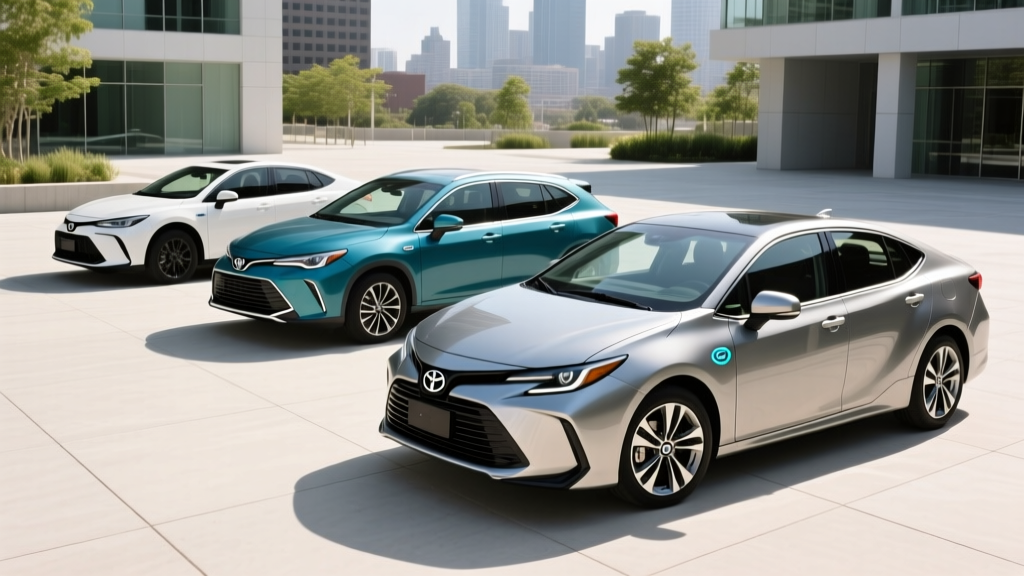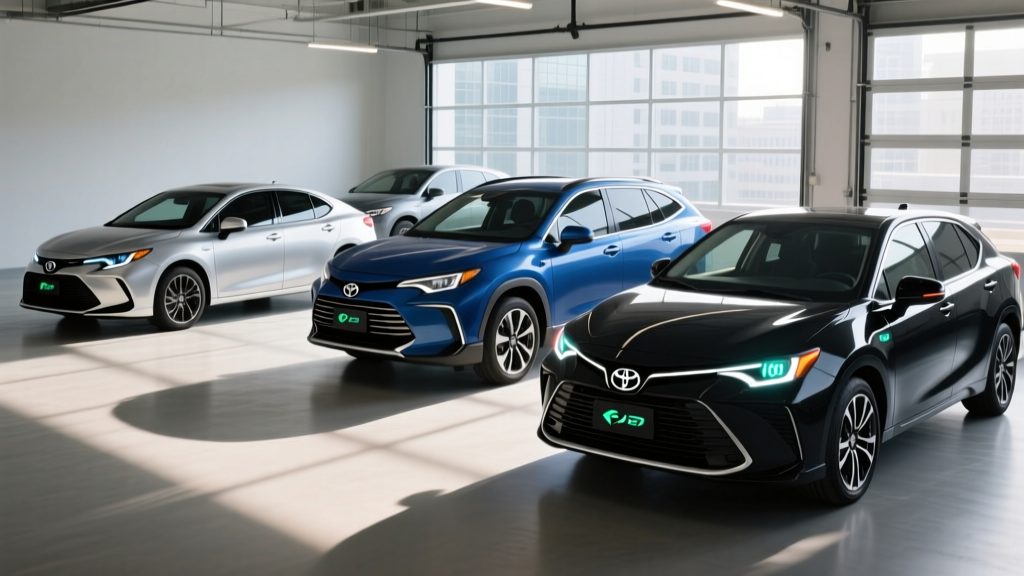
If you've searched for a Toyota cars hybrid, you already know Toyota practically invented the modern hybrid segment with the original Prius. Fast-forward to the 2026 model year, and Toyota's hybrid lineup has expanded to cover nearly every body style — from compact hatchbacks to midsize SUVs and even a full-size pickup. But with so many options spanning conventional hybrids (HEVs) and plug-in hybrids (PHEVs), choosing the right one requires understanding the real differences in fuel economy, electric-only range, pricing, and long-term ownership costs.
This guide breaks down every current Toyota hybrid and PHEV with exact EPA figures, real-world expectations, battery warranties, and tax-credit eligibility — so you can match the right powertrain to your driving habits.
HEV vs PHEV: Understanding Toyota's Two Hybrid Approaches
Before comparing individual models, it's critical to understand the fundamental difference between Toyota's two hybrid architectures. A conventional hybrid (HEV) uses a small battery charged entirely by the gasoline engine and regenerative braking — you never plug it in. A plug-in hybrid (PHEV) carries a larger battery that you charge from a wall outlet or public charger, giving you a meaningful electric-only driving range before the gas engine kicks in.
| Feature | Toyota HEV (Hybrid) | Toyota PHEV (Prime) |
|---|---|---|
| Plug-in charging | No — self-charging | Yes — Level 1 or Level 2 |
| Electric-only range | ~1 mile at low speed | 25–45 miles (model dependent) |
| Battery size | ~1.0–1.6 kWh | ~13.6–18.1 kWh |
| Federal tax credit | Not eligible | Up to $7,500 (eligibility varies) |
| Best for | No home charging access | Home charging + short commutes |
If you can install a Level 2 home charger and your daily commute falls under 40 miles round-trip, a PHEV lets you drive most days on electricity alone while keeping a gas tank for road trips. If you live in an apartment without charging access or drive long distances daily, a conventional HEV delivers excellent MPG with zero lifestyle changes.
2026 Toyota Hybrid Cars: Prius, Camry, and Crown
Toyota's car-based hybrids span three distinct models, each targeting a different buyer profile. Here's how they stack up on the numbers that matter.
2026 Toyota Prius and Prius Prime
The redesigned Prius shed its econobox image with sharper styling and a genuinely engaging powertrain. The standard Prius HEV pairs a 2.0-liter four-cylinder engine with dual electric motors for a combined 196 horsepower. The Prius Prime (the PHEV variant) bumps output to 220 hp and carries an 13.6 kWh lithium-ion battery.
| Model | City MPG | Highway MPG | Combined MPG | EV Range (PHEV) |
|---|---|---|---|---|
| Prius LE (HEV) | 57 | 56 | 57 | N/A |
| Prius XLE/Limited (HEV) | 52 | 52 | 52 | N/A |
| Prius Prime SE (PHEV) | 53 (hybrid mode) | 51 (hybrid mode) | 52 | 44 mi |
| Prius Prime XSE (PHEV) | 50 (hybrid mode) | 47 (hybrid mode) | 48 | 40 mi |
Real-world MPG note: The Prius HEV is one of the rare vehicles that often exceeds its EPA rating in city driving, where regenerative braking recaptures the most energy. Expect 55–60 MPG in stop-and-go urban traffic, but closer to 48–50 MPG on sustained highway cruises at 75+ mph. Source: fueleconomy.gov.
The Prius Prime charges from empty to full in approximately 4 hours on a standard 120V outlet (Level 1) or about 2.5 hours on a 240V Level 2 charger. It does not support DC fast charging — a limitation shared with most PHEVs due to their smaller battery packs.
2026 Toyota Camry Hybrid
The current-generation Camry is now offered exclusively as a hybrid, eliminating the old gas-only four-cylinder. It uses the same 2.5-liter four-cylinder hybrid system producing 225 hp with front-wheel drive or 232 hp with the available electronic all-wheel drive (AWD-e).
| Trim | City | Highway | Combined | Drivetrain |
|---|---|---|---|---|
| Camry Hybrid LE | 53 | 50 | 51 | FWD |
| Camry Hybrid LE AWD | 51 | 49 | 50 | AWD-e |
| Camry Hybrid SE/XSE | 48 | 47 | 47 | FWD |
With a 13.2-gallon fuel tank, the Camry Hybrid LE can theoretically cover over 670 miles between fill-ups — making it one of the longest-range sedans on the market without a plug. Toyota does not currently offer a Camry Prime (PHEV) variant.
2026 Toyota Crown
The Crown slots above the Camry as a premium hybrid sedan with a raised ride height. The standard hybrid powertrain delivers 236 hp, while the available Hybrid MAX system (a turbocharged 2.4-liter hybrid) pushes 340 hp for a 0–60 mph time of approximately 5.1 seconds.
| Powertrain | City | Highway | Combined | 0–60 mph |
|---|---|---|---|---|
| Standard Hybrid | 42 | 41 | 41 | ~7.6 sec |
| Hybrid MAX (Turbo) | 29 | 32 | 30 | ~5.1 sec |
The Crown sacrifices some efficiency for performance and luxury, making it the right pick if you want hybrid fuel savings without the economy-car feel.
2026 Toyota Hybrid SUVs: RAV4, Highlander, and Beyond
Toyota's hybrid SUVs are where the brand moves the most volume, and the RAV4 Hybrid alone accounts for a significant share of all Toyota hybrid sales.
RAV4 Hybrid and RAV4 Prime (PHEV)
The RAV4 Hybrid pairs a 2.5-liter four-cylinder with electric motors for 219 hp and standard electronic AWD. The RAV4 Prime — Toyota's PHEV SUV — is the performance flagship with 302 hp, a 18.1 kWh battery, and 42 miles of electric-only range.
| Spec | RAV4 Hybrid | RAV4 Prime (PHEV) |
|---|---|---|
| Combined horsepower | 219 hp | 302 hp |
| City / Highway / Combined MPG | 41 / 38 / 39 | 40 / 36 / 38 (hybrid mode) |
| Electric-only range | N/A | 42 miles |
| Total range | ~580 mi | ~600 mi (EV + gas) |
| Battery capacity | ~1.6 kWh (NiMH) | 18.1 kWh (Li-ion) |
| Charge time (Level 2, 240V) | N/A | ~2.5 hours |
| DC fast charging | No | No |
| 0–60 mph | ~7.4 sec | ~5.7 sec |
| Starting MSRP | ~$33,000 | ~$44,500 |
Real-world EV range caveat: The RAV4 Prime's 42-mile EPA electric range holds up well in mild weather, but expect 32–36 miles in freezing temperatures or sustained highway speeds above 70 mph. Cabin heating draws heavily from the battery in winter.
Highlander Hybrid and Grand Highlander Hybrid
For three-row family hauling, the Highlander Hybrid (243 hp, 35 MPG combined) and the larger Grand Highlander Hybrid (245 hp standard hybrid, 340 hp Hybrid MAX) offer meaningful fuel savings over their gas-only competitors. The Grand Highlander Hybrid achieves up to 36 MPG combined in standard hybrid form — remarkable for a vehicle that seats eight.
Other Toyota Hybrids: Sienna, Tacoma, Tundra
The Sienna minivan is hybrid-only, delivering 36 MPG combined with 245 hp and standard AWD availability. The Tacoma i-FORCE MAX hybrid produces 326 hp and 465 lb-ft of torque, while the full-size Tundra i-FORCE MAX hybrid delivers 437 hp and 583 lb-ft — proving hybrid tech isn't just for economy cars.
Pricing and Federal Tax Credit Eligibility
Toyota's hybrid lineup spans from roughly $28,000 for a base Prius LE to over $55,000 for a fully loaded Grand Highlander Hybrid MAX. But the critical question for PHEV buyers is tax-credit eligibility.
§30D Federal Tax Credit — Key Requirements for PHEVs
- Credit amount: Up to $7,500 for eligible new PHEVs (HEVs do not qualify)
- MSRP cap: Vans/SUVs/pickups must be under $80,000; sedans under $55,000
- Income cap: AGI must not exceed $150,000 (single) / $300,000 (joint)
- Battery sourcing: Critical minerals and battery components must meet phased-in domestic-content thresholds that tighten annually
- Point-of-sale transfer: Eligible buyers can apply the credit as a down-payment reduction at the dealer
Source: IRS §30D Clean Vehicle Credit. Always verify current-year rules with a tax professional.
For 2026, the Prius Prime (MSRP starting ~$33,000) and RAV4 Prime (MSRP starting ~$44,500) fall under their respective MSRP caps. However, battery-sourcing requirements have tightened significantly — the exact credit amount ($3,750 or $7,500) depends on whether Toyota's current battery supply chain meets the critical-minerals and component thresholds. Check the latest eligibility list at fueleconomy.gov before purchasing.
Conventional Toyota HEVs (Prius, Camry Hybrid, RAV4 Hybrid, Highlander Hybrid, Sienna) do not qualify for the federal §30D credit. Some states offer separate hybrid incentives — check your state's energy office for current programs.
Battery Warranty, Reliability, and Replacement Costs
Hybrid battery longevity remains the single biggest concern for first-time hybrid buyers. Here's the data.
Toyota Hybrid Battery Warranty (2026 Models)
| Coverage | Duration |
|---|---|
| Hybrid battery (all models) | 10 years / 150,000 miles |
| Hybrid system components | 8 years / 100,000 miles |
| Powertrain warranty | 5 years / 60,000 miles |
Toyota extended its hybrid battery warranty to 10 years/150,000 miles for all 2020+ models, up from the prior 8 years/100,000 miles. This applies to both HEV and PHEV batteries.
Replacement cost: A Toyota hybrid battery replacement (out of warranty) typically ranges from $2,000 to $4,500 depending on the model, with the Prius on the lower end and the RAV4 Prime's larger lithium-ion pack on the higher end. Third-party refurbishment shops offer reconditioned packs for $1,200–$2,500.
Real-world lifespan: Toyota's hybrid batteries consistently outlast their warranty periods. Data from fleet operators and owner surveys shows most Toyota hybrid batteries retain 80%+ capacity at 150,000 miles. The Prius, in particular, has documented cases of original batteries exceeding 300,000 miles. Toyota's conservative battery management — keeping the state of charge between roughly 40% and 80% in HEVs — minimizes degradation. PHEV batteries experience slightly more stress due to deeper discharge cycles, but the larger buffer and active thermal management mitigate most concerns.
Toyota's hybrid reliability ratings are consistently top-tier. The brand received top marks from IIHS across multiple hybrid models, and Toyota's hybrid synergy drive system has accumulated over 25 years of real-world validation with more than 25 million hybrid vehicles sold globally.
Hybrid vs PHEV vs Full EV: Which Toyota Fits Your Life?
Choosing between a Toyota HEV, a Toyota PHEV, and a full battery-electric vehicle (BEV) like the bZ4X comes down to three questions: Can you charge at home? How far do you drive daily? And how often do you take long road trips?
Choose a Toyota HEV (Prius, Camry Hybrid, RAV4 Hybrid) if:
- You don't have access to home or workplace charging
- You want maximum MPG with zero plug-in routine changes
- Your daily driving exceeds 50 miles and you don't want to manage battery levels
- You want the lowest upfront cost — HEVs start $5,000–$10,000 below PHEV equivalents
Choose a Toyota PHEV (Prius Prime, RAV4 Prime) if:
- You can install a Level 2 home charger (or have reliable workplace charging)
- Your daily commute is under 40 miles round-trip (enabling electric-only daily driving)
- You want EV-like operating costs on weekdays and gas flexibility for weekend road trips
- You want to reduce fuel consumption by 60–80% without range anxiety on long trips
Choose a full BEV (Toyota bZ4X or competitor) if:
- You have reliable home Level 2 charging and access to DC fast-charging networks
- Your daily driving is under 250 miles and you rarely tow
- You want zero tailpipe emissions and the lowest per-mile energy cost
- You're ready to plan charging stops on road trips
For most American households with home charging access and a sub-40-mile commute, a PHEV like the RAV4 Prime offers the best of both worlds: you'll burn almost no gasoline on weekdays, yet you can drive from Chicago to Denver without a single charging stop.
Pros and Cons of Toyota's Hybrid Lineup
Pros
- Best-in-class fuel economy across segments (57 MPG Prius LE combined)
- 10-year / 150,000-mile hybrid battery warranty — among the longest in the industry
- No charging infrastructure needed for HEV models
- PHEV models (Prime) offer 40–44 mi electric range — covers most commutes
- Strong resale value — Toyota hybrids consistently retain 60%+ value at 5 years
- RAV4 Prime's 302 hp makes it the quickest RAV4 ever produced
- Proven reliability with 25+ years of hybrid system refinement
Cons
- No DC fast charging on any Toyota PHEV — Level 2 only
- PHEV models carry a $5,000–$10,000 price premium over HEV equivalents
- Federal tax credit eligibility uncertain due to evolving battery-sourcing rules
- RAV4 Prime and Prius Prime often face dealer markups and long wait times
- Hybrid MAX powertrains (Crown, Grand Highlander) sacrifice MPG for performance
- Toyota's infotainment and driver-assist tech trails some competitors in refinement
Frequently Asked Questions
How many MPG does a Toyota hybrid get?
It depends on the model. The 2026 Prius LE leads the lineup at 57 MPG combined (57 city / 56 highway). The Camry Hybrid LE achieves 51 combined. The RAV4 Hybrid delivers 39 combined. In real-world city driving, Toyota hybrids often exceed their EPA ratings thanks to aggressive regenerative braking. Highway MPG tends to be 2–5 MPG below the EPA city figure for most Toyota hybrids.
How far can the Toyota RAV4 Prime go on electric only?
The RAV4 Prime has an EPA-rated 42 miles of electric-only range. In real-world conditions, expect 38–42 miles in mild weather and 32–36 miles in freezing temperatures or sustained highway driving above 70 mph. The Prius Prime SE achieves 44 miles of electric range under similar EPA testing conditions.
Do Toyota hybrids need to be plugged in?
No. Conventional Toyota hybrids (HEVs) like the Prius, Camry Hybrid, RAV4 Hybrid, Highlander Hybrid, and Sienna are entirely self-charging — the gasoline engine and regenerative braking replenish the small battery. Only Toyota's "Prime" models (PHEVs) require plug-in charging to access their electric-only range. If you never plug in a Prime, it simply operates as a conventional hybrid with slightly lower MPG due to the extra battery weight.
Is a Toyota hybrid reliable, and what does battery replacement cost?
Toyota hybrids are among the most reliable vehicles on the road, backed by a 10-year / 150,000-mile hybrid battery warranty. Real-world data shows most Toyota hybrid batteries last well beyond 150,000 miles with minimal degradation. Out-of-warranty replacement costs range from approximately $2,000 (Prius) to $4,500 (RAV4 Prime). Refurbished batteries are available from $1,200–$2,500.
Does a Toyota hybrid qualify for a tax credit?
Conventional Toyota HEVs do not qualify for the federal §30D Clean Vehicle Credit. Toyota PHEVs (Prius Prime and RAV4 Prime) may qualify for up to $7,500, but eligibility depends on current-year battery-sourcing requirements, your income (AGI under $150K single / $300K joint), and MSRP caps ($55K for cars, $80K for SUVs). The credit can be applied at the point of sale as a down-payment reduction. Always verify eligibility at fueleconomy.gov and consult a tax professional before purchasing.
How long does it take to charge a Toyota Prime PHEV?
On a standard 120V household outlet (Level 1), the RAV4 Prime takes approximately 12 hours from empty to full, and the Prius Prime takes about 10 hours. On a 240V Level 2 charger, both charge in roughly 2.5 hours. Neither Toyota PHEV supports DC fast charging. For most owners, overnight Level 1 charging is sufficient to replenish the battery daily.
Toyota hybrid vs full EV — which should I buy?
Choose a Toyota HEV if you lack home charging access or drive long distances daily. Choose a Toyota PHEV (Prime) if you can charge at home and commute under 40 miles — you'll run on electricity most days with gas backup for road trips. Choose a full EV if you have reliable home and public charging access, want the lowest per-mile cost, and are comfortable planning charging stops on trips over 250 miles. For many households, a PHEV is the lowest-risk transition into electrification.