Quick Verdict: The Camry Hybrid in Black Delivers Where It Counts
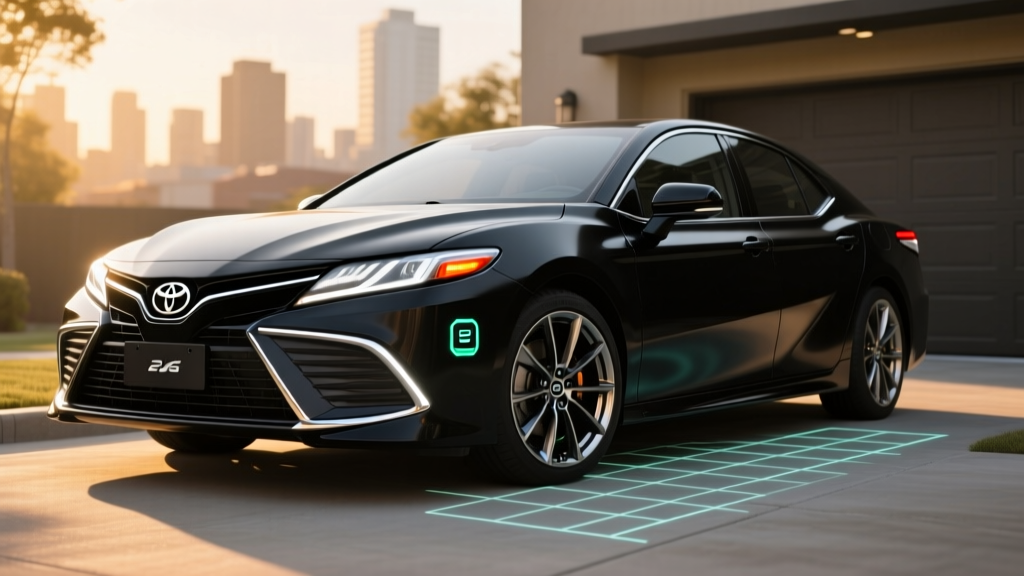
The 2026 Toyota Camry Hybrid continues as a conventional hybrid (HEV) — not a plug-in — meaning it never needs to be plugged in and generates all its electricity through regenerative braking and its gasoline engine. Available in a factory black exterior across multiple trims (LE, SE, XLE, and the sporty SE Nightshade), the Camry Hybrid pairs a 2.5-liter four-cylinder engine with Toyota's fifth-generation hybrid system for a combined 208 horsepower and an EPA-estimated 51 MPG combined on front-wheel-drive models.
If you've been searching for a "Toyota Camry Hybrid black" and wondering whether it's a special standalone model, here's the clarity: black is a color option available across the Camry Hybrid lineup, and the SE Nightshade trim packages black exterior accents, black badges, and black 19-inch alloy wheels into a monochromatic appearance. Mechanically, every Camry Hybrid shares the same powertrain — the differences are cosmetic and feature-based.
HEV vs PHEV: Why the Camry Hybrid Does Not Plug In
Conventional Hybrid (HEV) — Toyota Camry Hybrid: Uses a small battery (approximately 1.6 kWh) charged solely by the engine and regenerative braking. No plug. No electric-only range to manage. The electric motor assists the gas engine during acceleration and enables low-speed electric-only driving in stop-and-go traffic, but only for brief distances (typically under 1 mile at low speeds).
Plug-in Hybrid (PHEV) — Example: Toyota RAV4 Prime: Uses a larger battery (18.1 kWh in the RAV4 Prime) that can be plugged into a wall outlet or Level 2 charger. Delivers 42 miles of electric-only range before the gas engine engages. Requires plug-in access to realize full efficiency benefits.
The Camry Hybrid is strictly an HEV. Toyota does not currently offer a Camry PHEV in the United States. If you want plug-in capability from Toyota in a sedan format, you'll need to look at the Prius Prime. The Camry Hybrid's advantage is simplicity: fuel it like any gas car and let the hybrid system handle the rest.
Fuel Economy: EPA Ratings and Real-World MPG
| Drivetrain | City MPG | Highway MPG | Combined MPG |
|---|---|---|---|
| FWD (LE, SE, XLE) | 51 | 53 | 51 |
| AWD (LE, SE, XLE) | 49 | 50 | 49 |
| SE Nightshade (FWD) | 48 | 50 | 48 |
Source: fueleconomy.gov (EPA estimates for 2025–2026 Toyota Camry Hybrid)
Real-World MPG: What Owners Actually See
Toyota hybrids consistently exceed their EPA city estimates in real-world urban driving because regenerative braking recovers energy during stop-and-go commutes. Expect 52–56 MPG in city driving on FWD trims. Highway driving is where hybrids lose their advantage — sustained high speeds reduce regenerative opportunities and increase aerodynamic drag. Expect 44–48 MPG on the highway at 70–75 mph.
Cold weather reduces fuel economy by approximately 5–10% due to cabin heating demand and reduced battery efficiency. In sub-freezing conditions, FWD Camry Hybrid owners typically report 45–48 MPG combined. The AWD system adds a second electric motor on the rear axle (bringing total output to the same 208 hp) but costs roughly 2 MPG across the board.
Powertrain and Performance Specifications
| Specification | Detail |
|---|---|
| Engine | 2.5L Dynamic Force 4-cylinder |
| Hybrid System | Toyota Hybrid System (5th Gen) |
| Combined Net Horsepower | 208 hp |
| Engine Horsepower | 184 hp @ 6,000 rpm |
| Front Motor Output | 100 kW (134 hp) |
| AWD Rear Motor | 30 kW (40 hp) — AWD trims only |
| Hybrid Battery | ~1.6 kWh lithium-ion (self-charging) |
| Transmission | eCVT (electronically controlled) |
| 0–60 mph | ~7.0 seconds (FWD) |
| Drivetrain | FWD standard; AWD available |
| Towing Capacity | Not rated for towing |
The 208 combined horsepower represents a meaningful upgrade from the previous-generation Camry Hybrid's 208 hp (AWD) and 176 hp (FWD). Toyota's fifth-generation hybrid system uses a more compact transaxle and a more powerful electric motor, giving the 2026 model brisk acceleration that feels responsive in merging and passing situations. The eCVT operates without the rubber-band feel of older CVTs thanks to Toyota's sequential shift mode.
Pricing by Trim: What a Black Camry Hybrid Costs in 2026
| Trim | MSRP (FWD) | MSRP (AWD) | Black Exterior Availability |
|---|---|---|---|
| LE | $29,990 | $31,390 | Yes — Midnight Black Metallic |
| SE | $31,490 | $32,890 | Yes — Midnight Black Metallic |
| SE Nightshade | $33,090 | $34,490 | Yes — all-black accents standard |
| XLE | $34,490 | $35,890 | Yes — Midnight Black Metallic |
MSRP figures reflect 2025–2026 model year base pricing before destination charges (~$1,095). Dealer markups vary by market.
Tax Credit Eligibility
Federal §30D Tax Credit: The Toyota Camry Hybrid does not qualify for the federal EV tax credit under IRS §30D. This credit applies exclusively to battery electric vehicles (BEVs) and plug-in hybrids (PHEVs) with a minimum battery capacity of 7 kWh and compliant critical-mineral/battery-component sourcing. The Camry Hybrid's ~1.6 kWh battery falls well below the threshold.
State Incentives: A handful of states offer small rebates for conventional hybrids (typically $250–$500), but these programs change frequently. Check your state energy office or afdc.energy.gov for current availability.
Battery Warranty, Reliability, and Replacement Cost
Toyota provides a 10-year / 150,000-mile hybrid battery warranty (whichever comes first) on the 2026 Camry Hybrid, transferable to subsequent owners. This covers the hybrid battery pack against defects and capacity loss below a defined threshold. The broader powertrain warranty runs 5 years / 60,000 miles.
How Long Do Camry Hybrid Batteries Actually Last?
Real-world data from Toyota's hybrid fleet — spanning the Prius, Camry Hybrid, and RAV4 Hybrid — shows that modern lithium-ion hybrid batteries frequently last 150,000–200,000+ miles before requiring replacement. The hybrid battery in a Camry Hybrid is small and operates within a narrow state-of-charge window (roughly 40–80%), which minimizes degradation compared to a full EV battery that cycles through a wider range.
When replacement is eventually needed, a new OEM Camry Hybrid battery pack currently costs between $2,500 and $4,000 including labor at a Toyota dealer. Refurbished and aftermarket options run $1,500–$2,500. Given that the battery is warrantied for 10 years/150,000 miles and most Camry Hybrids outlast that period without replacement, long-term battery cost is a minor concern relative to a full EV.
Reliability Track Record
The Toyota Camry Hybrid consistently earns top reliability marks. The Camry nameplate has accumulated decades of hybrid-system data since the 2007 Camry Hybrid debut, and the current-generation system is among the most proven in the industry. IIHS has rated recent Camry models as a Top Safety Pick+ when equipped with Toyota Safety Sense 3.0, which comes standard on every 2026 Camry Hybrid trim.
Who Should Buy the Camry Hybrid — and Who Shouldn't
Choose the Camry Hybrid If:
- You want 50+ MPG without changing your fueling habits (no plug needed)
- You drive predominantly in city or suburban stop-and-go traffic where hybrid efficiency peaks
- You want a midsize sedan with proven reliability and low total cost of ownership
- You don't have access to home or workplace charging infrastructure
- You want AWD availability in a fuel-efficient sedan for snow-belt climates
- You prefer the monochromatic black aesthetic of the SE Nightshade trim
Look at a Full EV or PHEV Instead If:
- You have home Level 2 charging and want to eliminate gasoline use entirely (consider the Tesla Model 3, Hyundai Ioniq 6, or Toyota bZ4X)
- You want electric-only commuting with a gas backup (consider the Prius Prime — 44 miles EV range, PHEV)
- You want to qualify for the $7,500 federal tax credit (requires a qualifying BEV or PHEV)
- You drive mostly highway miles where the hybrid advantage narrows to single digits over an efficient gas car
- You want instant torque and one-pedal driving that only a full BEV delivers
Camry Hybrid vs the Alternatives
The Camry Hybrid competes in a narrow field of midsize hybrid sedans. The Honda Accord Hybrid (48/47/48 MPG EPA) offers a slightly more engaging driving experience but trails the Camry by 3 MPG combined. The Hyundai Sonata Hybrid (44/51/47 MPG EPA) provides a more striking design and a solar-panel roof option but sacrifices city MPG. Neither offers AWD.
If you're cross-shopping beyond sedans, the Toyota RAV4 Hybrid (41/38/40 MPG) delivers SUV utility with AWD standard, while the RAV4 Prime (PHEV, 42 miles EV-only, 94 MPGe) offers plug-in capability if you have charging access — but starts over $44,000.
Frequently Asked Questions
How many MPG does the Toyota Camry Hybrid get?
The 2026 Toyota Camry Hybrid FWD is EPA-rated at 51 city / 53 highway / 51 combined MPG on the LE and XLE trims. The SE Nightshade trim drops slightly to 48/50/48 MPG due to larger 19-inch wheels and sport-tuned suspension. AWD trims rate at 49/50/49 combined. Real-world city driving often exceeds EPA estimates by 2–5 MPG thanks to regenerative braking.
Is the Toyota Camry Hybrid a plug-in?
No. The Camry Hybrid is a conventional hybrid (HEV). It charges its small lithium-ion battery through regenerative braking and the gasoline engine. You never plug it in. If you want a Toyota plug-in hybrid sedan, the Prius Prime offers 44 miles of electric-only range.
Does the Camry Hybrid qualify for any tax credit?
The Camry Hybrid does not qualify for the federal §30D EV tax credit, which requires a plug-in vehicle with a minimum 7 kWh battery. Some states offer small hybrid rebates ($250–$500), but these vary by jurisdiction and change frequently. Consult afdc.energy.gov or your state energy office for current programs.
How much does a Camry Hybrid battery replacement cost?
An OEM replacement hybrid battery for the Camry Hybrid costs approximately $2,500–$4,000 including dealer labor. Refurbished options range from $1,500–$2,500. However, Toyota's hybrid batteries are warrantied for 10 years/150,000 miles, and real-world data shows many last 150,000–200,000+ miles without replacement.
What does "Toyota Camry Hybrid black" refer to?
"Black" refers to the Midnight Black Metallic exterior color, which is available across all Camry Hybrid trims (LE, SE, XLE). The SE Nightshade trim goes further with black 19-inch wheels, black mirror caps, black badges, and black interior trim for a full monochromatic appearance. There is no separate "Black Edition" trim — black is a color and styling option within the existing lineup.
Is the Camry Hybrid reliable?
Yes. The Camry Hybrid is among the most reliable vehicles in the midsize sedan segment. Toyota's hybrid system has been refined over two decades, and the 10-year/150,000-mile hybrid battery warranty provides long-term peace of mind. The Camry consistently earns top marks from IIHS and predicted-reliability ratings from Consumer Reports and J.D. Power.
How fast is the Camry Hybrid?
The 2026 Camry Hybrid produces 208 combined horsepower and accelerates from 0–60 mph in approximately 7.0 seconds (FWD). This is competitive with turbocharged four-cylinder midsize sedans and noticeably quicker than the previous-generation Camry Hybrid FWD (which made only 176 hp).