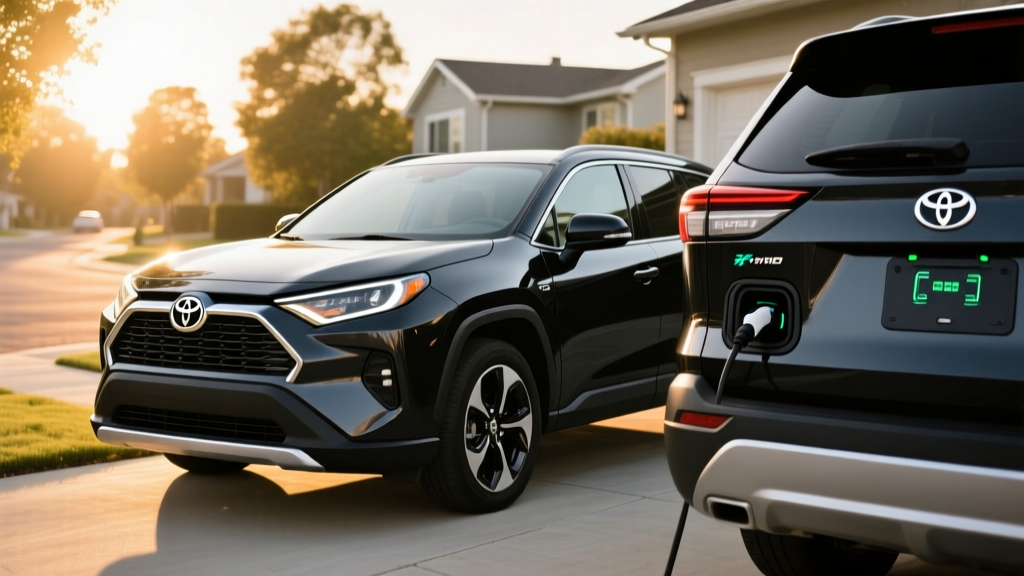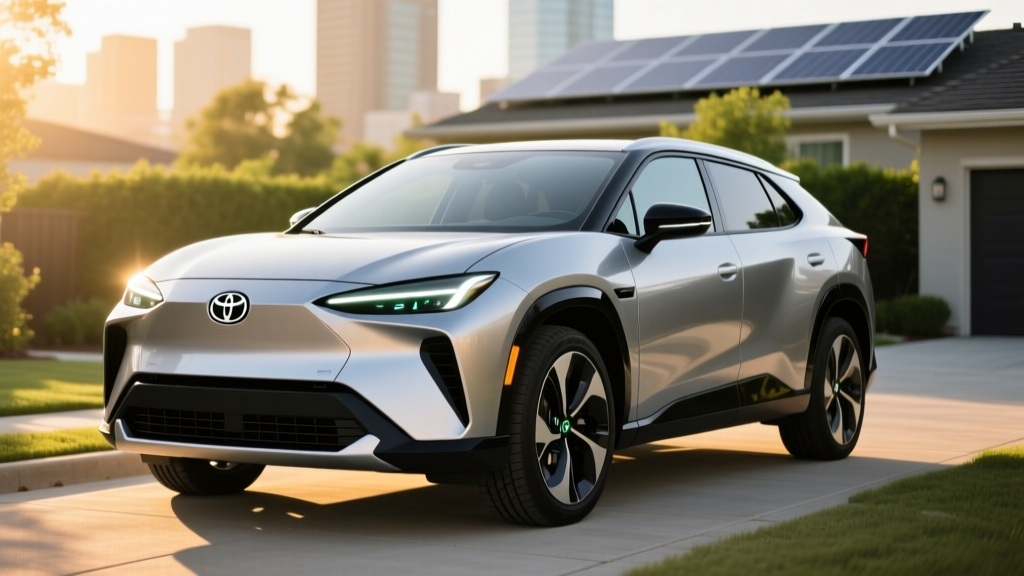
If you've been searching for a Toyota bZ4X hybrid, you're not alone — but you may be looking for something that doesn't actually exist. The Toyota bZ4X is a fully electric vehicle (BEV), not a hybrid or plug-in hybrid. Toyota sells it alongside models like the RAV4 Hybrid and RAV4 Prime (a PHEV), which can create confusion for shoppers navigating Toyota's growing electrified lineup.
This guide clears up exactly what the bZ4X is, how it compares to Toyota's hybrid and plug-in hybrid SUVs, and which electrified powertrain actually fits your driving habits in 2026.
The Toyota bZ4X Is a Battery Electric Vehicle — Not a Hybrid
The Toyota bZ4X is Toyota's first mass-market battery electric vehicle (BEV), built on the e-TNGA platform co-developed with Subaru (which sells the mechanically similar Solterra). It has no internal combustion engine, no gas tank, and no hybrid powertrain. It runs exclusively on battery power and must be plugged in to recharge.
For the 2026 model year, the bZ4X carries over with incremental updates. Here's what the current BEV offers:
| Spec | XLE (FWD) | XLE (AWD) |
|---|---|---|
| EPA Range | 252 miles | 228 miles |
| Battery Capacity | 71.4 kWh usable (NMC lithium-ion) | |
| Horsepower | 201 hp | 214 hp |
| 0–60 mph | ~7.1 sec | ~6.5 sec |
| Max DC Fast Charge | 150 kW (CCS1) | |
| 10–80% DC Charge Time | ~30 min (XLE), ~35 min (Limited AWD) | |
| Level 2 Charge Rate | 6.6 kW (J1772) | |
| Combined MPGe | 119 MPGe | 104 MPGe |
| Base MSRP | ~$37,070 | ~$39,070 |
| Battery Warranty | 8 years / 100,000 miles (70% capacity retention) | |
Sources: fueleconomy.gov, Toyota bZ4X official page.
Hybrid (HEV) vs. Plug-In Hybrid (PHEV) vs. BEV: Which Toyota Fits You?
Toyota offers three distinct electrified powertrains across its SUV lineup. Understanding the difference is essential before cross-shopping.
| Feature | HEV (e.g., RAV4 Hybrid) | PHEV (e.g., RAV4 Prime) | BEV (e.g., bZ4X) |
|---|---|---|---|
| Gas Engine? | Yes | Yes | No |
| Plug Required? | No — self-charging via regen | Yes — plug for EV range | Yes — plug only |
| Electric-Only Range | ~1 mile at low speed | ~42 miles | 228–252 miles |
| Total Range | ~580 miles | ~600 miles | 228–252 miles |
| Fuel/Charging | Gas only | Gas + plug | Plug only |
| Home Charging Needed? | No | Recommended | Essential |
| Federal Tax Credit (§30D) | No | Up to $7,500* | Up to $7,500* |
| Tailpipe Emissions | Yes | Yes (reduced) | None |
*Federal §30D tax credit eligibility depends on MSRP caps, buyer income limits, battery sourcing requirements, and point-of-sale transfer rules. See IRS.gov for current-year requirements. Consult a tax professional.
If You Want a Toyota Hybrid SUV, Here Are Your Actual Options
Since the bZ4X doesn't come in a hybrid variant, here's what Toyota actually sells in 2026 for buyers seeking hybrid efficiency in a compact SUV:
Toyota RAV4 Hybrid (HEV)
The volume seller. A 2.5-liter four-cylinder paired with Toyota's series-parallel hybrid system producing a combined 219 hp. No plug needed — the battery recharges through regenerative braking and engine power.
| City | Highway | Combined |
|---|---|---|
| 41 MPG | 38 MPG | 39 MPG |
Base MSRP starts around $33,575. Real-world city MPG often exceeds the EPA estimate — Toyota's hybrid system favors stop-and-go driving where regenerative braking recaptures energy. Highway-heavy drivers will see figures closer to 35–37 MPG at sustained speeds above 70 mph.
Toyota RAV4 Prime (PHEV)
The plug-in variant. A larger 18.1 kWh battery (usable) enables 42 miles of electric-only driving before the gas engine engages. Combined system output is 302 hp — making it the quickest RAV4 Toyota sells.
| Spec | Value |
|---|---|
| EV-Only Range | 42 miles (EPA) |
| Combined MPG (gas mode) | 38 MPG |
| Combined MPGe (EV mode) | 94 MPGe |
| Battery Capacity | 18.1 kWh usable (NMC) |
| Level 2 Charge Time (0–100%) | ~2.5 hours at 6.6 kW |
| DC Fast Charging | Not available |
| Horsepower (combined) | 302 hp |
| 0–60 mph | 5.7 sec |
| Base MSRP | ~$44,500 |
| Battery Warranty | 10 years / 150,000 miles (hybrid battery) |
The RAV4 Prime does not support DC fast charging — a notable limitation. Level 2 home charging is the intended use case, and most owners charge overnight.
Toyota Highlander Hybrid & Grand Highlander Hybrid
For three-row needs, Toyota offers both the Highlander Hybrid (36 MPG combined) and Grand Highlander Hybrid (also 36 MPG combined, with more cargo room). Neither is available as a PHEV.
Toyota bZ4X vs. RAV4 Hybrid vs. RAV4 Prime: Side-by-Side
| Attribute | bZ4X (BEV) | RAV4 Hybrid (HEV) | RAV4 Prime (PHEV) |
|---|---|---|---|
| Powertrain | Battery electric | Gas + electric hybrid | Gas + plug-in hybrid |
| Combined HP | 201–214 hp | 219 hp | 302 hp |
| Range / Fuel Economy | 228–252 mi / 104–119 MPGe | 39 MPG combined | 42 mi EV + 38 MPG gas |
| Plug-In Required | Yes | No | Recommended |
| Home Charger Needed | Essential | No | Recommended (Level 2) |
| DC Fast Charge | 150 kW | N/A | Not available |
| Base MSRP | ~$37,070 | ~$33,575 | ~$44,500 |
| Federal Tax Credit (§30D) | Potentially up to $7,500 | Not eligible | Potentially up to $7,500 |
| Battery Warranty | 8 yr / 100k mi | 10 yr / 150k mi | 10 yr / 150k mi |
| Cargo Volume | 27.7 cu ft (rear up) | 37.6 cu ft (rear up) | 33.5 cu ft (rear up) |
Federal Tax Credit: Does the bZ4X or a Toyota Hybrid Qualify?
Under the current §30D Clean Vehicle Credit rules, conventional hybrids (HEVs) like the RAV4 Hybrid do not qualify for any federal purchase incentive. Only plug-in vehicles — BEVs and PHEVs — are potentially eligible.
- Vehicle type: Must be a BEV or PHEV with ≥7 kWh battery capacity
- MSRP cap: SUVs ≤$80,000; sedans ≤$55,000
- Buyer income cap: AGI ≤$150,000 (single) / ≤$300,000 (joint)
- Battery sourcing: Critical minerals and battery components must meet phased-in domestic/free-trade requirements (percentages increase annually)
- Final assembly: Must occur in North America
- Point-of-sale transfer: Credit can be applied at purchase to reduce out-of-pocket cost
- Foreign entity of concern (FEOC): Vehicles with battery components or critical minerals from FEOC entities are disqualified
The bZ4X is assembled in Japan, which has historically complicated §30D eligibility under the North American final assembly requirement. The RAV4 Prime is assembled in Canada, which may qualify. Always verify current eligibility at fueleconomy.gov and consult a tax professional before relying on credit estimates.
Battery Reliability, Warranty, and Replacement Costs
Hybrid battery longevity is the top concern for used-hybrid buyers and long-term owners. Toyota has the deepest track record of any automaker in this area, with over 25 years of hybrid production since the original Prius.
- RAV4 Hybrid / Prime (Hybrid Battery): 10 years / 150,000 miles — covers capacity below ~70% of original
- bZ4X (Traction Battery): 8 years / 100,000 miles — covers capacity below 70% of original
- Hybrid Battery Replacement Cost (RAV4): ~$3,000–$5,000 (aftermarket/refurbished available for less)
- BEV Battery Replacement Cost (bZ4X): ~$12,000–$18,000 (estimated; full pack replacement is rare)
In practice, Toyota hybrid batteries rarely require full replacement within the warranty period. Degradation is gradual — most owners see 10–15% capacity loss over 10 years. Full BEV battery replacements remain uncommon and are typically covered under warranty if degradation exceeds the threshold.
Toyota's hybrid reliability ratings consistently rank at or near the top in JD Power and Consumer Reports surveys. The bZ4X, as a newer BEV platform, has a shorter reliability track record, though the e-TNGA architecture is shared with Subaru's Solterra and benefits from joint engineering validation.
Who Should Choose Which Toyota Electrified SUV?
Choose the RAV4 Hybrid (HEV) if:
- You have no access to home or workplace charging
- You want maximum range with zero behavior change (~580 miles per tank)
- Your budget is under $40,000
- You drive primarily in the city (where hybrids exceed EPA MPG)
Choose the RAV4 Prime (PHEV) if:
- You can install a Level 2 home charger
- Your daily commute is under 42 miles round-trip (you'll rarely use gas)
- You want 302 hp and the quickest RAV4 Toyota makes
- You need road-trip flexibility without charging stops
- You may qualify for the §30D credit
Choose the bZ4X (BEV) if:
- You have reliable home Level 2 charging
- You want zero tailpipe emissions and lowest per-mile energy cost
- Your daily driving is under 200 miles and you can plan DC fast stops for road trips
- You prefer fewer moving parts and lower maintenance
Frequently Asked Questions
Is there a Toyota bZ4X hybrid version?
No. The Toyota bZ4X is exclusively a battery electric vehicle (BEV). Toyota does not offer it in a hybrid or plug-in hybrid variant. If you want a Toyota hybrid SUV, look at the RAV4 Hybrid (HEV) or RAV4 Prime (PHEV).
How many MPG does the Toyota RAV4 Hybrid get?
The 2026 RAV4 Hybrid is EPA-rated at 41 MPG city, 38 MPG highway, and 39 MPG combined. Real-world city driving often yields 42–44 MPG thanks to regenerative braking. Highway-heavy driving at 75+ mph typically returns 34–37 MPG.
How far can the RAV4 Prime go on electric only?
The RAV4 Prime delivers an EPA-rated 42 miles of electric-only range on a full charge. That covers the average American daily commute (~37 miles round-trip per FHWA data) entirely on electricity, with the gas engine available for longer trips.
Does the bZ4X or any Toyota hybrid qualify for a tax credit?
Conventional hybrids (HEVs) do not qualify for the federal §30D Clean Vehicle Credit. The bZ4X (BEV) and RAV4 Prime (PHEV) may qualify, but eligibility depends on North American final assembly, battery sourcing requirements, MSRP caps, and buyer income limits. The bZ4X is built in Japan, which may affect eligibility. Always check fueleconomy.gov for the current qualified vehicle list.
How long do Toyota hybrid batteries last, and what does replacement cost?
Toyota hybrid batteries are warranted for 10 years or 150,000 miles. Real-world data from millions of Prius and RAV4 Hybrid owners shows most batteries retain 85–90% capacity after a decade. If replacement is needed, expect $3,000–$5,000 for a new or refurbished unit. Full BEV battery replacement (bZ4X) is estimated at $12,000–$18,000, though warranty coverage applies if degradation exceeds 30% within 8 years/100,000 miles.
Will Toyota release a bZ4X hybrid in the future?
Toyota has not announced a hybrid variant of the bZ4X. The "bZ" sub-brand is designated for battery electric vehicles. Toyota's hybrid strategy continues through its existing nameplates (RAV4, Camry, Highlander, Sienna — all available as hybrids). If Toyota introduces a next-generation RAV4 EV or a new electrified SUV with a hybrid option, we'll update this guide.