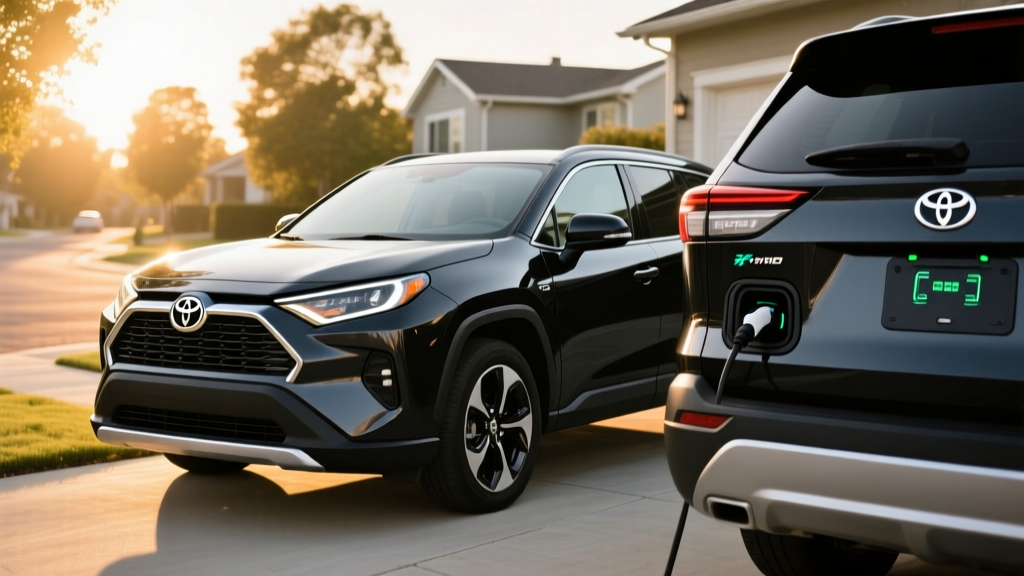
The 2018 Toyota RAV4 Hybrid occupies a specific niche in the used market: it's the final model year of the fourth-generation RAV4 before Toyota's major 2019 redesign, and it remains one of the most reliable hybrid SUVs you can buy used in 2026. With no plug required, proven hybrid synergy drive hardware, and a well-documented track record for battery longevity, this compact SUV continues to attract buyers who want electrified efficiency without charging infrastructure dependency.
This guide covers everything a 2026 used-car shopper needs: exact EPA fuel economy, real-world MPG data, the hybrid battery warranty and replacement economics, how the 2018 RAV4 Hybrid compares to the newer RAV4 Prime PHEV, and whether this HEV still makes sense versus a modern EV or plug-in hybrid.
2018 RAV4 Hybrid Powertrain and Efficiency Specs
The 2018 RAV4 Hybrid pairs a 2.5-liter four-cylinder Atkinson-cycle gasoline engine with two electric motor-generators and a nickel-metal hydride (NiMH) traction battery. Toyota's Hybrid Synergy Drive (HSD) manages power delivery seamlessly — the driver never needs to plug in, as the battery charges through regenerative braking and engine-generated electricity.
| Specification | Value |
|---|---|
| Engine | 2.5L 4-cyl Atkinson-cycle |
| Combined System Horsepower | 194 hp |
| Electric Motors | Front (141 hp) + Rear (67 hp) — e-AWD |
| Traction Battery | NiMH, ~1.6 kWh (not plug-in capable) |
| Drivetrain | Electronic on-demand AWD (AWD-i) |
| Transmission | eCVT (planetary gearset) |
| EPA Fuel Economy (Combined) | 32 MPG |
| EPA City | 34 MPG |
| EPA Highway | 30 MPG |
| 0–60 mph | ~7.8 seconds |
| Cargo Volume (behind rear seats) | 35.6 cu ft |
| Towing Capacity | 1,750 lbs |
The city MPG exceeds the highway figure — a hallmark of Toyota's hybrid system. At low speeds, the electric motor handles most propulsion, while the engine kicks in primarily for highway cruising and hard acceleration. This inverted city/highway split means urban commuters extract maximum value from the powertrain.
Real-World MPG: What Owners Actually Report
EPA estimates provide a baseline, but the 2018 RAV4 Hybrid's real-world fuel economy depends heavily on driving patterns. Data aggregated from owner-reported logs on fueleconomy.gov shows most drivers land between 30 and 35 MPG in mixed driving.
- City / stop-and-go: 33–38 MPG (regen braking maximizes electric assist)
- Mixed suburban: 30–34 MPG
- Highway (70+ mph sustained): 27–30 MPG (engine-dominant, less regen benefit)
- Cold weather (below 30°F): 26–30 MPG (engine runs more for cabin heat, battery efficiency drops)
The key takeaway: if your commute is predominantly city or suburban stop-and-go, expect to meet or exceed the 34 MPG city EPA figure. Highway-heavy drivers will see numbers closer to 28 MPG. This is the opposite of a conventional gas car, where highway driving yields better efficiency.
HEV vs PHEV: Understanding the 2018 RAV4 Hybrid vs the RAV4 Prime
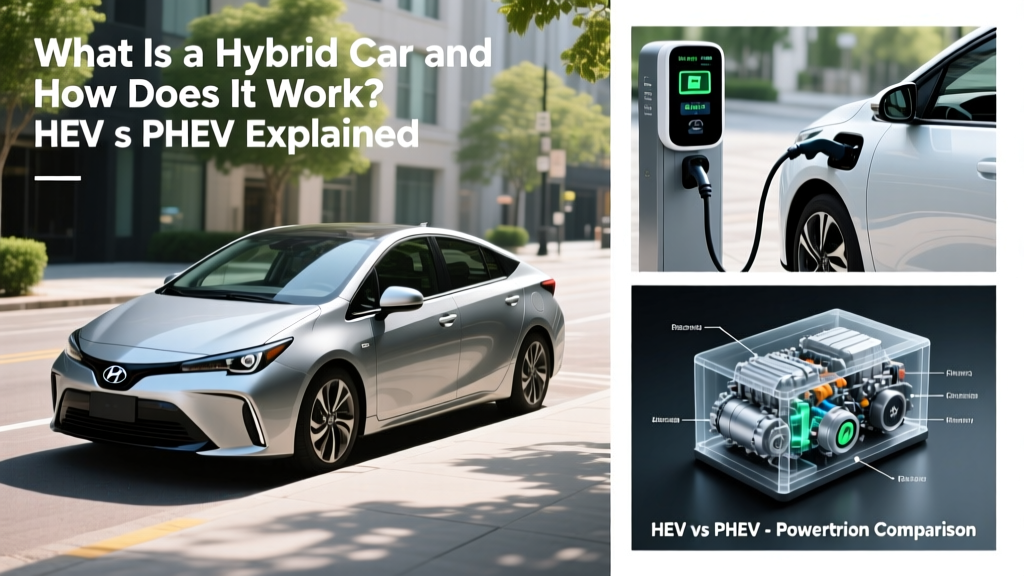
A common point of confusion is the difference between the conventional 2018 RAV4 Hybrid (HEV) and the plug-in RAV4 Prime (PHEV), which launched for the 2021 model year. The 2018 model was never offered as a plug-in. Here's how the two architectures differ:
| Attribute | 2018 RAV4 Hybrid (HEV) | 2021+ RAV4 Prime (PHEV) |
|---|---|---|
| Plugs in? | No — self-charging via regen + engine | Yes — Level 1 or Level 2 charging |
| Battery Chemistry / Size | NiMH, ~1.6 kWh | Lithium-ion, 18.1 kWh |
| Electric-Only Range | Less than 1 mile at low speed | 42 miles (EPA) |
| Combined MPG / MPGe | 32 MPG | 94 MPGe (electric) / 38 MPG (gas-only) |
| Combined Horsepower | 194 hp | 302 hp |
| DC Fast Charging | N/A | Not supported (Level 2 max) |
| 0–60 mph | ~7.8 sec | 5.7 sec |
| §30D Federal Tax Credit (New) | Not eligible | $7,500 (when available, subject to IRS rules) |
If you're shopping for a 2018 RAV4 Hybrid, you're getting a conventional HEV: zero plug-in capability, zero electric-only driving range beyond brief low-speed assist. The advantage is absolute simplicity — no charger installation, no range planning, no battery pre-conditioning. You fuel it like any other car and let the hybrid system optimize efficiency.
Hybrid Battery Lifespan, Warranty, and Replacement Cost
Battery longevity is the number-one concern for used hybrid buyers. The 2018 RAV4 Hybrid's NiMH traction battery is one of the most durable in the industry, with extensive real-world data supporting its lifespan.
- Hybrid Battery Coverage: 8 years / 100,000 miles (10 years / 150,000 miles in California and states adopting CARB standards)
- Hybrid System Components: 8 years / 100,000 miles (inverter, control module, electric motors)
- Capacity Threshold: Toyota does not publish a specific degradation percentage trigger — warranty covers defects and premature failure
By 2026, an original 2018 model is 8 years old, meaning the federal hybrid battery warranty window is closing or has closed depending on the vehicle's in-service date. In CARB states (California, New York, Massachusetts, and others), coverage extends to 10 years / 150,000 miles — still potentially active.
Real-world battery lifespan: Toyota's NiMH hybrid batteries routinely last 150,000–200,000+ miles before needing replacement. Many first-generation Prius batteries exceeded 200,000 miles. The RAV4 Hybrid's battery is less stressed than a PHEV or EV battery because it operates within a narrow state-of-charge window (roughly 40–80%), avoiding the deep cycles that accelerate degradation.
Replacement cost in 2026:
- New OEM NiMH battery from Toyota: $3,000–$4,500 (parts + labor at dealership)
- Refurbished/remanufactured battery: $1,500–$2,500 (installed at independent hybrid specialists)
- Individual module replacement (if only a few cells fail): $500–$1,200
For context, a conventional gas vehicle's transmission replacement often costs $3,000–$5,000 — and the hybrid battery is statistically less likely to fail before 200,000 miles than an automatic transmission is to require a rebuild.
Reliability and Long-Term Ownership Data
The 2018 RAV4 Hybrid benefits from Toyota's hybrid system, which has been in continuous production since 1997. The HSD eCVT uses a planetary gearset with no traditional clutch packs, torque converter, or shift solenoids — the components that typically fail in conventional automatic transmissions.
According to long-term reliability data, the 2018 RAV4 Hybrid earns top marks:
- Consumer Reports: Rated "Above Average" to "Much Better Than Average" for predicted reliability across model years 2016–2018
- NHTSA Recalls: Check nhtsa.gov/recalls for any open recalls by VIN — some 2018 RAV4 models had recalls for rear suspension arm and fuel pump issues, though the hybrid-specific components have been largely trouble-free
- Common wear items: Brake pads last 80,000–100,000+ miles thanks to regenerative braking reducing friction-brake use; the water pump and inverter coolant pump should be inspected at 100,000 miles
The absence of a traditional transmission, starter motor, or alternator (all replaced by the motor-generators) means fewer failure points than a comparable gas-only RAV4. The hybrid system is, counterintuitively, simpler than the conventional powertrain in several respects.
2018 RAV4 Hybrid Trims and Used Pricing in 2026
Toyota offered the 2018 RAV4 Hybrid in two trims: XLE and Limited. Both share the identical powertrain and AWD-i system.
| Trim | Original MSRP (2018) | Estimated Used Price (2026, 80k–120k mi) |
|---|---|---|
| XLE Hybrid | $34,030 | $16,000–$21,000 |
| Limited Hybrid | $37,130 | $19,000–$24,000 |
The XLE includes Toyota Safety Sense P (pre-collision, lane departure alert, automatic high beams, dynamic radar cruise control), a 7-inch touchscreen, dual-zone climate, and Smart Key. The Limited adds SofTex seats, navigation, JBL audio, and a power liftgate.
Tax credit eligibility: The 2018 RAV4 Hybrid does not qualify for the federal §30D new clean vehicle credit (conventional HEVs have never been eligible). On the used market, the IRS used clean vehicle credit of up to $4,000 applies only to qualifying plug-in EVs and PHEVs — not conventional hybrids. There is no federal tax credit available for purchasing a used 2018 RAV4 Hybrid. Some states may offer minimal incentives for used hybrid purchases, but these vary by jurisdiction and are generally modest.
Who Should Buy the 2018 RAV4 Hybrid vs an EV or PHEV
- You lack access to home or workplace charging
- Your budget is $16,000–$24,000
- You want AWD for snow/rain without the complexity of plug-in ownership
- You drive 10,000–15,000 miles/year in mixed city/suburban conditions
- You prioritize long-term reliability and low maintenance over maximum efficiency
- You take frequent road trips and don't want to plan around charging stations
- You have Level 2 home charging and a short commute (PHEV covers daily miles on electricity)
- You want electric-only driving for emissions or HOV lane access
- You're eligible for the $7,500 federal credit on a new PHEV/EV (income + sourcing rules apply)
- You want a new vehicle with full warranty coverage remaining
- Your daily drive is under 40 miles round-trip (a PHEV like the RAV4 Prime eliminates most gas use)
The decision framework is straightforward: the 2018 RAV4 Hybrid is a bridge vehicle for buyers who want better fuel economy than a gas car but aren't ready (or able) to adopt plug-in charging. It asks nothing of you except regular gas fill-ups and standard maintenance. A PHEV or full EV demands charging infrastructure but rewards you with dramatically lower per-mile energy costs and, in many cases, tax incentives that narrow the price gap.
Frequently Asked Questions
How many MPG does the 2018 RAV4 Hybrid get?
The EPA rates it at 34 city / 30 highway / 32 combined MPG. In real-world city driving, owners commonly report 33–38 MPG. Highway-heavy driving drops to 27–30 MPG. Cold weather reduces efficiency by roughly 10–15%.
Can the 2018 RAV4 Hybrid drive on electric power alone?
Only in very limited circumstances — at low speeds (under ~25 mph) for less than a mile, when the battery has sufficient charge. This is not a meaningful electric-only range. The vehicle is a conventional hybrid (HEV), not a plug-in, and cannot sustain electric-only driving.
Is the hybrid battery reliable, and what does replacement cost?
Yes. Toyota's NiMH hybrid batteries routinely last 150,000–200,000+ miles. A new OEM replacement costs $3,000–$4,500 installed; refurbished units run $1,500–$2,500. The original 8-year/100,000-mile warranty is expiring or expired on 2018 models in most states, but CARB-state vehicles retain coverage through 10 years/150,000 miles.
Does the 2018 RAV4 Hybrid qualify for any tax credit?
No. Conventional hybrids are not eligible for the federal §30D clean vehicle credit (new or used). The used EV credit of up to $4,000 applies only to qualifying plug-in vehicles. Check irs.gov for current rules, and consult a tax professional for personal eligibility.
How does the 2018 RAV4 Hybrid compare to the newer RAV4 Prime PHEV?
The RAV4 Prime (2021+) offers 42 miles of electric-only range, 302 hp, and 94 MPGe when charged. It requires Level 2 home charging to realize those benefits and costs significantly more on the used market ($35,000–$45,000+). The 2018 Hybrid is simpler, cheaper, and needs no charging infrastructure — but uses gasoline for every mile.
What maintenance does the hybrid system require?
Beyond standard oil changes (every 10,000 miles with synthetic), the hybrid-specific maintenance is minimal: inverter coolant inspection at 100,000 miles, hybrid battery air filter cleaning (accessible behind the rear seat), and ensuring the cooling fan for the battery remains unobstructed. Brake pads last significantly longer than on gas-only vehicles due to regenerative braking.