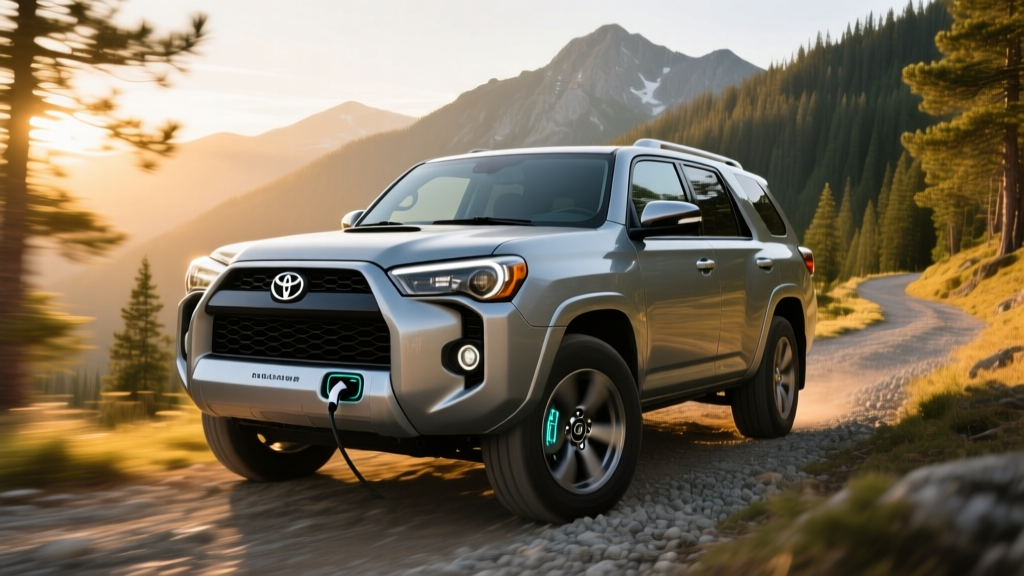
The sixth-generation Toyota 4Runner arrived with a turbocharged powertrain and, for the first time, a hybrid option. The 2025 Toyota 4Runner Hybrid pairs the i-FORCE MAX turbo hybrid system with a body-on-frame platform that serious off-roaders and daily commuters alike have been waiting for. But how efficient is it really, and does the hybrid premium make financial sense? We break down every number that matters.
Quick Verdict: Who the 4Runner Hybrid Is For
The 4Runner Hybrid targets buyers who need genuine off-road capability and three-row utility but want to cut fuel costs without plugging in. This is a conventional hybrid (HEV), not a plug-in hybrid — it charges itself through regenerative braking and the gasoline engine. If you want electric-only commuting, you'll need to look at a PHEV or full BEV. If you want 25+ MPG from a midsize body-on-frame SUV that can still tow 6,000 pounds and crawl over rocks, this is the shortlist.
Look at a PHEV or BEV instead if: You have home charging, want electric-only daily driving, or prioritize maximum efficiency over off-road hardware.
i-FORCE MAX Powertrain: Specs and Output
The 4Runner Hybrid uses Toyota's i-FORCE MAX powertrain, which sandwiches an electric motor between a 2.4-liter turbocharged inline-4 engine and an 8-speed automatic transmission. This is the same architecture found in the Tundra and Tacoma hybrids, adapted for the 4Runner's slightly lighter curb weight.
| Specification | 2025 4Runner Hybrid (i-FORCE MAX) |
|---|---|
| Engine | 2.4L turbocharged inline-4 |
| Electric Motor | Integrated between engine and transmission |
| Combined Horsepower | 326 hp |
| Combined Torque | 465 lb-ft |
| Transmission | 8-speed automatic |
| Drivetrain | 4WD (part-time or full-time depending on trim) |
| Hybrid Battery | ~1.87 kWh, NiMH (sealed) |
| Towing Capacity | Up to 6,000 lbs |
| 0-60 mph (est.) | ~6.5 seconds |
The 465 lb-ft of torque is the headline figure. It arrives low in the rev range thanks to the electric motor's instant response, making the 4Runner Hybrid feel noticeably quicker off the line than the non-hybrid i-FORCE (278 hp / 317 lb-ft). That torque also helps when merging onto highways or climbing grades with a trailer.
Fuel Economy: EPA Numbers and Real-World MPG
The EPA rates the 2025 4Runner Hybrid at approximately 23 MPG city, 24 MPG highway, and 23 MPG combined (4WD models). These numbers apply to the TRD Off-Road and Limited trims equipped with the i-FORCE MAX. For context, the gas-only 4Runner with the standard i-FORCE turbo-four returns around 20 MPG combined.
| Powertrain | City MPG | Highway MPG | Combined MPG |
|---|---|---|---|
| 4Runner Hybrid (i-FORCE MAX, 4WD) | 23 | 24 | 23 |
| 4Runner Gas (i-FORCE, 4WD) | 19 | 22 | 20 |
| 4Runner Gas (i-FORCE, RWD) | 20 | 24 | 21 |
Real-World MPG: What to Actually Expect
Hybrid systems typically outperform their EPA city estimates in stop-and-go driving because regenerative braking recaptures energy that a gas-only vehicle wastes as heat. In mixed suburban driving with moderate traffic, owners of i-FORCE MAX-equipped Toyotas (Tundra, Tacoma) frequently report 1–3 MPG above the EPA city figure. Expect roughly 24–26 MPG in city-heavy commutes.
Highway efficiency is a different story. At sustained 75–80 mph speeds, the aerodynamic penalty of the 4Runner's boxy shape and the rolling resistance of all-terrain tires (on TRD trims) work against you. Real-world highway MPG may dip to 21–22 MPG on long road trips. Cold weather adds another 1–2 MPG penalty as the engine runs more frequently to provide cabin heat and maintain battery temperature.
Real-World Expectation: 22–26 MPG depending on driving mix. City-heavy routes favor the hybrid; sustained highway speeds narrow the gap with the gas model. With a ~21-gallon fuel tank, expect roughly 460–520 miles per tank in mixed driving.
Hybrid vs. Plug-In Hybrid vs. Full EV: Which Fits You?
The 4Runner is currently offered only as a conventional hybrid (HEV). There is no plug-in hybrid (PHEV) variant in the 2025 lineup, and Toyota has not announced a fully electric 4Runner. Here's how these three powertrain types compare for SUV buyers:
| Factor | Conventional Hybrid (HEV) | Plug-In Hybrid (PHEV) | Battery Electric (BEV) |
|---|---|---|---|
| Plug in to charge? | No — self-charging | Yes — for electric-only range | Yes — always |
| Electric-only driving | Very short, low-speed only | 20–50 miles typical | 200–400+ miles |
| Fuel/energy cost | Gasoline, ~15% less than gas-only | Gas + electricity, lowest if charged daily | Electricity only, lowest per-mile cost |
| Home charging needed? | No | Recommended (Level 2) | Essential (Level 2) |
| Off-road suitability | Excellent (no range loss from battery weight) | Good (added weight, reduced ground clearance possible) | Limited by charging infrastructure in remote areas |
| Tax credit eligible? | No (federal §30D requires plug-in) | Yes, if §30D criteria met | Yes, if §30D criteria met |
For the 4Runner buyer, the HEV setup makes practical sense. You get meaningful fuel savings — about 3 MPG combined improvement over the gas model, which translates to roughly $200–$350 in annual fuel savings at 15,000 miles per year and $3.50/gallon — without any lifestyle changes. No charger to install, no range to manage, no plug-in routine to remember.
Pricing, Trims, and Tax Credit Eligibility
The 2025 Toyota 4Runner Hybrid (i-FORCE MAX) is available across multiple trims. Pricing starts around $52,000 for the TRD Off-Road Hybrid and climbs to approximately $60,000+ for the Platinum and TRD Pro Hybrid trims (destination included). The hybrid powertrain typically adds $1,500–$2,000 over the equivalent gas-only trim.
Federal Tax Credit: Does the 4Runner Hybrid Qualify?
No. The 2025 Toyota 4Runner Hybrid does not qualify for the federal §30D Clean Vehicle Credit. Under current IRS rules, the §30D credit applies only to plug-in electric vehicles (BEVs and PHEVs) with a battery capacity of at least 7 kWh. The 4Runner Hybrid's ~1.87 kWh NiMH battery pack does not meet this threshold, and conventional hybrids are explicitly excluded from the credit.
- §30D credit: Not eligible — HEV, not a plug-in vehicle
- State incentives: Some states offer rebates for conventional hybrids, but these are uncommon and vary by jurisdiction. Check your state's energy office or DMV for current programs.
- Used hybrid credit (§25E): If purchasing a qualifying used hybrid (model year 2023+), the §25E credit of up to $4,000 may apply, subject to income caps and vehicle price limits.
Battery Warranty, Reliability, and Replacement Cost
Toyota provides robust coverage for the hybrid system. The hybrid battery and all hybrid-system components (inverter, electric motor, control unit) are covered under Toyota's Hybrid Battery Warranty for 10 years or 150,000 miles, whichever comes first, on 2020-and-newer models. This applies to the 2025 4Runner Hybrid.
Powertrain Warranty: 5 years / 60,000 miles
Basic Warranty: 3 years / 36,000 miles
What's covered: Hybrid battery pack, hybrid control module, inverter, electric motor — essentially every high-voltage component.
Real-World Hybrid Battery Longevity
Toyota's hybrid systems have an exceptional reliability track record. The Prius, which has used a similar NiMH-based hybrid architecture for over two decades, routinely sees original hybrid batteries lasting 150,000–200,000+ miles. The 4Runner's hybrid battery is relatively small (~1.87 kWh) and is never deeply discharged — the system maintains a state-of-charge window that avoids stress on the cells, which is key to longevity.
Battery Replacement Cost
If the hybrid battery does fail outside of warranty, a replacement NiMH pack for a Toyota hybrid of this size typically costs between $2,000 and $3,500 (parts and labor) at a dealership. Third-party refurbished batteries can reduce that to $1,200–$2,000. This is far less expensive than a full BEV battery replacement, which can exceed $10,000–$15,000, because the 4Runner's hybrid pack is small and the chemistry (NiMH) is mature and well-understood.
Overall Reliability Outlook
Toyota's body-on-frame SUVs and the i-FORCE MAX powertrain both benefit from extensive real-world validation in the Tundra and Tacoma. According to NHTSA and industry reliability trackers, Toyota's hybrid systems consistently rank among the most dependable in the industry. The 4Runner's conventional hybrid setup adds minimal complexity compared to the gas model — there's no plug, no large high-voltage pack, and no external charging hardware to fail.
Pros and Cons at a Glance
Pros
- 326 hp and 465 lb-ft — significant torque upgrade over gas model
- ~3 MPG improvement combined; even better in city driving
- No plug-in required — zero lifestyle change
- 10-year / 150,000-mile hybrid battery warranty
- Proven i-FORCE MAX architecture from Tundra/Tacoma
- Retains full off-road capability (TRD hardware unchanged)
- 6,000-lb towing capacity maintained
Cons
- No federal tax credit eligibility (HEV, not plug-in)
- ~$1,500–$2,000 price premium over gas-only equivalent trim
- Highway MPG advantage over gas model is modest
- Hybrid battery adds weight (offset somewhat by turbo-four vs V6)
- No electric-only driving mode for silent/zero-emission operation
- Third row remains tight for adults (shared with gas model)
Ownership Costs: Hybrid vs. Gas 4Runner Over 5 Years
The hybrid premium pays for itself through fuel savings, but the timeline depends on your mileage and local gas prices. Here's a simplified comparison assuming 15,000 miles per year, $3.50/gallon regular unleaded, and EPA combined figures:
| Cost Factor | 4Runner Hybrid (23 MPG) | 4Runner Gas (20 MPG) |
|---|---|---|
| Annual fuel cost | $2,283 | $2,625 |
| 5-year fuel cost | $11,413 | $13,125 |
| Fuel savings (5 years) | $1,712 in hybrid's favor | |
| Hybrid premium (upfront) | ~$1,500–$2,000 | |
| Estimated insurance (annual avg.) | ~$1,800–$2,200 | ~$1,700–$2,100 |
The fuel savings roughly offset the hybrid premium within 4–5 years of ownership. Beyond that, every additional mile driven in the hybrid saves money. Buyers who drive more than 15,000 miles annually or live in states with higher gas prices (California, Washington, New York) will see the payback sooner.
Frequently Asked Questions
How many MPG does the 2025 Toyota 4Runner Hybrid get?
The EPA rates the 4Runner Hybrid (i-FORCE MAX, 4WD) at 23 MPG city, 24 MPG highway, and 23 MPG combined. In real-world city-heavy driving, expect 24–26 MPG thanks to regenerative braking. Highway-only trips at 75+ mph may return 21–22 MPG.
Does the 4Runner Hybrid need to be plugged in?
No. The 4Runner Hybrid is a conventional hybrid (HEV). It charges its small battery pack through regenerative braking and the gasoline engine. You fuel it exactly like a standard gas vehicle — just at the pump, slightly less often.
Is there a plug-in hybrid (PHEV) version of the 4Runner?
Not for the 2025 model year. Toyota has not announced a 4Runner PHEV. If plug-in hybrid capability is essential, the closest Toyota option is the RAV4 Prime (42 miles electric-only), though it's a unibody crossover, not a body-on-frame SUV.
Does the 4Runner Hybrid qualify for any tax credit?
The 4Runner Hybrid does not qualify for the federal §30D Clean Vehicle Credit because it is not a plug-in vehicle. Some states may offer small incentives for hybrids — check your local programs. The used-vehicle credit (§25E) may apply if you buy a qualifying pre-owned hybrid.
How long will the 4Runner Hybrid battery last?
Toyota covers the hybrid battery for 10 years or 150,000 miles. Based on Toyota's track record with NiMH hybrid batteries (Prius, Highlander Hybrid, Camry Hybrid), original packs commonly last 150,000–200,000+ miles. The small pack size and conservative state-of-charge management in the 4Runner should support similar longevity.
What does it cost to replace the hybrid battery?
Out-of-warranty replacement for the 4Runner Hybrid's NiMH battery pack is estimated at $2,000–$3,500 at a dealership, or $1,200–$2,000 with a refurbished unit. This is significantly less than a full EV battery replacement.
Hybrid vs. gas 4Runner — which should I buy?
Choose the hybrid if you want more torque (465 lb-ft vs 317), better city fuel economy, and don't mind a ~$1,500–$2,000 premium that pays back in fuel savings over 4–5 years. Choose the gas model if you drive mostly highway miles (where the MPG gap narrows), want the lowest possible purchase price, or plan to keep the vehicle under 4 years.
Can the 4Runner Hybrid still go off-road?
Yes. The hybrid system does not compromise ground clearance, approach/departure angles, or 4WD capability. TRD Off-Road and TRD Pro trims retain all the locking differentials, crawl control, and Multi-Terrain Select features of their gas counterparts. The instant torque from the electric motor actually improves low-speed rock crawling response.
Sources: EPA fuel economy data via fueleconomy.gov; Toyota specifications via toyota.com; IRS §30D credit rules via irs.gov.