Quick Verdict: The 2014 XV Crosstrek Hybrid in 2026
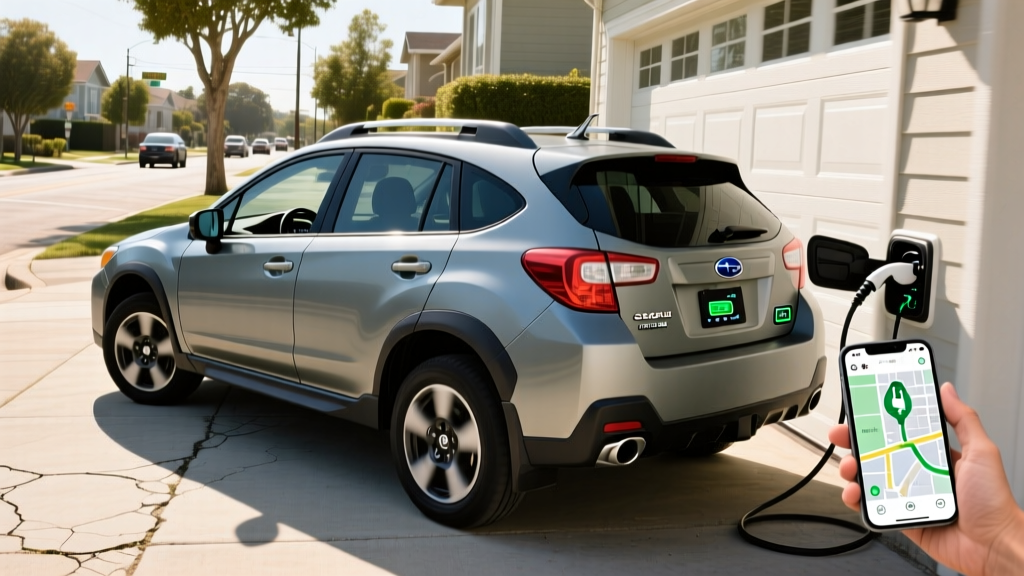
The 2014 Subaru XV Crosstrek Hybrid was Subaru's first production hybrid, pairing a 2.0-liter boxer engine with a small electric motor in a parallel-hybrid system. As a conventional hybrid (HEV) — not a plug-in hybrid — it never needed to be plugged in and offered modest efficiency gains over the gas-only Crosstrek. In 2026, this model is exclusively available on the used market, and prospective buyers should weigh its aged 13.5 kWh nickel-metal hydride battery, limited electric-only capability, and Subaru's early hybrid learning curve against its standard AWD and rugged practicality.
| Specification | 2014 Subaru XV Crosstrek Hybrid |
|---|---|
| Powertrain Type | Conventional Hybrid (HEV) |
| Engine | 2.0L 4-cyl boxer (148 hp) + electric motor (13.4 hp) |
| Combined System Output | 160 hp / 163 lb-ft torque |
| Transmission | Lineartronic CVT |
| Drivetrain | Symmetrical AWD (standard) |
| Hybrid Battery | 13.5 kWh NiMH (nickel-metal hydride) |
| EPA MPG (City / Hwy / Combined) | 29 / 33 / 31 |
| EV-Only Range | ~1 mile at very low speeds (not EPA-rated) |
| 0-60 mph | ~9.2 seconds |
| Cargo Volume (behind rear seats) | 22.3 cu ft |
| Original MSRP (2014) | $26,770 (base Hybrid) / $30,070 (Hybrid Touring) |
| Estimated Used Price (2026) | $8,000–$13,000 depending on mileage and condition |
| Hybrid Battery Warranty (original) | 8 years / 100,000 miles |
HEV vs PHEV: What the 2014 Crosstrek Hybrid Actually Is
A common source of confusion with older Subaru hybrids is whether they need to be plugged in. The 2014 XV Crosstrek Hybrid is a conventional hybrid (HEV), meaning it charges its battery solely through regenerative braking and the gasoline engine. There is no charging port, no plug, and no meaningful electric-only driving range.
| Feature | HEV (2014 Crosstrek Hybrid) | PHEV (e.g., 2024 Crosstrek Hybrid) | Full EV (BEV) |
|---|---|---|---|
| Plugs in? | No | Yes | Yes |
| Electric-only range | Negligible (~1 mi at low speed) | 17–25 mi typical | 200–400+ mi |
| Battery size | 13.5 kWh NiMH (small usable buffer) | 8.8 kWh usable (lithium-ion) | 60–100+ kWh |
| Fuel economy advantage | Modest (2–4 MPG over gas) | Significant with regular charging | No gasoline used |
| Tax credit eligible? | No | Potentially (check §30D rules) | Up to $7,500 (§30D) |
Subaru later offered a plug-in hybrid Crosstrek (badged as the Crosstrek Hybrid starting in 2019, using Toyota-derived PHEV powertrain technology). That model provides roughly 17 miles of EPA-rated electric-only range and a combined 88 MPGe when running on electricity. The 2014 model is fundamentally different — it is closer in concept to a Toyota Prius-style parallel hybrid with Subaru's AWD system.
Fuel Economy: EPA Numbers and Real-World MPG
The EPA rated the 2014 Subaru XV Crosstrek Hybrid at 29 MPG city, 33 MPG highway, and 31 MPG combined, according to fueleconomy.gov. For context, the gas-only 2014 Crosstrek with the same 2.0L engine and CVT was rated at 25 city / 33 highway / 28 combined. The hybrid's advantage is therefore roughly 3 MPG combined — a modest gain that stems largely from electric-motor assist during acceleration and low-speed regenerative braking.
| Driving Scenario | EPA Estimate | Real-World Expectation |
|---|---|---|
| City (stop-and-go) | 29 MPG | 27–32 MPG (regen helps in traffic) |
| Highway (steady 70 mph) | 33 MPG | 29–32 MPG (aero drag, AWD losses) |
| Combined | 31 MPG | 28–31 MPG |
| Cold weather (below 30°F) | N/A | 24–28 MPG (engine runs more for heat) |
In practice, owners frequently report combined fuel economy in the high 20s to low 30s. The hybrid system's benefit is most pronounced in city driving where regenerative braking recaptures energy. On the highway, the electric motor contributes less and the added weight of the battery pack (~265 lbs over the gas model) partially offsets the efficiency gain. Cold weather further reduces efficiency as the gasoline engine runs more frequently to provide cabin heat and maintain battery temperature.
Powertrain Deep Dive: Boxer Engine Meets Electric Assist
The 2014 Crosstrek Hybrid pairs Subaru's FB20 2.0-liter flat-four engine (148 hp, 145 lb-ft) with a 10-kW (13.4 hp) electric motor integrated into the CVT transmission housing. Combined system output is 160 horsepower and 163 lb-ft of torque. The electric motor provides its peak torque from zero RPM, which gives the car a slightly more responsive feel from a stop compared to the gas-only model, though the 0-60 mph time of approximately 9.2 seconds is hardly quick by modern standards.
The 13.5 kWh NiMH battery pack is mounted beneath the cargo floor, which reduces under-floor storage space slightly compared to the gas Crosstrek. Importantly, only a small fraction of this battery's capacity is usable for electric propulsion — the system uses a narrow state-of-charge window to preserve battery longevity. This is why electric-only driving is limited to roughly one mile at speeds under 20 mph, essentially functioning as an enhanced start-stop and low-speed creep system rather than true EV mode.
The Lineartronic CVT is calibrated for efficiency, keeping engine RPM low during cruising. Under hard acceleration, the characteristic CVT drone is present, though the electric motor's torque fill slightly reduces the sensation of the engine straining at low speeds.
Battery Health, Warranty, and Replacement Costs
For any used hybrid purchase — and especially one that is now over a decade old — battery condition is the single most important mechanical consideration.
Original Hybrid Battery Warranty: 8 years / 100,000 miles (10 years / 150,000 miles in CARB states including California, New York, Massachusetts, and others that follow California emissions standards).
Warranty Status in 2026: All 2014 models have exceeded the 8-year time limit. The 10-year CARB-state coverage has also expired for all 2014 vehicles. Unless a previous owner purchased an extended warranty, the hybrid battery is no longer covered.
NiMH batteries in parallel-hybrid applications tend to degrade more gracefully than early lithium-ion packs, because the system uses a narrow charge window that avoids deep cycling. That said, after 12 years of service, capacity loss is expected. Signs of a degraded hybrid battery include reduced regenerative braking effectiveness, the engine running more frequently, lower observed MPG, and dashboard warning lights (check engine or hybrid system warning).
Battery replacement cost: A new OEM hybrid battery pack from Subaru typically costs between $2,000 and $3,500 for the part alone, with labor adding $500–$1,000 depending on the shop. Third-party reconditioned or refurbished NiMH packs are available from aftermarket suppliers for approximately $1,200–$2,000 installed. Independent hybrid-specialty shops can often perform the replacement at lower cost than a Subaru dealer.
Before purchasing a used 2014 Crosstrek Hybrid, request a hybrid battery health diagnostic from a Subaru dealer or qualified hybrid technician. This test measures the battery's state of health (SoH) and individual cell voltage balance, providing a clear picture of remaining life.
Does the 2014 Crosstrek Hybrid Qualify for Tax Credits?
No. The 2014 Subaru XV Crosstrek Hybrid does not qualify for the federal §30D clean vehicle tax credit. Under current IRS guidelines, the §30D credit applies only to new plug-in electric vehicles (BEVs and PHEVs) that meet battery capacity, MSRP, income, and critical-mineral sourcing requirements. Conventional hybrids (HEVs) that do not plug in have never been eligible for the §30D credit.
When new, the 2014 Crosstrek Hybrid was eligible for a modest $250 to $650 federal tax credit under the older Advanced Lean Burn Technology Motor Vehicle credit (IRC §30B), which has long since expired for this model. No current federal incentive applies to this vehicle.
Some states historically offered hybrid purchase incentives, but most state-level programs have shifted to focus on plug-in vehicles. Used buyers should check their state's current DMV or energy office website for any remaining hybrid-specific incentives, though these are increasingly rare.
Reliability and Ownership Costs
Subaru's first-generation hybrid system proved reasonably reliable, though it was not without issues. The most common problems reported by owners and tracked by NHTSA include:
- Hybrid battery degradation: Expected with age; some owners reported reduced MPG and increased engine cycling after 80,000–100,000 miles.
- CVT concerns: Subaru's Lineartronic CVTs from this era have drawn complaints for shuddering or failure, though the hybrid variant's CVT is somewhat different from the gas model's unit. Subaru extended the CVT warranty on certain model years to 10 years/100,000 miles.
- Brake actuator issues: The regenerative braking system uses an electric brake actuator that can fail, resulting in a firm brake pedal and reduced regen. Replacement cost is typically $800–$1,500.
- Standard Subaru concerns: Head gasket issues are less common on the FB20 engine than on older EJ-series engines, but oil consumption and wheel bearing wear remain considerations at high mileage.
Insurance costs for the 2014 Crosstrek Hybrid are generally comparable to the gas model, averaging $100–$140 per month depending on driver profile and location. Maintenance costs are slightly higher than the gas Crosstrek due to the hybrid-specific components (inverter coolant, hybrid battery cooling fan filter), but routine items like oil changes, brake pads (which last longer thanks to regen), and tires remain affordable.
Pros
- Standard symmetrical AWD — excellent traction in snow and rain
- Higher ground clearance (8.7 inches) than most hybrids of its era
- Modest fuel economy improvement over gas Crosstrek
- Practical hatchback cargo area (22.3 cu ft)
- Proven Subaru boxer engine durability when maintained
Cons
- Only 3 MPG combined improvement over gas model — marginal gain
- NiMH battery is aged; replacement likely needed if not already done
- No electric-only driving capability for daily commuting
- Reduced cargo under-floor storage due to battery placement
- Sluggish acceleration (9.2 sec 0-60) and CVT drone under load
- No federal tax credit eligibility
Who Should Buy the 2014 Crosstrek Hybrid — And Who Shouldn't
Choose the 2014 Crosstrek Hybrid if:
- You need AWD and ground clearance for snow, dirt roads, or outdoor activities
- You want a used hybrid under $13,000 with hatchback utility
- You drive mostly in the city where regenerative braking helps efficiency
- You've confirmed the hybrid battery is in good health or has been replaced
Choose a different vehicle if:
- You want meaningful electric-only commuting — look at a PHEV like the 2019+ Toyota Prius Prime or 2019+ Crosstrek PHEV
- You prioritize fuel economy above all — a used Toyota Prius (50+ MPG) or Prius V is far more efficient
- You want modern safety tech — the 2014 Crosstrek lacks automatic emergency braking, lane-keeping, and adaptive cruise
- The hybrid battery shows significant degradation and you don't want a $2,500+ repair expense
For buyers committed to Subaru's platform and wanting a more capable electrified option, the 2019–2023 Subaru Crosstrek Hybrid (PHEV) offers 17 miles of electric-only range, a combined 88 MPGe, and a more modern Toyota-sourced plug-in hybrid system — though at a significantly higher used price ($22,000–$30,000+).
Frequently Asked Questions
How many MPG does the 2014 Subaru XV Crosstrek Hybrid get?
The EPA rates it at 29 MPG city, 33 MPG highway, and 31 MPG combined. Real-world results typically range from 28 to 31 MPG combined, with cold weather reducing efficiency to the mid-20s. This represents a 3 MPG combined improvement over the gas-only 2014 Crosstrek (28 MPG combined).
Can the 2014 Crosstrek Hybrid drive on electric power alone?
Only marginally. The system allows roughly one mile of electric-only movement at speeds under 20 mph — essentially functioning as enhanced start-stop and low-speed creep assist. It is not designed for electric-only commuting. This is a conventional hybrid (HEV), not a plug-in hybrid.
How long does the hybrid battery last, and what does replacement cost?
NiMH hybrid batteries in parallel-hybrid systems typically last 100,000–150,000 miles before significant degradation, though age is also a factor. At 12+ years old, many 2014 Crosstrek Hybrids will need or have already needed battery replacement. A new OEM battery costs $2,500–$4,500 installed; refurbished units run $1,200–$2,000 installed.
Does the 2014 Crosstrek Hybrid qualify for any tax credit in 2026?
No. The federal §30D clean vehicle credit applies only to new plug-in vehicles (BEVs and PHEVs). Conventional hybrids like the 2014 Crosstrek Hybrid are not eligible. The small federal hybrid credit that existed when this car was new (under IRC §30B) has long since expired.
Is the 2014 Crosstrek Hybrid reliable?
Moderately so. The FB20 engine and hybrid system are generally durable, but the CVT, brake actuator, and aging NiMH battery are known concerns at this vehicle's age and mileage. A pre-purchase inspection including a hybrid battery health test is essential. Subaru's CVT warranty extension may still cover some vehicles — check with a dealer using the VIN.
Hybrid vs PHEV vs EV — which should I choose?
A conventional hybrid (HEV) like the 2014 Crosstrek Hybrid suits drivers who want modest efficiency gains with no behavior change — no plugging in, no range planning. A plug-in hybrid (PHEV) is ideal if you have home charging and a short commute (under 25 miles), letting you drive mostly on electricity while keeping a gas engine for longer trips. A full EV (BEV) makes sense if you have reliable home charging, want zero tailpipe emissions, and your daily driving stays within range. For a used buyer on a tight budget needing AWD, the HEV Crosstrek is practical; if charging access is available, a used PHEV or BEV will deliver far greater fuel savings.